Tag Archives: Israel

DOES A SHIELD MAKE PEACE?

The Intellitake
One argument · Two sides · One verdict · Daily
Friday, September 25, 2026 · The Missile Defense Debate
“

Geography no longer protects America. A shield over the homeland is not a provocation — it is a commitment to peace through strength.

The Thesis — Gen. Mike Guetlein, The Washington Post

THE ARGUMENT

In the Washington Post, Gen. Mike Guetlein — the U.S. Space Force general who directs Golden Dome for America — makes the program’s public case. For generations, he writes, Americans could believe that two vast oceans and friendly neighbors kept major conflict far from our shores; that era of quiet skies is over. His framing, consistent with his testimony to Congress: near-peer competitors, specifically China and Russia, are rapidly expanding and modernizing their strategic arsenals, while the old U.S. missile defense architecture was designed only for rogue-state threats. The shield — a network of sensors and interceptors against ballistic, hypersonic, and cruise missiles — is, in his words, a commitment to peace through strength and deterrence: raising the cost of attacking America until no adversary tries.

vs

THE ANSWER

Veteran nuclear-policy analyst Joe Cirincione, in the Bulletin of the Atomic Scientists, states the stability school’s counter-case: any missile defense stimulates an offensive arms race, because the cheapest answer to a shield is more spears — an adversary cannot assume the system will fail, so it must build enough missiles to overwhelm it. That, he notes, is precisely why Nixon and Kissinger paired the first offensive arms treaty with the ABM Treaty in 1972: you cannot limit offense without limiting defense. China’s missile buildup, on this view, is already partly a response to U.S. defenses — and analysts like Laura Grego add the arithmetic: intercepting even a handful of ICBMs could require tens of thousands of space-based interceptors. The shield, the critics conclude, doesn’t end the missile age; it accelerates it.

iC

THE INTELLITAKE

Both sides claim the same goal — deterrence — and prescribe opposites, because they disagree about what an adversary sees when it looks at a shield. Guetlein sees a wall that makes attack futile; Cirincione sees a promise that America means to strike first and block the reply, which makes an adversary build until the wall is irrelevant. This is not a new argument: it is the SDI debate of 1983 and the ABM debate of 1972, rerun with hypersonics and orbital interceptors. What is new is the author — not a columnist but the program’s own director, making his case to the public in a newspaper, which is itself a datum: shields need believers to deter. The unresolved question is the one the 1972 negotiators answered one way and this administration answers the other: is defense the end of the arms race, or its engine?

TODAY’S PROVOCATION

If a perfect shield existed, would you trust your own government more — knowing it could strike without fear of reply?

— THE EDITORS, INTELLICURIOUS —
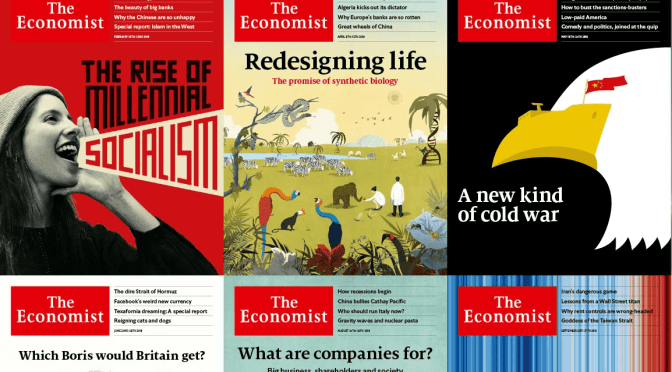
THE ECONOMIST MAGAZINE – SEPTEMBER 26, 2026

THE ECONOMIST MAGAZINE: The latest issue features ‘When America walks away’…

When America walks away

For decades America has enjoyed hegemony over the Middle East. That is about to end

Why house prices may be in trouble

In a big serving of bad news, there are crumbs of comfort

Brazil turns its back on the future

The looming election will not bring the change the country needs

Back and shoulder surgery is often worse than useless

Millions of operations should be scrapped

THE GUARDIAN WEEKLY – SEPTEMBER 25, 2026

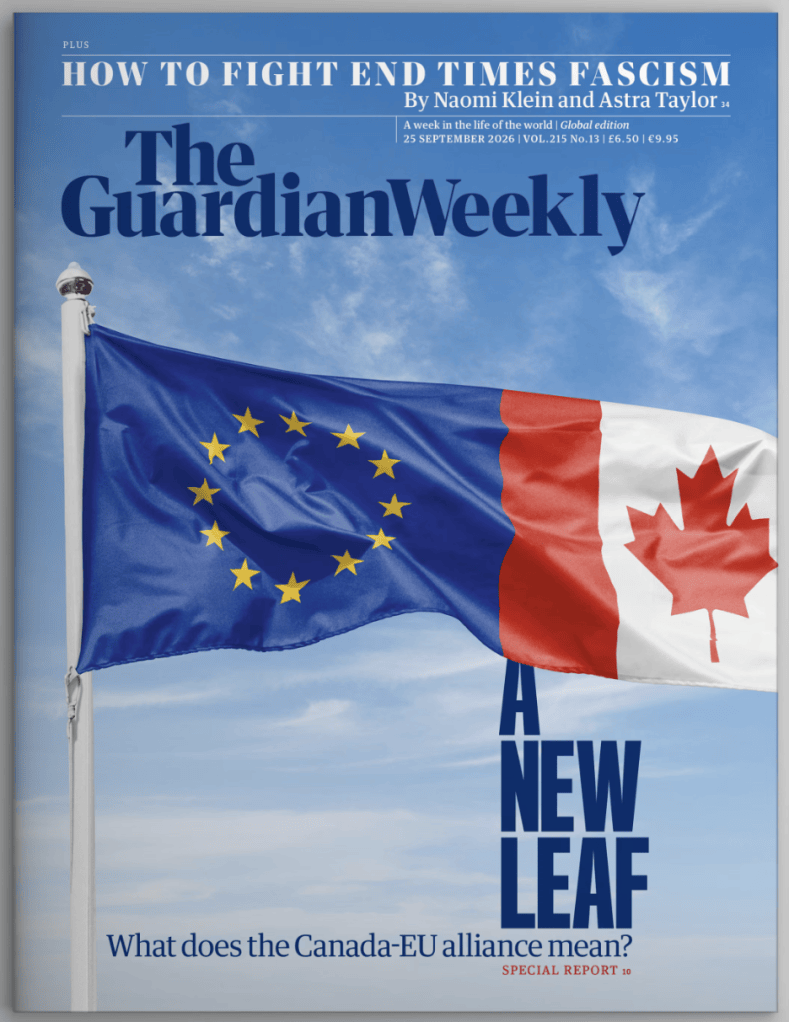
THE GUARDIAN WEEKLY: The latest issue features ‘A NEW LEAF’ – What does the Canada-EU alliance mean?

The European Commission president, Ursula von der Leyen, last week extended an unprecedented offer to Canada, inviting it to become the EU’s first “associate member”.

For our big story this week, Brussels correspondent Jennifer Rankin explores what the proposed alliance might mean. While there is a lot of common ground for the two parties, she writes, their agreement raises many questions and is clouded in uncertainty.

Meanwhile, senior correspondent Lisa O’Carroll examines the possible implications for the UK – asking whether it offers a blueprint for Britain, or a reminder it is out in the cold.

Then, former White House speechwriter Ted Widmer says Canadian prime minister Mark Carney’s remarks before the European parliament set out what a new west might look like, without its most powerful member – the US.

Spotlight | Yemeni families’ flight
Fierce fighting has forced people to abandon their homes, leaving everything behind to seek shelter in refugee camps. Nasser Al-Sakkaf reports from Taiz

Science | ‘A map is never neutral’
The cartographers who took on centuries of western bias with the new Equal Earth projection speak to Oliver Holmes, Ana Lucía González Paz and Pablo Gutiérrez about their alternative to the 16th-century Mercator display

Feature | How to fight end times fascism
An unholy alliance is working toward an apocalyptic future from which only a chosen few will emerge unscathed. It’s becoming clear how we stop them, say Naomi Klein and Astra Taylor

Opinion | This Israeli election could be the country’s last
Spend time on the ground and you see how high the stakes are for next month’s contest – for Israelis and Palestinians alike, writes Jonathan Freedland

Culture | Present and correct
Author Jonathan Franzen talks to Sophie McBain about a new TV adaptation of his bestseller The Corrections, the future of reading and why creating new work is “horrible”

THE ECONOMIST MAGAZINE – SEPTEMBER 19, 2026

THE ECONOMIST MAGAZINE: The latest issue features ‘Can the AI arms race be stopped?‘


Can the AI arms race be stopped?

America will struggle to make the technology safe while staying ahead of China

Markets are waking up to the rich world’s reckless borrowing

Governments are still, alas, asleep

In praise of Democrats’ disunity

Republicans show that party unity is overrated

How AI is creating jobs

The apocalypse is postponed. A mini boom is at hand

Why schoolchildren are getting dimmer

Machines are getting brighter; teenagers are not

The age of the orator

The transmission of ideas is moving away from text and back to the spoken word

COMMENTARY MAGAZINE – OCTOBER 2026 PREVIEW

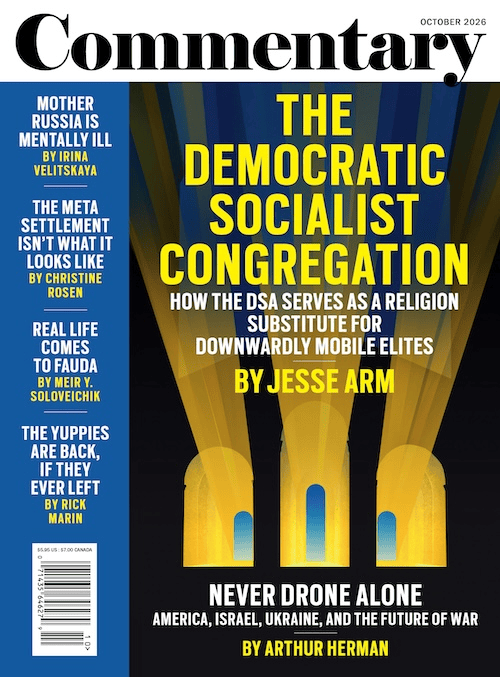
COMMENTARY MAGAZINE: The latest issue features ‘The Democratic Socialist Congregation’ – How The DSA Serves As A Religion Substitute For Downwardly Mobile Elites….

The Democratic Socialist Congregation

How the DSA serves as a religion substitute for downwardly mobile elites by Jesse Arm

Never Drone Alone

What our history and Ukraine’s strategies can teach us about the future of war by Arthur Herman

The Jewish PRIZE

A five-point plan to fight anti-Semitism in court—and win by Jeffrey Lax

Mother Russia Is Mentally Ill

Russia’s real enemy isn’t Ukraine. It’s helplessness by Irina Velitskaya

THE GUARDIAN WEEKLY – SEPTEMBER 18, 2026

THE GUARDIAN WEEKLY: The latest issue features ‘Germany’s Nightmare’ – Can Merz Save His Country Or Himself?

Friedrich Merz is a man with few choices and little popular support as he faces the end of Germany’s postwar settlement and the collapse of all the checks and balances to maintain democratic norms after the second world war and reunification. While Alternative für Deutschland’s success in state elections in Saxony-Anhalt saw the party win 44% of the vote, they are three seats short of a governing majority and, so far, no other party has said they are prepared to work with them, which means that for the moment, at least, the threat of Germany’s first rightwing extremist state government since the Nazi period has not yet come to pass.

As Berlin correspondent Deborah Cole explains, Merz is seen as the wrong man to present and sell a political counterpoint to the AfD’s populist policies. Seen as lacking in empathy and political dexterity, his demeanour is in sharp contrast to Ulrich Siegmund, the AfD’s lead candidate in Saxony-Anhalt. But as Deborah’s Berlin colleague, Kate Connolly, reports, some of Siegmund’s prospective new MPs have questionable backgrounds, including criminal records, Stasi pasts and connections to far-right networks.

Spotlight | Stop, slow down and swerve the apocalypse
Can the world heave a collective sigh of relief after fellow tech bosses heeded a proposal by Anthropic CEO Dario Amodei’s to put the brakes on AI’s headlong rush to over take human intelligence? Nick Robins-Early weighs up our chances

Science | Can I borrow your coyote?
Guardian US reporter Lois Beckett visits a one-of-a-kind California lending library where you can check out taxidermied animals and fossilised dinosaur bones.

Feature | Slime is not as simple as it seems
Scientists are battling to determine whether supposedly simple organisms demonstrate a form of intelligence. If they do, what does it mean for our understanding of brain power, asks Samanth Subramanian

Opinion | Ethics make a return to UK foreign policy
The evidence is Ed Miliband’s bold decision to label settler violence in the West Bank as “ethnic cleansing” and institute a boycott, argues Steve Bloomfield

Culture | Shear fun
Catherine Shoard is rounded up for a trip down to Mossy Bottom farm to get a behind-the-scenes preview of the latest Shaun the Sheep film

THE ECONOMIST MAGAZINE – SEPTEMBER 12, 2026

THE ECONOMIST MAGAZINE: The latest issue features The truth and the lies about Islam in Europe…

The truth and the lies about Islam in Europe

Islam poses no serious danger. But Islamism and the fear of Islam do

In praise of the Democrats’ disarray

Republicans are proving that party unity is overrated

What should Germany do about its rising right?

A stunning success for the AfD in Saxony-Anhalt

Kevin Warsh should raise interest rates

The Federal Reserve’s next meeting will be his first big test as chair

Plunging test scores are a slow-moving catastrophe

Machines are getting brighter. Teens are getting dimmer. Schools must act now

Argentina needs less shouting and more growth

Without it, Javier Milei’s remarkable liberal experiment could end next year

THE GUARDIAN WEEKLY – SEPTEMBER 11, 2026

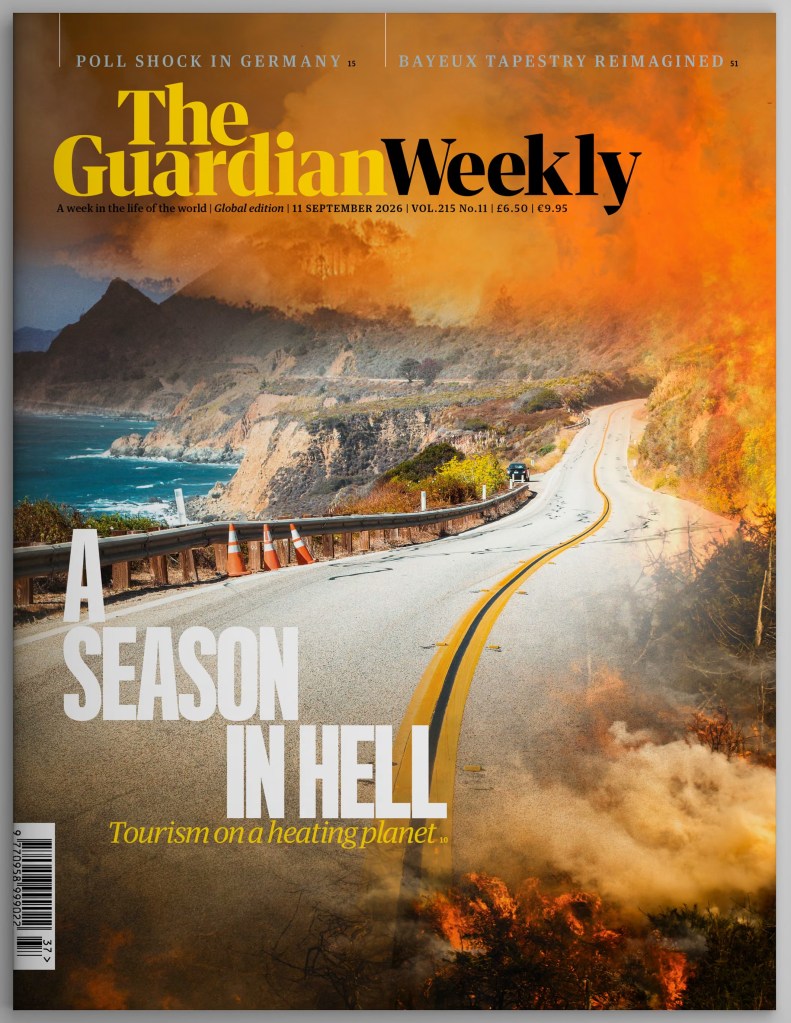
THE GUARDIAN WEEKLY: The latest issue features ‘A Season In Hell’ – Tourism on a heating planet.


California’s Big Sur coastline is often called a slice of heaven. But this year – beset by wildfires, road closures and disruptions to tourist amenities – it has endured a long summer of hell. Now questions are being asked about how many visitors it can sustain in the face of the climate crisis.

For our big story this week, Andrew Gumbel visits Big Sur, where the tourist industry accounts for about 90% of the local economy, to hear why the community fears its ethos is under threat.

The UN has warned that the El Niño climate phenomenon is “supersizing before our eyes”. Environment editor Damien Carrington reports on the latest forecasts, which predict the event is near certain to shatter temperature records.

Then, the mayors of Paris, Milan and Phoenix write about how their cities are learning from each other on responding to the heat crisis. “How do you protect millions of people,” they ask, “when extreme heat is no longer an exceptional event, but an increasingly familiar part of summer?”

Spotlight | ‘It breaks my heart’
Kate Connolly reports from Magdeburg, the capital of Saxony-Anhalt, where voters are digesting the far-right Alternative für Deutschland’s state election triumph

Science | Forbidden planet
Since it was stripped of planetary status, Pluto’s defenders have been fighting the decision – and they’re only getting more passionate, writes Tim Dowling

Feature | Your lying AIs
LLMs have an alarming tendency to deceive and manipulate their users. As they become ever more embedded in society, the race is on to find out why – and stop them doing it. Snigdha Poonam explains

Opinion | The route to a brighter future
The world is being driven to the brink by thugs and dictators, says Simon Tisdall, but ordinary people have more power than we think

Culture | A stitch up
As the Bayeux tapestry goes on show in London, cartoonist Edith Pritchett offers an alternative 21st century take, capturing today’s battles, while art critic Jonathan Jones reviews the British Museum’s blockbuster exhibition of the original masterpiece

THE SPECTATOR WORLD MAGAZINE – SEPT. 14, 2026

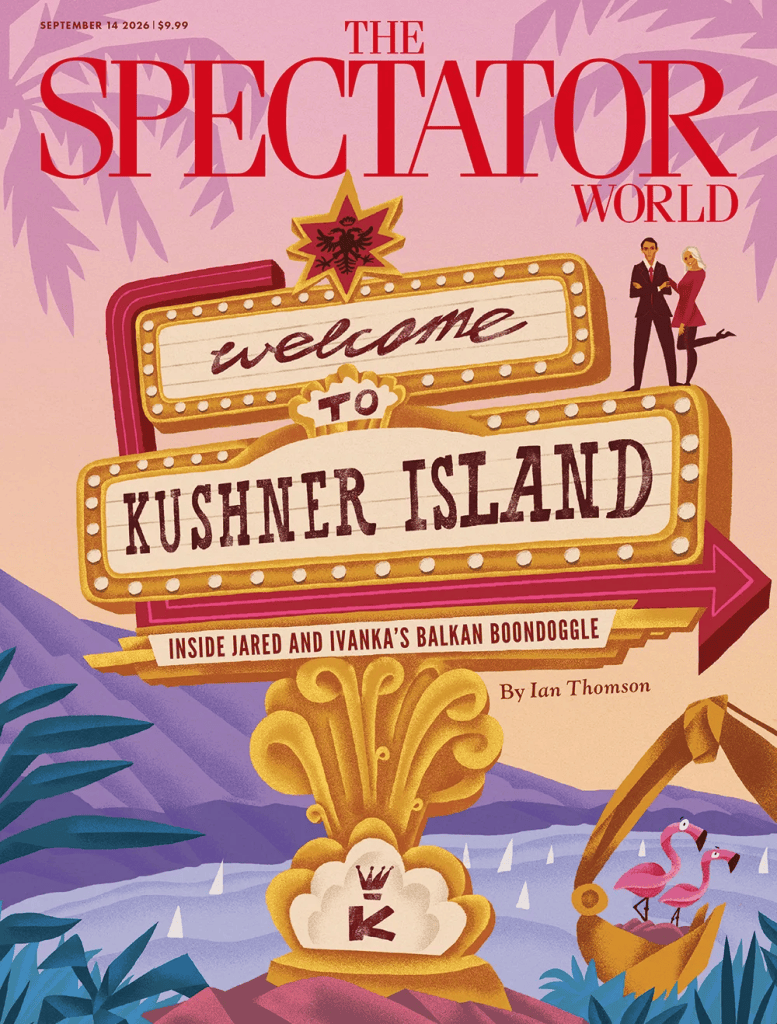
THE SPECTATOR WORLD: The latest issue features ‘Welcome to Kushner Island’ – Inside Jared and Ivanka’s Balkan Boondoggle…

Inside Jared Kushner’s Albanian adventure

For much of its history, Albania remained as shadowy and remote as the fictional Syldavia of the Tintin comics. Letters to Albania were sometimes returned from Albany, New York, with the postal direction “Try Europe.” The country came into existence only after 1912, with the collapse of the Ottoman Empire. Its first ruler, King Zog, was hounded out by Mussolini when he invaded in 1939. Five years later, the Italians and…

Trump has serious beef with American farmers

In August, Donald Trump sided with consumers by increasing the tariff-free quota on imported beef for 90 days beginning September 1. The concession will last three months. It would be a minor story with any other president in the White House. But under Trump, even dull-sounding trade news can take on a sudden importance, especially when mixed up with foreign affairs. Trump’s justification for favoring Argentina, whose 2026 quota he increased by 80,000 metric tons, is partly geopolitical: he wants to give support to Javier Milei’s free-market regime, seeing it as a foil to left-leaning governments elsewhere in Latin America.

Is Pete Hegseth running for president? Or getting fired?

Pete Hegseth has a face for television and a machismo of sorts. It appears, even to parts of MAGA, that Donald Trump put him in charge of the armed forces because the President likes attractive people on TV. “Right out of central casting,” Trump once told Secretary Hegseth, patting him on the bicep. “Pete loves war!”

THE ECONOMIST MAGAZINE – SEPTEMBER 5, 2026

THE ECONOMIST MAGAZINE: The latest issue features ‘The Sorcerer Of Silicon’ – Jensen Huang, Nvidia and the future of AI…

Nvidia is driving the AI boom. Good

The chipmaker’s enormous bets are how capitalism is supposed to work

Bessent’s bond-market misadventures

America will regret the treasure secretary’s interventions

Carney v Trump

Canada’s prime minister must beware an all-out trade war with Donald Trump

A Sino-American tug of law

When obeying an American law means breaking a Chinese one

The world’s most famous bookshop

What Shakespeare & Co reveals about culture

How data centres became one of America’s hottest political issues

Growing hatred of the facilities is reshaping the midterm elections