County clerks and secretaries of state are overwhelmed this year, as they stare down a “perpetual moving target” of new conspiracy theories, political pressure and threats.
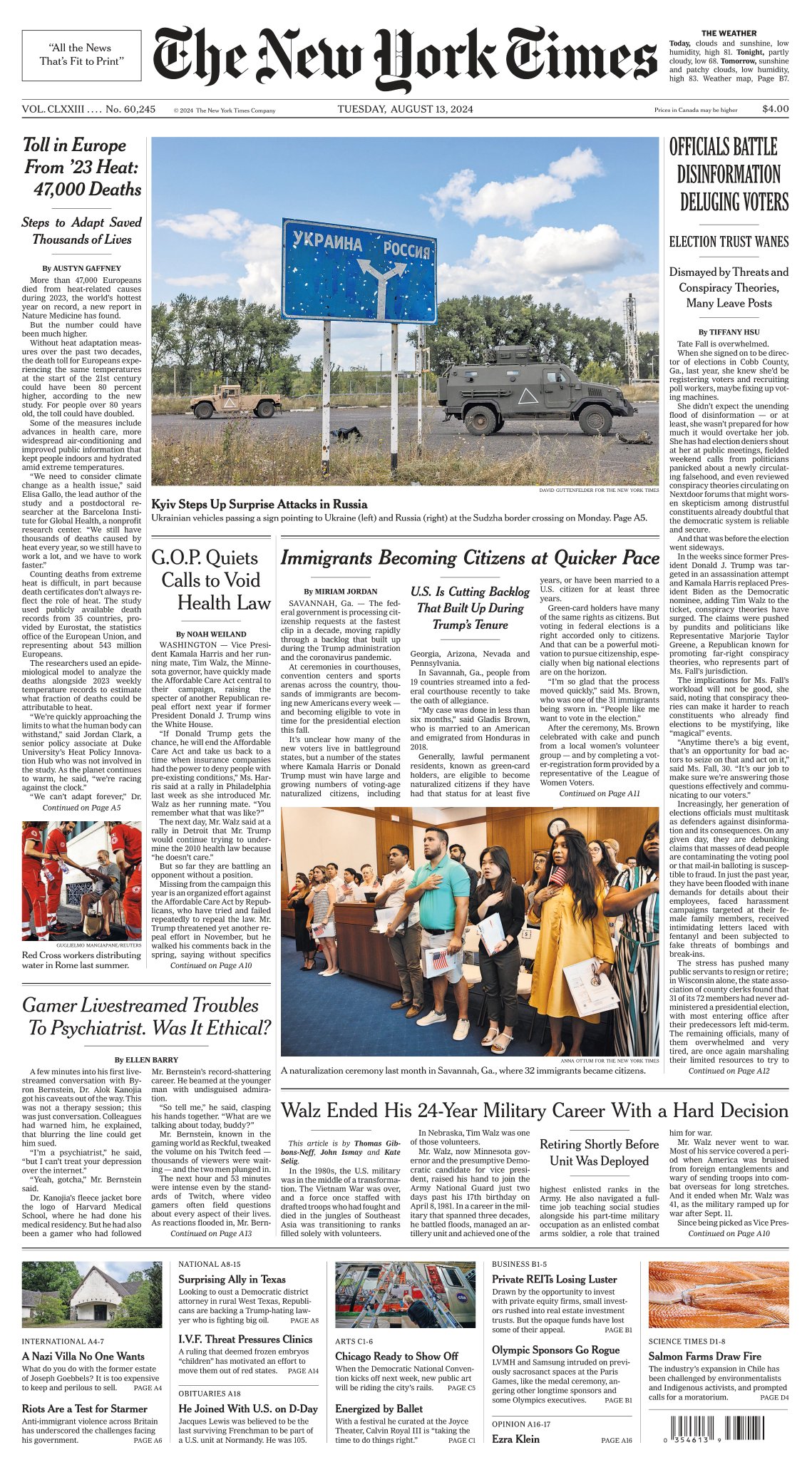
The government has reduced a backlog of applications that built up during the Trump administration. New citizens say they are looking forward to voting in November.
Harris Says Trump Will Repeal Obamacare. Trump Now Claims He’ll Make It ‘Better.’
The popularity of the Affordable Care Act has changed the political strategy of Republicans, who are no longer campaigning to end the law.
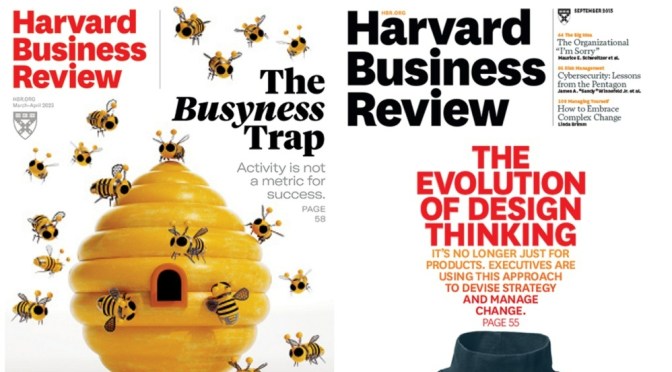
In this article, NFL great Tom Brady and Nitin Nohria, of Harvard Business School, present a set of principles that people in any realm can apply to help teams successfully work together toward common goals.close
When our society talks about success, we tend to focus on individual success. We obsess about who is the “greatest of all time,” who is most responsible for a win, or what players or coaches a team might add next season to become even better.
Let’s say you’re leading a meeting about the hourly pay of your company’s warehouse employees. For several years it has automatically been increased by small amounts to keep up with inflation. Citing a study of a large company that found that higher pay improved productivity so much that it boosted profits, someone on your team advocates for a different approach: a substantial raise of $2 an hour for all workers in the warehouse. What would you do?
History has shown that technological innovation can profoundly change how business is conducted. The steam engine in the 1700s, the electric motor in the 1800s, the personal computer in the 1970s—each transformed many sectors of the economy, unlocking enormous value in the process. But relatively few of these and other technologies went on to become direct sources of sustained competitive advantage for the companies that deployed them, precisely because their effects were so profound and so widespread that virtually every enterprise was compelled to adopt them. Moreover, in many cases they eliminated the advantages that incumbents had enjoyed, allowing new competitors to enter previously stable markets.
National Geographic Traveller Magazine (June 11, 2024): The September 2024 issue features a look beyond Istanbul and the Turquoise Coast in Turkey to descend into the subterranean cities of Cappadocia, a feast in the blossoming culinary region of Urla, and a marvel at Edirne’s age-old oil wrestling festival. Plus, trekking in Sri Lanka, a weekend in Montenegro and a guide to Miami.
Also inside this issue:
Sri Lanka: The Indigenous Vedda people are leading immersive treks in the jungled highlands Valencia:Journey through the parks, wetlands and groves of 2024’s European Green Capital Austria: Drink up the views from Carinthia’s lakeside restaurants and lofty mountain trails Japan: Itineraries to experience the archipelago’s urban life, scattered islands and more Miami: Explore the influences that have shaped Florida’s sun-soaked capital Dublin: A guide to the Irish capital, from big-ticket attractions to intimate audiophile bars Bay of Kotor: From medieval towns to national parks, this is Montenegro at its prettiest Perth: The capital of Western Australia is fresh out of an unprecedented hotel boom
Plus, a Silk Road adventure in London’s British Museum; Spain’s Parador hotels unveil new tours; the global influences behind Guyanese cuisine; fine dining in Sorrento; the inside scoop on St John’s, Canada; canal boating trips in the UK; a bucolic escape in the Forest of Dean; the best autumn literary festivals; and portable kit for your next adventure.
We talk with author Oliver Smith on finding peace at Britian’s holy sites, and former astronaut José Hernández on reaching for the stars. In our Ask the Experts section, the experts give advice on digital nomad visas, planning a music-themed road trip in the US and more. The Info sets sail for Venice’s historical regatta, while Hot Topic explores the rise of tiger mosquitos across Europe and the Report asks whether costlier safaris really mean more money for conservation initiatives. Finally, photographer and writer Simon Urwin discusses capturing the otherworldly landscapes of Algeria in How I Got the Shot.
The Globalist Podcast (August 12, 2024): As the Olympic Games wrap up in Paris, France is forced to face the political crisis that has been brewing in the background.
We also discuss the latest efforts to bring peace to war-torn Sudan, what’s next for Rwanda as Paul Kagame is sworn in yet again and why the prime minister of Fiji is on a week-long trip to China. Plus: news from the Balkans and a look at the day’s newspapers.
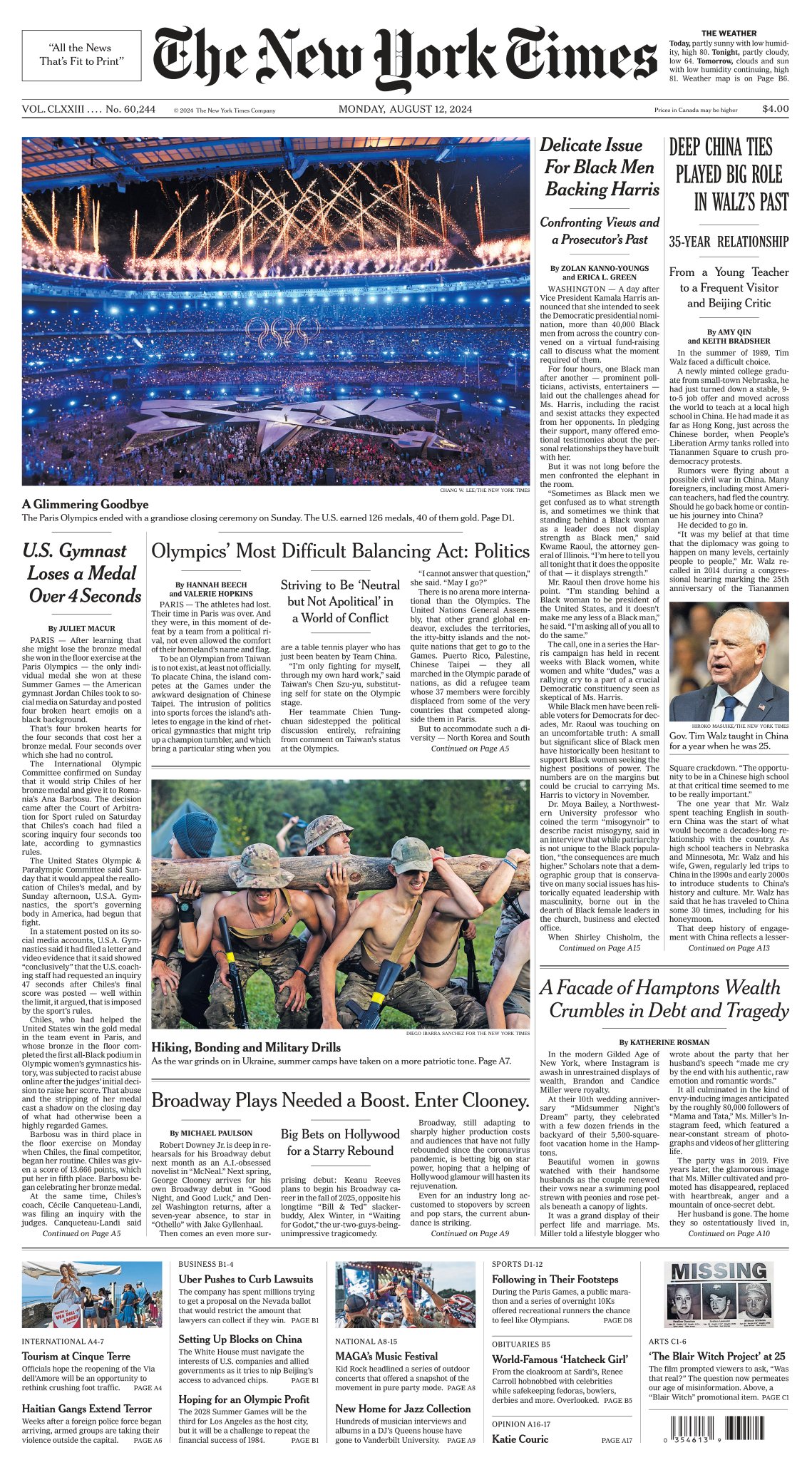
Mr. Walz, the Democrats’ vice-presidential nominee, taught in China and has visited the country around 30 times. But he has also been critical of the Chinese government’s human rights record.
“I’m standing behind a Black woman to be president of the United States, and it doesn’t make me any less of a Black man,” said the Illinois attorney general. “I’m asking all of you all to do the same.”
An inquiry by Chiles’s coach led judges to adjust her score and give her a medal. A court ruled the inquiry came too late. Now, the I.O.C. wants her bronze back.
The Olympics’ Toughest Act: Balancing Sports and Politics
The Olympics have long been a stage for political expression, for athletes who take the opportunity. Some do, while others choose to focus strictly on their sport.
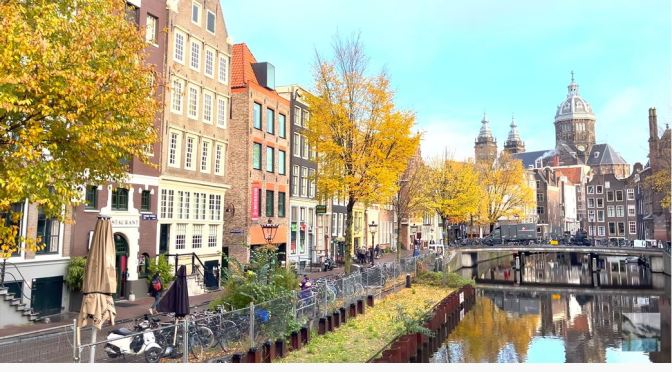
DW Travel (August 11, 2024): Loads of tourists go to Amsterdam. The real residents are frustrated with crowded streets, party noise and folks who come mainly to get drunk and/or stoned. We show you creative concepts the city and its people have come up with to master the situation.
Monocle on Sunday (August 11, 2024): Colette Davidson and Francis Collings join Emma Nelson to discuss the latest news from Paris for our last programme at Maison Allianz.
We also discuss the technology of sportswear with the co-founder of Fusalp, Sophie Lacoste, and the former head of programming at La Machine du Moulin Rouge talks music and sports at the Olympic Games. Plus: Monocle’s editorial director, Tyler Brûlé, checks in from Zürich, and we hear from our roving Olympics correspondent, Kieran Pender. Allianz is a Worldwide Insurance Partner of the Olympic and Paralympic Games.
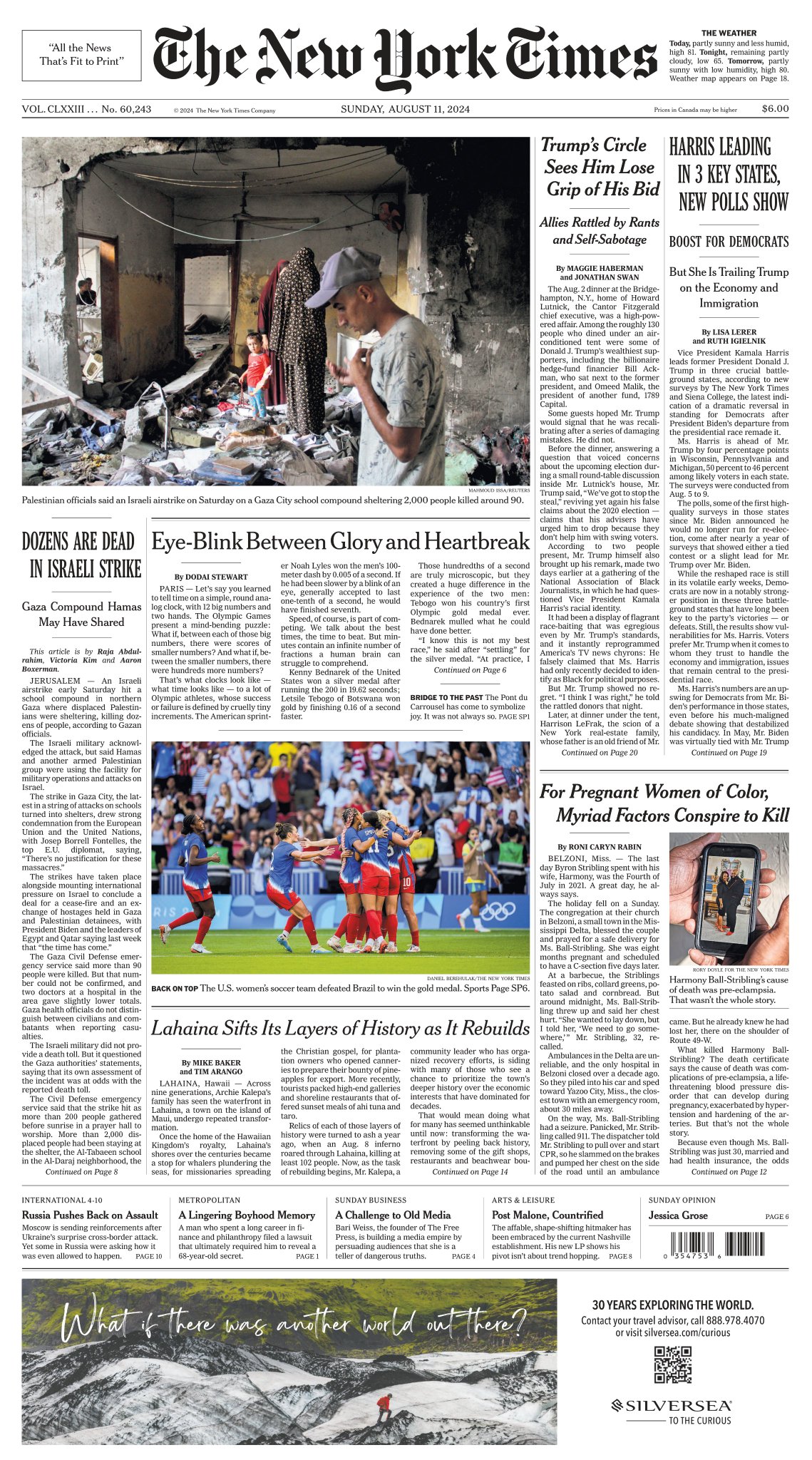
New surveys of Michigan, Wisconsin and Pennsylvania taken this week offer the latest indication of a dramatic reversal in standing for the Democratic Party since President Biden abandoned his re-election bid.
People around the former and would-be president see a candidate knocked off his bearings, disoriented by his new contest with Kamala Harris and unsure of how to take her on.





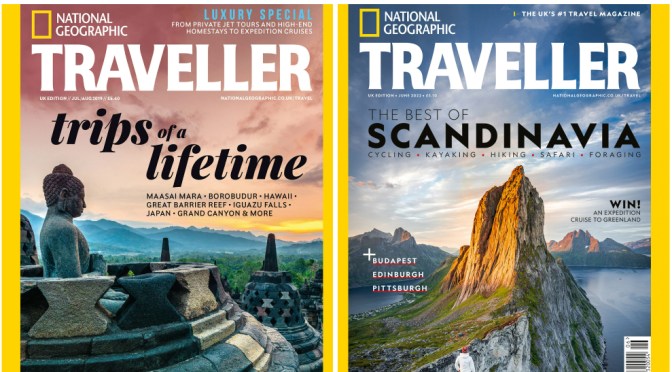
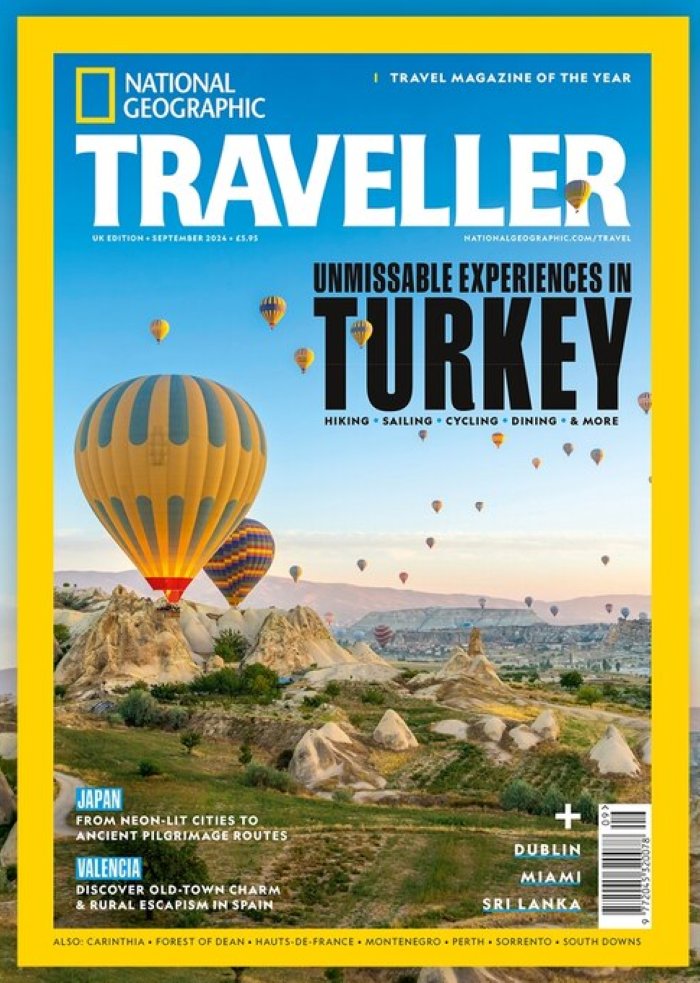
 National Geographic Traveller Magazine (June 11, 2024): The September 2024 issue


 The New Yorker (August 12, 2024):