Scoff at ritual if you like, but nations cannot survive on rationality alone
By Matthew Syed

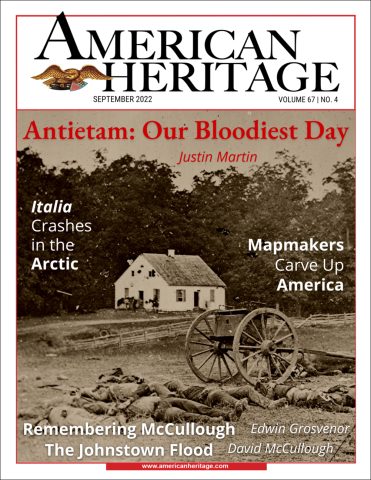
In September 1862 the South hoped to end the war by invading Maryland just before the mid-term elections. But its hopes were dashed after the bloodiest day in American history. By Justin Martin
In the hills above Johnstown, the old South Fork dam had failed. Down the Little Conemaugh came the torrent, sweeping away everything in its path. By David McCullough
He became the dean of American historians after learning his craft working for five years on the staff of American Heritage. By Edwin S. Grosvenor
By artfully illustrating the boundaries of colonial powers, mapmakers in the 1700s helped define what our New World would become. By Neal Asbury, Jean-Pierre Isbouts

Randall W. Forsyth
Ben Levisohn
Ben Levisohn
Jack Hough
Lisa Beilfuss
Al Root
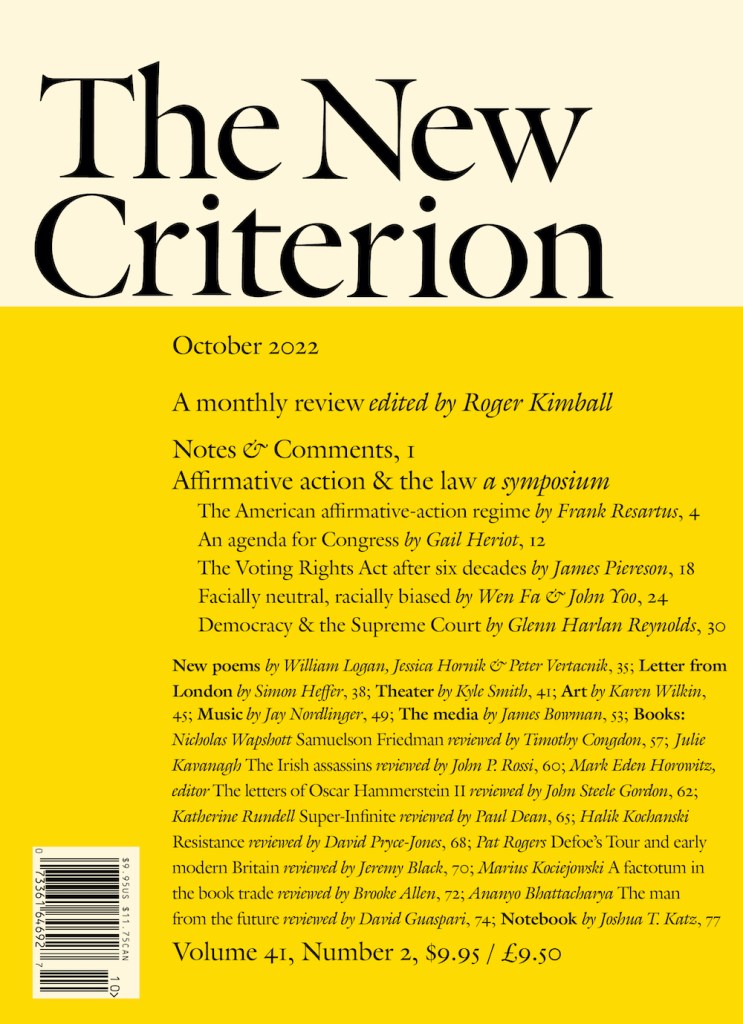
October 2022
Affirmative action & the law a symposium
The American affirmative-action regime by Frank Resartus
An agenda for Congress by Gail Heriot
The Voting Rights Act after six decades by James Piereson
Facially neutral, racially biased by Wen Fa & John Yoo
Democracy & the Supreme Court by Glenn Harlan Reynolds
New poems by William Logan, Jessica Hornik & Peter Vertacnik
Here is the truly amazing thing that few people besides Tommie Smith remember about his gold medal–winning 200-meter run in the 1968 Olympics: He broke the world record in just under 20 seconds on one good leg.
As we were editing our Sept. 15 issue in mid-August, news broke that author Salman Rushdie had been attacked at a lecture in western New York state. The story sent shock waves through the literary community—a stark reminder that violence can lurk in the corners of literary debate. Rushdie is the author of many works of fiction and nonfiction and is most celebrated for his 1981 novel, Midnight’s Children, a kaleidoscopic epic of Indian life after independence that won the Booker Prize as well as two subsequent honors, the Booker of Bookers in 1993 and the Best of the Booker in 2008.
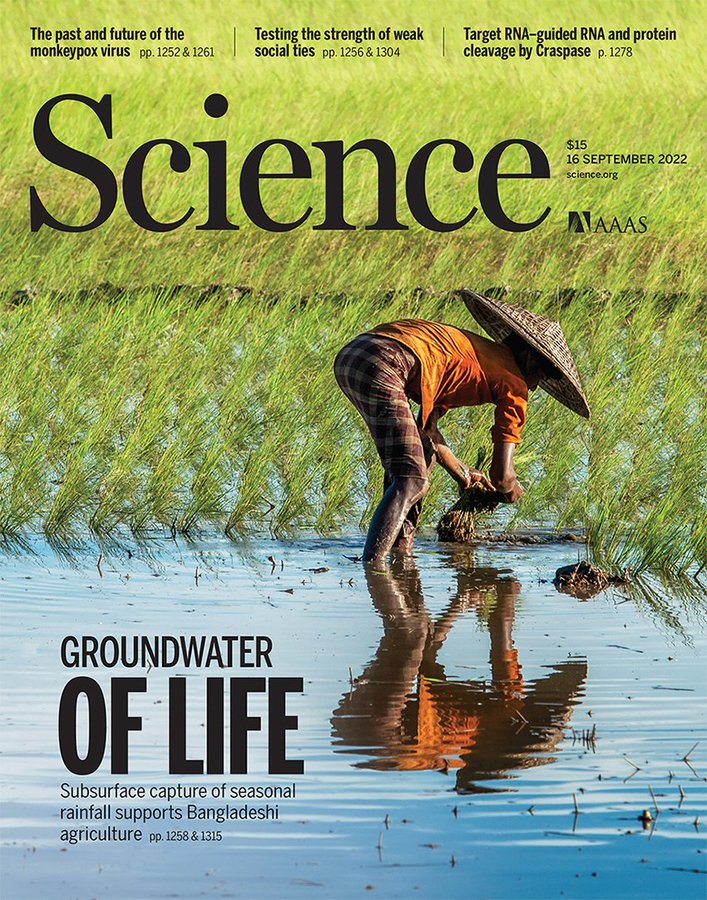
Seasonal monsoon rainfall replenishes groundwater reserves in the Bengal basin of Bangladesh thanks to the region’s seemingly counterintuitive intensive dry-season irrigation practices, a new Science study finds.
Supercomputing and accelerator centers struggle with surging gas and electricity prices
Initiative to explore whether coronavirus lingers in patients
Decades of complaints have gone unheeded by NSF and contractors managing operations, employees say
As New York state declares an emergency, experts are far more worried about a resurgence in low-income countries
Read that and more in this week’s issue: https://fcld.ly/dt1xr77
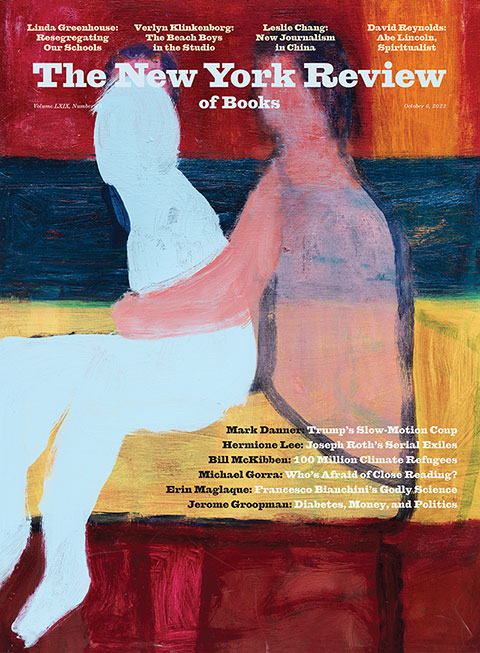
The October 6 issue is online now, with Bill McKibben on the climate refugee crisis, Hermione Lee on Joseph Roth’s violently mixed feelings, Linda Greenhouse on Justice Breyer’s most powerful dissent, Jerome Groopman on diabetes, Leslie T. Chang on narrative nonfiction in China, Ange Mlinko on H.D., David S. Reynolds on séances in the Lincoln White House, Verlyn Klinkenborg on the Beach Boys’ moment in the sun, Erin Maglaque on the pope’s astronomer, Mark Danner on the long, slow Trump coup, a poem by Vona Groarke, and much more.
Three books on the movement, of both humans and wildlife, spurred by climate change illustrate the magnitude of the challenge before us.
Nowhere Left to Go: How Climate Change Is Driving Species to the Ends of the Earth – by Benjamin von Brackel, translated from the German by Ayça Türkoğlu
Nomad Century: How Climate Migration Will Reshape Our World – by Gaia Vince
Border and Rule: Global Migration, Capitalism, and the Rise of Racist Nationalism – by Harsha Walia
Joseph Roth was unwavering in his passion for the vanished Austro-Hungarian Empire, which inspired his greatest novel, his hatred of nationalism, and his prophetic and courageous loathing for the Nazis. About everything else, as a new biography shows, he had violently mixed feelings.
Endless Flight: The Life of Joseph Roth – by Keiron Pim

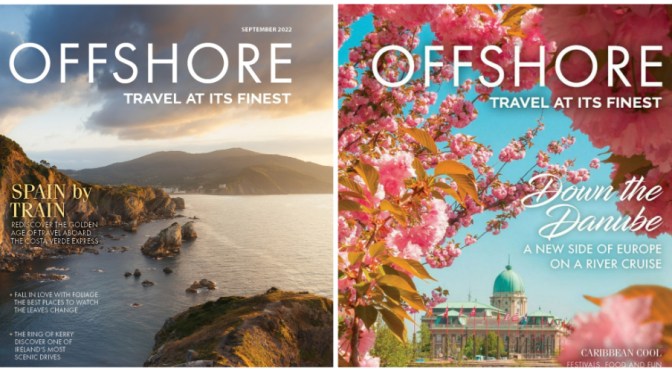
The Fall 2022 Issue of OFFSHORE is hot off the press and ready to inspire! Join our editors on a luxury journey across Spain aboard the Costa Verda Express. Plus, enjoy the scenic drive through one of Ireland’s most famed routes and more!
Come mid-September, Canadians everywhere recognize the telltale signs of the autumn season. Cooler nights call for cosy knits, a dockside Caesar gets swapped for a glass of Cabernet Sauvignon, and in bustling cities and quiet towns alike, tree leaves begin to change colour, and eventually fall. An abundance of external influences like warmer or cooler temperatures make “peak” autumn colour
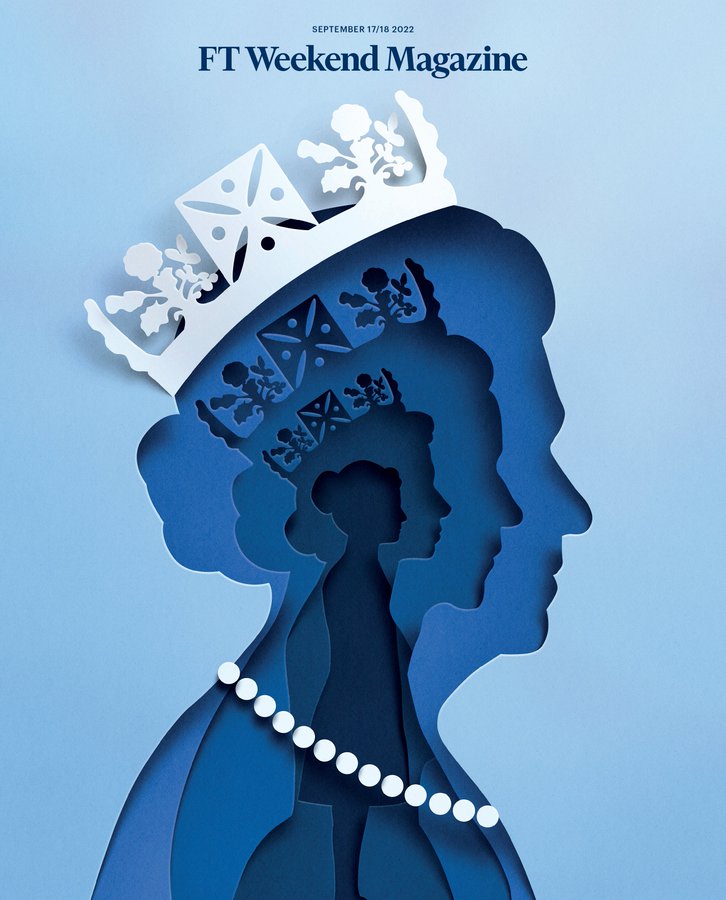
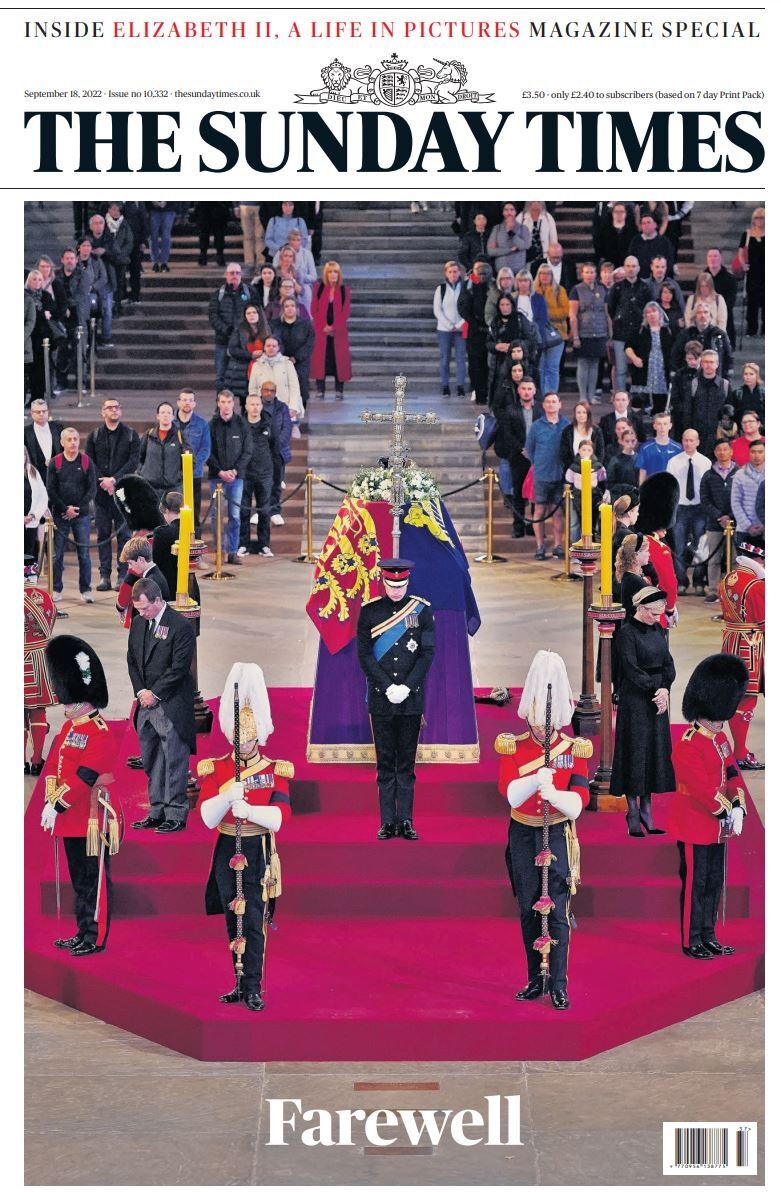
Scenes from the end of an Elizabethan age
Artwork by Eiko Ojala
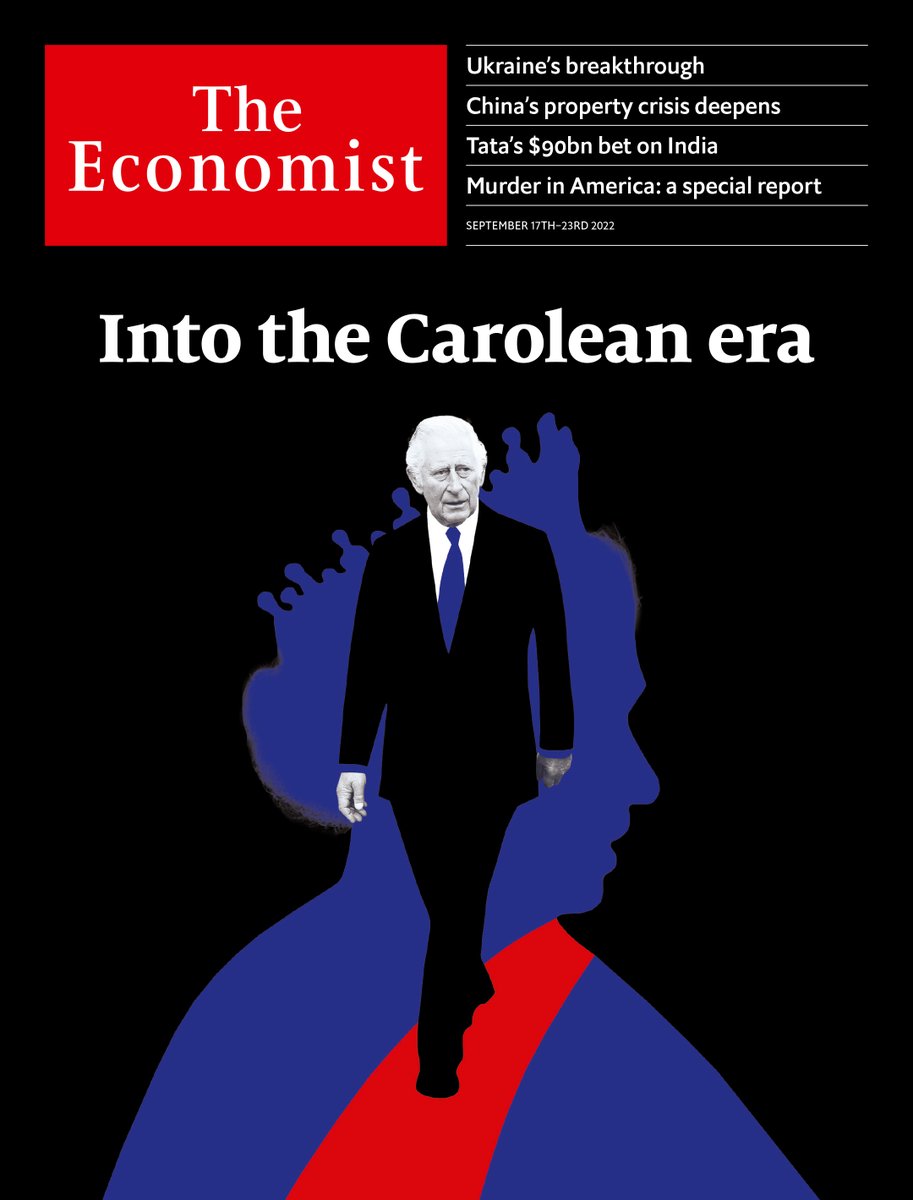
The monarchy is an anachronism, yet it thrived under Elizabeth II. That holds lessons for her successor and for democracies elsewhere