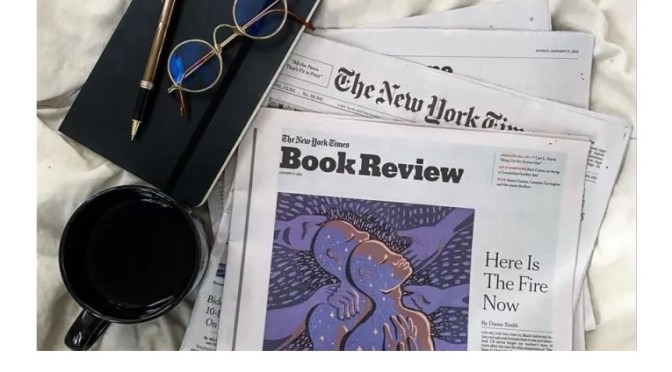


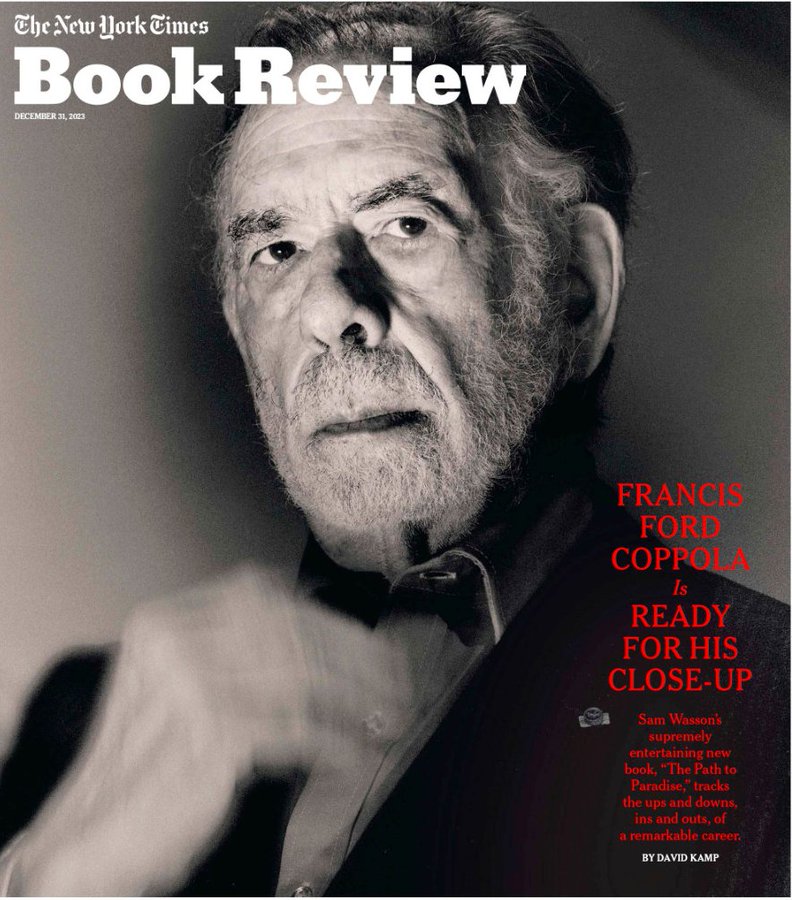

THE NEW YORK TIMES BOOK REVIEW (December 31, 2023): The latest issue features Francis Ford Coppola Is Ready For His Close-Up – Sam Wasson’s supremely entertaining new book, “The Path to Paradise”, tracks the ups and downs, ins and outs, of a remarkable career.

Elon Musk thinks a free market of ideas will self-correct. Liberals want to regulate it. Both are missing a deeper predicament.
When the billionaire entrepreneur Elon Musk sat down for his profanity-laced interview at The New York Times’s DealBook Summit in late November, his petulant dropping of F-bombs received a lot of attention. Less noticed but far more revealing was his evident disdain for a humble word beginning with the letter T. “You could not trust me,” Musk said, affecting an air of tough-guy indifference in his shearling-collared flight jacket and shiny black boots. “It is irrelevant. The rocket track record speaks for itself.”



by Dana Mattioli (April 23, 2024)
From veteran Amazon reporter for The Wall Street Journal, The Everything War is the first untold, devastating exposé of Amazon’s endless strategic greed, from destroying Main Street to remaking corporate power, in pursuit of total domination, by any means necessary.
In 2017, Lina Khan published a paper that accused Amazon of being a monopoly, having grown so large, and embedded in so many industries, it was akin to a modern-day Standard Oil. Unlike Rockefeller’s empire, however, Bezos’s company had grown voraciously without much scrutiny.
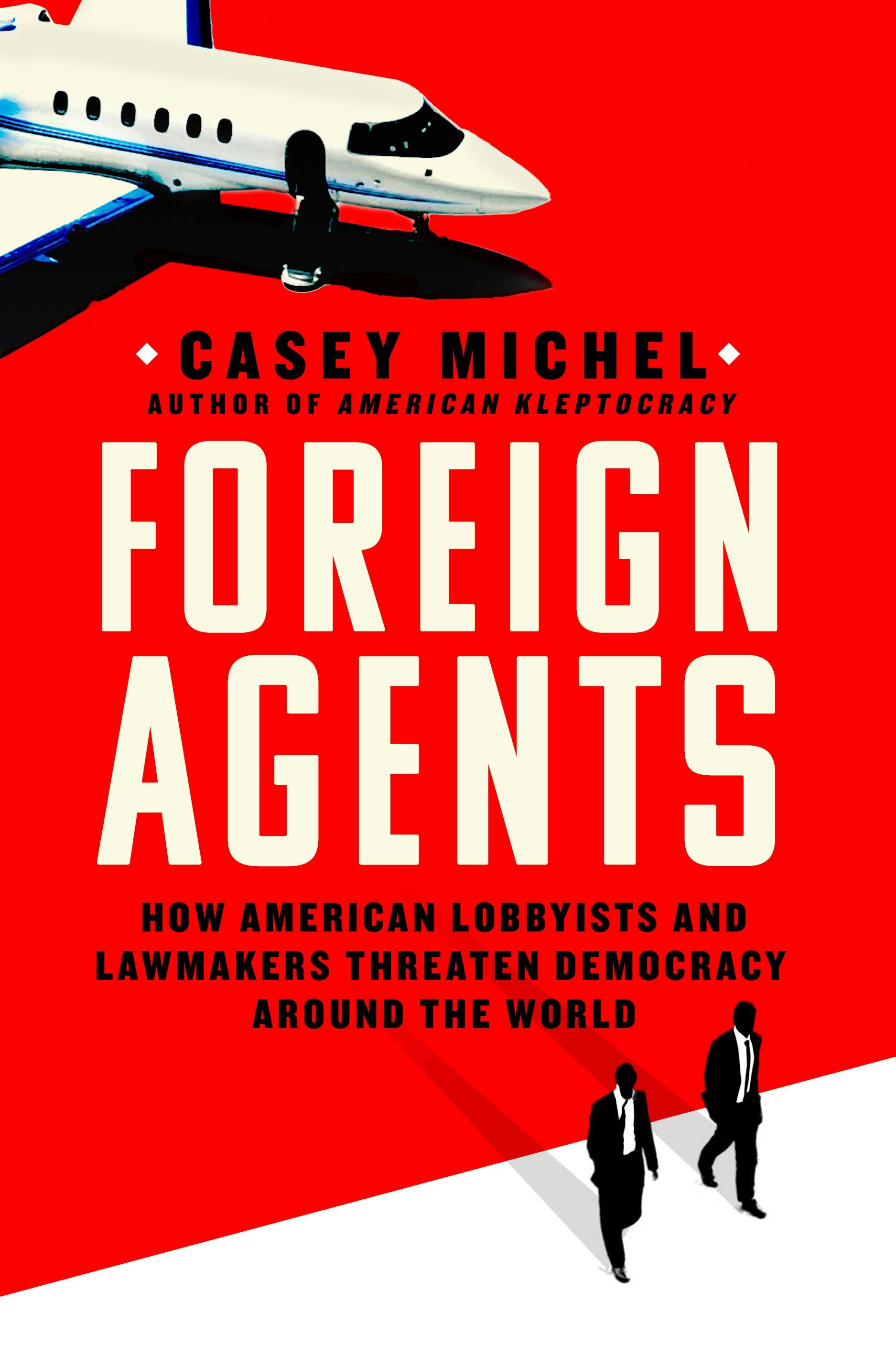
By Casey Michel (August 2024)
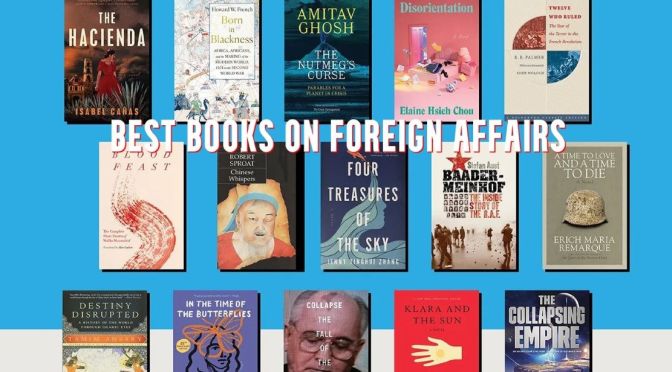
A stunning investigation and indictment of the elements in United States’ foreign lobbying industry and the threat they pose to democracy.
For years, one group of Americans has worked as foot-soldiers for the most authoritarian regimes around the planet. In the process, they’ve not only entrenched dictatorships and spread kleptocratic networks, but they’ve secretly guided U.S. policy without the rest of America even being aware. And now, journalist Casey Michel contends some of them have begun turning their sights on American democracy itself.
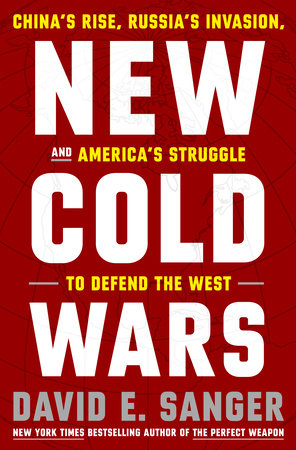
By David E. Sanger (April 2024)
Three decades after the end of the Cold War, the United States finds itself in a volatile rivalry against the other two great nuclear powers–Xi Jinping’s China and Vladimir Putin’s Russia–in a world far more complex and dangerous than that of a half century ago
.New Cold Wars–the latest from Pulitzer Prize-winning journalist and bestselling author of The Perfect Weapon, David E. Sanger–is a fast-paced account of America’s plunge into simultaneous confrontations against two very different adversaries. For years, the United States was confident that the newly-democratic Russia and increasingly wealthy China could be lured into a Western-led order that promised prosperity and relative peace–so long as they agreed to Washington’s terms. By the time America emerged from the age of terrorism, it was clear that this had been a fantasy.
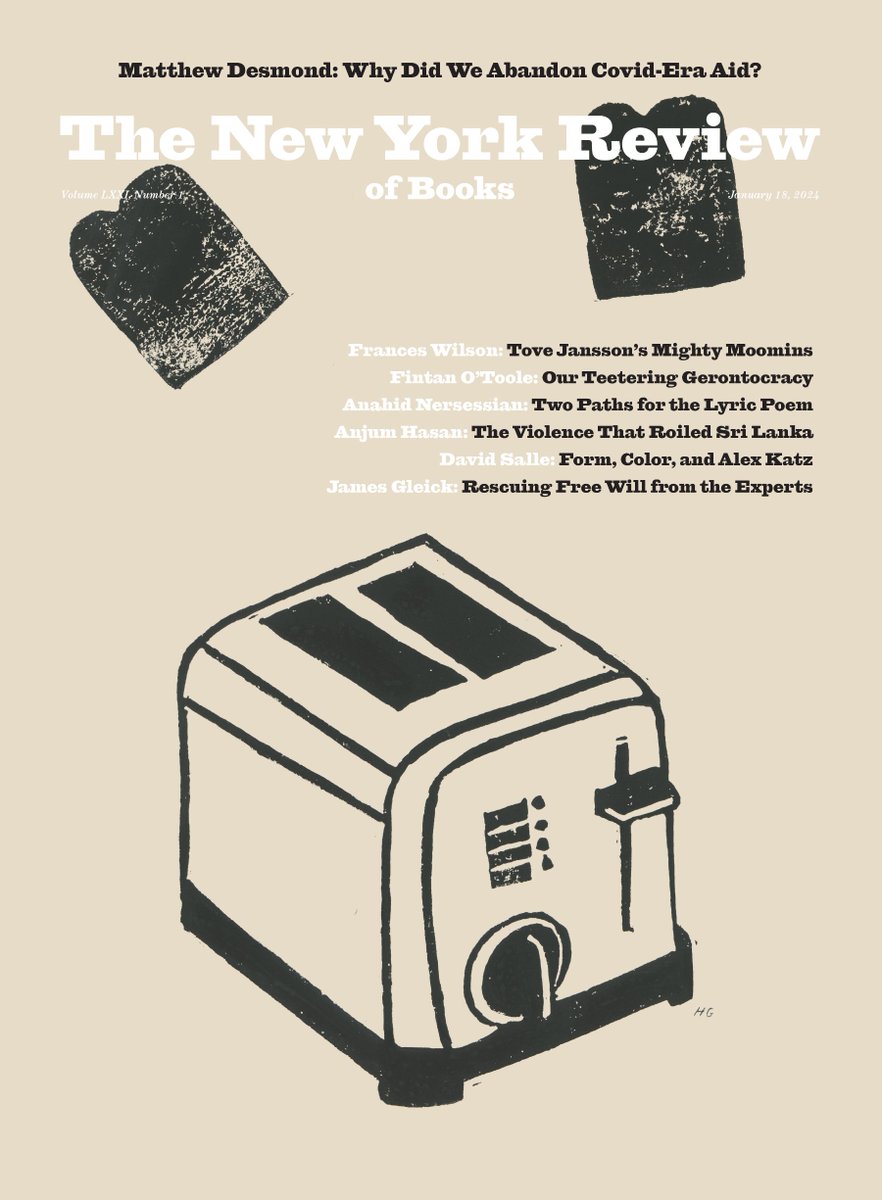


By James Gleick
In Free Agents, Kevin Mitchell makes a scientific case for the existence of human agency.
Free Agents: How Evolution Gave Us Free Will by Kevin J. Mitchell
Nobody was holding a gun to your head when you started reading this. You made a choice. Surely it felt that way, at least. A sense of agency—of control over our actions, of continual decision-making—is part of the experience of being human, moment by moment and day by day. True, we sometimes just drift, like robots or zombies, but at other times we gird our loins and exert our will. David Hume defined will nearly three centuries ago as “the internal impression we feel and are conscious of, when we knowingly give rise to any new motion of our body, or new perception of our mind.” The feeling was universal then and it’s universal now.
Why have Americans not fought to sustain the unprecedented Covid-era expansion of aid to children, renters, and gig workers?

Since then, the boat has inspired adventurers and scientists for generations, but the original ship was nearly lost. CBS News’ Jeff Glor reports on the person determined to give it new life.
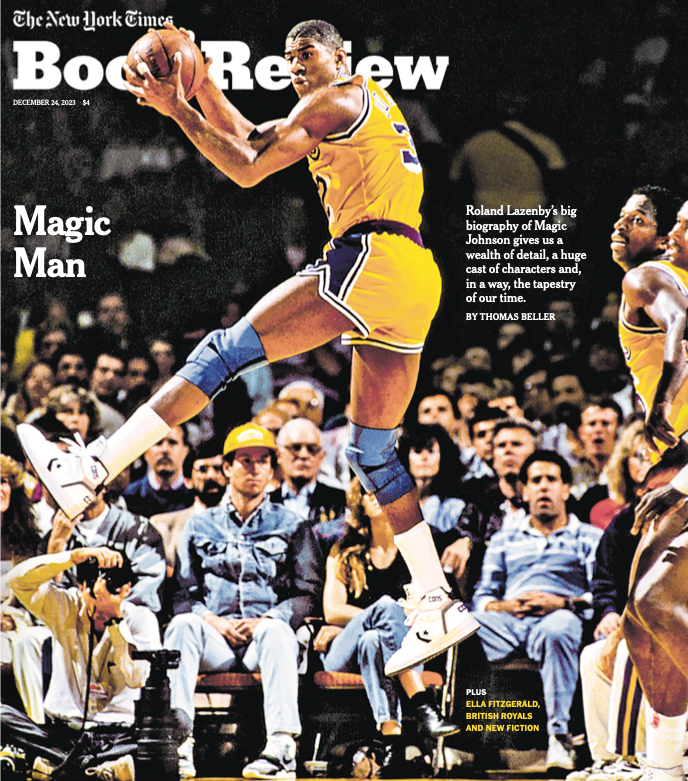
THE NEW YORK TIMES BOOK REVIEW (December 22, 2023): The latest issue features MAGIC: The Life of Earvin “Magic” Johnson, by Roland Lazenby; My Jewish Charlie Brown Christmas – The Peanuts special is the most overtly Christian TV holiday classic. So why does it speak to me so deeply?; Seven Fishes (Not Seven Dishes) for Christmas Eve – A modern Italian American take on the Feast of the Seven Fishes offers a streamlined menu any family can pull off….

Roland Lazenby’s big biography of Magic Johnson gives us a wealth of detail, a huge cast of characters and, in a way, the tapestry of our time.
By Thomas Beller
MAGIC: The Life of Earvin “Magic” Johnson, by Roland Lazenby
I once asked a portrait photographer why no one ever smiled in her pictures, and she replied, “A smile is a mask.”
I thought of this aphorism as I read Roland Lazenby’s 800-page biography of Magic Johnson. Sports Illustrated declared his smile to be one of the two greatest smiles of the 20th century. (The other was Louis Armstrong’s.) As Missy Fox, the daughter of his high school coach, says in the book, “That is the one thing he’s always had, that smile.”

The Peanuts special is the most overtly Christian TV holiday classic. So why does it speak to me so deeply?
“A Charlie Brown Christmas” was a one-of-a-kind wonder when it premiered in 1965 and remains so almost 60 years later. Unlike the other jingle-belled baubles that TV throws down the chimney each year, it is melancholy and meditative. The animation is minimalist and subdued, full of grays and wafting snowflakes. I could wrap myself in the Vince Guaraldi jazz score like a quilt.
And then there’s the speech.
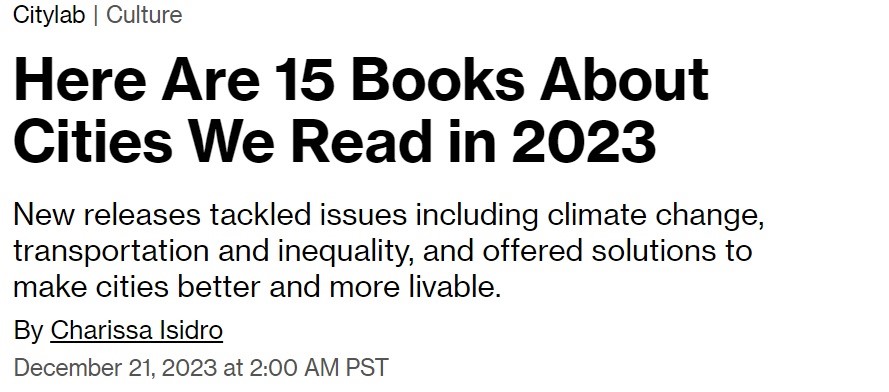
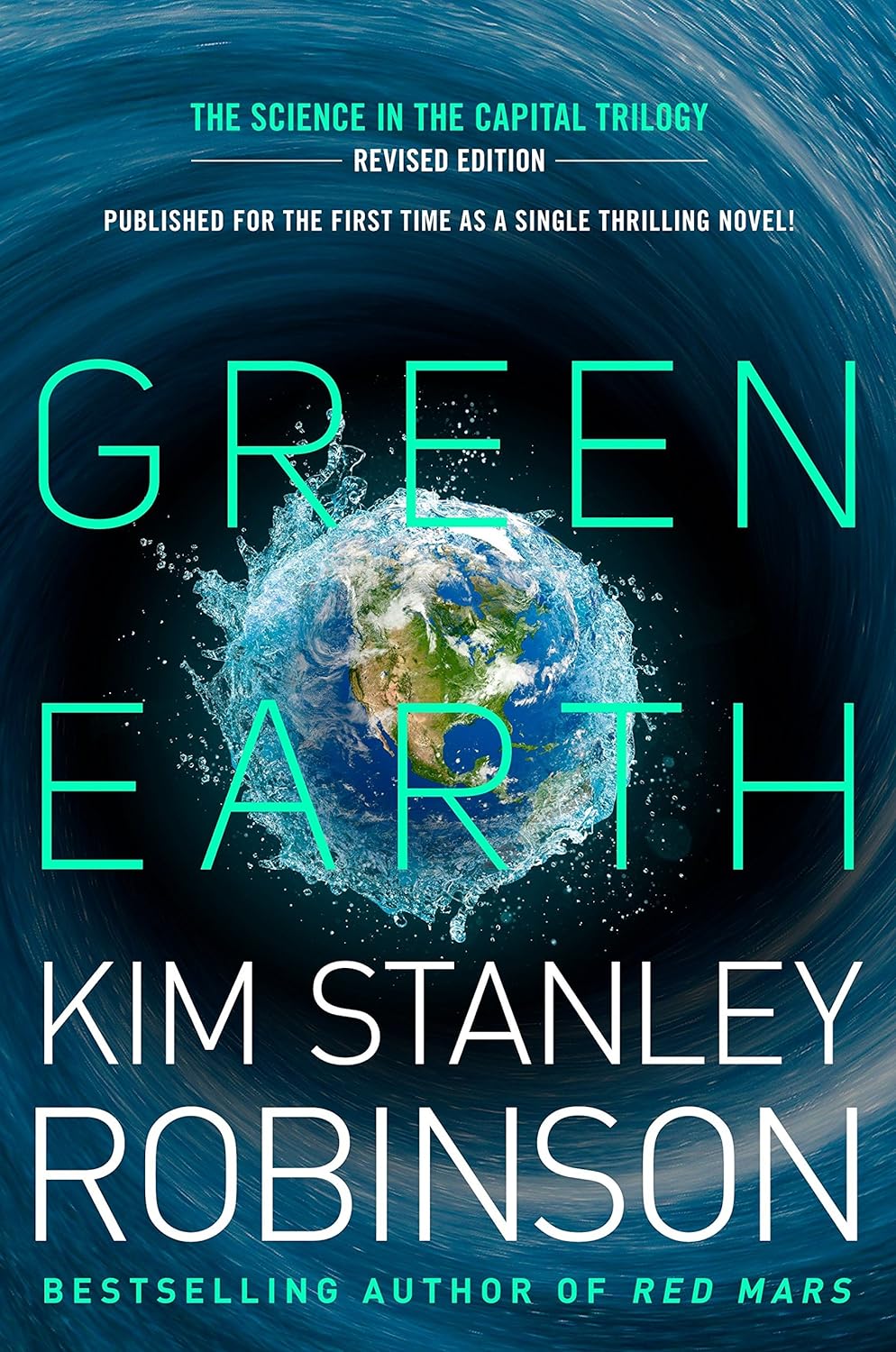
Kim Stanley Robinson is credited with helping create the genre of climate fiction, and his book Green Earth is yet another example of that. Set in Washington, DC, Robinson draws from his own personal experience living and working in the capital city. “What I like about DC is that there is kind of an electricity in the air, a human electricity,” Robinson told CityLab. “You walk the streets, you see people from all over the world. To go to the world capital and settle there is a statement. It’s an attempt to wrest control of one’s fate.” But where the fictional part of the story begins is in its characters — when he portrays federal bureaucrats as a positive force for good.
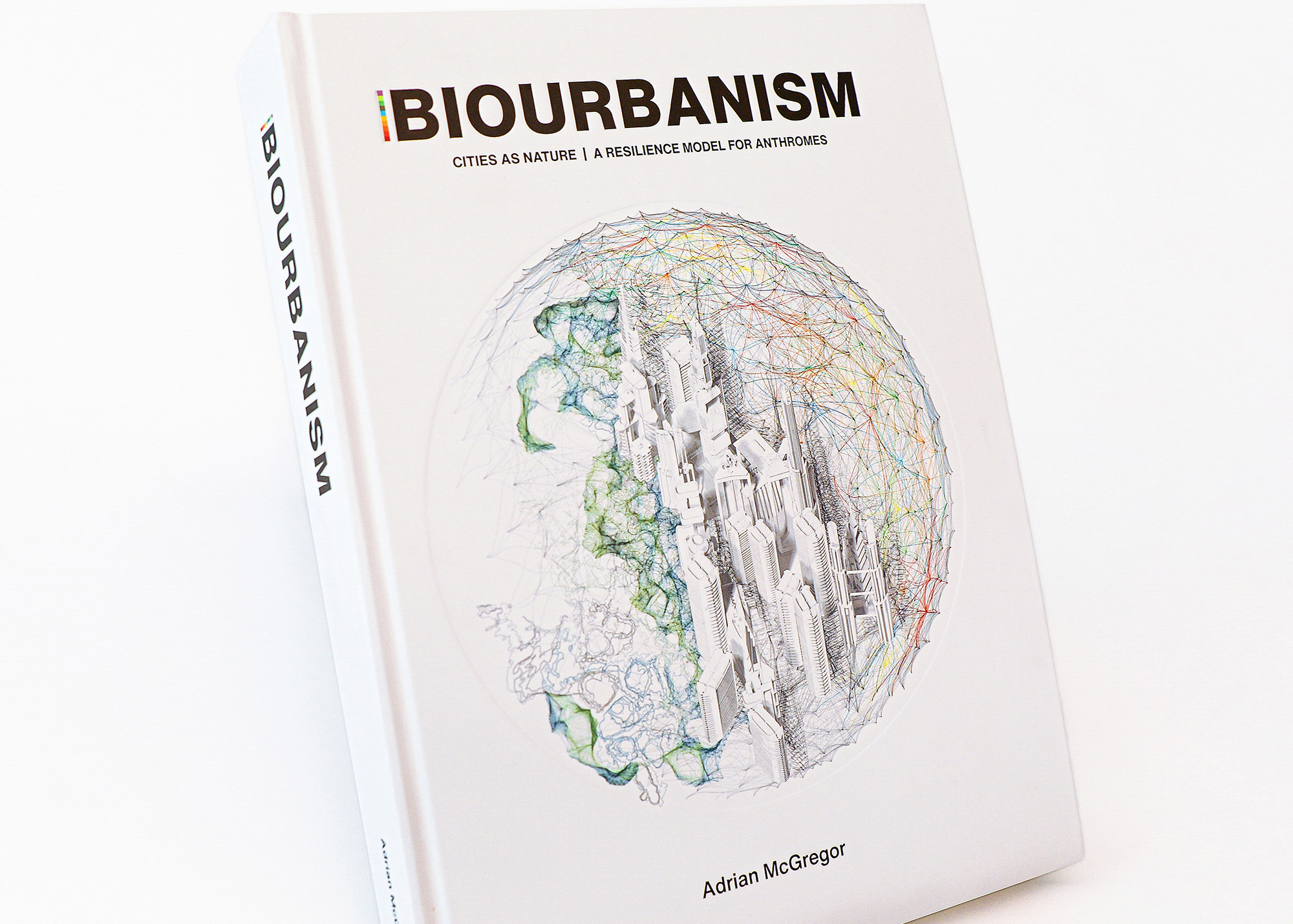
“If we can understand that cities are part of nature — even if they don’t really look like nature — that means we’ve got to change how we plan with them, how we work with them, and what our future looks like on spaceship Earth,” Adrian McGregor says. That’s the premise of Biourbanism: Cities as Nature, which looks at how effective urban planning and design can be achieved by viewing cities through a natural lens. McGregor sees cities as instrumental to lead the fight against the climate crisis. “There’s a policy gap between a federal government making decarbonization commitments and actual city policy,” he says. “They’re not really thinking clearly about where the emissions are coming from and therefore how to target them.”
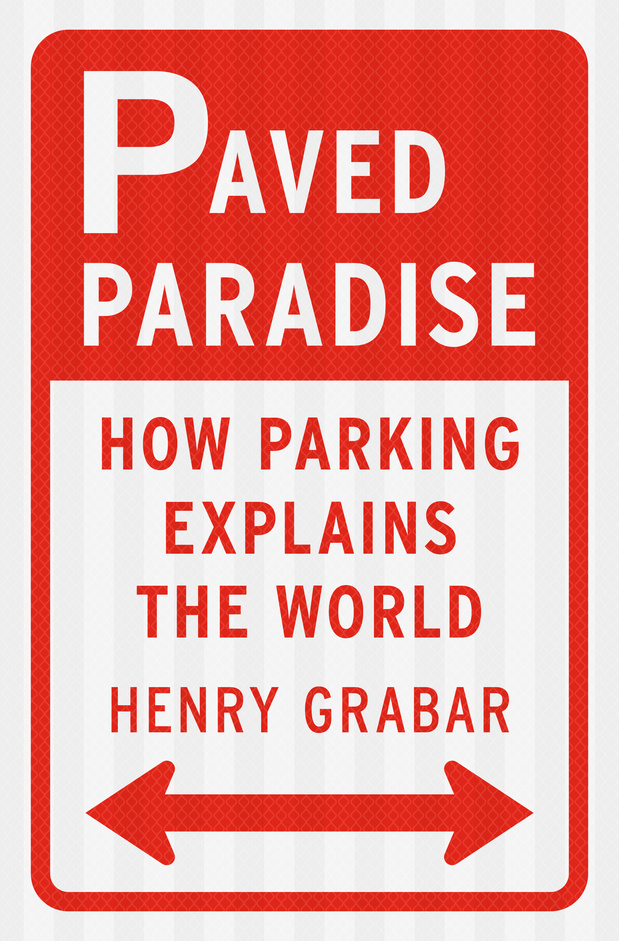
Journalist Henry Grabar has a pretty simple solution for better city living: parking reform. The act of parking, for so many, is an aggravating experience. “You’re more likely to be killed over a parking space than you are to be killed by a shark,” Grabar told CityLab. In his book Paved Paradise, he argues that the key to happier residents is transforming parking policies to make them smarter and more convenient, and by undoing some of the privileges given to drivers in order to help boost multimodal transportation. “It’s very hard to overrule the instinctive feeling that parking ought to be available when I want it, where I want it, for the price I want to pay, which is zero,” Grabar said. “A lot of smart parking policy deviates from those assumptions, like charging for coveted street parking in busy locations, or trying to encourage people to park in a garage a few blocks away and then walk a bit.”
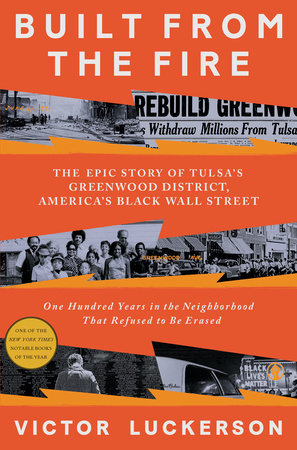
What happened after the Tulsa race massacre? It’s a question often lost when thinking about the violence that saw one of the wealthiest historic Black American neighborhoods burned down, and its residents killed or chased out. Built From the Fire seeks to tell the story of Greenwood from start to end, past the initial tragedy that wiped out Black Wall Street and the destructive urban renewal plans and physically divisive highways that followed. For Victor Luckerson, who moved to Tulsa and embedded himself in Greenwood’s community and archives in order to tell the story right, the policies and actions of local government officials did as much damage, if not more, to the neighborhood’s heritage than the initial conflagration. “I would say the massacre was more devastating in the short term, and urban renewal more devastating in the long term,” he says.

It’s not just heartbreak and bad grades that teens are facing — now, it’s gentrification too. Author Jade Adia found inspiration in the Los Angeles youth that came out to protest against police brutality after the murder of George Floyd, and wrote There Goes the Neighborhood with those young people in mind. Her debut young adult novel tells the story of 15-year-old Rhea, who devises a plan to save her best friend’s family from eviction, as gentrifiers threaten to upend her neighborhood in South Los Angeles. “I wanted to tackle the topic [of gentrification] in the most accessible way possible,” Adia told CityLab, “by putting young people and their experiences on the front lines of the conversation.”
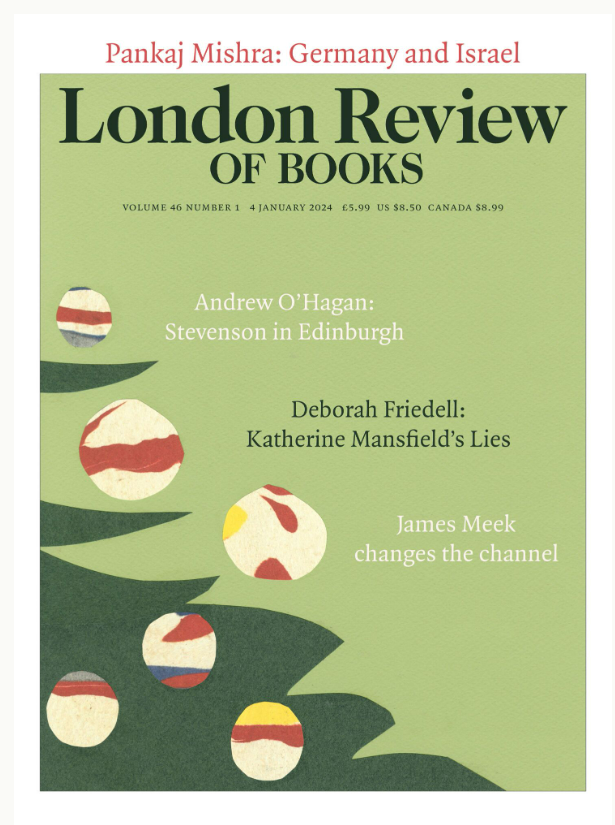

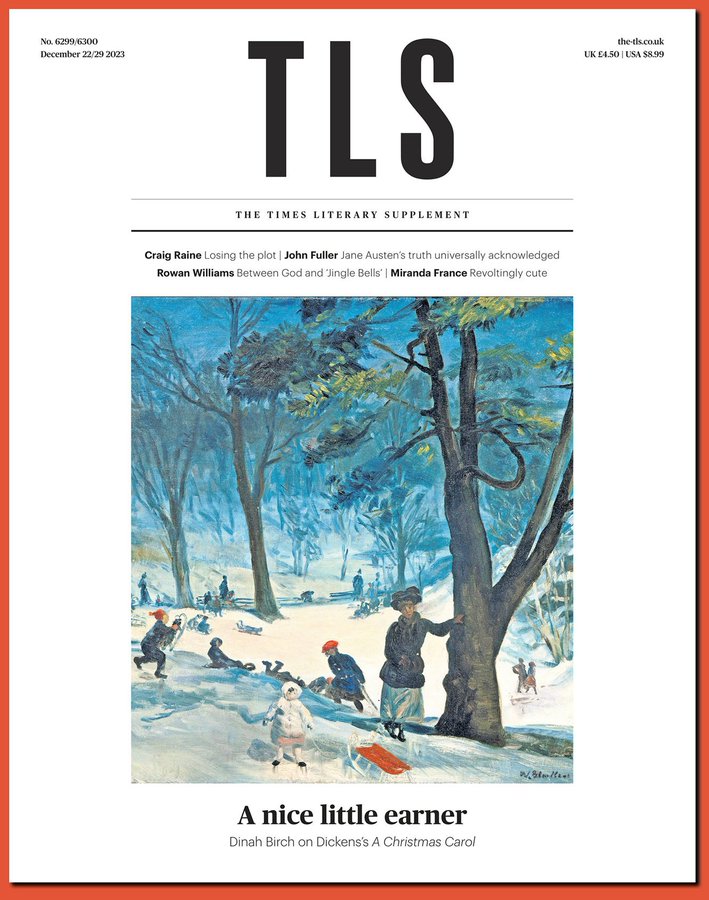
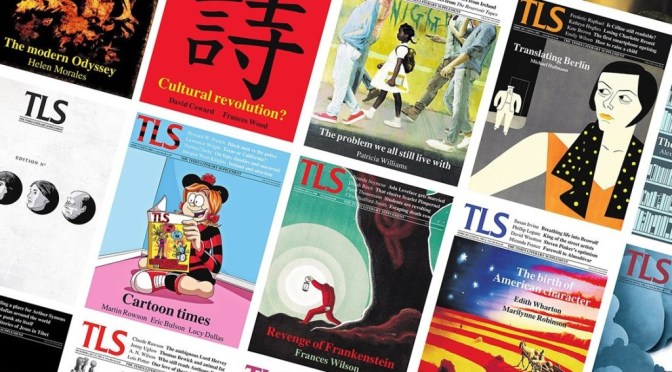
Times Literary Supplement (December 20, 2023): The latest issue features ‘A nice little earner’ – On Dicken’s Christmas Carol; Jane Austen’s Truth Universally Acknowledged; Between God and Jingle Bells; and ‘Revoltingly Cute’…


by Tara Zahra
In a timely and thought-provoking book, Zahra delves into the tumultuous years between World War I and World War II to argue that it was resistance to globalism and globalization that ended up weakening Europe’s then-fragile democracies, eventually contributing to the continent’s slide into dictatorship. READ THE REVIEW

by Gary Bass
Bass’s magnificent book, an account of the post–World War II Tokyo war-crimes trial, encourages a deeper understanding of the Asian experience of war and occupation. His work also sheds light on an enduring debate about liberalism and international politics, showing how the trial played formative roles both in postwar Asian politics and in the making of the postwar global human rights regime. READ THE REVIEW

by Martin Wolf
In a sophisticated and expansive account, Wolf, a veteran economics commentator, suggests that the root cause of today’s political and economic malaise lies in the breakdown of the relationship between capitalism and liberal democracy—and the failure of institutions to counter poverty and marginalization. READ THE REVIEW
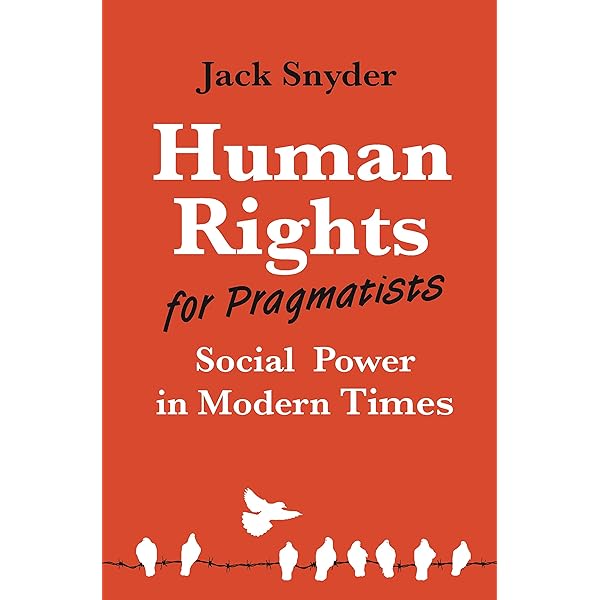
by Jack Snyder
In this masterful work, Snyder offers a bold explanation for why, how, and when societies make progress in expanding political rights and freedoms, arguing that breakthroughs occur when human rights serve the interests of a country’s dominant political coalition .READ THE REVIEW

by Peter Trubowitz and Brian Burgoon
Trubowitz and Burgoon argue in this groundbreaking study that the current backlash against the Western-led liberal international order can be traced to the 1990s, when the United States and European governments encouraged globalization at the expense of social and economic protections at home. READ THE REVIEW

by Charles S. Maier
Moving beyond the standard account of the twentieth century as an epic struggle between democracy and autocracy, Maier examines how a wide range of actors tried to harness industrial modernity in the pursuit of power and material interests, weaving an alternative narrative about the explosive interplay of economic privilege and political grievance. READ THE REVIEW