All posts by Intellicurious

News, Views and Reviews for the Intellectually Curious

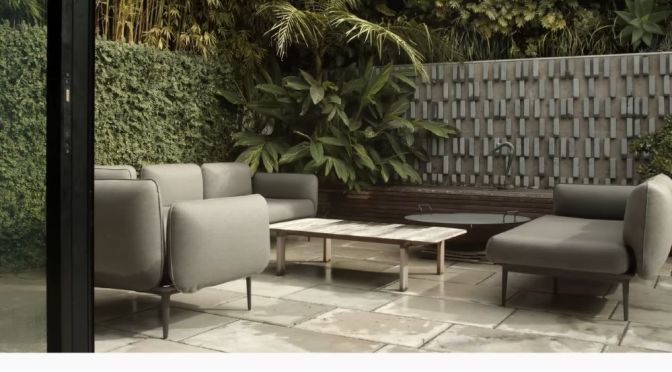
Tours: Harborview House In Manly Cove, Sydney

Combining old and new, Harbourview House is a modern home that retains elements of its federation-style heritage. Situated in Sydney’s Manly Cove – a location associated with swimming, boating and surfing – Harbourview House is inspired by both its scenic location and residing family.

Timeline: 00:00 – The Feeling of the Timeless and Modern Home 00:27 – Introduction to the Home 00:55 – Collaboration Between the Designers 01:35 – Walking Through the Home 02:49 – Material Choice 03:22 – Juxtaposition Between the Old and New 03:53 – The Kitchen 04:24 – The Master Bedroom and Ensuite 05:08 – Inspiration for the Home

The modern home is designed to express appreciation for natural beauty, reflecting the warm and energetic nature of the clients. Approaching the modern home, the pre-existing, federation-style structure remains as the primary façade whilst the new, minimalist architecture can be seen beyond. Internally, the master suite occupies a heritage element of the home, positioned at the front of the build and benefitting from broad bay windows. Further in, the open-plan lounge and kitchen lead to the landscaped garden. The material palette of Harbourview House makes for a texturally-dense experience that maintains a sense of refinement, aligning with the vision of a modern home. Hand-glazed tiles, honed marble and brass features are purposefully chosen for their aesthetically pleasing and organic natures. In the kitchen, a robust and non-porous surface on the rear bench is complemented by an elegant marble splashback and island. Working within a monochromatic colour palette, Penman Brown Interior Design crafts a modern home that enriches the senses through texture. Interacting with the work of Collins Pennington Architects and landscape by Jamie Durie, the design of Harbourview House embraces the difference between the old home and the new.
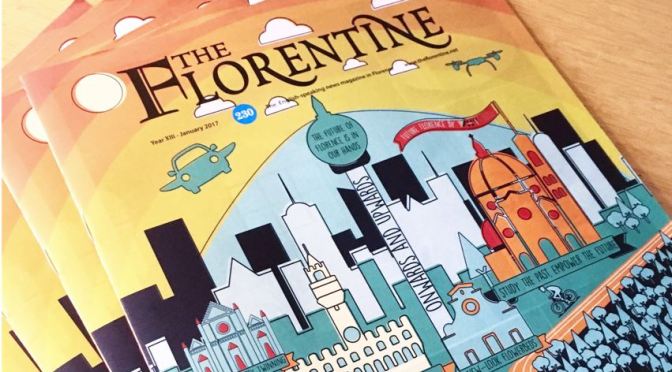
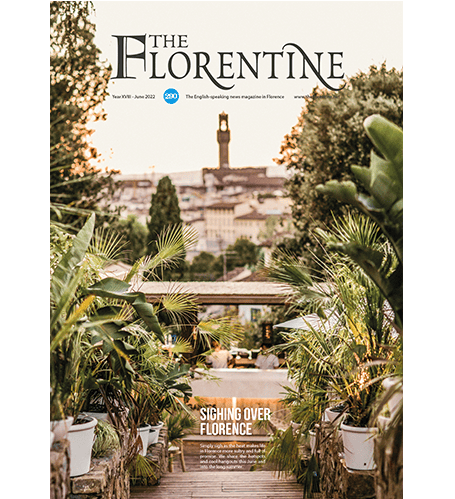
Preview: The Florentine Magazine – June 2022

Florentine Magazine, June 2022 – Sighing over Florence

There’s a garden on a hillside overlooking Florence where it feels like you’ve struck the pot of gold—and all the colours of the rainbow. This art park is the life’s work of Alice Esclapon de Villeneuve, who started to expand the family’s plot of land just off viale Michelangelo on the occasion of her daughter’s birth over 20 years ago. Finding the art park is something of a treasure hunt, however, hence the enlistment of bilingual guide Elena Fulceri for tours in Italian or English.

Cover Preview: Nature Magazine – May 26, 2022

Volume 605 Issue 7911

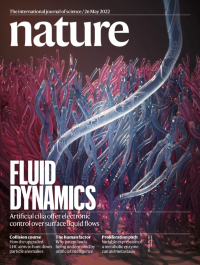
Fluid dynamics

Cilia are characterized by slender, threadlike projections, which are used by biological organisms to control fluid flows at the microscale. Attempts to mimic these structures and engineer cilia-like systems to have broad applications have proved problematic. In this week’s issue, Wei Wang and colleagues present electronically controlled artificial cilia that can be used to create flow patterns in near-surface liquids. The researchers use surface-mounted platinum strips, each about 50 micrometres long, 5 micrometres wide and 10 nanometres thick, and capped on one side with titanium. Applying an oscillating potential with an amplitude of around 1 volt to the cilia drives ions on to and off of the exposed platinum surface. These ions create asymmetric forces that generate a beating pattern that can be used to pump surface liquids in various flow geometries. The cover shows an artist’s impression of the artificial cilia in action.

Walking Tour: Giethoorn In The Netherlands (4K)

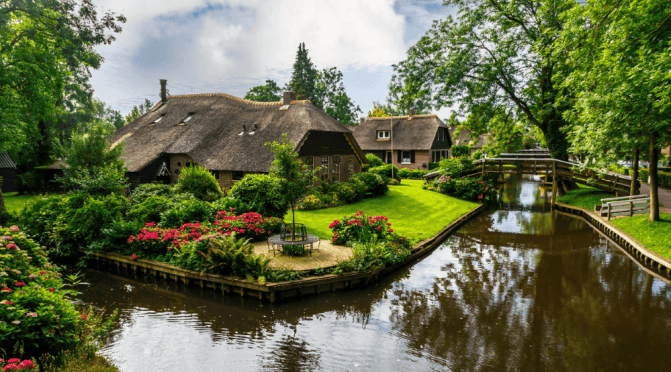
Giethoorn is located in National Park Weerribben-Wieden, is an idyllic village in Overijssel where countless thatched farms have been built on small peat islands connected by over 170 small wooden bridges.

– What is there to do in Giethoorn? In Giethoorn, a typically Dutch village in Overijssel, you can perfectly see how the Dutch love to live with and on the water. In an environment full of lakes, reed beds and forests lies this picturesque village with its many handsome farms with thatched roofs and characteristic wooden bridges.

– Giethoorn was established as a settlement of peat harvesters. Peat cutting created ponds and lakes, and people built houses on the islands between them. As a result, access was only possible by bridge or using traditional Giethoorn boats, so-called punters – narrow boats pushed along using a long pole by a punteraar.

Reviews: ‘The Week In Art’

Friday May 27, 2022: Are stolen Cambodian statues hidden in the world’s great public collections?

We discuss Cambodia’s looted heritage with Celia Hatton, Asia Pacific editor and presenter at the BBC World Service, whose documentary for BBC TV and radio Cambodia: Returning the Gods exposes the connections between looters, smugglers and, allegedly, some of the world’s most famous encyclopaedic museums. Plus, the dark truth behind the art and antiques assembled by the Marcos family in the Philippines as they return to power.

We talk to the Filipino artist Pio Abad—who’s made art about Ferdinand and Imelda Marcos and their collections for more than a decade—about Bongbong Marcos’s presidential election victory in the Philippines and what that means for the country and the art and antiquities seized by its government after the Marcoses were deposed in the 1980s. And in this episode’s Work of the Week, we discuss a sculpture by Ruth Asawa—Untitled (S.266, Hanging Seven-Lobed, Multi-Layered Interlocking Continuous Form within a Form) (1961)—a highlight of a new exhibition at Modern Art Oxford in the UK, with Emma Ridgway, the show’s co-curator. Remarkably, the solo exhibition is the first in a European institution dedicated to the Japanese-American artist.

You can read Celia’s report on Cambodian antiquities online at bbc.co.uk. Cambodia: Returning the Gods (radio version) is on the BBC website and the BBC Sounds app—under The Documentary Podcast stream for the World Service and the Crossing Continents podcast stream in the UK—and on other podcast platforms.

Cambodia: Returning the Gods (television version) is on iPlayer in the UK and will be shown again on the BBC World news channel, broadcast date tbc—check listings.Pio Abad: Fear of Freedom Makes Us See Ghosts, Ateneo Art Gallery, Ateneo de Manila University, until 30 July, pioabad.com.

Ruth Asawa: Citizen of the Universe, Modern Art Oxford, UK, 28 May-21 August; Stavanger Art Museum, Norway, 1 October-22 January 2023.

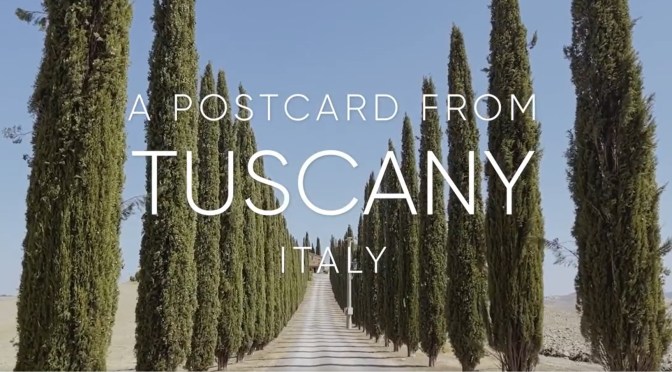
Travel: A Postcard From Tuscany (Condé Nast)

From cypress tree tunnels to medieval villages and ancient vineyards, Tuscany is home to some of the most beautiful scenes in Italy.

Tuscany is a region in central Italy. Its capital, Florence, is home to some of the world’s most recognizable Renaissance art and architecture, including Michelangelo’s “David” statue, Botticelli’s works in the Uffizi Gallery and the Duomo basilica. Its diverse natural landscape encompasses the rugged Apennine Mountains, the island of Elba’s beaches on the Tyrrhenian Sea and Chianti’s olive groves and vineyards.

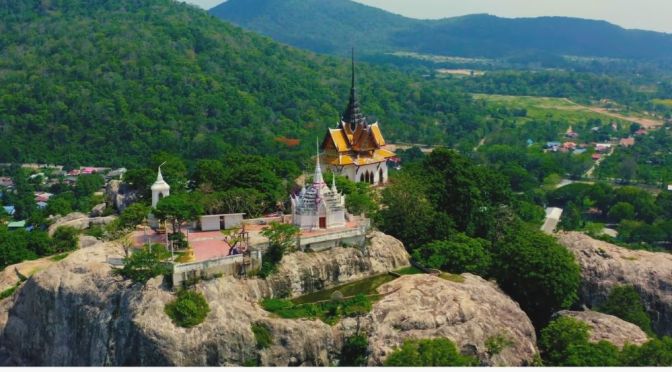
Aerial Travel: Wat Phra Phutthabat In Thailand

Wat Phra Phutthabat  is a Buddhist temple in Saraburi, Thailand. It is among the oldest Buddhist temples in Thailand. Its name means “temple of Buddha’s footprint“, because it contains a natural depression believed to be a footprint of the Buddha.

Phra Phutthabat temple was built in 1624[1] (B.E. 2168) by King  Songtham  of Ayutthaya, after a hunter named Pram Bun found a large depression in the stone, resembling a huge footprint, near Suwan Banpot Hill or Satchaphanthakhiri Hill. The hunter reported his find to the king, who ordered workers to build a temporary mondop to cover the footprint; this later became the temple.

Science & Medicine: What Are Risks Of Monkeypox?

The sudden surge of monkeypox cases outside Africa has alarmed public health authorities around the world. In Europe and North America it’s the first time community transmission has been recorded among people with no links to west or central Africa. So what is happening?

Ian Sample talks to virologist Oyewale Tomori about why monkeypox is flaring up, whether we should fear it, and what we can learn from countries such as Nigeria and the Democratic Republic of the Congo, which have been tackling this virus for decades.