

- COVER STORIES

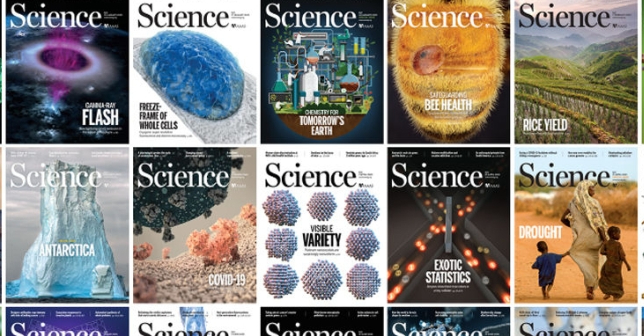
The Casarabe people lived in southwest Amazonia around AD 500–1400, but understanding of this culture has been limited because the archaeological remains are covered in dense forest. In this week’s issue, Heiko Prümers and his colleagues reveal the discovery of new Casarabe settlements in the Bolivian Amazon. The researchers used lidar to scan the forest, revealing 2 large settlements (each covering more than 100 hectares) and 24 smaller sites, 15 of which had previously been known to exist.

The cover image shows Cotoca, one of the two large settlements, in which earthen mounds (one more than 20 metres high) and long causeways can clearly be seen. The team suggests that these results are the first evidence of agrarian-based, low-density urbanism in western Amazonia. They conclude that the region was not as sparsely populated in pre-Hispanic times as was previously thought.
Cover image: Heiko Prümers/DAI.
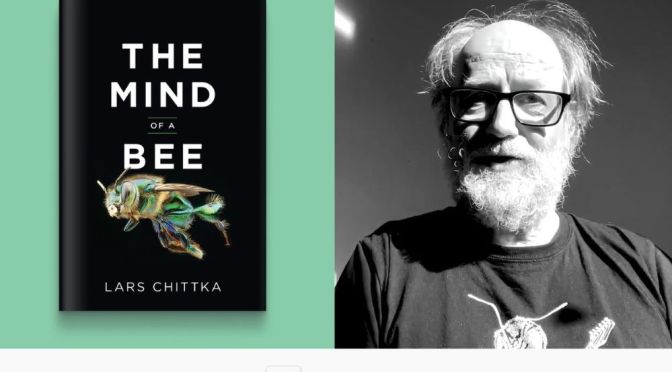
Most of us are aware of the hive mind—the power of bees as an amazing collective. But do we know how uniquely intelligent bees are as individuals? In The Mind of a Bee, Lars Chittka draws from decades of research, including his own pioneering work, to argue that bees have remarkable cognitive abilities.
He shows that they are profoundly smart, have distinct personalities, can recognize flowers and human faces, exhibit basic emotions, count, use simple tools, solve problems, and learn by observing others. They may even possess consciousness. Taking readers deep into the sensory world of bees, Chittka illustrates how bee brains are unparalleled in the animal kingdom in terms of how much sophisticated material is packed into their tiny nervous systems.
He looks at their innate behaviors and the ways their evolution as foragers may have contributed to their keen spatial memory. Chittka also examines the psychological differences between bees and the ethical dilemmas that arise in conservation and laboratory settings because bees feel and think. Throughout, he touches on the fascinating history behind the study of bee behavior. Exploring an insect whose sensory experiences rival those of humans, The Mind of a Bee reveals the singular abilities of some of the world’s most incredible creatures.
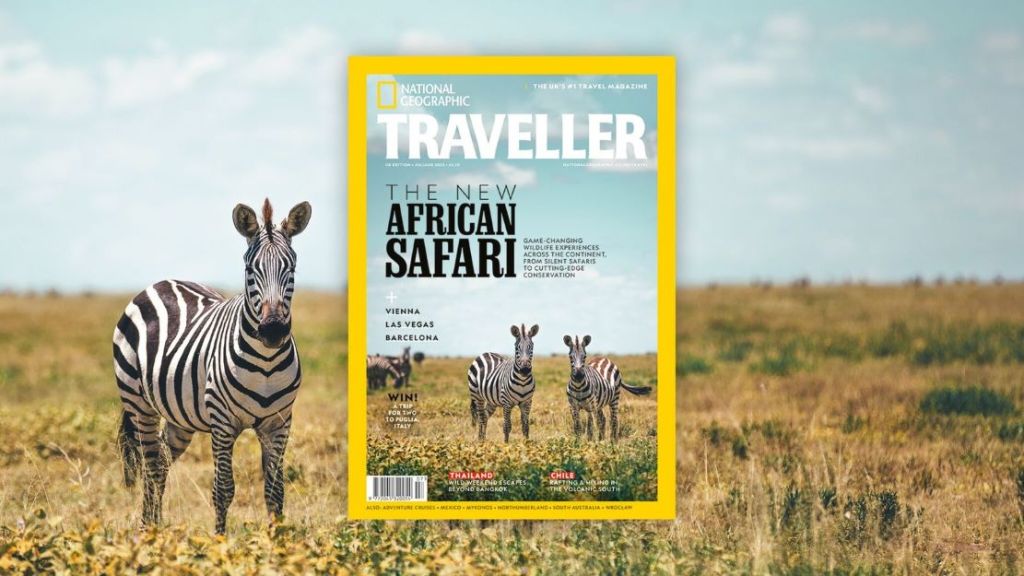
Travel with pride to these inclusive destinations
Travel with pride to these inclusive destinations
READ Reviving Europe’s ancient ‘superhighway’
Reviving Europe’s ancient ‘superhighway’
READ The earth’s oldest trees live in this U.S. park
The earth’s oldest trees live in this U.S. park
READ For a taste of the Caribbean just go to Brooklyn
For a taste of the Caribbean just go to Brooklyn
READ Take a craft-filled road trip to the mountains of North Carolina
London Review of Books, June 9, 2022 –
The new issue is now online, featuring Jonathan Meades’s #platinumjubilee tribute,
@mmschwartz on the Bataclan trial,
@MJCarter10 on Desert Island Discs, Colin Burrow on Stanley Cavell, Jo Applin on Judy Chicago and a cover by Naomi Frears: http://lrb.co.uk
Things don’t usually fall apart completely in Britain and the centre holds. In the mid-seventeenth century, however, civil war raged across the islands. Military rule in England was followed by the conquest of Ireland and Scotland, paving the way for the Union. Michael Braddick, reviewing Ian Gentles’s The New Model Army, thinks there are lessons here for our “dysfunctional” democracy. This week the TLS features several meditations on times of civil war.
By Martin Ivens
Science Magazine – June 3, 2022: A 10th-century Maya structure at Chichen Itza, Mexico, is often called the Observatory for its expansive view of the sky and a design seemingly guided by key positions of the Sun, Moon, and planets. The historic Maya anchored their calendars and rituals to celestial events, and their astronomical knowledge is now coming into sharper focus thanks to new analyses of archaeological relics and insights from today’s Maya.

President Biden urged lawmakers to stop the sale of assault-style weapons, expand universal background checks and pass “red flag” laws after last month’s massacres in Texas and New York.
Some 3 million people live in French overseas territories – islands like Guadeloupe, Martinique, Polynesia, New Caledonia, Réunion, and Saint Pierre and Miquelon, remnants of France’s colonial empire. We explore these distant lands that are regularly pushing for independence. Also in this issue, meet the French community of Hawaii, read about Alma de Bretteville Spreckels – the “great-grandmother of San Francisco” and a friend of Rodin – and discover our interview with U.S. historian Stephen Bourque on the “the Allied war against France” during the Normandy landings. Lastly, we bring you the story of Disneyland Paris, which revived fears of Americanization in France when it opened 30 years ago.


 Intellicurious