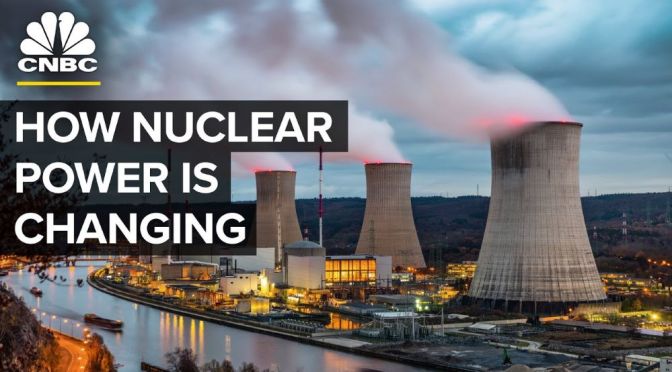
Analysis: How Nuclear Power Is Changing (CNBC)

For some, nuclear power may conjure images of mushroom clouds or bring back memories of disturbing nuclear disasters like Chernobyle and Fukushima. But despite public fear around nuclear power, the technology has proved to be an emission-free, reliable way to produce large amounts of electricity on a small footprint.

As a result, sentiments about the technology are beginning to change. Both the U.S. government and private companies including X Energy, NuScale and, Bill Gates-backed, TerraPower are pouring money into developing, what they say will be smaller, safer nuclear reactors. CNBC visited Idaho National Laboratory to see the Marvel microreactor firsthand and learn what such developments could mean for the future of nuclear power.

After humankind discovered nuclear fission, the first applied use was the atomic bomb. The study of fission for electricity production came later. In December 1953, President Dwight D. Eisenhower gave his fateful Atoms for Peace speech, an impassioned plea to reconstitute the power of the atomic bombs dropped in World War II for a more noble cause.

“Against the dark background of the atomic bomb, the United States does not wish merely to present strength, but also the desire and the hope for peace,” Eisenhower told the United Nations. Almost 70 years later, the tension between those end uses still underlies the space today. From the 1950s through the 1970s, the United States dramatically increased its nuclear energy generation.

But the Three Mile Island accident in 1979 and Chornobyl meltdown in 1986 changed the landscape, spurring fear that nuclear energy could not be controlled safely. Since the 1980s, nuclear energy capacity and generation in the U.S. has largely stayed flat. Today, the country’s fleet of nuclear power reactors produces only 19% of the country’s electricity, according to the government’s Energy Information Administration.

In more recent times, the Fukushima Daiichi accident in Japan in 2011 — and earlier this year the capture of nuclear power plants in Ukraine by invading Russian forces — have added to public concerns. But despite its fraught origin story and the psychological effect of high-profile accidents, nuclear energy is getting a second look. That’s largely because nuclear energy is clean energy, releasing no greenhouse gasses.

Meanwhile, the world is seeing more of the effects of climate change, including rising global temperatures, increased pollution, wildfires, and more intense and deadly storms. “We need to change course — now — and end our senseless and suicidal war against nature,” Antonio Guterres, the secretary-general of the United Nations, said in Stockholm on Thursday. “There is one thing that threatens all our progress. The climate crisis. Unless we act now, we will not have a livable planet,” Guterres said. “Scientists recently reported that there is a 50-50 chance that we could temporarily breach the Paris Agreement limit of 1.5 degrees Celsius in the next five years.”
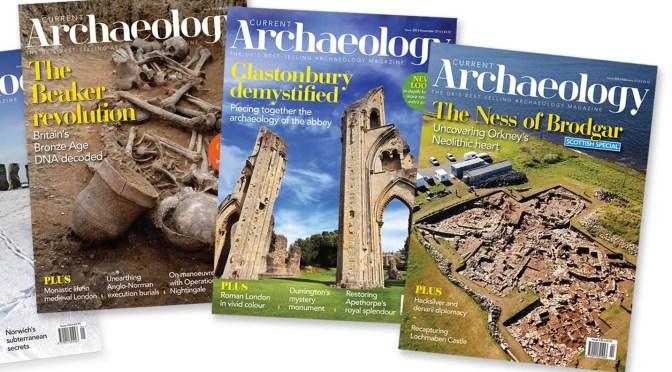
Cover Preview: Current Archaeology – July 2022

This year, events are taking place across the country to celebrate the 1,900th anniversary of the construction of Hadrian’s Wall (the eagle-eyed among you may have spotted that this most-famous Roman landmark has also featured, in some capacity, in every issue of CA since January).

This month our cover story considers whether the Romans too may have commemorated the Wall’s construction – and we also have an opinion piece asking how sure we can be about its date.

From monumental stonework to modern quarrying, we next head to Bedfordshire to learn about archaeological investigations at Black Cat Quarry, carried out before extraction works began on the site. There, excavations have revealed an impressive multi-period landscape, including Neolithic and Bronze Age settlements, a significant Roman farmstead, and what may be the remains of a Viking ‘fort’ referred to in the Anglo-Saxon Chronicle.

News: Johnson Survives Confidence Vote, Putin’s Threats, Milan Design

Boris Johnson survives a confidence vote – but at what price? Plus: Putin’s threats over Western weapon deliveries to Ukraine, a flick through today’s papers and a special update from the 2022 edition of Salone del Mobile.

Preview: The New Yorker Magazine – June 13, 2022

South Carolina Views: Greater Myrtle Beach

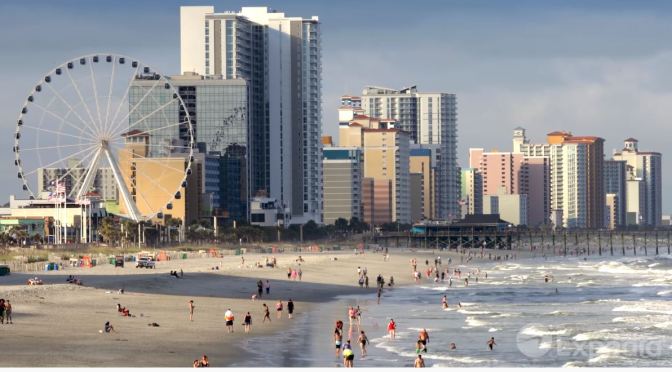
This video shows the areas to the north and south of Myrtle Beach City Limits, Little River(3:44), Cherry Grove, North Myrtle Beach, Garden City Beach, Murrells Inlet, and Pawleys Island.

Myrtle Beach, a city and vacation resort on South Carolina’s Atlantic coast, is the hub of the Grand Strand, a 60-mile string of beaches. It’s also known for its celebrity-designed golf courses. Along its beachfront boardwalk are arcades, souvenir stands and restaurants, as well as the old-fashioned Family Kingdom amusement park and the SkyWheel, one of the country’s tallest Ferris wheels. 

Women’s Health: How Mammograms Can Reveal Cardiovascular Disease

The routine mammograms women receive to check for breast cancer may also offer clues to their risk for heart disease, new research suggests.

White spots or lines visible on mammograms indicate a buildup of calcium in breast arteries. This breast arterial calcification is different from coronary artery calcification, which is known to be a marker for higher cardiovascular risk. For the study, researchers followed 5,059 postmenopausal women (ages 60 to 79) for six and a half years. They found that those with breast arterial calcification were 51% more likely to develop heart disease or have a stroke than those without calcification. The study was published March 15, 2022, in Circulation: Cardiovascular Imaging.

Blenheim Palace: Britain’s Answer To Versailles

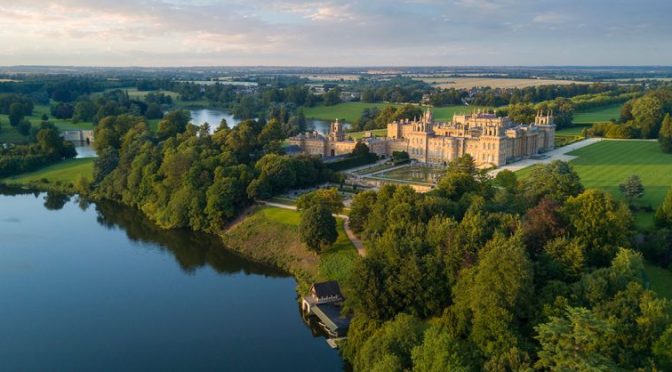
Blenheim Palace, Oxfordshire — the seat of the Duke of Marlborough — is one of the outstanding palaces of Baroque Europe, and was planned as both a residence and national monument.

Towards the end of the day on August 13, 1704, John Churchill, Duke of Marlborough, exhausted by an intense day of fighting near Blindheim, a village on the Danube, famously scrawled a note to his wife on the back of a tavern bill: ‘I have not time to say more but to beg you will give my duty to the Queen and let her know her army has had a glorious victory.’ The battle of Blenheim — as the name has been anglicised — was, in fact, a confrontation between a Franco-Bavarian army and the forces of a grand alliance of European powers, including the Dutch republic, Austria and Britain, over control of Spain and its empire. It was the first major defeat inflicted on a French army in the field for 50 years and was crowned by the capture of Louis XIV’s commander-in-chief, Marshal Talleyrand, who waited in the Duke’s coach as he scribbled his hasty message.

Although the plans of the building changed considerably over time, something close to the final design was published in the first part of Colen Campbell’s Vitruvius Britannicus (1715). As described by Campbell, ‘the manner is grand, the parts noble, and the air majestick of this palace, adapted to the martial genius of the patron…’ This latter quality was celebrated both in the ornament of the building with military trophies and its original title, ‘Blenheim Castle’.

Fig 5: The Saloon is overlooked by figures representing the four Continents and the marble doorcase is ornamented with an imperial eagle. Blenheim Palace, Woodstock, Oxfordshire, photographed for Country Life Magazine by Will Pryce. ©Country Life

Both Vanbrugh and Hawksmoor were well versed in medieval castle architecture and their knowledge of it shines through the spectacular outline of this building, its great angle towers and the rugged articulation of the masonry. Yet this is really a Classical castle suitable for a general of Britain in its newly assumed character as an Imperial power and second Rome. Borrowing Hawksmoor’s description of Castle Howard, as ‘the seat of one of the chief nobles of Britain, it is both a castle and palace conjoined’.

News, Views and Reviews For The Intellectually Curious