Tag Archives: Food

THE GUARDIAN WEEKLY – OCTOBER 9, 2026

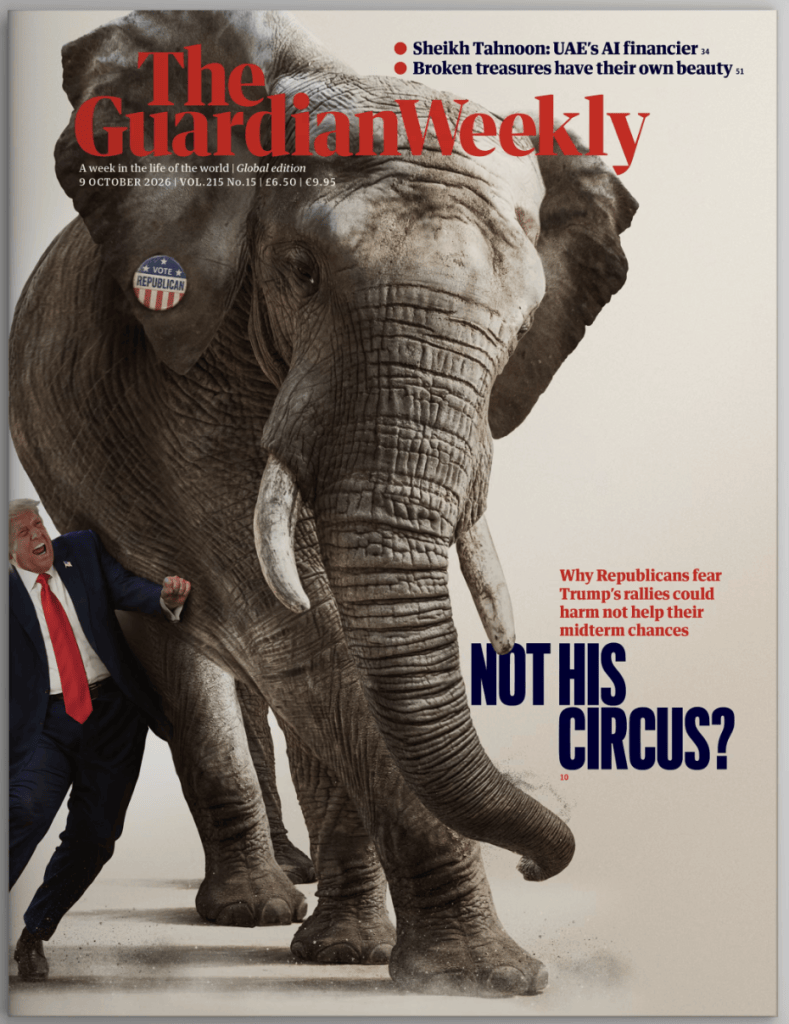
THE GUARDIAN WEEKLY: The latest issue features ‘NOT HIS CIRCUS?’ – Why Republicans fear Trump’s rallies could harm not help their midterm chances….

With fewer than 30 days until the US midterm elections, Donald Trump seems determined to still be centre stage despite poll fears that after 3 November he may end up a lame-duck president as a Democratic blue wave sweeps the country. Our Washington bureau chief, David Smith, has been watching how the president is playing to Republican voters at the start of a blitz of cross-country rallies. It’s, at best, a mixed picture.

As David reports, Trump’s self-belief and message to voters to “pretend” his name is on the ballot reveal a man out of touch with ordinary Americans’ worries about the cost of living and whose promises that the war with Iran will soon be over ring ever more hollow. And then there are the candidates, more of whom are shying away from their earlier allegiances to a president whose approval ratings continue to slide.

Spotlight | An education crisis in France
As school and university protests intensify, Paris correspondent Angelique Chrisafis finds out why students feel the government is ignoring their complaints about the state of education

Spotlight | Green division and diversion
Peter Walker reports on the English and Welsh Green party’s annual conference in which a motion equating Zionism with racism was passed, and analyses how this reveals weaknesses in the way the party is run

Feature | The big business of porn
Why not analyse the porn industry just like any journalist would the oil business? That was the premise behind Patricia Nilsson’s new book. An approach that, as Amelia Gentleman finds out, yields new insights into how pornography’s imperatives have seeped into all our online lives

Opinion | Putin won’t bomb Ukraine into submission
Kyiv may now be under almost constant attack but, says Rajan Menon, history shows that bombing doesn’t crush morale

Culture | There’s beauty in bits and pieces
A novel exhibition in Florence puts broken sculptures on display and, as Philip Oltermann discovers, reveals their profound allure
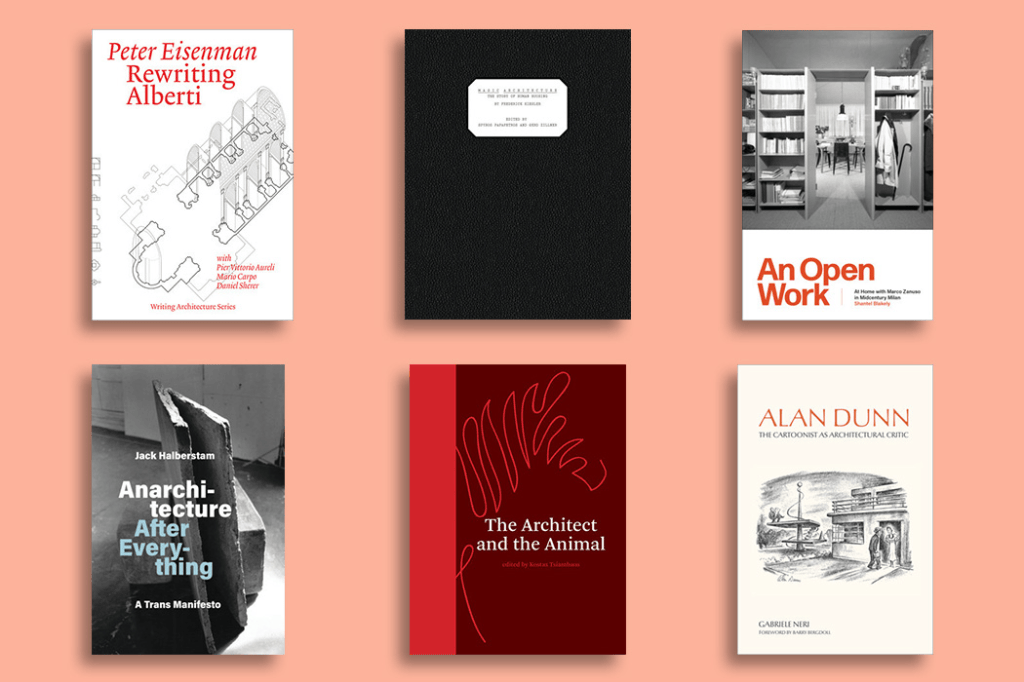
ARCHITECTURE UNBOUND

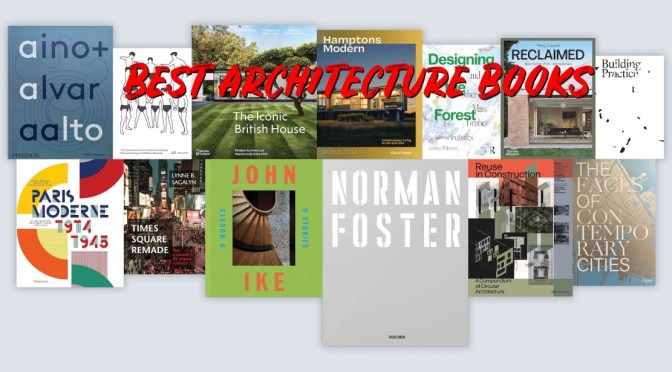
MIT PRESS: The following books are highlighted for World Architecture Day 2026:

Since our founding in the 1960s, the MIT Press has been considered a premier publisher of architectural scholarship. To celebrate World Architecture Day, this year we are highlighting some of our latest books on architectural theory and practice—including a study of anarchitecture, an investigation of an enigmatic Italian architect-designer, and an abecedarium-style book exploring architect’s intersection with animal life.


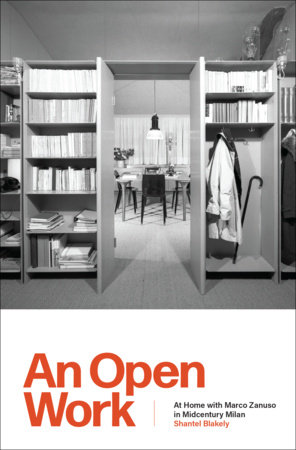
An Open Work: At Home with Marco Zanuso in Midcentury Milan by Shantel Blakely

An Open Work investigates the celebrated, enigmatic Italian architect-designer Marco Zanuso (1919–2001). Zanuso’s buildings were widely recognized in Italy, and today his object and furniture designs, which won many awards in their time, can be found in prestigious museums worldwide, yet few scholars have addressed the different scales he worked at as parts of a whole. This beautifully written, lavishly illustrated book opens the door to Zanuso’s acclaimed work, specifically his dual focus on architecture and industrial design, a form of practice that many architects in Milan pursued as the Italian economy rebounded in a surge of industrialization after World War II.


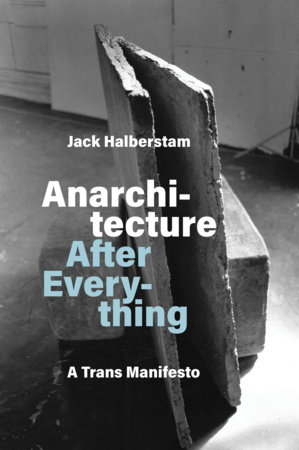
Anarchitecture After Everything: A Trans Manifesto by Jack Halberstam

Anarchitecture, a radical aesthetic practice of unmaking the built environment, staged a vigorous confrontation with urban renewal and gentrification projects in the 1970s. In Anarchitecture After Everything, Jack Halberstam identifies a powerful lexicon of transformation within anarchitecture, joining the movement’s practices of cutting and splitting with the destabilizing power of transness to detonate acts of formal violence in our time. By reading anarchitecture through transness and transness through anarchitecture, Halberstam helps us see the trans body as a space of radical unmaking and as a portal to new lexicons for transformation.


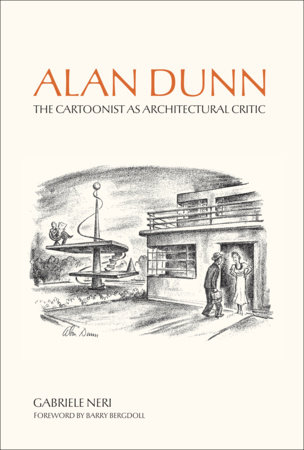
Alan Dunn: The Cartoonist as Architectural Critic by Gabriele Neri

Drawing on his pioneering expertise in the relationship between graphic satire and architecture, Gabriele Neri retraces Alan Dunn’s path from painter to renowned cartoonist, offering an unconventional perspective on architectural and urban transformations—and on their perception within society. Featuring 200 carefully selected images, including Dunn’s correspondence, unpublished cartoons, preliminary sketches, watercolors, and rare photographs, Alan Dunn demonstrates the critical potential of caricature and cartoons for architectural history. Through Neri’s deft analysis, the book also reveals the complex intersections of architecture with media, publishing, commerce, society, art, and politics.


The Architect and the Animal edited by Kostas Tsiambaos

In The Architect and the Animal, 26 different architects look at how 26 different animals, from A to Z, have found their way into modern architectural discourse. The animal was typically approached in this discourse not through its various cultural or symbolic identities but as a body examined under a formalistic scientific lens. In this volume, the authors explore a less operative—and more meaningful—understanding of animal references and representations in twentieth-century architecture. Both playful and serious, there is nothing quite like this book.


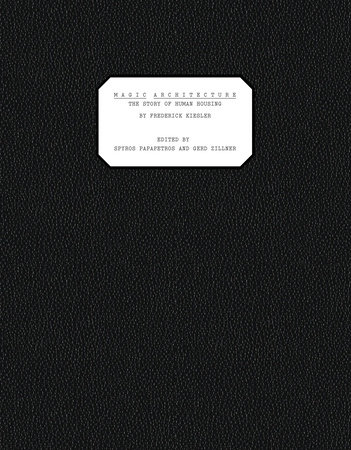
Magic Architecture: The Story of Human Housing by Frederick Kiesler

Magic Architecture was the architect Frederick Kiesler’s most ambitious book project, an epoch-spanning history of human housing from prehistory to the atomic era, submitted to editors after World War II but left unpublished. In its holistic view of habitation through the lens of anthropology, ecology, and the life sciences, Magic Architecture is one of the most extraordinary texts on architecture written in the twentieth century, now at last published in the twenty-first. Kiesler’s exploration of the effects of modern technology in combination with the alternative epistemology of “magical” practices associated with cave drawings and the first artifacts of human industry reflects his profoundly interdisciplinary perspective on the development of art, architecture, and design.


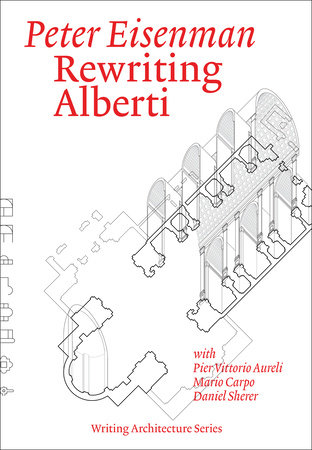
Rewriting Alberti by Peter Eisenman

Much has been written about Renaissance architect Leon Battista Alberti’s mantra of part-to-whole as one of the continuing conditions of architecture. While this underlying thesis has often been repeated in the annals of architectural history and theory, architects have rarely questioned the idea. In Rewriting Alberti, architect Peter Eisenman suggests, however, that Alberti provoked a radical discourse beyond the part-to-whole dialogue featured in his Ten Books of Architecture. Eisenman’s in-depth analysis of Alberti’s five built works reveals a disjunction between the architect’s buildings and theoretical writings, suggesting a new relationship of form to meaning based on the fragmentation of homogeneous space.

ORION MAGAZINE FALL 2026

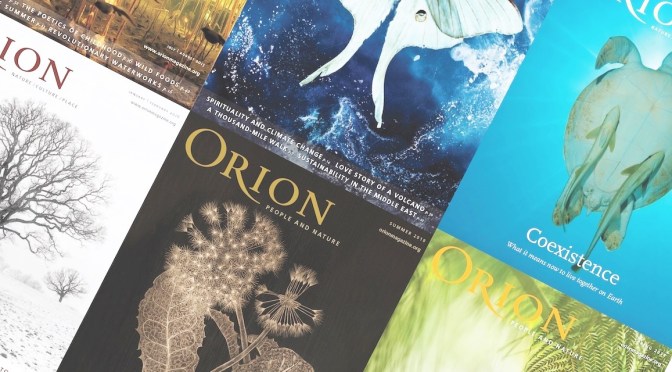
ORION MAGAZINE: The Autumn 2026 issue, ‘Tongues: Adventures in the Science of Taste’, ventures into the outer reaches of flavor. Each story is keyed to a different feature of taste in the human and more-than-human worlds, a palette that includes carnivory, sourness, sweetness, bitterness, and fermentation. Contributors parse the flavors of breast milk, spiderwebs, and stinky cheeses. They explore the cultural history of foods forged in adverse conditions like famine and oppression. Taken together, In Tongues offers a vivid, sensory buffet of how we experience the world through our tongues.

A Taste for Meat

How carnivorous plants trouble the order of things. By Lacy M. Johnson

Sour Fruit

The marginalization of a flavor mirrors the logic of extraction. By Sharanya Deepak

Heart of Bitterness

A journey to the center of the flavor—and the feeling. By Maria Pinto

Yeast Mode

For food scientist and fermenter David Zilber, taste is the fundamental question of organismic existence. By Jaya Saxena and David Zilber

THE NEW YORK TIMES MAGAZINE- OCTOBER 4, 2026

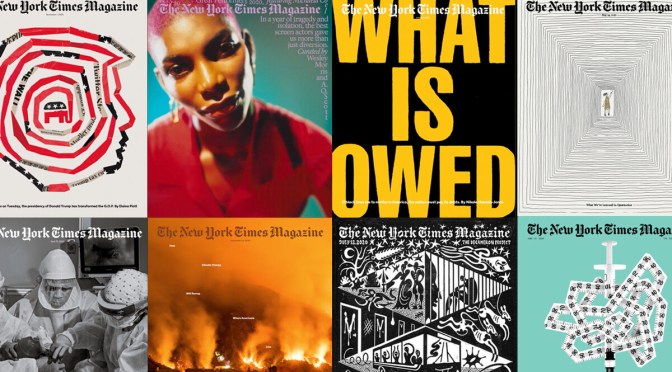
THE NEW YORK TIMES MAGAZINE: The latest issue features Trisha Thadani’s cover essay on alternative medical clinics targeting cancer patients with misinformation, alongside Max Read’s examination of Silicon Valley products adopting the logic of gambling, and Kwame Anthony Appiah’s Ethicist column on sponsoring a caregiver’s career.

Min Jin Lee Was Underestimated for Half Her Life. Then She Started to Write.

A torch bearer for the great 19th-century tradition of social realism, she’s become one of the most important novelists of her generation.

When Did Everyone Start Talking Like a Hollywood Windbag?

The phrase “the X of it all” started as a joke to mock the vague lingo of studio bosses. But there’s something widely appealing about speaking “casually, broadly and vaguely in order to reduce friction.” By Nitsuh Abebe

They Kept Outsiders Away for 500 Years. Their World Is About to Change.

My father dedicated his life to studying the Guna people of Panama, and they may soon allow unprecedented development through their land. I went on a trek through the jungle to find out why. By Ben Ryder Howe and Federico Rios

How Everything Became Gambling

It’s not just DraftKings and Polymarket — the logic of gambling undergirds everything coming out of Silicon Valley.

THE GUARDIAN WEEKLY – OCTOBER 2, 2026

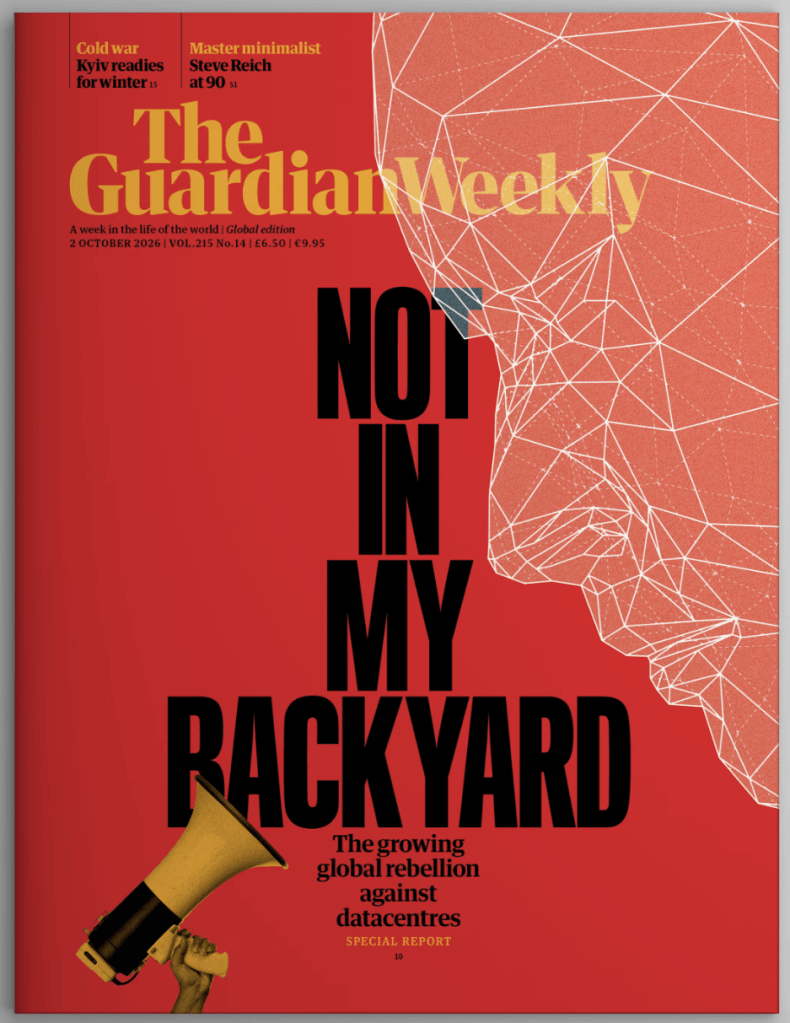
THE GUARDIAN WEEKLY: The latest issue features ‘NOT IN MY BACKYARD’ – The growing global rebellion against datacenters.

As the alarm bells sound ever louder about the potentially existential threat of breakneck AI development, people far removed from Silicon Valley debates about the future of the artificial intelligence revolution are voicing other more immediately tangible worries about the building of the vast datacentres that power these entities.

For this week’s cover story, economics and political writer Eduardo Porter, analyses why communities are pushing back against AI and the future that the big tech plutocrats want to create. These fears, based around environmental concerns over resource use and rapid societal change, are, he argues, far more complex than luddite attitudes or nimbyism.

It’s a position exemplified by reporting from two rural communities in India and the UK where vast datacentres are already under construction or being planned. As Hannah Ellis-Petersen and Aakash Hassan find out, the villagers of Tarluvada, in Andhra Pradesh, feel that government promises of a “golden age” that a hyperscale Google datacentre would bring them have been broken. Meanwhile, Sandra Laville meets protesters in Great Torrington, Devon, who sense that they are being kept in the dark about plans for an AI campus, one of Europe’s largest, in a Unesco-designated nature reserve.

Spotlight | Kyiv’s cold front is approaching
Charlotte Higgins reports on how residents are preparing for winter, stocking up on food and determination, as Russia increases its attacks on energy infrastructure

Environment | What Nepal has taught Argentina
What can the Patagonian town of El Chaltén at the foot of the Torre glacier do to avoid an event similar to the disaster in Nepal? María de los Ángeles Orfila finds out

Feature | Andy Burnham: a man with a plan
As the first Labour conference with Andy Burnham as prime minister takes place, Hettie O’Brien finds out just how radical his policies could be

Opinion | Macron’s brave swansong
In his final speech to the UN, Emmanuel Macron told the world how to stand up to Trump, says Steve Bloomfield

Culture | A minimalist at 90
As he prepares to celebrate a milestone birthday, Steve Reich tells Flora Willson how he developed his musical ideas and why he wants others to take up the baton of performing his works

COUNTRY LIFE MAGAZINE – SEPTEMBER 30, 2026 PREVIEW

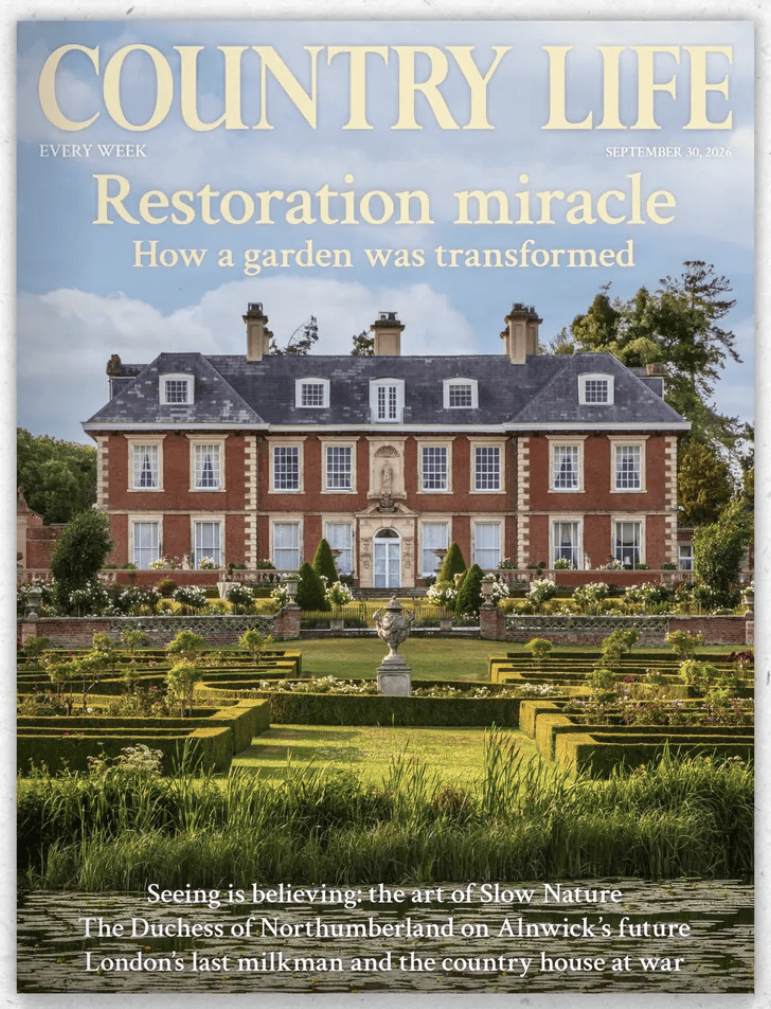
COUNTRY LIFE MAGAZINE: The latest issue features ‘Restoration Miracle’ – How a garden was transformed…

When the Englishman’s house was no longer his castle

Deborah Nicholls-Lee explores how the requisition of country houses played a crucial role in winning the Second World War

Look, listen, learn

Nature writer Mark Cocker delves into his new book to explain how we can open our eyes to the world around us

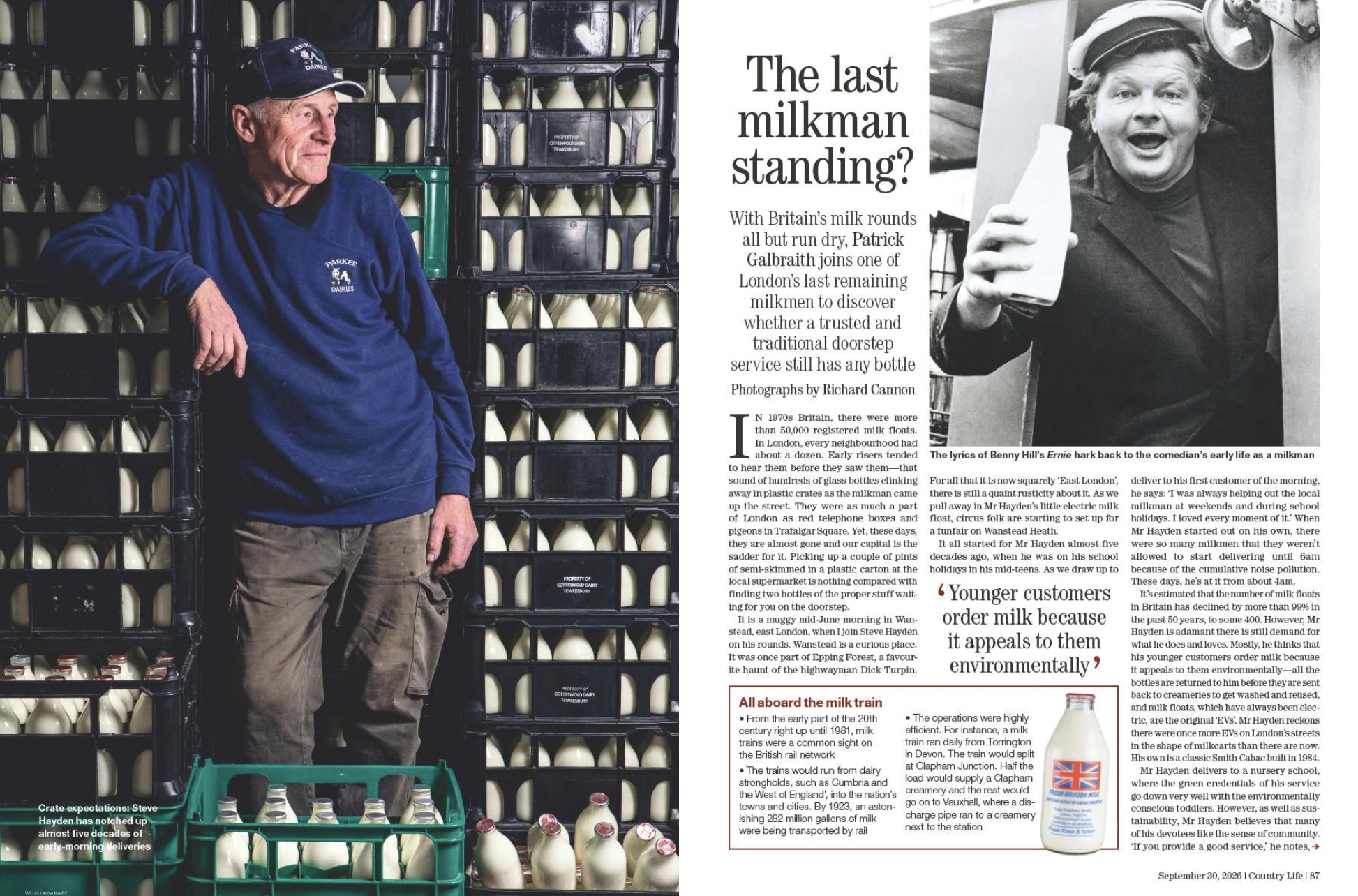
The last milkman standing?

Are doorstep dairy deliveries a thing of the past, asks Patrick Galbraith, as he joins one of the capital’s few remaining rounds

Spreads from Country Life September 30, 2026

The restoration of ‘England’s green and pleasant land’

Timothy Mowl admires the revival of one of the finest and earliest Pulhamite gardens at Highnam Court in Gloucestershire

The Versailles of the north

The Duchess of Northumberland tells Charles Quest-Ritson of her plans for the Alnwick Garden as it celebrates its 25th anniversary

Tony Iommi’s favourite painting

The Black Sabbath founder chooses a work depicting beauty, strength and grace

Country-house treasure

John Goodall raises a glass to the late-Victorian ‘Braxted Bar’ that dominates the entrance hall at Braxted Park in Essex

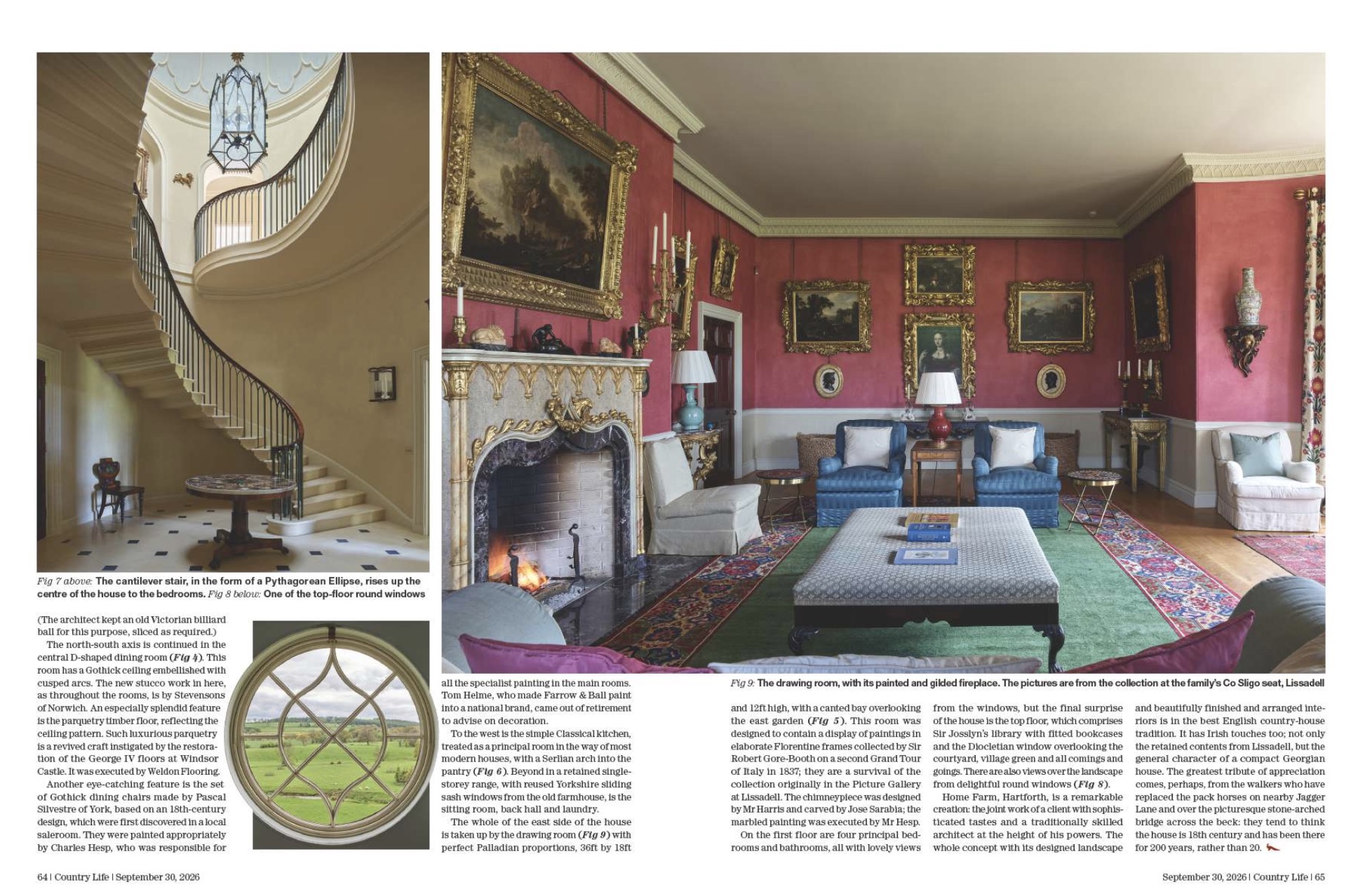
The genius of place

Classical and Gothic detailing are employed to dramatic effect at Home Farm in North Yorkshire, finds John Martin Robinson

Spreads from Country Life September 30, 2026

On the brink of extinction

In a last call for the telephone exchange, Ptolemy Dean ponders the future of the obsolete edifices

The legacy

Octavia Pollock hails the vision of John Bateman, whose dams and reservoirs still serve us today

There goes summer

John Lewis-Stempel prepares to get hands-on with his flock as thoughts turn to tupping time with the transition to autumn

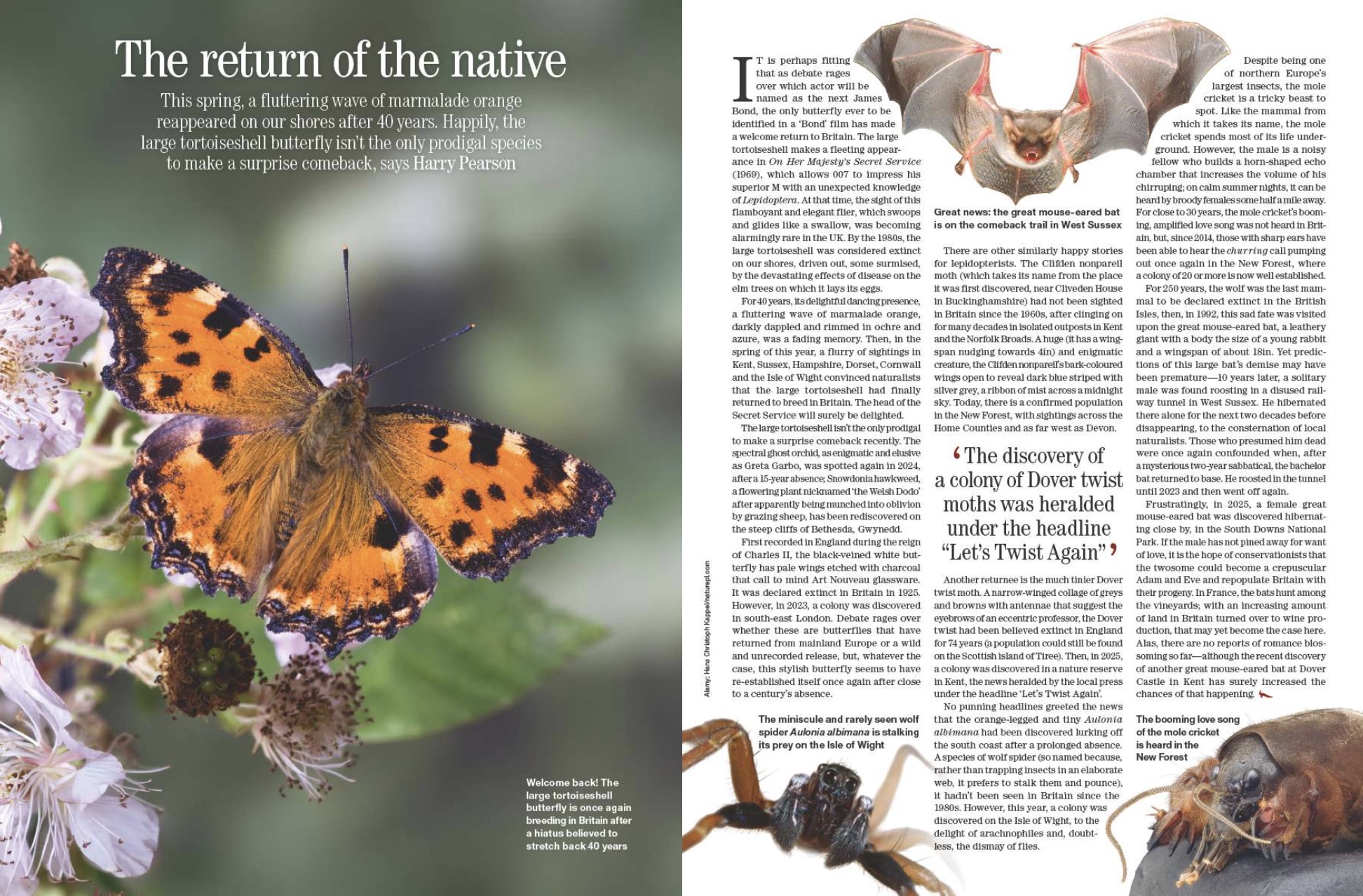
The return of the native

The large tortoiseshell butterfly is back. Harry Pearson hails British species risen from the dead

Spreads from Country Life September 30, 2026

Luxury

Amie Elizabeth White showcases floral jewels and country classics, plus Rita Konig’s favourite things

Interiors

Amelia Thorpe picks companies that add a touch of craftsmanship to country-house renovations

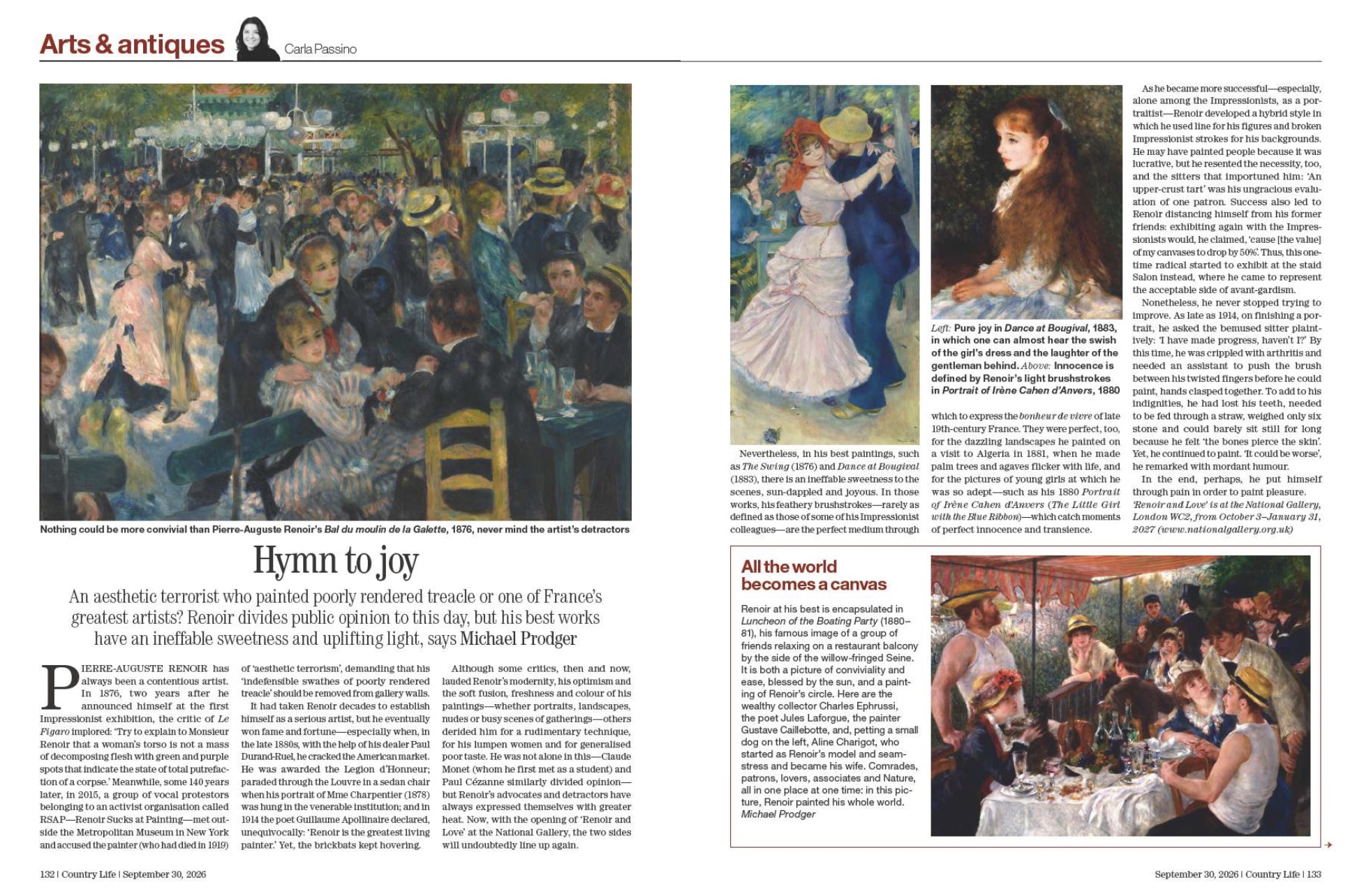
Arts & antiques

Ahead of a new Pierre-Auguste Renoir exhibition at the National Gallery, Michael Prodger looks at how the French Impressionist is still dividing critical opinion

Spreads from Country Life September 30, 2026

Countryside mystery

Straying livestock could prove costly in the days of the village pound, as John Wright reveals

Travel

Rosie Paterson visits the Algarve in Portugal and finds a natural haven that is truly worth its salt

Ripe for the picking

From apples to pears and pomegranates, painters down the ages have used all manner of fruit as artistic symbols, as Michael Prodger discovers

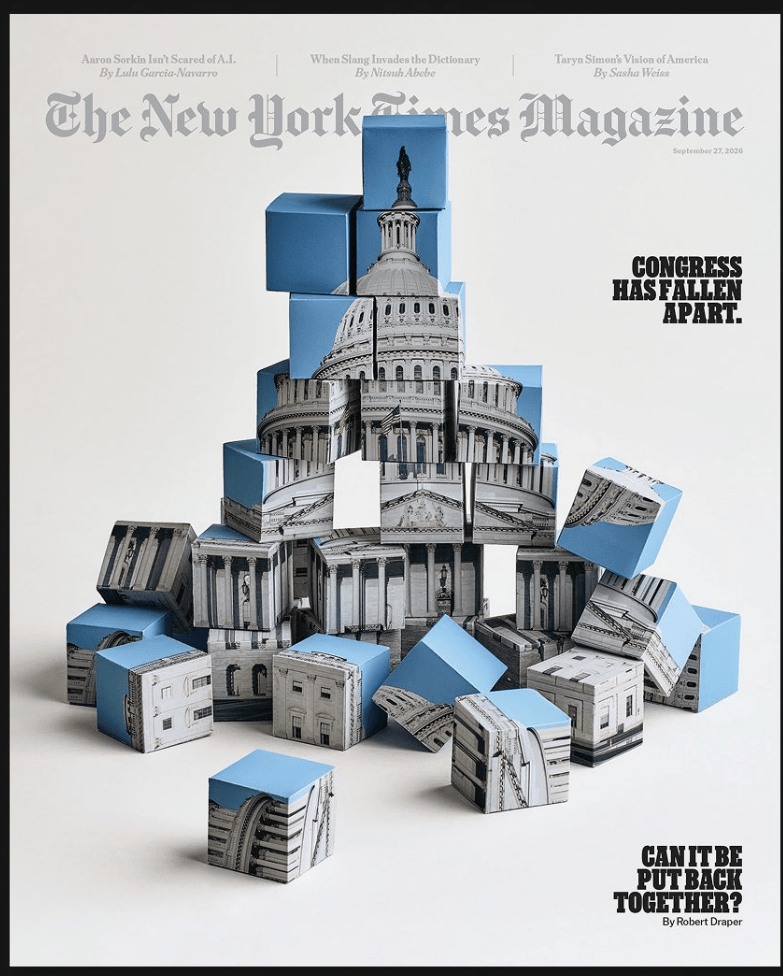
THE NEW YORK TIMES MAGAZINE- SEPT. 27, 2026

THE NEW YORK TIMES MAGAZINE: The latest issue features ‘Can It Be Put Back Together?’….

They Kept Outsiders Away for 500 Years. Their World Is About to Change.

My father dedicated his life to studying the Guna people of Panama, and they may soon allow unprecedented development through their land. I went on a trek through the jungle to find out why. By Ben Ryder Howe and Federico Rios

The Problem With Apocalyptic Thinking

From climate to Covid to A.I., we face a terrifying feeling of exponential growth spinning out of our control. Are we right?

Has a Dash of ‘Whimsy’ Become Less Whimsical?

The push to optimize the magic in our lives is starting to feel like a trick for consumers. By Mitch Therieau

Back to School With Bulletproof Backpacks

Three people trying to quell their school-shooting anxiety. By Coralie Kraft

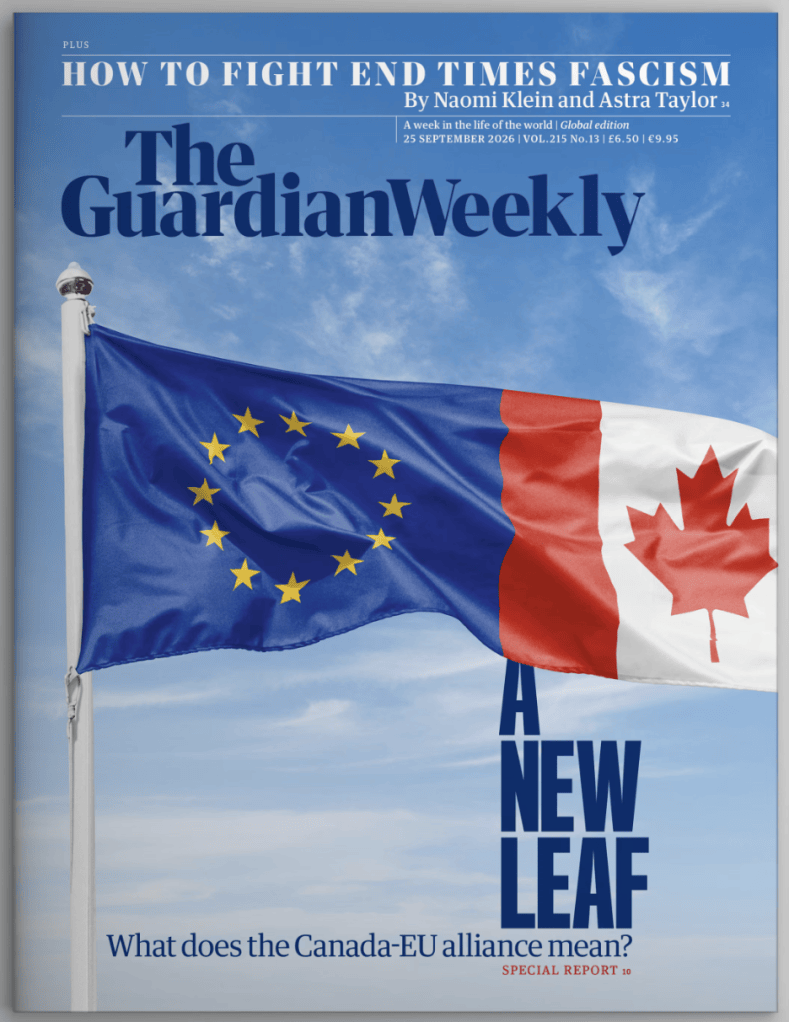
THE GUARDIAN WEEKLY – SEPTEMBER 25, 2026

THE GUARDIAN WEEKLY: The latest issue features ‘A NEW LEAF’ – What does the Canada-EU alliance mean?

The European Commission president, Ursula von der Leyen, last week extended an unprecedented offer to Canada, inviting it to become the EU’s first “associate member”.

For our big story this week, Brussels correspondent Jennifer Rankin explores what the proposed alliance might mean. While there is a lot of common ground for the two parties, she writes, their agreement raises many questions and is clouded in uncertainty.

Meanwhile, senior correspondent Lisa O’Carroll examines the possible implications for the UK – asking whether it offers a blueprint for Britain, or a reminder it is out in the cold.

Then, former White House speechwriter Ted Widmer says Canadian prime minister Mark Carney’s remarks before the European parliament set out what a new west might look like, without its most powerful member – the US.

Spotlight | Yemeni families’ flight
Fierce fighting has forced people to abandon their homes, leaving everything behind to seek shelter in refugee camps. Nasser Al-Sakkaf reports from Taiz

Science | ‘A map is never neutral’
The cartographers who took on centuries of western bias with the new Equal Earth projection speak to Oliver Holmes, Ana Lucía González Paz and Pablo Gutiérrez about their alternative to the 16th-century Mercator display

Feature | How to fight end times fascism
An unholy alliance is working toward an apocalyptic future from which only a chosen few will emerge unscathed. It’s becoming clear how we stop them, say Naomi Klein and Astra Taylor

Opinion | This Israeli election could be the country’s last
Spend time on the ground and you see how high the stakes are for next month’s contest – for Israelis and Palestinians alike, writes Jonathan Freedland

Culture | Present and correct
Author Jonathan Franzen talks to Sophie McBain about a new TV adaptation of his bestseller The Corrections, the future of reading and why creating new work is “horrible”

COUNTRY LIFE MAGAZINE – SEPTEMBER 23, 2026 PREVIEW

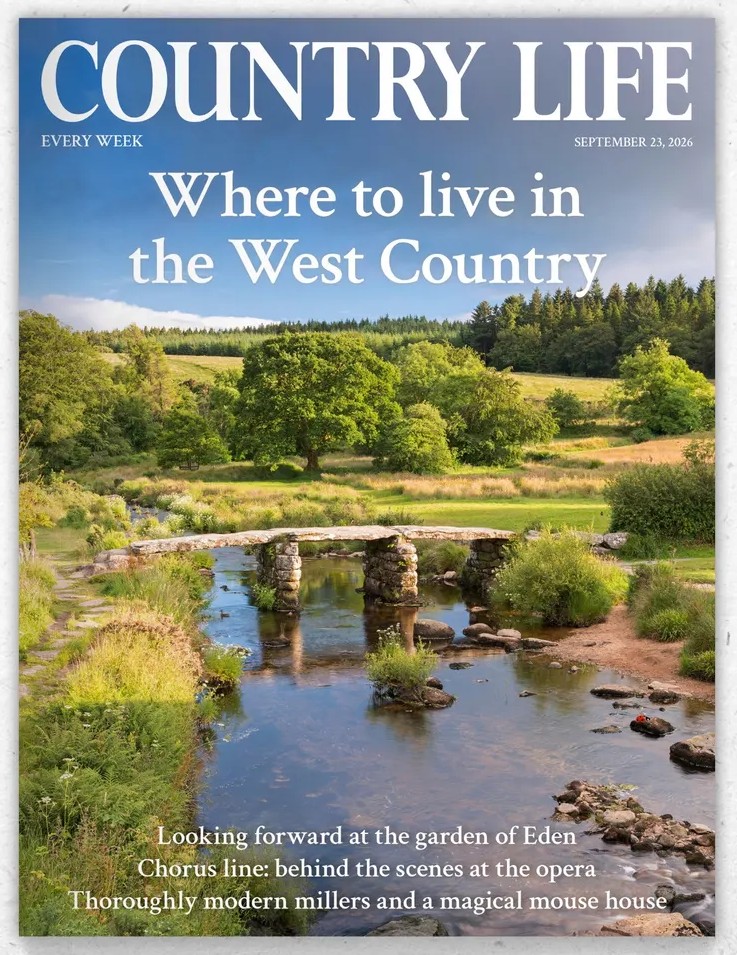
COUNTRY LIFE MAGAZINE: The latest issue features ‘Where To Live In The West Country’….

Hide and squeak

Miniature Mouse Town has been captivating audiences for half a century, but the rodent realm has reached the end of the road, as Harry Pearson reports

Flour power

Ancient and heritage grains are enjoying a revival. Makers and growers tell Tom Howells why they are going back to the future

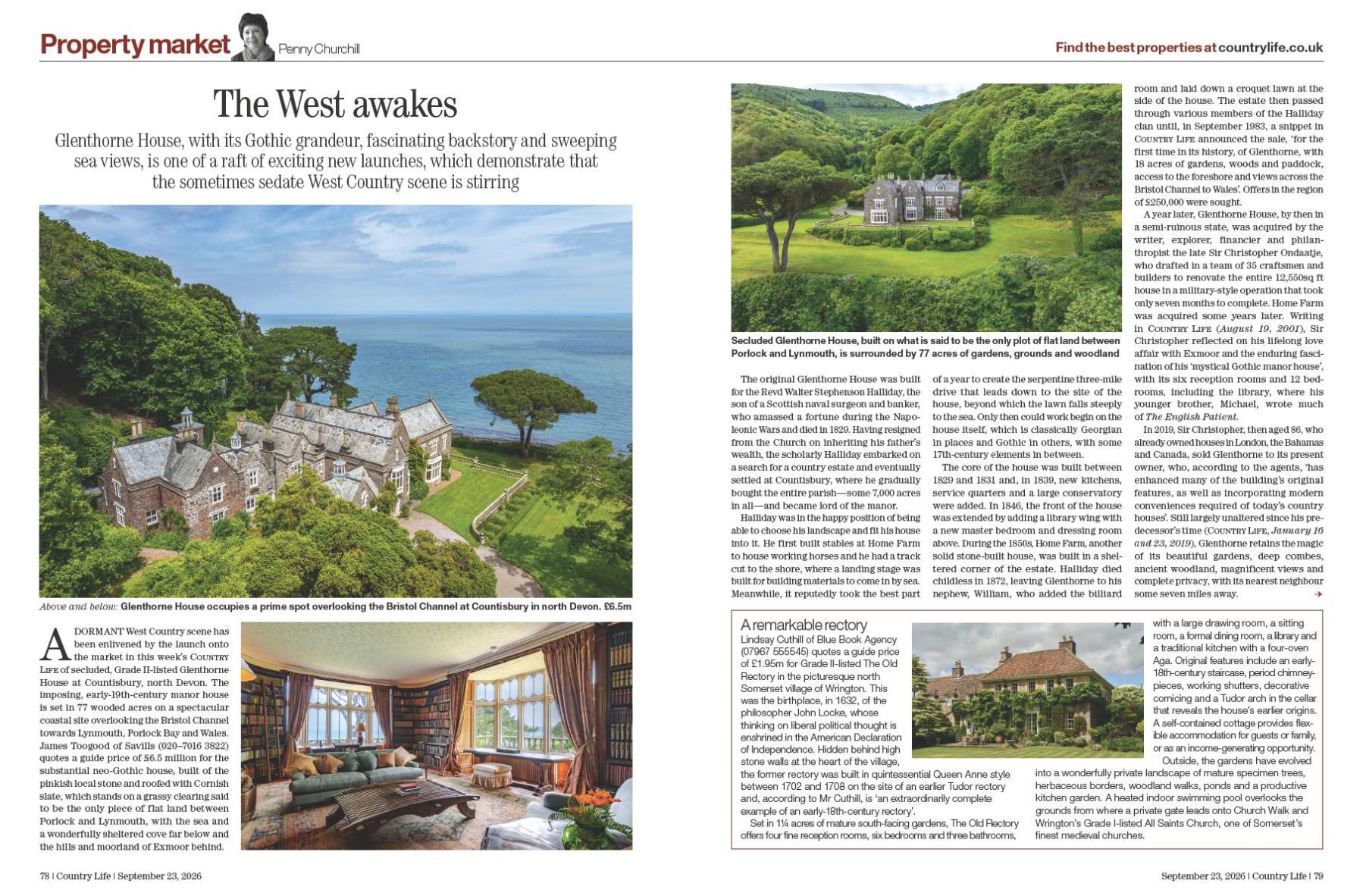
Property market

Penny Churchill surveys a West Country scene sparking into life with the launch onto the market of a spectacular coastal estate

Spreads from Country Life September 23, 2026

Properties of the week

West is best, says Julie Harding, as she showcases characterful and comfortable cottages for sale

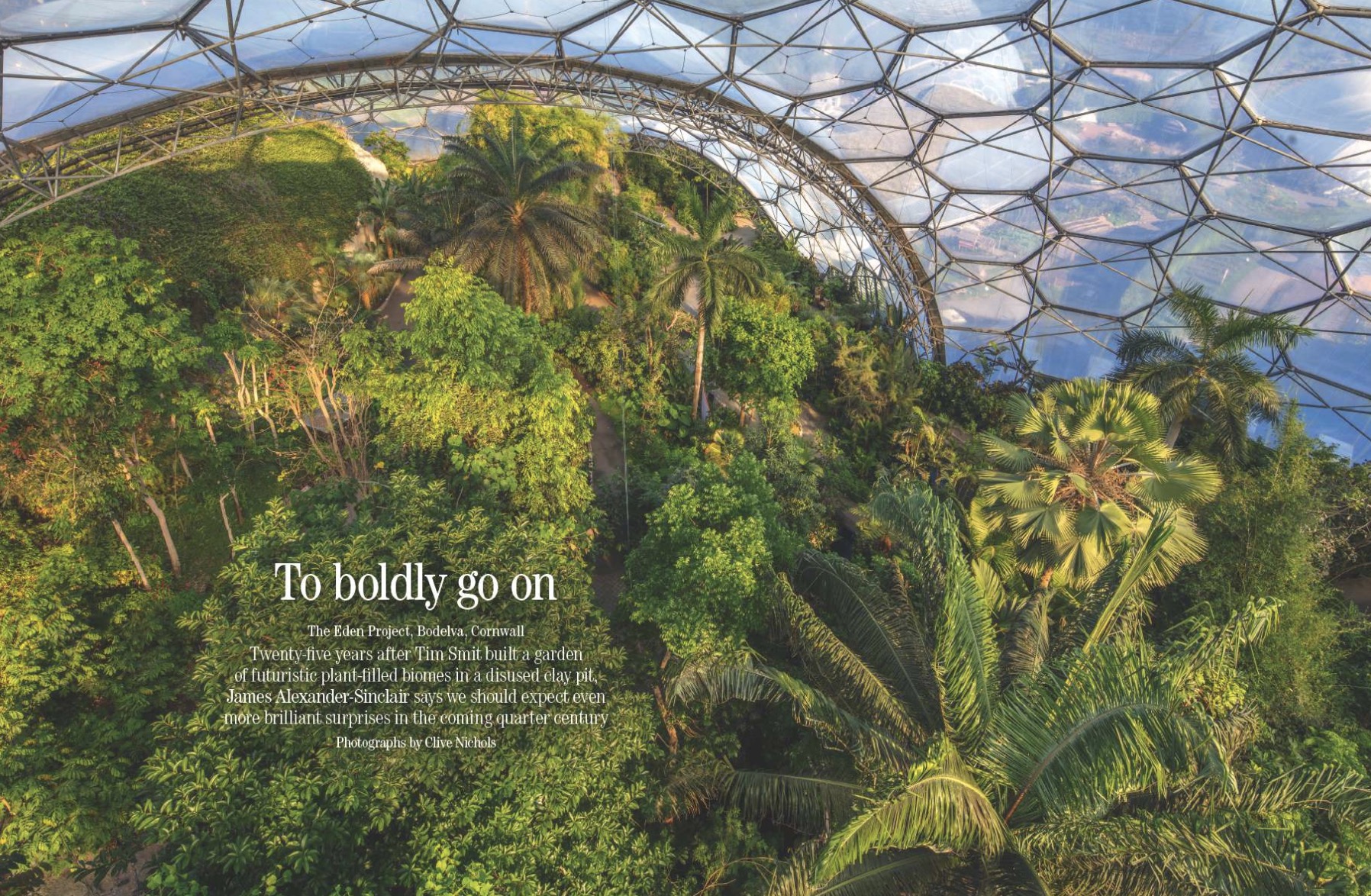
To boldly go on

James Alexander-Sinclair finds out what the future holds for the innovative Eden Project as the Cornwall garden turns 25

Spreads from Country Life September 23, 2026

Chorus of approval

Henrietta Bredin hails opera’s unsung chorus lines in a look at life beyond the solo spotlight

Iain MacGregor’s favourite painting

The historian picks a work that reveals beauty in ordinary things

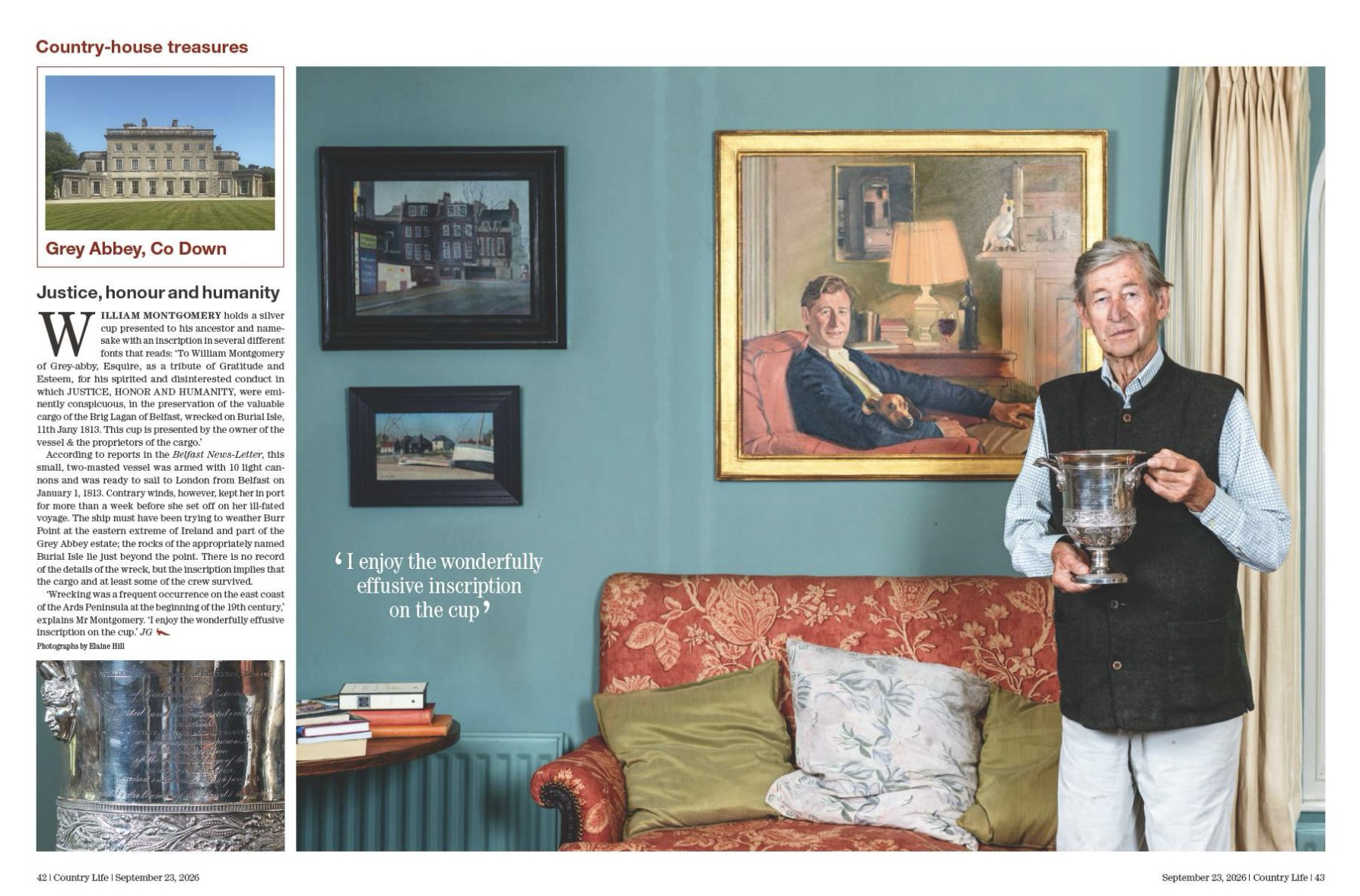
Country-house treasure

A tribute to ‘justice, honour and humanity’ catches John Goodall’s eye at Grey Abbey in Co Down

Spreads from Country Life September 23, 2026

Ruling the waves

Admiralty House and the Ripley Building in London represent 400 years of our naval history, as Billy Hurley Reading discovers

The legacy

Kate Green celebrates the ever-popular 19th-century Savoy operas of that peerless creative double act Gilbert & Sullivan

Get ready for rush hour

Rush is not only a haven for all manner of wildlife, but also a precious resource for artisan makers, declares Laura Parker

Deep thinking

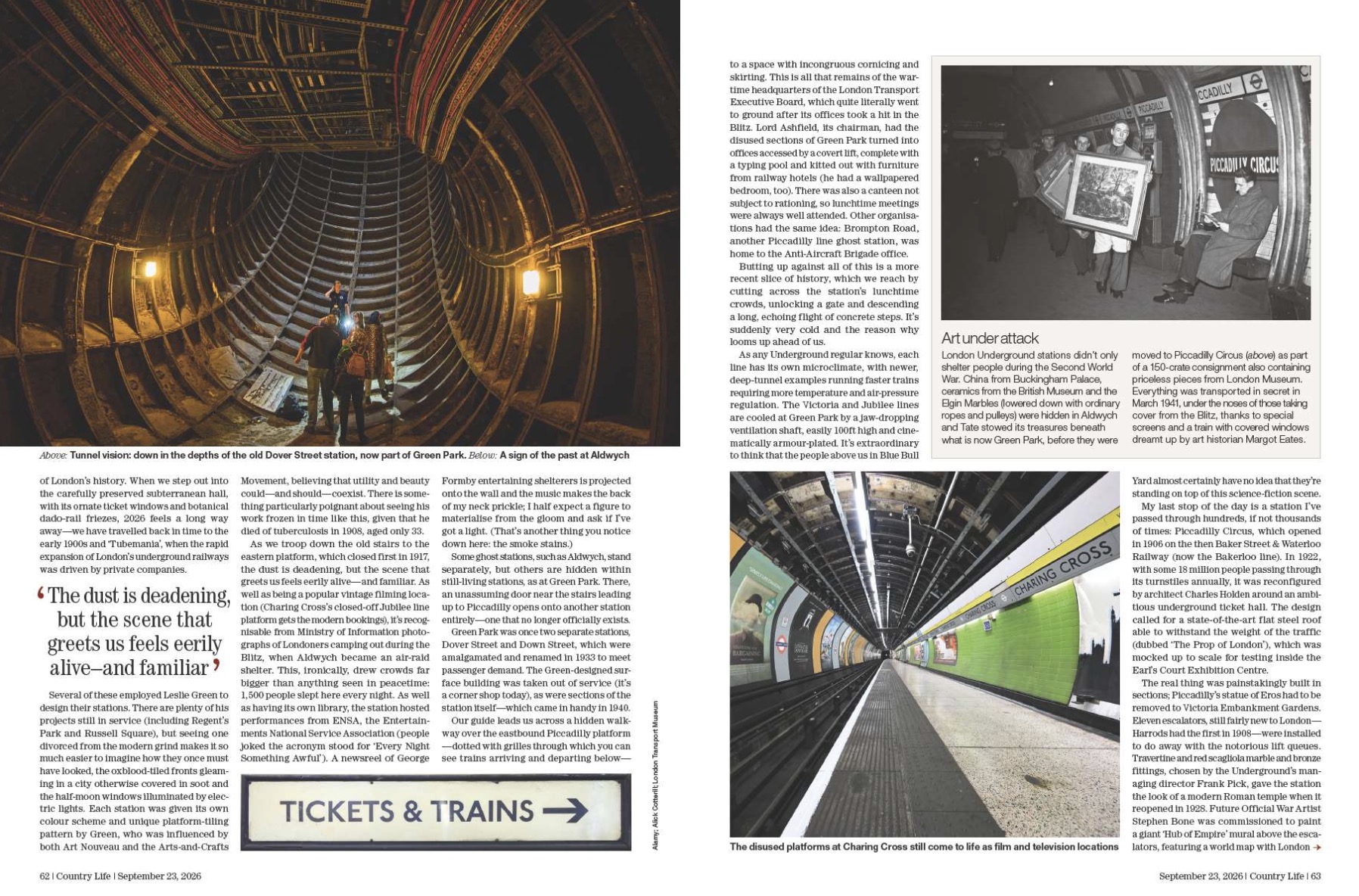
Next stop, Aldwych… Emma Hughes goes underground to tour the forgotten platforms of London’s lost Tube stations

Spreads from Country Life September 23, 2026

Luxury

Amie Elizabeth White chooses classic check prints making an impression this autumn

Interiors

Arabella Youens warms to a fossil-stone fireplace in an Exmoor retreat and Amelia Thorpe shares some bright ideas on wall lights

Countryside mystery

The wonder of choke fungus takes John Wright’s breath away

Travel

Sophia Money-Coutts stays on the secluded Flete Estate, a favourite south Devon destination

Arts & antiques

Carla Passino visits a new British Museum exhibition exploring how Korea mastered foreign art forms and made them its own

On the hoof

Satyrs, centaurs and fauns have been strident symbols in art from Ancient Greece to the present day. Charles Harris investigates

THE NEW YORK TIMES MAGAZINE- SEPT. 20, 2026

Current cover

THE NEW YORK TIMES MAGAZINE: The 9.20.26 Issue features David Wallace-Wells on our age of perpetual climate disaster; Eve Fairbanks on a superintendent who rebuilt his devestated schools; Mark Chiusano on the New York City subway system and flooding; and more.

In an Age of Perpetual Climate Disaster, Rebuilding Is the Wrong Goal

But every crisis is an opportunity.

Congress May Be Broken Beyond Repair. Lawmakers Told Us How It Happened.

Members from both parties say the legislative branch has descended into a state of dysfunction in the Trump era. By Robert Draper

He Rebuilt His City’s Devastated Schools. Then Came the Backlash.

A former superintendent in Joplin, Mo., is trying to apply what he learned to other shattered districts — and reckoning with the toll of the disaster on his own life. By Eve Fairbanks

After 21 Years of Calling the Mets, Howie Rose Somehow Still Believes in Miracles