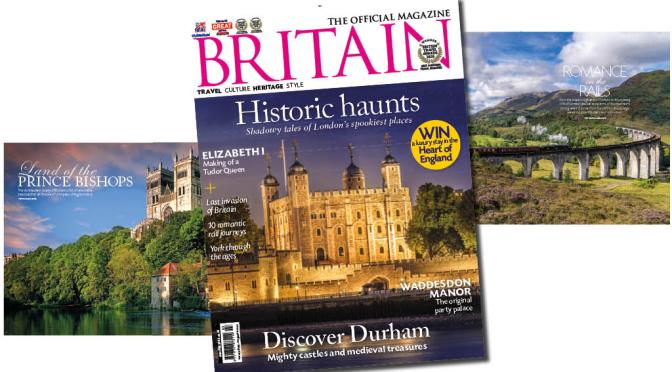
Your July/August 2022 issue of BRITAIN is here, and there's much excitement in the air as time is up on the five-year restoration of Big Ben…get your copy here: https://t.co/f2L16XheEO
Big Ben, the world’s most famous clock has been under wraps for four years, its iconic bell silenced. This year, restored to its former glory, Big Ben once again shows its face.
Between Richmond and Hampton Court is a storied stretch of the River Thames, whose banks are lined with grand houses, royal parks and Henry VIII’s favourite palace.
We talk to the writer and critic Amy Castor about what effect the tumbling crypto markets might have on the until-now booming world of non-fungible tokens or NFTs.
As Norway’s vast new National Museum opens, we speak to its director Karin Hindsbo. And this episode’s Work of the Week is Folding Screen with Indian Wedding, Mitote, and Flying Pole, made in Mexico in the late 17th century. It is one of the major pieces in a new show at the Los Angeles County Museum of Art, called Archive of the World: Art and Imagination in Spanish America, 1500–1800. Ilona Katzew, the curator of the exhibition, talks in depth about the meanings and purpose of the work.
You can read Amy Castor’s thoughts on crypto and NFTs at amycastor.com.
The National Museum in Oslo opens on 11 June.
Archive of the World: Art and Imagination in Spanish America, 1500–1800, Los Angeles County Museum of Art, 12 June-30 October.
The committee investigating the Capitol attacks of January 6th 2021 held the first of several public hearings last night, having gathered evidence for the past year.
The hearings may not break Donald Trump’s hold on the Republicans, but they are creating a vital record of an attempted coup. As wolf populations grow, humans are learning to live with them. And why the corporate world has taken an interest in psychedelic drugs.
The promise and perils of a breakthrough in machine intelligence
Jun 9th 2022ShareGive
Picture a computer that could finish your sentences, using a better turn of phrase; or use a snatch of melody to compose music that sounds as if you wrote it (though you never would have); or solve a problem by creating hundreds of lines of computer code—leaving you to focus on something even harder. In a sense, that computer is merely the descendant of the power looms and steam engines that hastened the Industrial Revolution. But it also belongs to a new class of machine, because it grasps the symbols in language, music and programming and uses them in ways that seem creative. A bit like a human.
The “foundation models” that can do these things represent a breakthrough in artificial intelligence, or ai. They, too, promise a revolution, but this one will affect the high-status brainwork that the Industrial Revolution never touched. There are no guarantees about what lies ahead—after all, ai has stumbled in the past. But it is time to look at the promise and perils of the next big thing in machine intelligence.
And a fraught Supreme Court readies the most high-profile rulings of its term. NPR is doing its annual survey to better understand how listeners like you spend time with podcasts.
This remarkable painting by Michel Corneille the Elder has been hidden away from view for at least the past 110 years and is a truly exceptional rediscovery for French painting of the 17th century. After a recent restoration, the artist’s signature has been re-exposed so that now this impressive work can be confidently attributed to the early French Classicist.
This episode of Anatomy of a work of art, discover The Death of Virginia, taken from Roman historian Livy and recounts the death of Virginia, daughter of a centurion in the Roman army. This rediscovery will be one of the highlights of our sale Tableaux Dessins Sculptures 1300-1900, Session I, Including Treasures from the Antony Embden Collection.
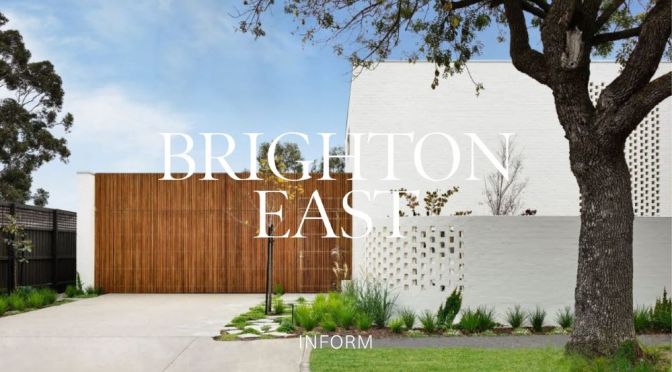
Complementing the Australian climate, Brighton East 4 is a mid-century inspired home crafted to meet the demands of a young family. Designed and built by Inform with architecture by Pleysier Perkins, the house takes inspiration from Palm Springs.
00:00 – Introduction to the Mid-Century Inspired Home 00:56 – The Client Brief 01:20 – Walking Through the Home 02:02 – Interior Design Style 02:43 – The Island Bench 03:04 – Colour Palette and Materiality 03:36 – Collaboration between the Client, Architect and Builder 04:06 – The Feel of the Home 04:41 – Successfully Meeting the Client Brief
Settled into the same-named Melbourne suburb, Brighton East 4 articulates quintessential Australian living. As a mid-century inspired home, the residence has an informal, open-plan layout and natural materiality, including the use of stone and timber.
Architecturally, Brighton East 4 curves, further evidencing its existence as a mid-century inspired home. Present in both the external and internal architecture, curves effortlessly unify the outdoor and indoor aspects of the home, creating fluidity and softness. Natural materials are a key feature of a mid-century inspired home and are incorporated throughout the project.
Behind the staircase sits a feature wall of stack-bond brickwork, whilst the bathroom sees terrazzo used generously. In the kitchen, the island bench sports an elegant stone top, with slatted timber battens at its base. Showcasing their proficiency in architecture and interiors, Inform and Pleysier Perkins craft a comfortable residence with a strong sense of spatial flow. As a mid-century inspired home, Brighton East 4 testifies to its Palm Springs influence through a natural and restrained materiality.
Times Literary Supplement (TLS), June 10, 2022 – This week’s @TheTLS, featuring @ianground on Wittgenstein’s notebooks; @CaroDuttlinger on Kafka’s drawings; @wander2wonder on Budapest; Emily Barton on Mieko Kawakami; @sophieolive on fabric; @TobyLichtig on Jarvis Cocker – and more.
Pakistan’s government faces an unpleasant choice between doing what’s popular and what is economically necessary, as Imran Khan, the former prime minister, exploits widespread discontent for his own ends.
Russia’s invasion is threatening Ukraine’s unique seed bank. And why so many languages have such a rich variety of words to describe family members and relationships.
News, Views and Reviews For The Intellectually Curious