Tag Archives: Climate Change

Science: Climate Change Hits Desert Soil, Mayan Calendars In Guatemala

On this week’s show: Climate change is killing critical soil organisms in arid regions, and early evidence for the Maya calendar from a site in Guatemala.

Staff Writer Elizabeth Pennisi joins host Sarah Crespi to discuss how climate change is affecting “biocrust,” a thin layer of fungi, lichens, and other microbes that sits on top of desert soil, helping retain water and create nutrients for rest of the ecosystem. Recent measurements in Utah suggest the warming climate is causing a decline in the lichen component of biocrust, which is important for adding nitrogen into soils.

Next, Sarah talks with Skidmore College anthropologist Heather Hurst, who directs Guatemala’s San Bartolo-Xultun Regional Archaeological Project, and David Stuart, a professor of art history and director of the Mesoamerica Center at the University of Texas, Austin, about their new Science Advances paper. The study used radiocarbon dating to pin down the age of one of the earliest pieces of the Maya calendar. Found in an archaeological dig in San Bartolo, Guatemala, the character known as “seven deer” (which represents a day in the Maya calendar), was dated to 300 B.C.E. That early appearance challenges what researchers know about the age and origins of the Maya dating system.
Cover Previews: Nature Magazine – April 14, 2022


Preservation: Cairngorms National Park, Scotland

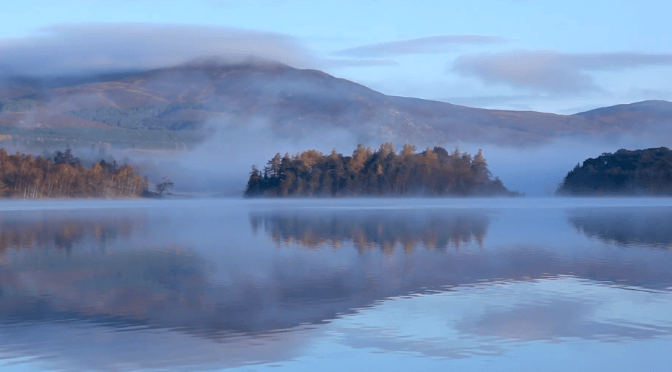
“When it comes to climate change, scale is essential. We need to be scaling up our work and being really bold and ambitious, and that’s exactly what Cairngorms Connect is.” Find out how Scotland’s largest landscape-scale restoration project is fighting back against climate change in our new film for Cairngorms Connect.

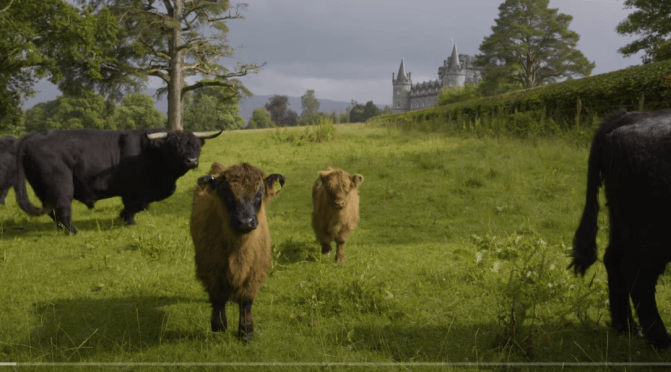
Cairngorms National Park is a national park in northeast Scotland, established in 2003. It was the second of two national parks established by the Scottish Parliament, after Loch Lomond and The Trossachs National Park, which was set up in 2002. The park covers the Cairngorms range of mountains, and surrounding hills. Already the largest national park in the United Kingdom, in 2010 it was expanded into Perth and Kinross.

Roughly 18,000 people reside within the 4,528 square kilometre national park. The largest communities are Aviemore, Ballater, Braemar, Grantown-on-Spey, Kingussie, Newtonmore, and Tomintoul. Tourism makes up about 80% of the economy.[4] In 2018, 1.9 million tourism visits were recorded. The majority of visitors are domestic, with 25 per cent coming from elsewhere in the UK, and 21 per cent being from other countries.

Political Analysis: Putin’s War Escalates, Climate Change, French Debate

A selection of three essential articles read aloud from the latest issue of The Economist. This week: the horror ahead in Ukraine, why climate change must be adapted to as well as opposed (11:25) and why France needs a proper debate ahead of its presidential election (15:40).

Science: Nuclear War Threat, Climate Change, Coronavirus Origins

As the war in Ukraine intensifies, Vladimir Putin raised Russia’s nuclear readiness level. The team discusses what this means about the likelihood of nuclear war. They also explore the unfolding humanitarian crisis in the country.

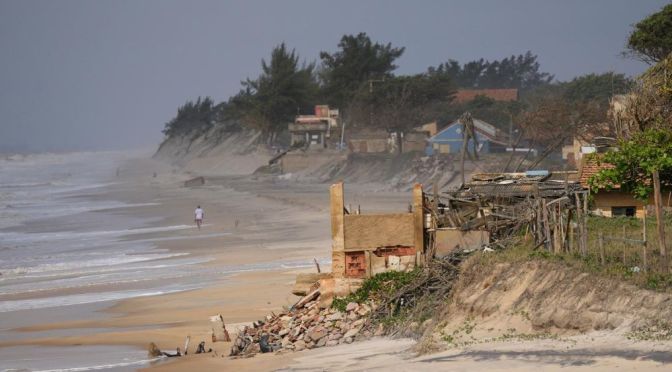
The latest Intergovernmental Panel on Climate Change report is out, and it focuses on impacts, adaptation and vulnerability. We hear from Swenja Surminski, head of adaptation research at the Grantham Research Institute on Climate Change and the Environment.

New studies into the start of the coronavirus pandemic are confirming what we’ve long suspected – that the virus originated at the Huanan food market in Wuhan. The team discusses the latest findings.

Moles – the animals that make holes in your lawn – are non-binary. Just one of a number of amazing facts to come out of the new book ‘BITCH: A Revolutionary Guide to Sex, Evolution & the Female Animal’. Hear from the author Lucy Cooke, who is challenging the sexist basis of much of the thinking about female animals. 

Stonehenge may have been built as a giant calendar. Though the claim itself isn’t new, the team explores a new theory from the archaeologist Tim Darvill which explains how it would’ve worked.

Science: Extreme Old Age Gene Quest, Gravitational ‘Glint’ Waves, Early Springs

The quest for a longer life continues – raising the question of whether we can escape death. The team discusses a rare gene variant that may explain why centenarians live so long – and how we might be able to use it to create age-defying drugs.

The team explores a theory that suggests gravitational waves may be the thing that finally helps us detect dark matter – we just need to look for the ‘gravitational glint’.

Spring is rolling around earlier and earlier. The team examines a new study which shows that since the 1980s, the warming climate has brought the season forward by a month – which could have major ecological implications. They also discuss a study which looks at the impact of marine heatwaves on things like coral and fish populations.

New Books: ‘Literature For A Changing Planet’ By Martin Puchner (2022)

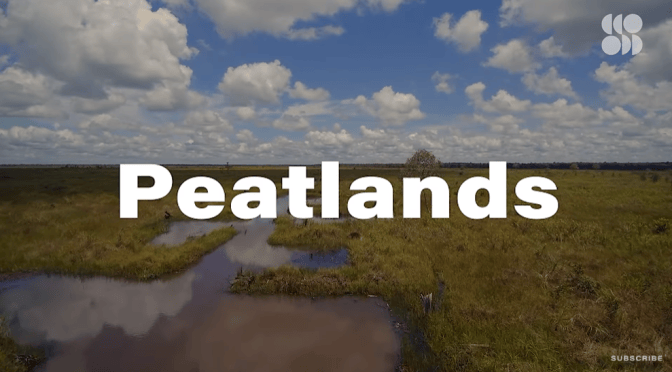
Ecology: Importance Of Peatlands In CO2 Capture

As more of the world’s forests are destroyed, it makes you wonder: what’s going to absorb CO2 in their place?! In an ironic twist of fate, one of Earth’s “deadest” habitats might be our best hope for an ongoing supply of breathable air.

Called peatlands, these wetland environments are named for their tendency to accumulate decayed plant matter. Unlike most other ecosystems, like forests, where branches and leaves typically decompose in a matter of months… in peatlands, that plant material can stay intact for millenia. You see, peatlands mostly exist in high altitude places where temps are low and there’s not much water flow. This results in their having extremely low oxygen and high acidity levels.

These harsh conditions aren’t very hospitable to microbes and fungi, which are instrumental to the whole decomposition process. So without them around, the plant material sort of… just sits. Over time, that it globs together to form peat, a thick, spongy material that can soak up 20x its weight in water. Peat also soaks up loads of carbon. Through a process known as the Calvin cycle, living plants absorb CO2 from the air and convert it into organic molecules that they can then use as energy to grow.

Through decomposition, the carbon that’s “fixed” in a plant’s structure gets released but since peat doesn’t decompose, that carbon can stay put! It’s estimated that peatlands contain 550 gigatonnes of organic carbon, which is twice as much organic carbon as all the world’s forests combined. That’s absolutely wild, considering that forests cover about 30% of the world’s land area… and peatlands only account for 3%! Like most of the world’s habitats, peatlands aren’t immune to the threats of human development and exploitation.

Peat is also are a very in-demand resource. Its incredible water holding capacity makes it a favorite amongst horticulturists; If you’ve ever picked up a bag of soil amendment, chances are it’s full of the stuff. Since peat is also a fossil fuel with a long burn, it’s used in some parts of the world. Peatlands are also often drained to accommodate other land use activities, like agriculture.