
Tag Archives: Climate Change

Research Preview: Nature Magazine – August 10, 2023

Volume 620 Issue 7973

nature Magazine – August 10, 2023 issue: Algorithm designs 3D shapes to follow specific pathways; Why Indigenous youth need a voice in the climate debate; DNA leaks linked to inflammageing in the brains of mice; JWST spots what could be a quasar from the early Universe….

JWST spots what could be a quasar from the early Universe
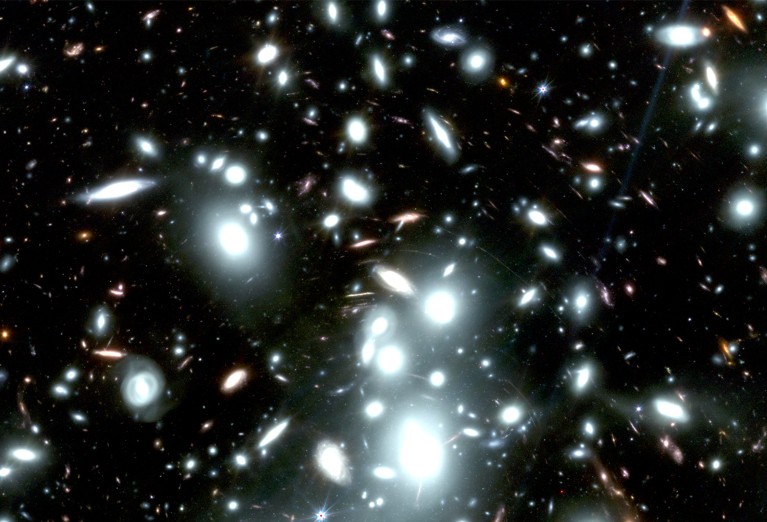
Composite-colour image of the central core of a massive galaxy cluster.

The object’s deep red colour suggests it existed when the Universe was less than 700 million years old.

The James Webb Space Telescope (JWST) has seen what is probably a quasar from the early Universe1.

ChatGPT-like AIs are coming to major science search engines

The Scopus, Dimensions and Web of Science databases are introducing conversational AI search.

A hand holds a phone displaying the OpenAI website ChatGPT.

The conversational AI-powered chatbots that have come to Internet search engines, such as Google’s Bard and Microsoft’s Bing, look increasingly set to change scientific search, too. On 1 August, Dutch publishing giant Elsevier released a ChatGPT-like artificial-intelligence (AI) interface for some users of its Scopus database, and British firm Digital Science announced a closed trial of an AI large language model (LLM) assistant for its Dimensions database. Meanwhile, US firm Clarivate says it’s working on bringing LLMs to its Web of Science database.

Research Preview: Nature Magazine – August 3, 2023

Volume 620 Issue 7972

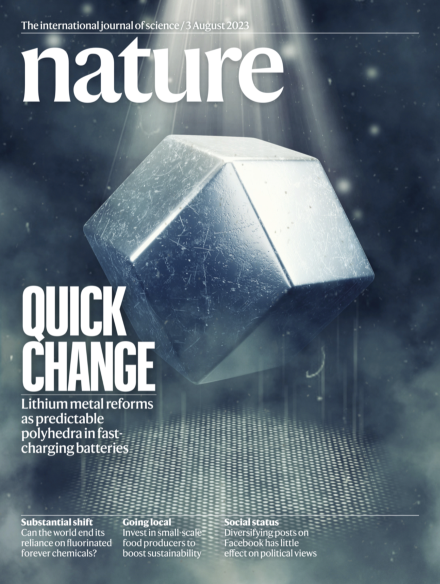
nature Magazine – August 3, 2023 issue: Lithium-metal batteries promise to charge rapidly and to hold more energy than batteries based on lithium ions. Recharging these batteries requires lithium metal to be reformed at the anode, but this process is affected by the battery’s electrolyte and current collector, which causes the shape of the lithium deposits to vary unpredictably, impairing the battery’s performance.

Water crisis: how local technologies can help solve a global problem

Climate change is making water stress worse for billions worldwide. Scaling up both new and traditional solutions must be a priority.

Why heart trouble can lead to sleep trouble

An immune response triggered by cardiac disease affects the function of a gland with a key role in the sleep–wake cycle.

Preview: MIT Technology Review – July/August 2023

Image

MIT Technology Review – July/August 2023: ‘The Accessibility issue’ features Connecting climate change and the digital divide. A blind educator working to make images accessible to everyone. How the app meant to streamline immigration at the border may be making things worse. Plus regulating robotaxis, Metaverse attorneys, and the forgotten history of highway photologs.

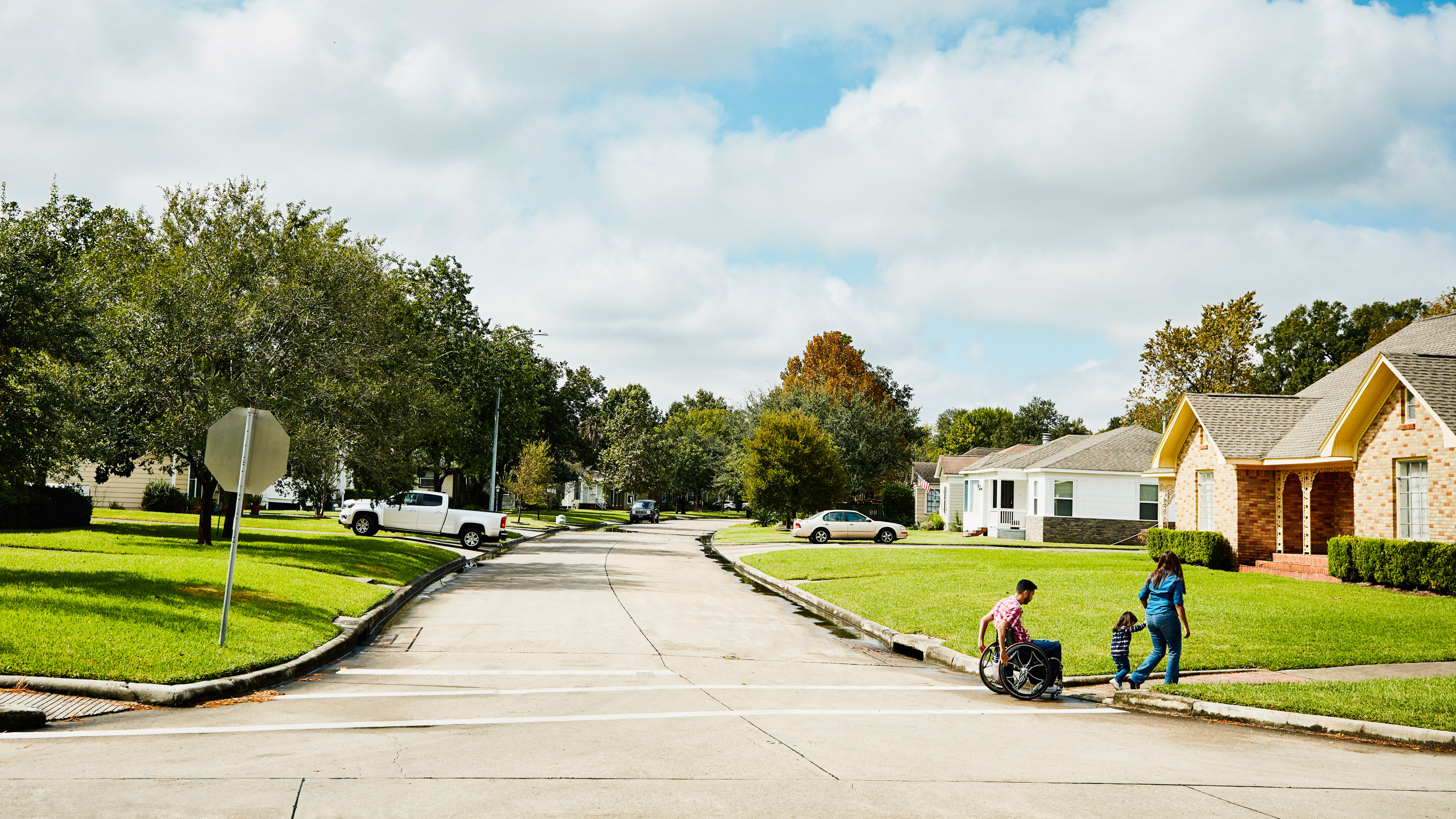
The future is disabled

Looking down a neighborhood street where a man in wheelchair has crossed with wife and daughter.

We need to take steps toward a more inclusive future—one that we all can inhabit.

“Technology,” wrote the late historian of technology Melvin Kranzberg Jr., “is neither good nor bad, nor is it neutral.” It’s an observation that often doesn’t stick with people as they think about technologies related to accessibility.

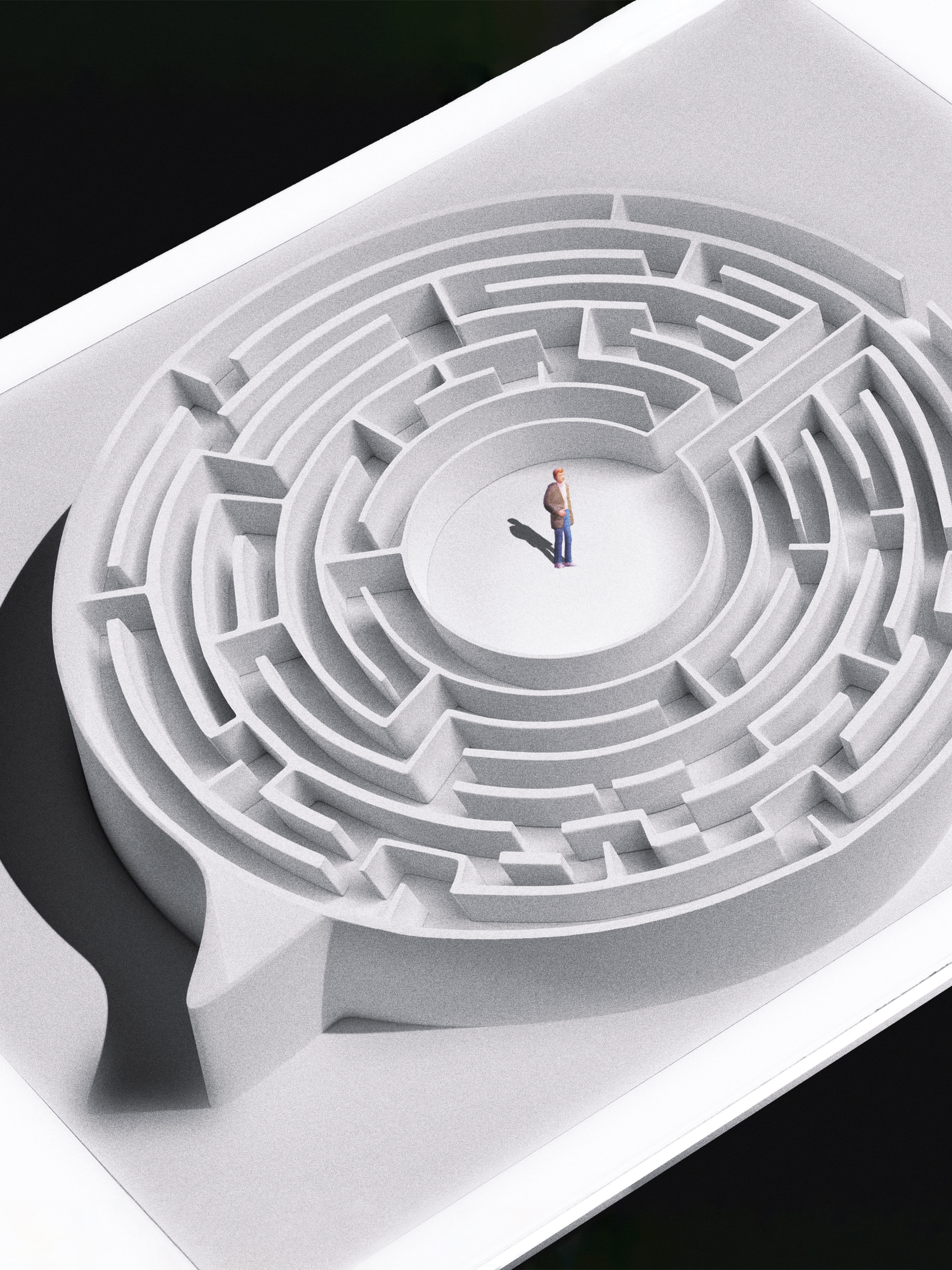
The iPad was meant to revolutionize accessibility. What happened?

a tiny person in the center of a maze protruding from the screen of an iPad

For people who can’t speak, there has been depressingly little innovation in technology that helps them communicate.

A piece of hardware, however impressively designed and engineered, is only as valuable as what a person can do with it. After the iPad’s release, the flood of new, easy-to-use AAC apps that LoStracco, Shevchenko, and their clients wanted never came. 

Climate Change: A Review Of High-Tech Solutions

DW Documentary (June 13, 2023) – Can high-tech solutions help protect the climate? What would be the side effects of further human intervention in nature?

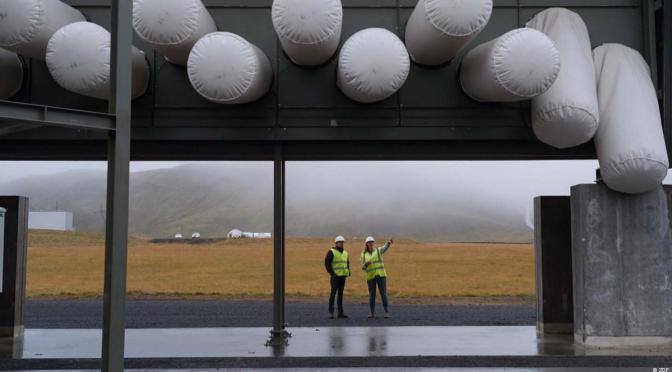
Attempts are being made to reduce the CO2 in the atmosphere with technical solutions. For example, new carbon capture technology that can extract CO2 from air and water, even if the amount currently captured is minimal and not enough to prevent the climate crisis and its consequences. Still, there is no shortage of ideas. Adding basalt rock dust to agricultural fields not only binds carbon dioxide but keeps the soil fertile.

Biochar, made from organic waste, has a similar effect. Some ideas are bolder: A protective screen of particles in the upper layers of the atmosphere could filter sunlight, as seen with the eruption of the Pinatubo volcano in the Philippines in 1991. The millions of tons of sulfur dioxide spewed into the stratosphere cooled the earth significantly.

Theoretically, aircraft could be used to deliver the particles. But experts warn that the consequences for humans and the weather would be felt worldwide and could never be fully controlled.

#documentary #dwdocumentary #climatechange

Environment: The Grand Canyon Is Losing Its River

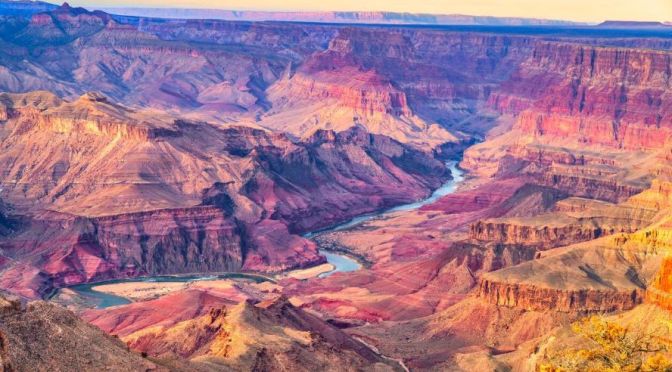
Long shadows are in the foreground of a view of the reddish canyon walls, which loom on either side and ahead. The sky is blue with ribbed white clouds.

The New York Times (June 6, 2023) – Down beneath the tourist lodges and shops selling keychains and incense, past windswept arroyos and brown valleys speckled with agave, juniper and sagebrush, the rocks of the Grand Canyon seem untethered from time. The oldest ones date back 1.8 billion years, not just eons before humans laid eyes on them, but eons before evolution endowed any organism on this planet with eyes.

The Grand Canyon, a Cathedral to Time, Is Losing Its River

Written and photographed by Raymond Zhong, who joined scientists on a 90-mile raft expedition through the canyon.

About half a dozen people with orange life jackets ride a blue raft on a murky, brownish and somewhat choppy Colorado River. Rust-colored canyon walls loom on either side and ahead of them. Three other rafts are in the distance.

Since 1963, the Glen Canyon Dam has been backing up the Colorado for nearly 200 miles, in the form of America’s second-largest reservoir, Lake Powell. Engineers constantly evaluate water and electricity needs to decide how much of the river to let through the dam’s works and out the other end, first into the Grand Canyon, then into Lake Mead and, eventually, into fields and homes in Arizona, California, Nevada and Mexico.


Spend long enough in the canyon, and you might start feeling a little unmoored from time yourself.

A spring that looks like a narrow waterfall cascades out of a hole in a canyon wall down into a calm part of the Colorado River. The canyon walls are rust-red.
North Canyon, and a spring at Vasey’s Paradise.

The immense walls form a kind of cocoon, sealing you off from the modern world, with its cell signal and light pollution and disappointments. They draw your eyes relentlessly upward, as in a cathedral.

You might think you are seeing all the way to the top. But up and above are more walls, and above them even more, out of sight except for the occasional glimpse. For the canyon is not just deep. It is broad, too — 18 miles, rim to rim, at its widest. This is no mere cathedral of stone. It is a kingdom: sprawling, self-contained, an alternate reality existing magnificently outside of our own.

And yet, the Grand Canyon remains yoked to the present in one key respect. The Colorado River, whose wild energy incised the canyon over millions of years, is in crisis.

Read more

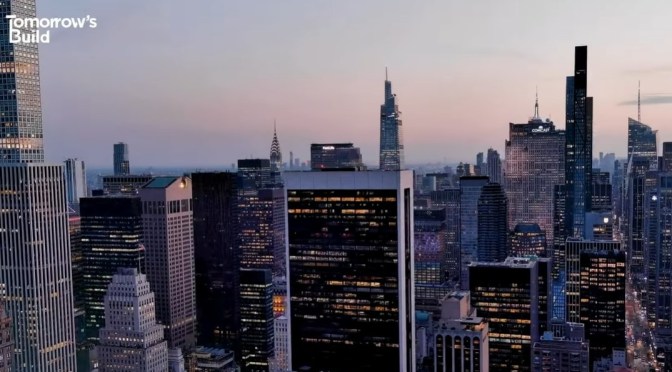
Emissions: The Problem With NYC’s Skyscrapers

Tomorrow’s Build (May 9, 2023) – Thousands of Manhattan’s tall buildings now HAVE to change.

Local Law 97

Buildings account for approximately two-thirds of greenhouse gas emissions in New York City and Mayor de Blasio has pledged to address these emissions as part of his plan to make the city carbon neutral by 2050.
 
Local Law 97 is one of the most ambitious plans for reducing emissions in the nation. Local Law 97 was included in the Climate Mobilization Act, passed by the City Council in April 2019 as part of the Mayor’s New York City Green New Deal.
 
Under this groundbreaking law, most buildings over 25,000 square feet will be required to meet new energy efficiency and greenhouse gas emissions limits by 2024, with stricter limits coming into effect in 2030. The goal is to reduce the emissions produced by the city’s largest buildings 40 percent by 2030 and 80 percent by 2050. The law also established the Local Law 97 Advisory Board and Climate Working Groups to advise the city on how best to meet these aggressive sustainability goals. 
 
Local Law 97 generally covers, with some exceptions:

  • Buildings that exceed 25,000 gross square feet;
  • Two or more buildings on the same tax lot that together exceed 50,000 square feet;
  • Two or more buildings owned by a condo association that are governed by the same board of managers and that together exceed 50,000 square feet. 

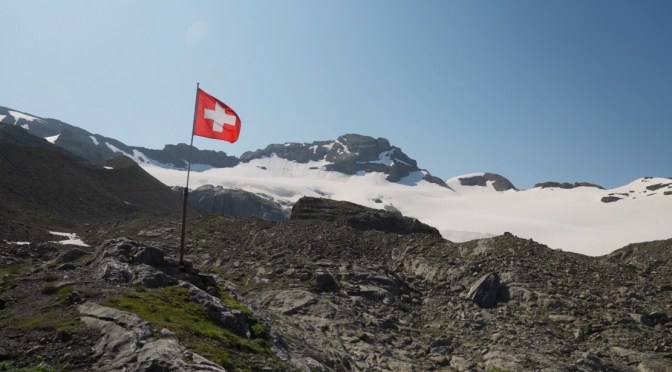
Climate Change Films 2023: Switzerland- ‘The Last Ice’

Alessandro Rovere Films (May 3, 2023) – The Last Ice showcases two cultures, laying on the same longitude on opposite sides of our planet, who have for generations relied on their deep connection with nature to sustain their way of life.

DIRECTOR / PRODUCER / EDITOR / DRONE: ALESSANDRO ROVERE
CLIENT: KLIMAHAUS BREMERHAVEN

However, the devastating effects of climate change have begun to threaten the future of a Swiss mountain village and the Yupik people, on a small island in the Bering Sea, Alaska.

The film was created in collaboration with, and exhibited at, the German Climate Museum, Klimahaus Bremerhaven, as a reminder of the common ground and concerns shared by communities worldwide in the face of climate change and humanity’s heavy dependence on nature.

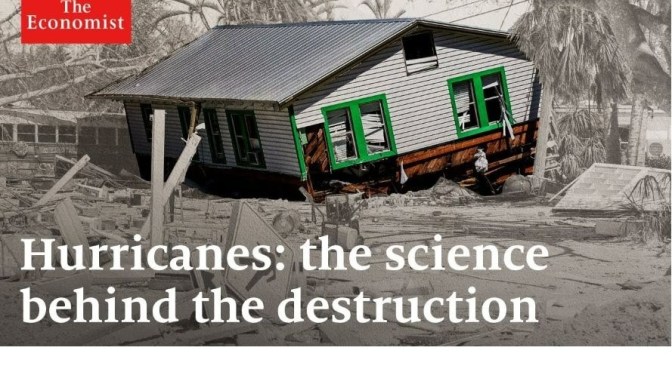
Hurricanes: The Science Behind Their Destruction

The Economist (May 5, 2023) – Hurricanes are among the most dangerous natural phenomena on earth, causing billions of dollars of damage and destroying lives every year. But what turns a peaceful patch of ocean into the planet’s most destructive force, and how is this process being affected by climate change?

Video timeline: 00:00 – What are tropical cyclones? 00:46 – The history of tropical cyclones 02:06 – How do they form? 04:33 – What happens when they reach land? 07:13 – What is the impact of climate change?

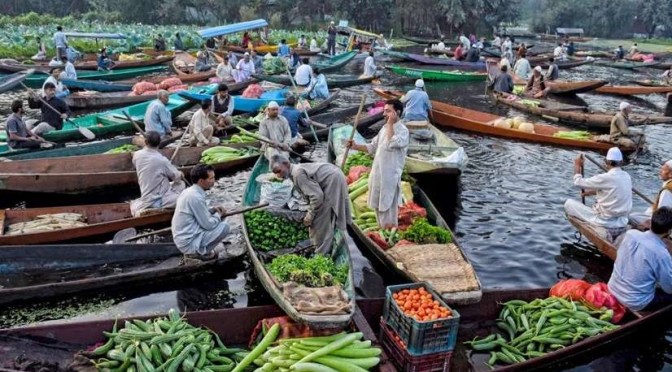
Culture: Dal Lake Floating Market, Srinagar, Kashmir

Insider Business (April 21, 2023) – For generations, farmers in Indian-administered Jammu and Kashmir have been selling their crops on the Dal Lake in a floating market. The lake is an economic hub for people living there – with many working in agriculture, fishing, and tourism. But decades of pollution have threatened their livelihoods.

The floating vegetable market on Dal Lake is in Srinagar, Kashmir, where locals trade out of their canoes. The produce sold here is grown in floating gardens.. The rich ecosystem of this wetland produces plenty of tomatoes, cucumbers, water chestnuts and the famous nadru (lotus roots, a delicacy in the Kashmir Valley).

They gather in the centre of the lake at dawn, and disappear just as sunlight hits the waters.

Climate Change: 10 Foods That Keep Getting Pricier

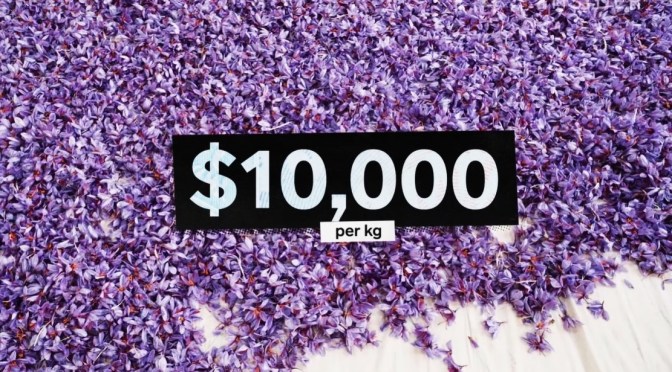
Insider Business (April 4, 2023) – Purple flowers in Kashmir produce the world’s most expensive spice — saffron. While it can sell for $10,000 per kilogram, climate change is making it even more expensive. Because of lower-than-usual rainfall over the last few years, production has dropped significantly.

And fields that once yielded this delicate spice have become sites for new housing construction. Climate change is threatening the production of all kinds of foods from cloves in India to eels in Japan and Spain. Here are 10 expensive, and vulnerable, foods and why climate change is making them so much more expensive.