


Country Life Magazine – February 27, 2024: The latest issue features ‘Britain’s Top Dogs’ – Our favorites, decade by decade…

Country Life Magazine – February 27, 2024: The latest issue features ‘Britain’s Top Dogs’ – Our favorites, decade by decade…



Workers sent from the country to Chinese factories describe enduring beatings and sexual abuse, having their wages taken by the state, and being told that if they try to escape they will be “killed without a trace.”

Disturbances on the sun may have the potential to devastate our power grid and communication systems. When the next big storm arrives, will we be prepared for it?
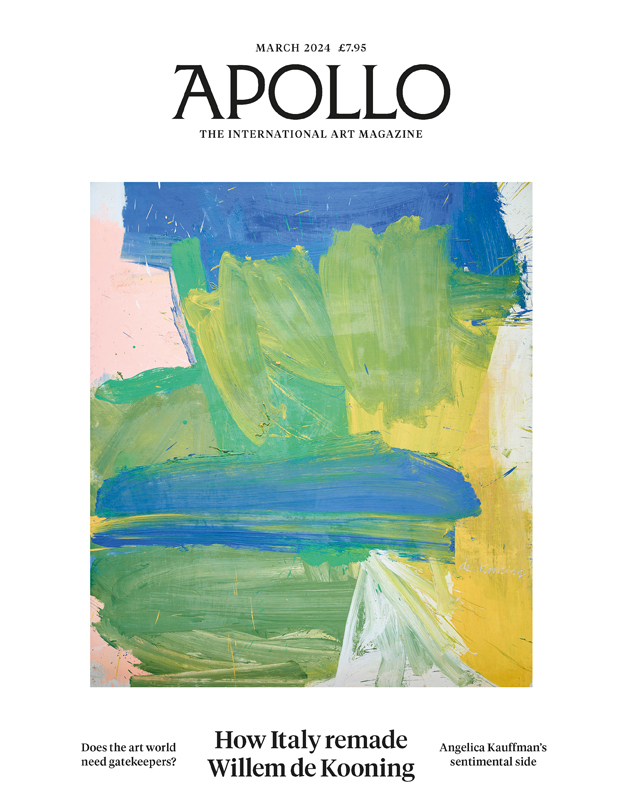


The Haitian-Canadian artist surrounds himself with unlikely objects to spark his imagination, books about drawing, and about 25 different types of tea

These timepieces are fluttering, chiming embodiments of how Britain and China traded with each other in the 18th and 19th centuries

At the Whitechapel Gallery, the French-Algerian unspools personal and political histories through imitation sets and empty stages
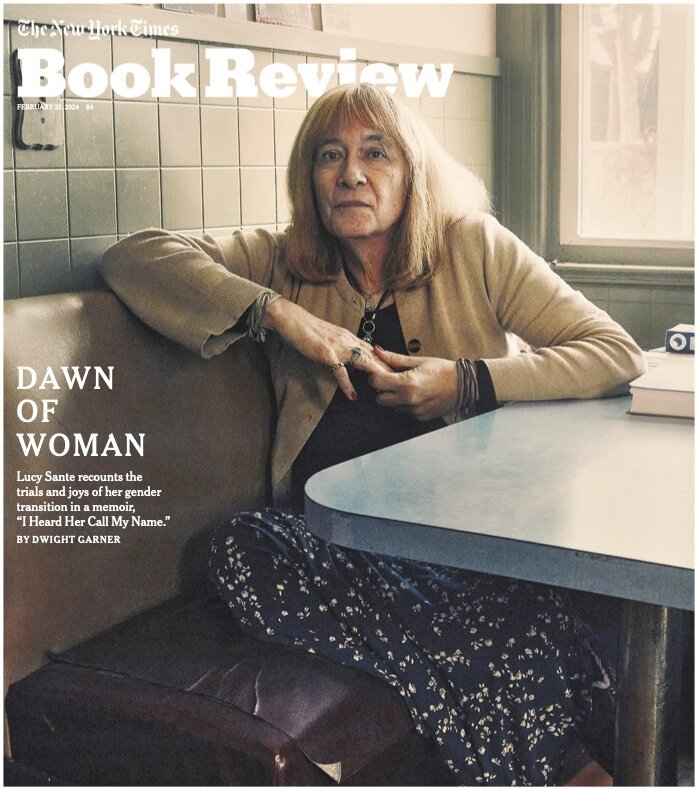

THE NEW YORK TIMES BOOK REVIEW (February 23, 2024): The latest issue features ‘Dawn of Woman’ – Lucy Sante recounts the trials and joys of her gender transition in a memoir, “I Heard Her Call My Name”…

In her memoir “I Heard Her Call My Name,” the author reflects on her life and embarking on a gender transition in her late 60s

In “Strong Passions,” the historian Barbara Weisberg tells the story of an explosive, lurid 1860s case that still resonates today.

Country Life Magazine – February 21, 2024: The ‘The Fine Arts Issue’ – Artists who say it with flowers and the AI debate; Wig law, daffodils and how does your hedgerow grow?….
With the technology powering artificial intelligence advancing so rapidly, what can artists do to protect their original work?
Michael Prodger examines how flowers have inspired artists for centuries, from the ancient Egyptians up to the present day

The periwigs that were a 17th-century status symbol are still a mainstay of our legal system, as Agnes Stamp discovers
They have long been used to contain cattle or define boundaries, but hedges can be beautiful, too, argues Charles Quest-Ritson

Alan Titchmarsh takes a wander with Wordsworth as he dreams of spring daffodils ‘fluttering and dancing in the breeze’
The architect falls under the spell of a gritty, but humorous work
Jamie Blackett is ready to man the barricades to scupper plans for an unwanted national park
John Goodall applauds the restoration of Leighton House in London, which formed the hub of a 19th-century celebrity circle

Mary Miers follows the globe-trotting Sir John Lavery from Ireland to Africa and beyond
An inspiring oil painting was at the centre of a heist with a happy ending, reveals Carla Passino
A protective force in China and Wales, but a symbol of greed and evil in England: Lucien de Guise delves into dragon lore

Hetty Lintell celebrates the best of the Art Deco era with earrings old and new, but always modern
The astonishing King’s Lodge suite at The Connaught is fit for a monarch, finds Rosie Paterson
Amelia Thorpe shares the very best of London Design Week
Tilly Ware meets the wild-seed pioneer ‘nurturing the future’
Ben Lerwill finds the salt of the earth on the coast of Scotland

Melanie Johnson on rhubarb
A real-life couple are in harmony on stage, finds Michael Billington


Lawsuits. Unlicensed dispensaries. Corporations pushing to get in. The messy rollout of a law that has tried to deliver social justice with marijuana.

The Florida Republican is among the most brazen and controversial figures in Donald Trump’s G.O.P. He’s also among the most influential.
Representative Matt Gaetz arrived at the White House in the last days of 2020, amid a gathering national crisis. President Donald Trump had lost his bid for reëlection the previous month, and his allies were exploring strategies to keep him in office. Though only thirty-eight years old, Gaetz, the scion of a political family in Florida’s Panhandle, had become one of the Republican Party’s most prominent and divisive figures. His dark hair styled in a kind of bouffant, his lips often curled in a wry smile, Gaetz bore a resemblance to Elvis Presley, or, in the description of a Florida friend, “either Beavis or Butt-head.” He was quick-witted and sometimes very funny, and he loved to taunt his enemies, who were numerous, especially in his own party. “He’s the most unpopular member of Congress, with the possible exception of Marjorie Taylor Greene, and he doesn’t care,” a fellow-congressman told me.

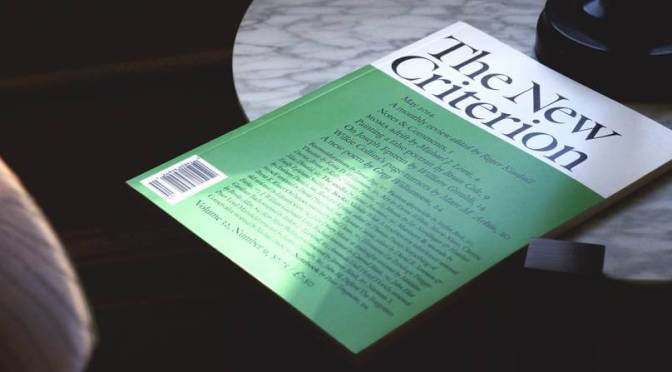
 The New Criterion – The March 2024 issue features:
THE NEW YORK TIMES BOOK REVIEW (February 16, 2024): The latest issue features ‘Philip Gefter’s sizzling, “unapologetically obsessive” new book, “Cocktails With George and Martha: Movies, Marriage and the Making of ‘Who’s Afraid of Virginia Woolf?’” Our critic Alexandra Jacobs calls it “a shot glass filled with one work that, alongside contemporaneous books like Richard Yates’s novel ‘Revolutionary Road’ and Betty Friedan’s polemic ‘The Feminine Mystique,’ showed how the ‘cartoon versions of marriage’ long served up by American popular culture always came with a secret side of bitters.”

With Burton and Taylor as stars and a writer and director feuding, adapting the scabrous play wasn’t easy. “Cocktails With George and Martha” pours out the details.

A story collection from Diane Oliver, who died at 22, locates the strength in Black families surviving their separate but equal surroundings.
In her powerful new memoir, the author examines a life composed of conflicting identities — and fierce, contradictory desires.

Country Life Magazine – February 13, 2024: The latest ‘How Do I Love Thee?’ – Let me count the ways; Rough collies, red roses and royal caviar; Glass acts – the coolest conservatories; Head start – why real gentlemen wear hats….
With its velvety, softly scented depths, the red rose has long beguiled lovers. Charles Quest-Ritson falls under its spell
Tom Parker Bowles savours the unctuous delights of caviar from the mother-daughter team at King’s Fine Foods, ethically farmed and utterly delicious

Famed for their loyalty, rough collies are happy finding hidden sheep, bounding up Munros or simply curling up with children. Katy Birchall meets Lassie
Time was when every gentleman of every background wore a hat. It’s time to fall back in love with bowler, beret and bonnet, recommends John F. Mueller
Amelia Thorpe admires the most stylish conservatories
The composer chooses an ethereal Italian scene that literally reflects his own music
Fiona Reynolds explores the environs of St Albans in Hertfordshire, from the longest nave in Europe to the River Ver
With imagination and style, late-18th-century Marlwood Grange in Gloucestershire has been transformed into a family home fit for the 21st century, discovers Jeremy Musson

Hetty Lintell gets a handle on the most colourful handbags
As the famous opera house at Glyndebourne, East Sussex, turns 90, the gardens are more glorious than ever. Tiffany Daneff admires a symphony of planting
Tom Parker Bowles tucks into the succulent, comforting suet pudding, an old favourite that deserves to return to our plates
Admired for his portrayal of dewy eyes and diaphanous fabrics, John Singer Sargent rose to the top of the portrait-painting world. Mary Miers follows his career from peripatetic childhood to Society favourite

THE NEW YORK TIMES BOOK REVIEW (February 9, 2024): The latest issue features ‘Armed And Dangerous’ – Two new books – “One Nation Under Guns”, by Dominic Erdozain, and “What We’ve Become”, by Jonathan M. Metzl – examine America’s gun culture and its costs…

Two new books consider how the country’s obsession with firearms has become an existential threat.
By Rachel Louise Snyder
ONE NATION UNDER GUNS: How Gun Culture Distorts Our History and Threatens Our Democracy, by Dominic Erdozain
WHAT WE’VE BECOME: Living and Dying in a Country of Arms, by Jonathan M. Metzl
Last year, a friend from Brunei visited me in the United States. She is American but was raised in Sudan and has lived in Cambodia and Scotland, among other places. We were talking about the rise in anxiety among teenagers in America when another friend texted me; her daughter had just arrived home from school, where she’d spent the afternoon in lockdown. “Of course your kids have anxiety,” my Brunei friend said. “They’re being raised in a war zone.”

In Margot Livesey’s new novel, “The Road From Belhaven,” a 19th-century farm girl’s life and maturity are complicated by her uncontrollable visions of accident and disaster.
By Daisy Lafarge
Lizzie Craig has a gift: She sees “pictures” of events before they take place. It happens first when she’s 10, with a vision in which her grandfather’s scythe slips from a whetstone and injures his leg. It’s the tail end of the 19th century in Fife, rural Scotland, where Lizzie is brought up by her grandparents on Belhaven Farm. Her pictures, more often than not, are premonitions of accidents and disasters: a hurt leg, a wheel coming off a cart, a tree hit by lightning. They tend to arrive “a few weeks before the accident,” giving Lizzie time to prepare, and sometimes, intervene accordingly.



 Intellicurious