
The main hall garden is of the “pond” style, formally known as “chisenkai kaiyuushiki garden” (池泉回遊式庭園). The only island stone of the pond represents a ship and is called “funaishi”, which means… ship stone 😉

The main hall garden is of the “pond” style, formally known as “chisenkai kaiyuushiki garden” (池泉回遊式庭園). The only island stone of the pond represents a ship and is called “funaishi”, which means… ship stone 😉
Monocle on Sunday, January 21, 2024 – Georgina Godwin, Charles Hecker and Latika Bourke on the weekend’s biggest talking points. We also speak to Monocle’s editorial director, Tyler Brûlé, in Paris and Monocle’s correspondent, Mary Fitzgerald, reporting from Granada, Spain this week.

Some Israeli commanders said the government’s two main goals were mutually incompatible. To eradicate Hamas, the military would have to engage in a lengthy war that would most likely cost the hostages’ lives.
The old guard of the Republican Party has rallied around Nikki Haley ahead of New Hampshire’s primary, in a long-shot bid to stop the former president’s march to the nomination.
The backlash against “wokeism” has led a growing number of states to ban D.E.I. programs at public universities. Thousands of emails and other documents reveal the playbook — and grievances — behind one strand of the anti-D.E.I. campaign.
The claims involving Fani Willis and Nathan Wade, the special prosecutor she hired to manage the sprawling case in Georgia, have led to new questions about Mr. Wade’s qualifications.

BARRON’S MAGAZINE – JANUARY 22, 2024 ISSUE:

The 77 companies featured in bullish Barron’s articles last year returned nearly 10% on average, slightly trailing their benchmarks. Here’s what we got right—and wrong.
Tech, energy, entertainment, and more ideas to power your portfolio.
Monocle on Saturday, January 20, 2024: What are the key takeaways from the interview with German defence minister, Boris Pistorius? Which country is the common link in the recent Middle Eastern conflicts, and why?
Join Georgina Godwin and Austrian journalist Tessa Szyszkowitz for this and more from the week’s news and culture. Plus: Monocle’s Lilian Fawcett visits Singapore’s international art fair, ART SG, to find out how Singapore is trying to establish itself as a global art hub.


Protesters demanded action to free hostages, a war cabinet minister criticized the military campaign and the Israeli prime minister publicly ruled out a two-state solution, rebuffing the U.S.
Unable to fathom a 2020 rematch, many Americans are clinging to forlorn hopes and floating wild theories — including that Michelle Obama might replace President Biden.
After a long struggle for acceptance, Israel’s female combat soldiers are pushing new boundaries after rushing into battle on Oct. 7.
The country had made great progress against H.I.V. Now terrified patients have fled clinics, and experts fear a resurgence.


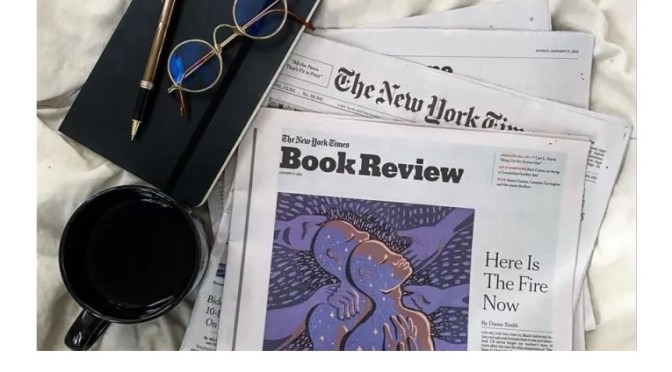
THE NEW YORK TIMES BOOK REVIEW (January 19, 2024): The latest issue features the excitement over advance copy reviews of a January novel, Kaveh Akbar’s “Martyr!” …“You’ve got to read this,” one editor said. “One of the most electric novels I’ve read in a long while,” another said. This kind of thing — everyone thrilled by the same book — is unusual at the TBR, and explains why “Martyr!,” about a grieving young man’s search for meaning, graces our cover this week.

In “Martyr!,” the poet Kaveh Akbar turns a grieving young man’s search for meaning into a piercing family saga.
Martyr!, by Kaveh Akbar
Reviewed by By Junot Díaz
Cyrus Shams, the aching protagonist at the heart of Kaveh Akbar’s incandescent first novel, is a veritable Rushdiean multitude: an Iranian-born American, a “bad” immigrant, a recovering addict, a straight-passing queer, an almost-30 poet who rarely writes, an orphan, a runner of open mics, an indefatigable logophile, a fiery wit, a self-pitying malcontent. But above all else Cyrus is sad; profoundly, inconsolably, suicidally sad.
Here are the books discussed in this week’s episode:
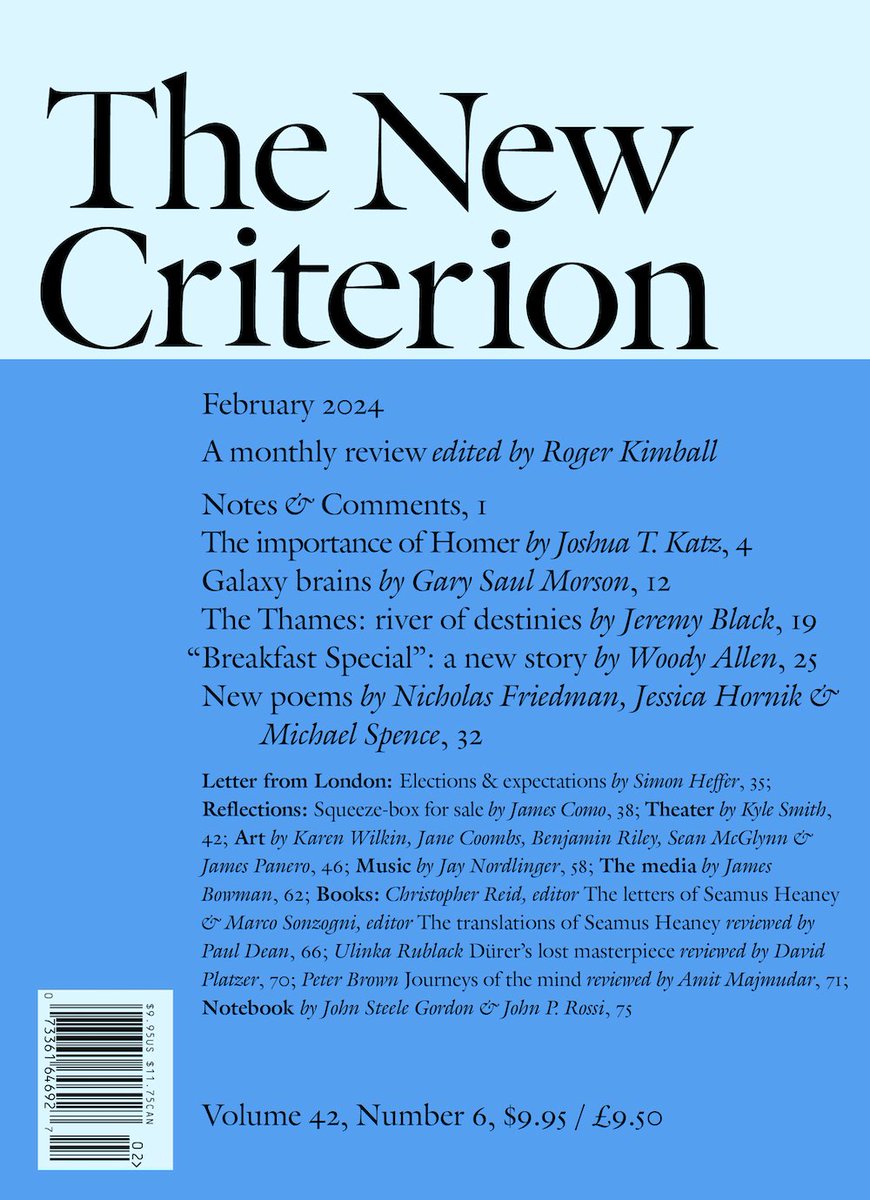
 The New Criterion – The February 2024 issue features:
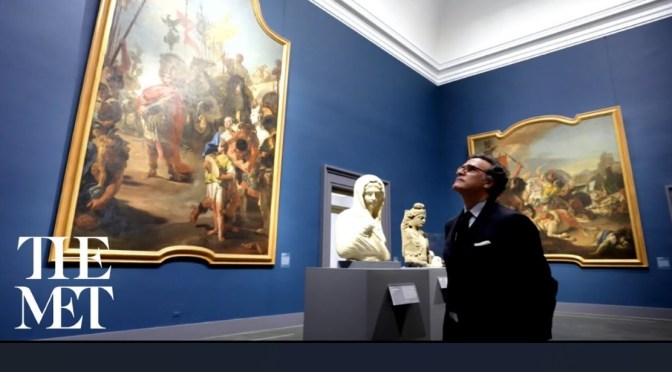
The reconfigured galleries highlight fresh narratives and dialogues among more than 700 works of art from the Museum’s world-famous holdings, which include recently acquired paintings and prestigious loans, as well as select sculptures and decorative art, showcase the interconnectedness of cultures, materials, and moments across The Met collection.

Video timeline: 00:00 – Introduction to the 200 Year Old Home 01:02 – The Original Concept 02:13 – Seeking Perfection Through Form 03:00 – Behind The Material Palette 04:30 – The Relationship Between Builder and Architect 05:26 – Experiencing the Intimacy of the Home 06:50 – Favourite Aspects
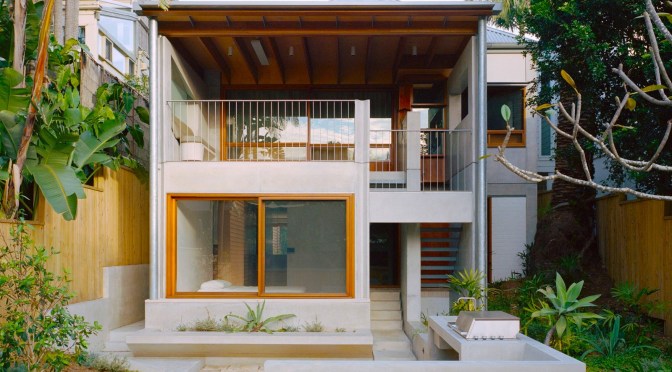
“What we have tried to do is seek aspects of perfection in form that enable us to encourage something in the human condition which isn’t able to be seen, but is perhaps only able to be felt,” reflects Angelo. Here, the architect redesigns a 200 year old home in Sydney’s Watsons Bay. The front façade appears as a humble, one-storey traditional cottage that sits in contrast to the two-storey, modern, geometric façade at the rear. The way the architect redesigns a 200 year old home was a step away from the client’s original brief – removing the existing cottage and creating a large home.
After many discussions, the client developed a modesty about their brief. “It meant we could work with an incredibly quiet house… something that is purely an interior design,” says Angelo. The architect redesigns a 200 year old home with a material palette that is simultaneously robust, raw and refined. Timber flooring and ceilings make the space feel spacious yet cosy and is also used in the kitchen for joinery, the dining table and the base of the island bench. This is complemented by the heavy use of concrete for walls, stairs and detailing, softened by round curves. Styling is dominated by minimalist furniture and neutral tones.