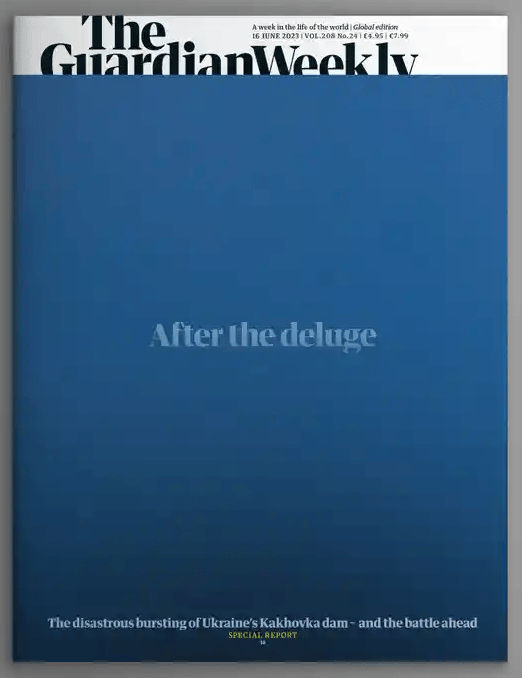
More than a week has passed since the collapse of the Kakhovka dam in Ukraine. Only as the flood waters begin to recede is the long-term scale of the disaster becoming apparent.
With suspicion (though not yet, according to western capitals, conclusive proof) falling on Moscow, Dan Sabbagh, Artem Mazhulin and Julian Borger report on a human and environmental catastrophe, and what it might mean for Ukraine’s counteroffensive plans against Russia.
And amid reports of disunity among Moscow’s ruling elite, Shaun Walker went along to a gathering of exiled influential Russians who are once again daring to dream of an end to Vladimir Putin’s rule.
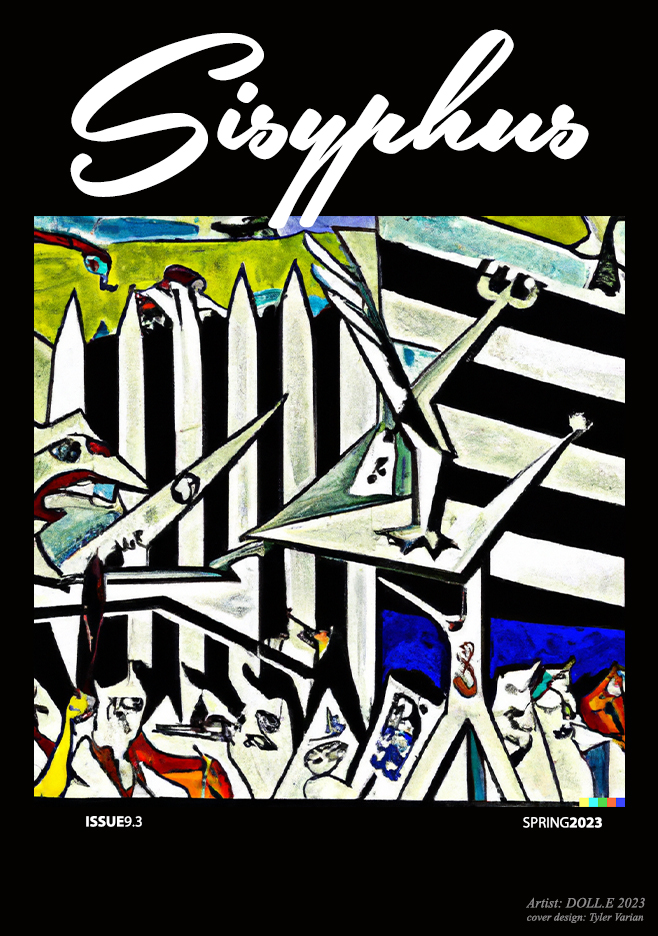
SISYPHUS MAGAZINE (SPRING 2023) – This issue explores the theories in society that subjectify truth, the influence of social media, philosophical pragmatism, the generational representations of societal ideals, the environmental impact of governmental and private sector choices, the factions of progressive arguments, and the evolution of Sisyphus.
In modern society, it’s difficult to discern what’s real and what’s not in news media’s contemporary platforms and discussions.
Truth is difficult to define but having a correct theory or definition is not the problem. We all know many truths and untruths, without knowing what philosophers have said, and without knowing that many still disagree with each other.
Once lost, the laws might be derived again When necessary, or so you’ve been told. You’re half asleep in January sun. Just out of sight, someone starts bugging you And Steller’s jays. Green hills, blue weather, — noon To bring out Panpipes, but it’s too damn cold.
Both Adam Smith and Karl Marx believed in progress.
The question, therefore, is what do we mean by progress? How do we understand it? How does it operate? How does progress correspond with progressivism? These questions have become important because progressivism has encountered an internal impasse. It has become mired in internal conflict.
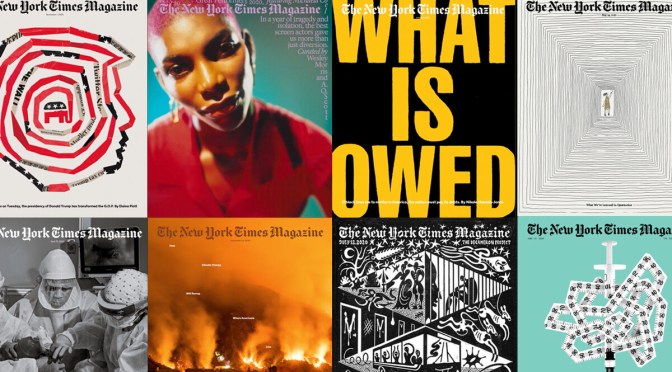
THE NEW YORK TIMES MAGAZINE (June 09, 2023) – Inside the $4-billion credit repair industry. Plus, the mycologist who wants us to learn about the magic of mushrooms and the cringe comedian perfect for this moment.
Taqwanna Clark, a credit-repair agent in Houston and the founder of Credit Lift Inc.Credit…Eli Durst for The New York Times
Desperate to improve their ratings, Americans now spend billions on “credit repair” — but the industry often can’t deliver on its promises.
By Mya Frazier
When Taqwanna Clark went to buy a video camera at Fry’s Electronics in Houston, she asked if they had a layaway plan. The cashier instead handed her an application for a store credit card. She applied. “Instantly, it came back declined — like, No!” she says. “Denied, denied — you know, your credit is not good enough.” Clark was 30 and working as a security guard at the Port of Houston. On weekends, she performed as a rapper in the local club scene, under the name T-Baby. She wanted the camera to shoot music videos, to promote her music career. “If I can’t afford a $200 camera,” she recalls thinking, “then I’m in a bad way with this credit thing.”
Merlin Sheldrake, author of the best-selling book “Entangled Life.”
A vast fungal web braids together life on Earth. Merlin Sheldrake wants to help us see it.
By Jennifer Kahn
One evening last winter, Merlin Sheldrake, the mycologist and author of the best-selling book “Entangled Life,” was headlining an event in London’s Soho. The night was billed as a “salon,” and the crowd, which included the novelist Edward St. Aubyn, was elegant and arty, with lots of leggy women in black tights and men in perfectly draped camel’s-hair coats. “Entangled Life” is a scientific study of all things fungal that reads like a fairy tale, and since the book’s publication in 2020, Sheldrake has become a coveted speaker.
This minor fact is one of the major things I learned at my very awkward dinner interview with Robinson and Zach Kanin, creators of the cult Netflix comedy series “I Think You Should Leave.” Robinson ordered drunken spaghetti with tofu — spicy — and, almost immediately, the spaghetti started to make his voice hoarse. He insisted, however, that this had nothing to do with the spice — in fact, he said, his food wasn’t spicy enough. I asked our server if she could go spicier. She brought out a whole dish of special chiles. Robinson spooned them enthusiastically over his noodles.
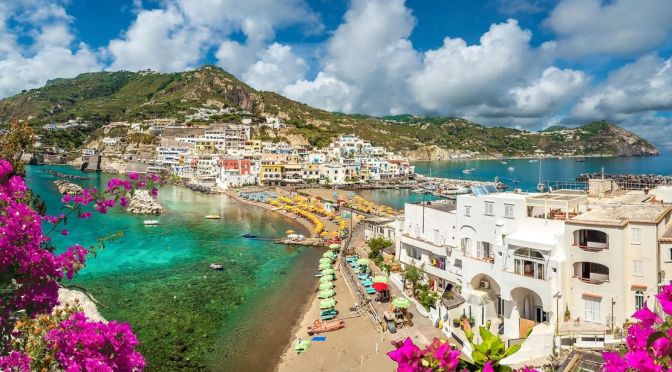
The New York Times Travel (June 9, 2023) – The Italian island, long in the shadow of its fashionable neighbor, Capri, is newly chic, but remains deeply authentic, with rocky harbors more likely to dock fishing boats than megayachts.
The Hotel Mezzatorre is perched on a finger of land with a view onto the bay of Naples and the beach of San Montano below.
Ischia is one of a trio of islands (known as the Phlegraeans) off Naples that also includes Capri and Procida. Capri’s size and popularity with day trippers means it can easily feel overrun and overexposed. Procida is the smallest of the three and has never gotten the attention of its siblings (although it too is worth a visit for its pastel villages and artisan workshops).
La Mortella gardens in Forio were created by the renowned garden designer Russell Page.
Ischia’s magic is that it’s suspended between the newly chic — with the recent overhaul of the Mezzatorre Hotel by the hotelier Marie-Louise Sció, who brought a crowd that had never heard of the island but were fans of her über-photogenic hotels — and the authentic. There are simple bars, beach clubs and harbors more likely to dock fishing boats than megayachts. With a surface area of almost 18 square miles, the island is home to a number of charming villages to explore like Forio, Ischia Ponte, Sant’Angelo and Casamicciola, among others. Add in natural thermal spas, lush vineyards and deserted coves, and it’s easy to see why Ischia is quickly become one of Italy’s rising destinations.
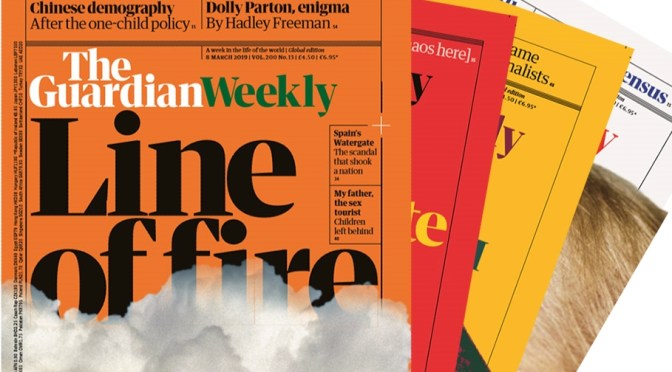
The Guardian Weekly (June 9, 2023)– A year ago, the Indigenous expert Bruno Pereira and Guardian contributor Dom Phillips were murdered in a remote area of the Brazilian Amazon. They had travelled there to meet with Indigenous activists who patrol the Javari valley to protect it from illegal fishing and mining gangs.
Their deaths laid bare the environmental devastation inflicted under Brazil’s former president, Jair Bolsonaro, as well as the extreme threat to those who dare to disrupt the activities of exploitative industries in the region. That’s why, in collaboration with an international journalists’ consortium, the Guardian has published the Bruno and Dom project: a series that seeks to honour their work and continue it. You’ll find a selection of pieces in this week’s Guardian Weekly and the rest are available online.
THE AMERICAN SCHOLAR – SUMMER 2023 issue: What does Antoni van Leeuwenhoek have to do with Covid? Can a digital restoration of a supposed da Vinci be just as good as the real thing? What was it like to be a young journalist on one of François Truffaut’s sets?
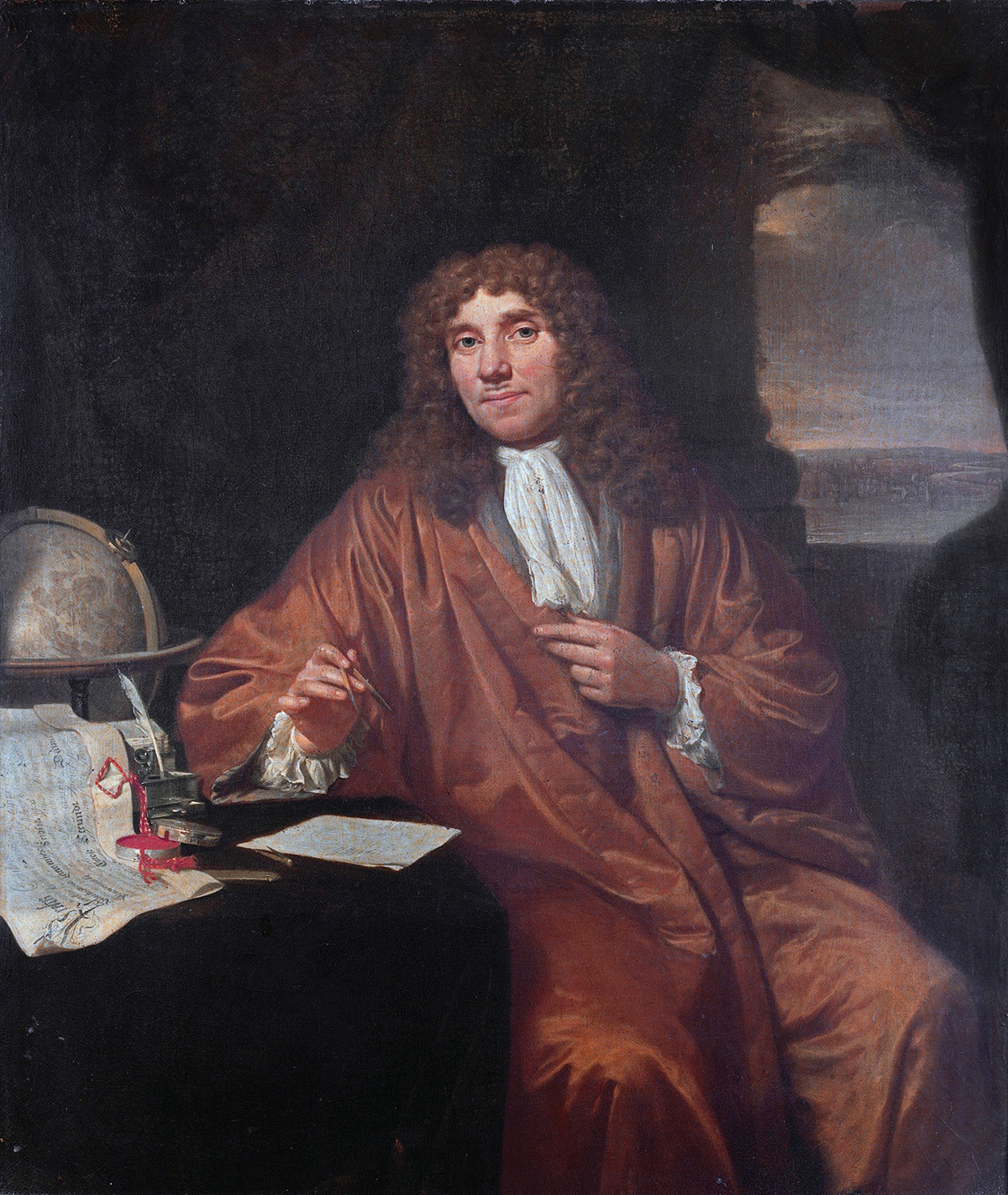
Antoni van Leeuwenhoek, in a circa 1680 painting by the Dutch artist Jan Verkolje, famous for his portraits of prominent members of Delft society
Antoni van Leeuwenhoek’s discovery of microorganisms made possible the revolutionary advances in biology and medicine that continue to inform our Covid age
One night in 1677, a grizzled man in a wrinkled linen nightshirt rushed from his bemused wife’s bed with a candle in hand to examine the “remains of conjugal coitus, immediately after ejaculation before six beats of the pulse.” Using the candle to cast a pool of light in his dark study, he put a drop of the liquid into a tiny glass vial he had blown himself, attaching it to the back of a strange-looking device he had also constructed.
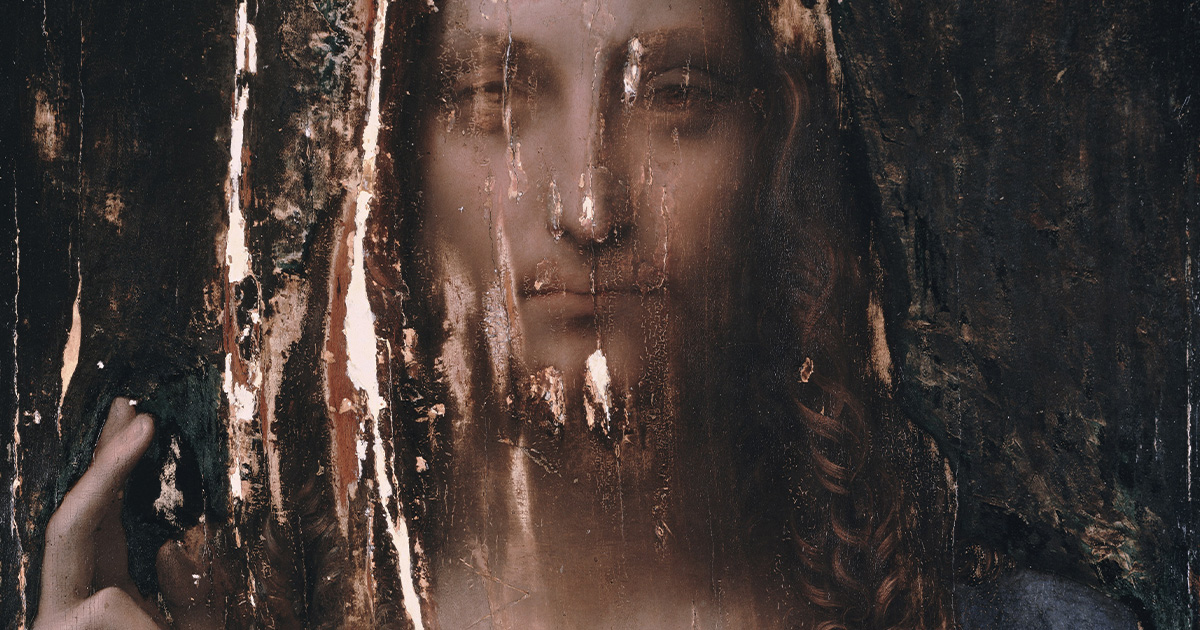
What a digital restoration of the most expensive painting ever sold tells us about beauty, authenticity, and the fragility of existence
I got the call late on a summer afternoon. Yanai Segal, an artist I’ve known for years, asked me whether I’d heard of the Salvator Mundi—the painting attributed to Leonardo da Vinci that was lost for more than two centuries before resurfacing in New Orleans in 2005. I told him that I’d heard something of the story but that I didn’t remember the details. He had recently undertaken a project related to the painting, he said, and wanted to tell me about it. I was eager to hear more, but first I needed to remind myself of the basic facts. We agreed to speak again soon.
Can hard-core gamers learn to play well with others? By Spencer Kornhaber
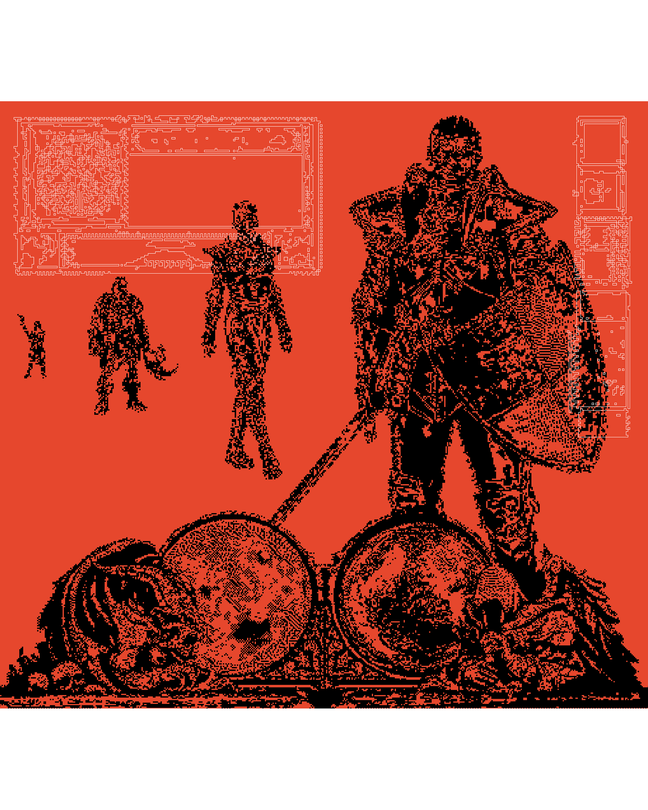
Playing a prerelease version of Diablo IV, the latest installment in a 26-year-old adventure series about battling the forces of hell, I faced swarms of demons that yowled and belched. My character, a sorcerer, shot them with lightning bolts, producing a jet-engine roar.
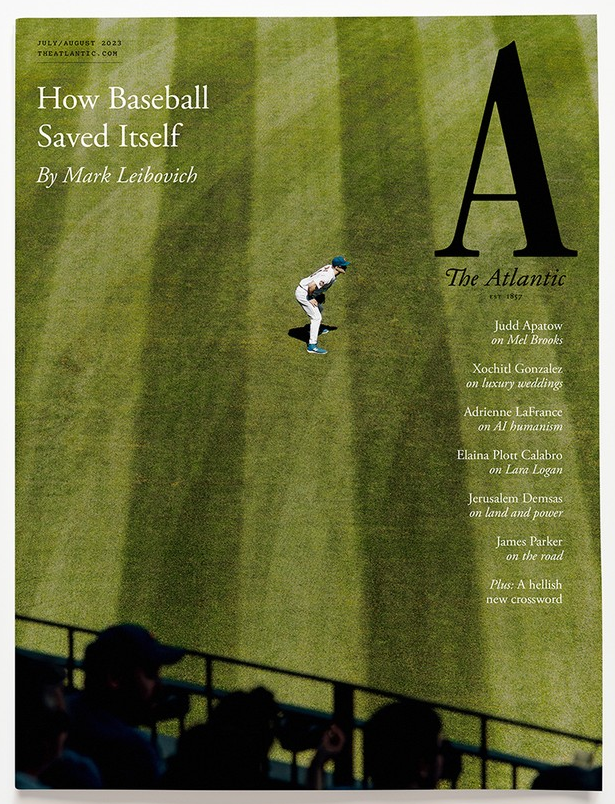
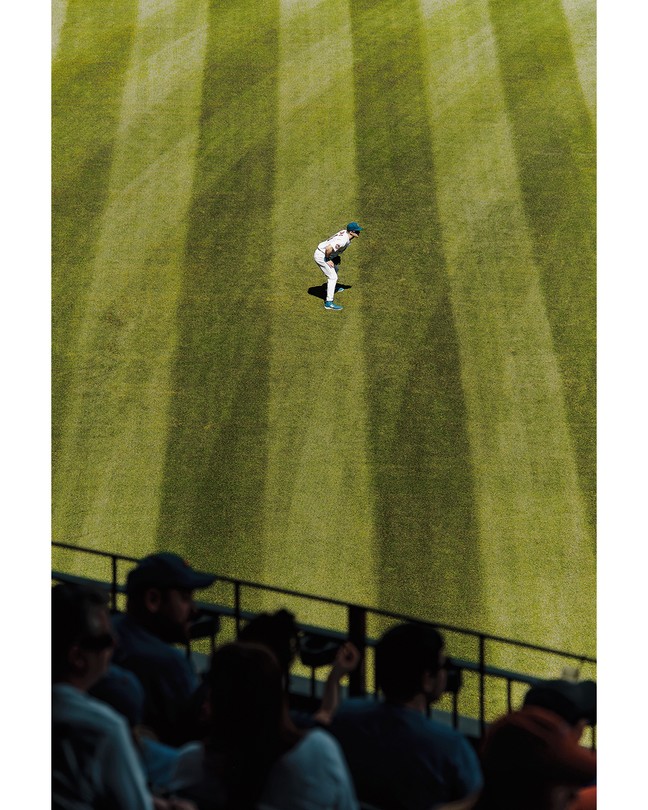
Inside the desperate effort to rescue America’s pastime from irrelevance By Mark Leibovich
Where in the name of human rain delays is Juan Soto?
The stud outfielder is late. Everyone keeps checking their phones—the antsy Major League Baseball officials, the San Diego Padres PR guy, the handful of reporters, and the assorted hangers-on you encounter around baseball clubhouses. Everyone is wondering when the Padres superstar will show up. He was supposed to be here half an hour ago, just after this baseball players’ sanctum opened and we were allowed to join them in their most elemental of baseball activities: waiting around.
THE NEW YORK TIMES MAGAZINE (June 4, 2023) – California is the place where the future happens, for good and ill. That’s part of its magic. Read our first-ever California Issue to find out what roads the state will take us down next.
Inside: A fight over a parking lot that explains the housing crisis; the future of California’s power to shape national policy; how the state is adapting to a warming world — and more.
From reparations to tax revolts, the Golden State tries out new ideas all the time. What roads will its latest experiments send us down?
By Laila Lalami
I remember my first glimpse into the future. In August 1992, when I arrived in California as a student, I discovered during orientation that the university required all incoming students to have something called an email account. To access it, I had to call up a text-based mail client on Unix, using a series of line commands. If I needed a file that sat on a university computer in New York, I could use file transfer protocol to download it in Los Angeles, the whole process taking no more than a few minutes. That’s brilliant, I remember thinking.
For a while this winter, seemingly every text message that Buffy Wicks received asked if she was running for Congress. Representative Barbara Lee, of California’s 12th District, which includes Oakland, had announced that she would enter the race for Dianne Feinstein’s soon-to-be-vacated Senate seat. This decision by Lee, who is 76, created a rare opportunity for the next generation of California Democrats to vie for federal office. And Wicks — a 45-year-old State Assembly member who lives in Lee’s district and was last re-elected with 85 percent of the vote — seemed like a natural candidate.
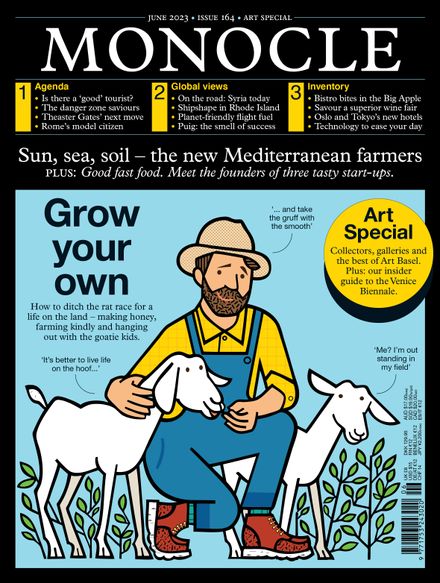
Monocle Magazine (May 2023 issue) – Ever dreamed of ditching the rat race for a life on the land? We meet the new Mediterranean farmers doing just that in the latest edition of Monocle.
Issue 164 also includes an Art Special that puts collectors, galleries and this year’s Art Basel in the frame.
Plus: a guide to the Venice Architecture Biennale and a rare venture into Syria.
Ever dreamed of ditching the rat race for a life on the land?
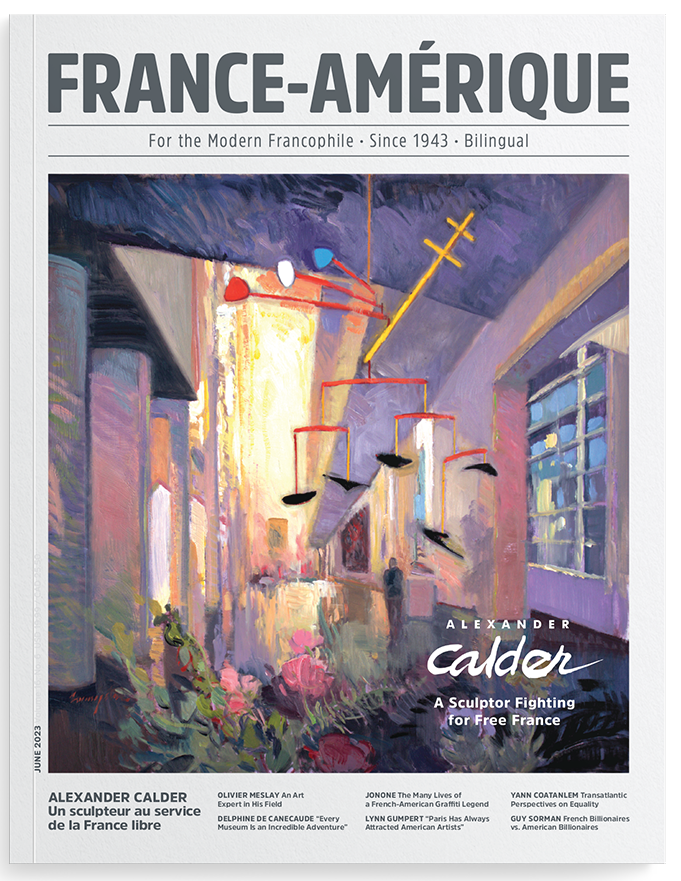
France-Amérique Magazine – June 2023– The issue explores the art world on both sides of the Atlantic Ocean! First, read how American sculptor Alexander Calder produced a mobile to support Free France during World War II – this is our cover story.
LYNN GUMPERT – “Paris Has Always Attracted American Artists”
By Guy Sorman
A book co-edited by Lynn Gumpert, director of the Grey Art Gallery at NYU, is shaking up preconceptions about the contribution of American artists in France following World War II. We asked her about this little-known period, when Paris was still as much a hub of artistic creativity as New York City.
Also in this issue, discover the little-known contribution of American artists in 1950s France; read our interview with Delphine de Canecaude of Chargeurs Museum Studio, the French company that has outfitted many of America’s largest museums; and enjoy our profiles of Clark Art Institute director Olivier Meslay and French-American graffiti legend John “JonOne” Perello.
DELPHINE DE CANECAUDE
By Guénola Pellen
“Every Museum Is an Incredible Adventure”
The dynamic fortysomething was hired to run Chargeurs Museum Studio in February. As the world leader in cultural engineering and production, the French company has designed the National Museum of the U.S. Army, the National Museum of African American History and Culture, and the new wing of the American Museum of Natural History, which recently opened in New York City.
News, Views and Reviews For The Intellectually Curious