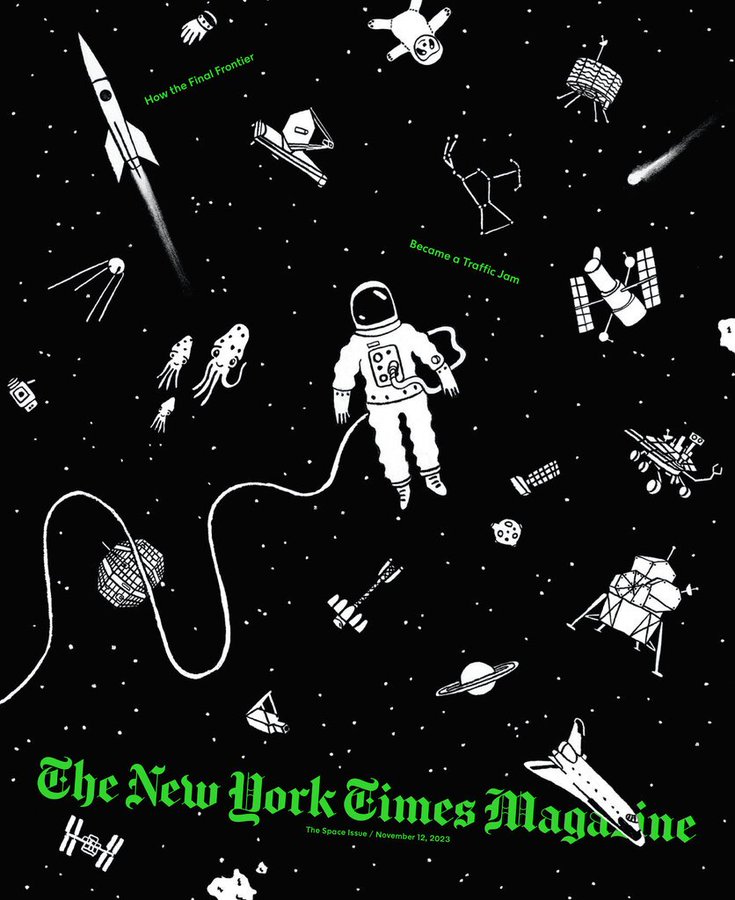
THE NEW YORK TIMES MAGAZINE (November 10, 2023): The latest issue features A Beginner’s Guide to Looking at the Universe; What Does the U.S. Space Force Actually Do? – Inside the highly secretive military branch responsible for protecting American interests in a vulnerable new domain; Their Final Wish? A Burial in Space. – Why some people decide to send their remains into orbit.
A stunning advancement in a long history of stargazing, the James Webb telescope reveals light where once we saw only darkness. Our view of the universe will never be the same.
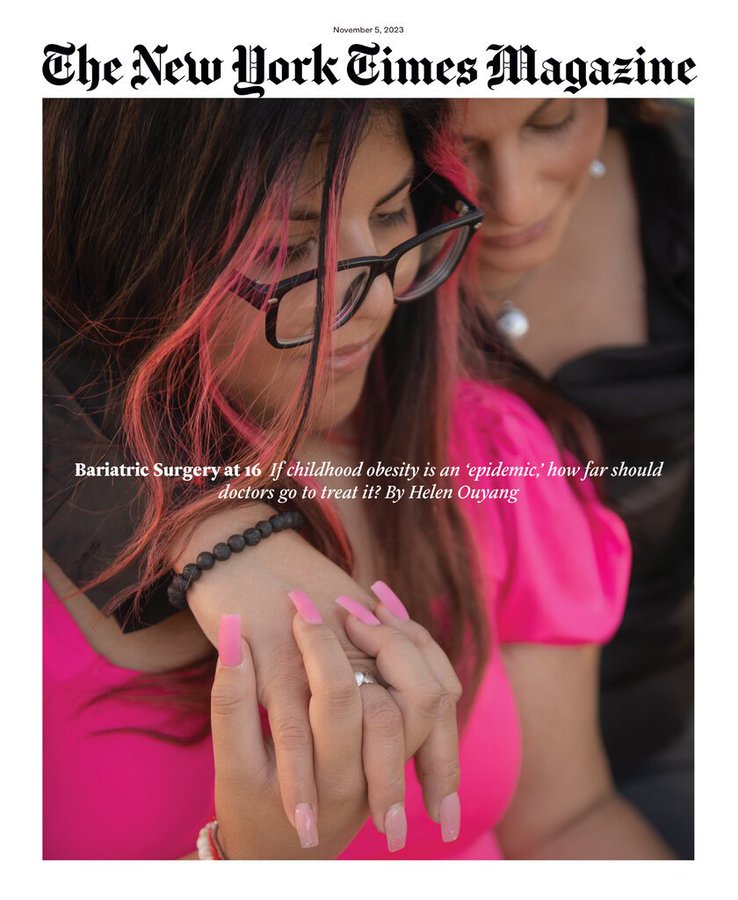
THE NEW YORK TIMES MAGAZINE (November 3, 2023): The latest issue features Bariatric Surgery at 16 – If childhood obesity is an ‘epidemic,’ how far should doctors go to treat it?; Some Ukrainians Helped the Russians. Their Neighbors Sought Revenge; The Eternal Life of the ’90s Supermodel -How did a small group of models manage to stay on top for so long?, and more…
If childhood obesity is an ‘epidemic,’ how far should doctors go to treat it?
By Helen Ouyang
Last fall, Alexandra Duarte, who isnow 16, went to see her endocrinologist at Texas Children’s Hospital, outside Houston. From age 10, she had been living with polycystic ovary syndrome and, more recently, prediabetes. After Alexandra described her recent quinceañera, the doctor brought up an operation that might benefit her, one that might help her lose weight and, as a result, improve these obesity-related problems.
For people in Bilozerka, the invasion began a cat-and-mouse game of collaboration and resistance.
By James Verini
Andriy Koshelev steered his car into the driveway of his home on Pushkin Street in Bilozerka, a lakeside town in Ukraine’s Kherson region. Leaving the car on, Koshelev got out and walked to the entrance gate. He reached down to loosen the latch. When he pulled it, the gate exploded. Koshelev’s parents, who lived on the same property, rushed outside as acrid smoke filled their driveway and the street. The explosion resounded across town.
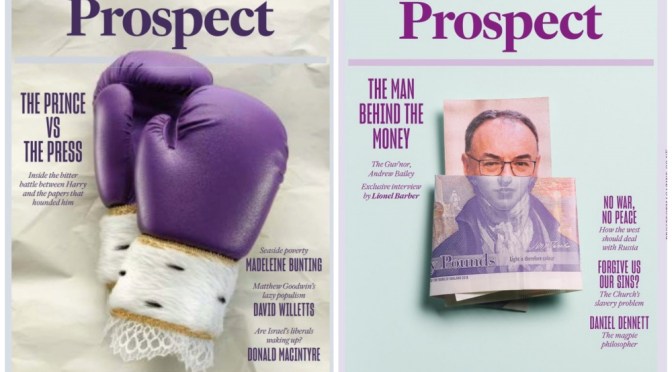
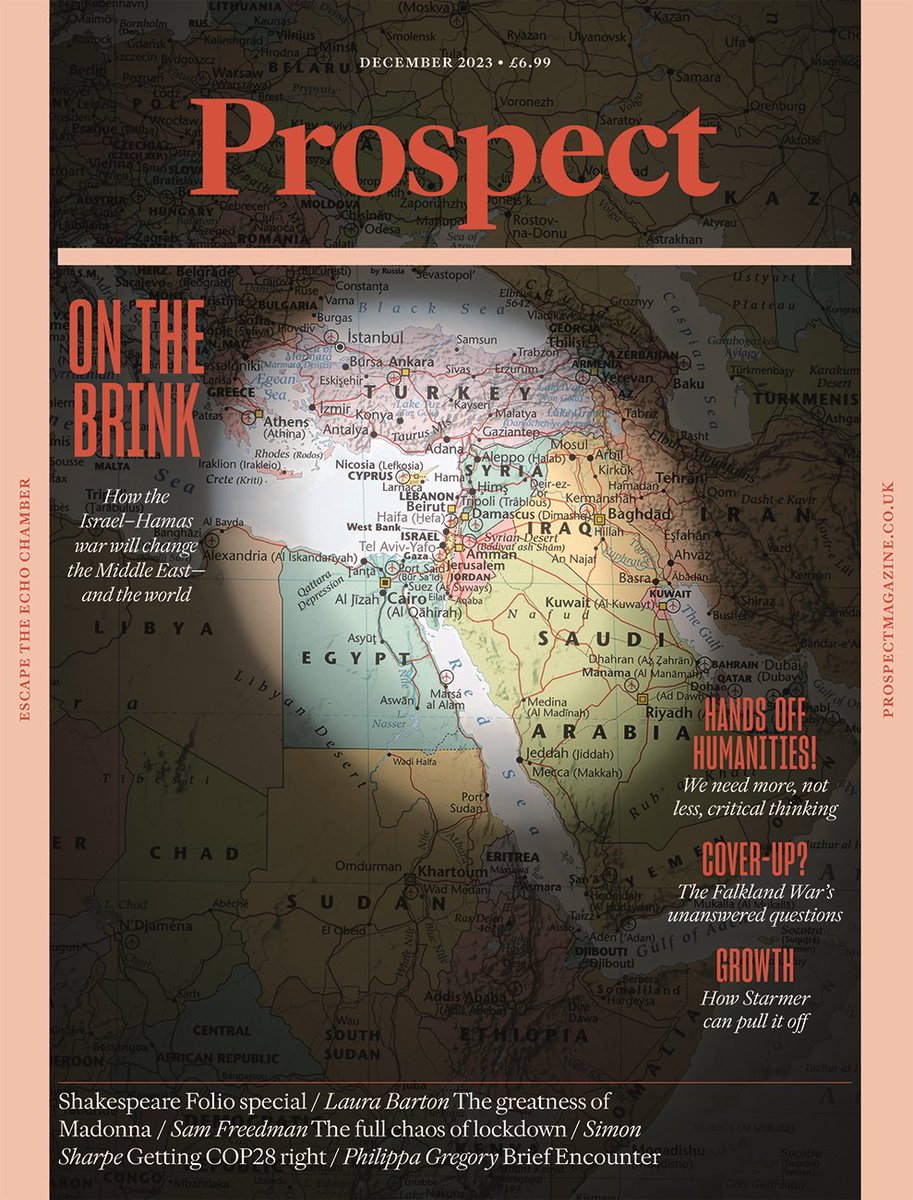
Prospect Magazine (December 2023)– The latest issue features Oh, the humanities! – History, literature, film studies; I still dream of peace – How Israel might emerge from the Gaza horror, and more…
The following words were written amid the storm of battle. Planes constantly circling in the sky, the bedroom turned into a shelter, the radio telling of new atrocities, the heart torn with fear as to the fate of missing persons. The days are now devoted to funerals and condolences, and the evenings to guarding our small community. I have participated in many demonstrations against the terrible folly of Benjamin Netanyahu, which found its outcome in the revenge and rage in Gaza on 7th October. Today, I try to be available for acts of support and solidarity with the victims on all sides. This beautiful land between the Jordan River and the Mediterranean Sea weeps bitterly, its two communities refusing to be comforted.
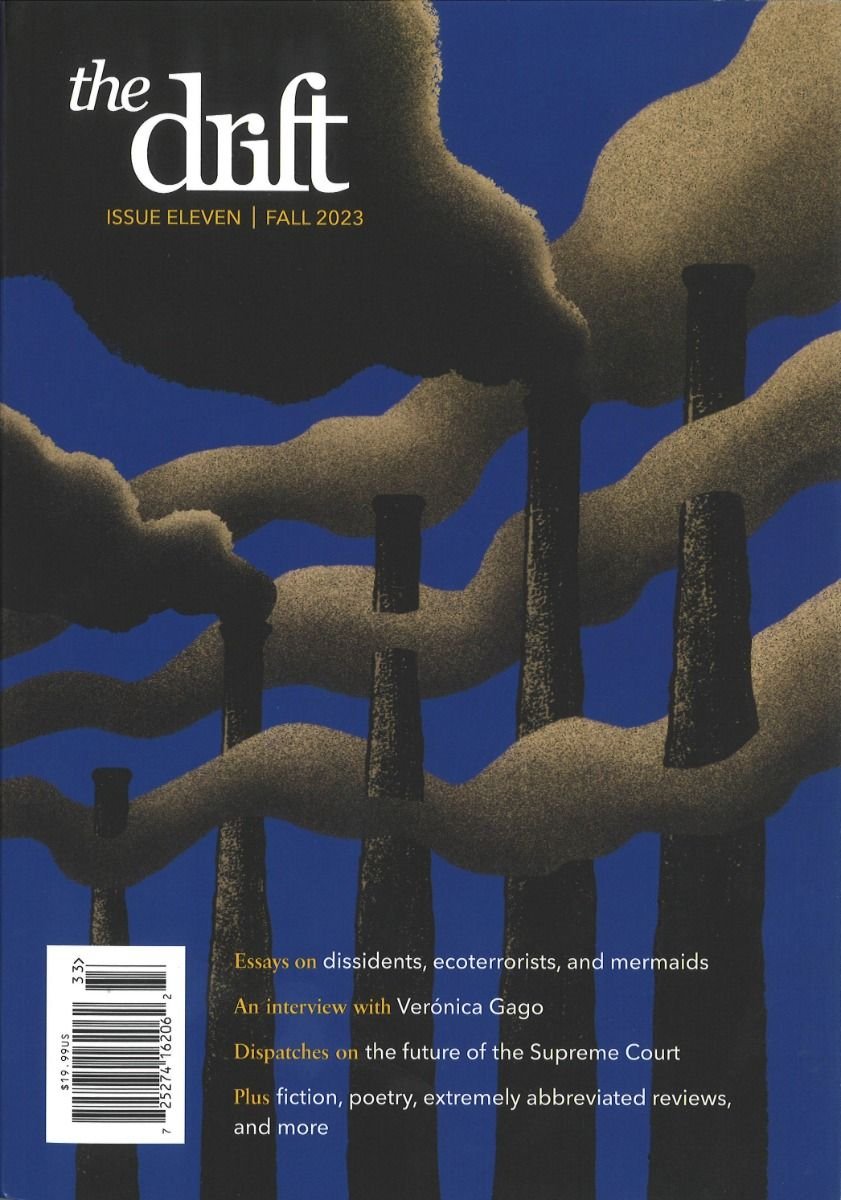
The Drift Magazine – Fall 2023 Issue – Essays on dissidents, ecoterrorists, and mermaids; an interview with Veronica Gago, Dispatches on the future of the Supreme Court; also fiction, poetry, reviews and more…
THE NEW YORK TIMES MAGAZINE (October 29, 2023): The latest issue features The Scientists Watching Their Life’s Work Disappear; Can We Save the #Redwoods by Helping Them Move?; ‘It’s Like Our Country Exploded’: #Canada’s Year of #Fire and #ClimateChange Is Keeping Therapists Up at Night….
Amid the chaos of climate change, humans tend to focus on humans. But Earth is home to countless other species, including animals, plants and fungi. For centuries, we have been making it harder for them to exist by cutting down forests, plowing grasslands, building roads, damming rivers, draining wetlands and polluting. Now that wildlife is depleted and hemmed in, climate change has come crashing down. In 2016, scientists in Australia announced the loss of a rodent called the Bramble Cay melomys, one of the first known species driven to global extinction by climate change. Others are all but certain to follow. How many depends on how much we let the planet heat.
The largest trees on the planet can’t easily ‘migrate’ — but in a warming world, some humans are helping them try to find new homes.
By Moises Velasquez-Manoff
When Philip Stielstra retired from Boeing in 2012, he needed something purposeful to do. He and his wife, Gay, were casual golfers, but Stielstra, an antiwar activist in college who refused to fight in Vietnam — he worked in a post office instead — wanted a pastime with bigger stakes. Before leaving his job, he received an email from the city of Seattle: The Parks and Recreation Department needed “tree ambassadors.” Tree canopy cover had receded in the city, and the department was responding by promoting an appreciation for its remaining trees. The volunteer ambassadors would learn about these trees and lead residents on walking tours to marvel at them. Stielstra, despite being a self-described introvert, signed up.
Fiction “Thinking Ahead” by Joan Silber: “How does a person behave when he knows he’s dying? There’s a myth that people go off and do what they’ve always wanted to do—sail to Spain, buy a horse, eat at the world’s most famous restaurant. ‘They never do that,’ my mother said, ‘that I’ve seen. They don’t even remember why they wanted to do it.”
“Seabreeze” by Korey Lewis: Jojo and Jaz wait for The Defendant to pick them up from their mother’s place and take them to Seabreeze. “If Disney is where dreams come true, then Seabreeze is where they give up.”
“Eau de Nil” by Chloe Wilson: “It was a website called Geriatrix. On it were women my age, in various states of undress. I saw breasts droopier and flatter than mine, necks that were crêpier, bellies that bulged and hung. But what really struck me was how happy they looked.”
“Country Furnishings” by Earle McCartney: The equilibrium in a tetchy blue-collar workshop gets jostled with the arrival of Frank Wonderwood—future son-in-law of the business’s new co-owner and future woodworking graduate from Del Tech.
Poetry Karen Leona Anderson, Stuart Dybek, Johanna Carissa Fernandez, Mike Good, Cleo Qian, Sarah Lynn Rogers, Joel M. Toledo
Nonfiction Laura M. Furlan her birth parents, identity, and butterflies. Adam Foulds on the home-turned-museum of one of England’s greatest architects, Sir John Soane. Sam McPhee on the singular fascination hands have on his attention. Jessica Francis Kane on her lifelong affinity with the fascinating James Boswell. And Devon Brody’s “Beth”: “I’m glad to be with only Beth and her long hair that meets the hair on my arms, and the hair on her arms that meets the hair on my arms.”
In Conversation: Ricardo Frasso Jaramillo delves with Justin Torres into Torres’s career and his new novel, Blackouts, a finalist for the National Book Award.
THE NEW YORK TIMES MAGAZINE (October 22, 2023): The latest issue features In Search of Kamala Harris; Longer Commutes, Shorter Lives: The Costs of Not Investing in America and The Botched Hunt for the Gilgo Beach Killer….
All the conditions seemed right for a chance to reset the narrative.
At the Munich Security Conference in February, amid rising international angst about Russia’s war in Ukraine, Vice President Kamala Harris led a delegation of Americans, including around 50 lawmakers from both parties. She spent her first day in Germany in seclusion, preparing for the next 48 hours: meetings with European leaders the first day and a keynote speech the next in the ornate ballroom of the Hotel Bayerischer Hof. When she emerged, head high and shoulders back, Harris exuded what her staff members have argued is a particular comfort with her role on the international stage. There, they say, she is respected.
Every morning in21st-century America, thousands of people wake up and prepare to take a cross-country trip. Some are traveling for business. Others are visiting family or going on vacations. Whether they are leaving from New York or Los Angeles, Atlanta or Seattle, their trips have a lot in common.
Section 301, in the second-to-highest tier of Levi’s Stadium, floats 105 feet above Santa Clara, Calif. It comprises 251 seats — a mere hamlet in the vast 64,000-seat general kingdom of the place, but it was our hamlet, and on the last Saturday in July, we took up each one of those seats and watched, our collective breath held, as Taylor Swift emerged from a bevy of billowing pastel parachutes and rose up on a platform to perform the 47th show of her Eras Tour. A few songs in, she announced, laughing, that her father told her that Santa Clara had named her its honorary mayor during her two-night stay there and that the entire town had been renamed Swiftie Clara.
The novelist is competing with giants like William Faulkner, while mapping territory all her own.
By Imani Perry
Jesmyn Ward gestured with her eyes and a tilt of her face, hands on the wheel. “This crazy colored house right here? That’s my grandmother’s house. That’s the house I grew up in. And her sister lives there” — she pointed — “and then that little blue house? That’s my great-grandparents’ house.” She was driving me around DeLisle, Miss., her hometown and the inspiration for Bois Sauvage, the fictional setting of her first three novels. It is Deep South-in-August hot outside, and the air-conditioning was a relief. “My mom’s side of the family was all clustered around this road.”
LA Review of Books (Autumn 2023) – The latest issue features The Funny Thing About Misogyny; The New Scarcity Studies: On Two New Socioeconomic Histories and Endgame Emotions: The Melting of Time, the Mourning of the World…
THE FUNNY THING about misogyny is it’s structured like a joke. Not a very good joke—a groaner, a dad joke. Why are they called “women”? Because they’re a woe to men. Get it? Woman is a container for man; language engenders gender subordination. As Mike Myers recites on stage in his role as a moody slam poet in the thrillingly zany 1993 Hitchcockian send-up So I Married an Axe Murderer, “Woman! Whoa, man. Whoaaaaaa. Man!”
Scarcity: A History from the Origins of Capitalism to the Climate Crisis by CARL WENNERLIND
WATER FALLS FROM the sky, literally. It is the most abundant chemical compound on Earth, and yet many people buy it in plastic bottles. Nestlé and other corporations source water cheaply and add labels that depict something other than heavy-industry and fossil-fuel derivatives, as though you’re drinking straight from a pristine spring. By bottling this natural resource and selling it as a commodity, Nestlé creates a form of scarcity.
News, Views and Reviews For The Intellectually Curious


























/https%3A%2F%2Fdev.lareviewofbooks.org%2Fwp-content%2Fuploads%2F2023%2F09%2FScarcity.jpg)
 Intellicurious