
LONDON REVIEW OF BOOKS: The latest issue features…

LONDON REVIEW OF BOOKS: The latest issue features…

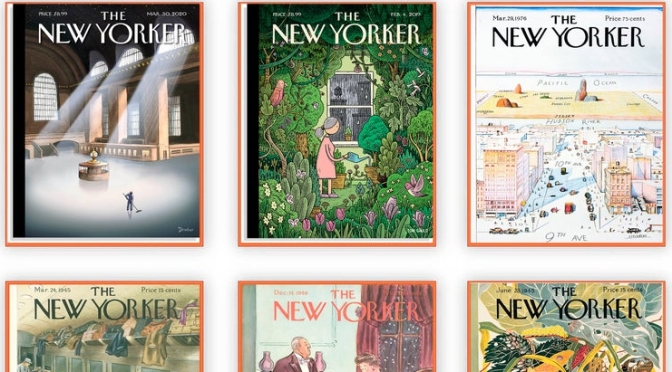
THE NEW YORKER MAGAZINE: The latest issue cover features ‘Pierre-Emmanuel Lyet’s “After the Comeback” – New Yorkers unite in hope.
In a Senate that took its constitutional role seriously, Blanche would not win confirmation a second time. By Ruth Marcus
The hedge-fund titan is an unabashed big spender—from pièds-a-terre to politics. By Gary Sernovitz
“We want Greenland,” Trump said. Four men sprang into action to make fantasy a reality. By Ben Taub
In the nineteen-eighties, an office job promised security and fulfillment. For graduates starting careers today, the prospect is often tinged with dread. By Molly Fischer

THE NEW YORKER MAGAZINE: The latest issue cover features ‘Barry Blitt’s “Out Cold” – The South Lawn octagon.
How the defining figure of the manosphere built a fortune—and became a political force—by systematically exploiting women. By Heidi Blake
The Trump Administration has chosen to honor the Semiquincentennial of a nation of immigrants with a vision that sends the country back in time. By Jonathan Blitzer
The neurophysiological disorder is characterized by a severe aversion to sound—and the struggle to convince others of the severity of that aversion. By Sloane Crosley

THE NEW YORKER MAGAZINE: The latest issue cover features ‘Sergio García Sánchez and Lola Moral’s “The Secret Life of Books” – A living library. By Françoise Mouly
Why read historical fiction? A new novel by the author of “Hamnet” offers one answer: because it’s fun. By Katy Waldman
For the critic Leslie Fiedler, the country’s best and worst fiction was shaped by visions of escape from society—and therefore from maturity. By Becca Rothfeld
FIFA’s powerful president is remaking global soccer in his own image. Can the sport survive him? By Sam Knight

THE NEW YORKER MAGAZINE: The latest issue cover features ‘Mark Ulriksen’s “Kings of New York” – A historic season for the Knicks.
The outbreaks of hantavirus and Ebola expose the shortsightedness of America’s retreat, under the Trump Administration, from its role as a global-health leader. By Dhruv Khullar
The Donald J. Trump and Jeffrey Epstein Memorial Reading Room, in Tribeca, housed three and a half million bound files, along with a handy time line charting the ickiness. By Charlotte Goddu
National pride in America has plummeted in the Trump era. Is it worth trying to salvage? By Arthur Krystal

THE NEW YORKER MAGAZINE: The latest issue cover features ‘Kadir Nelson’s “Plein Air” – Impressions of spring.
Their electoral prospects are finally improving, but opportunities can quickly give way to divisions. Does the Party have a plan? By Amy Davidson Sorkin
A young girl was brought from Guinea to a wealthy suburb near Dallas. She spent the next sixteen years of her life in forced servitude. By Yudhijit Bhattacharjee
An unprecedented gerrymandering effort led by Donald Trump—and internal divisions among Democrats—has made the Minority Leader’s path to victory harder than ever. By Jason Zengerle
History knows the First Lady as a hysterical widow and a lavish spender. Her most recent biographer chooses to highlight her mental fortitude and political prowess. By Thomas Mallon
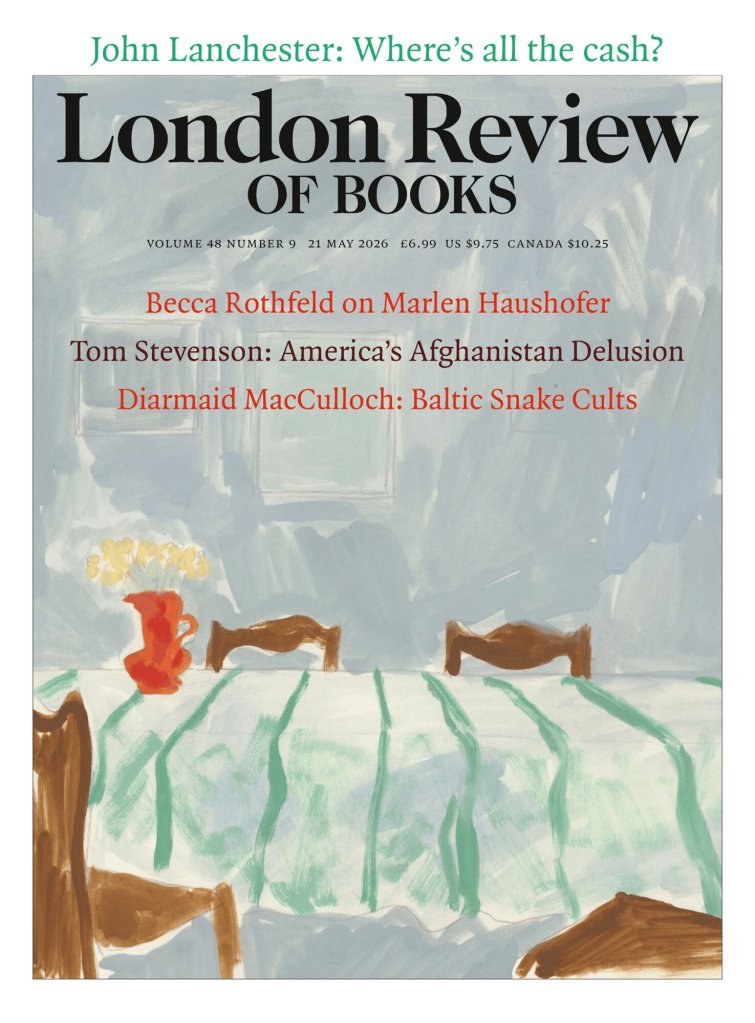
“The Clearance of Aoineadh Mòr, 1824” by Tarn MacArthur: A historical account of the Highland Clearances, specifically focusing on the displacement of communities in Scotland.
At the Movies: Michael Wood provides his regular column of film criticism, likely focusing on current European or art-house releases.
Poetry & Correspondence: The issue also contains poems and a robust letters section, which in this period has been heavily occupied by debates over the Arctic (following Laleh Khalili’s piece in the previous issue) and the fallout of the UK local elections.

THE NEW YORKER MAGAZINE: The latest issue cover features ‘Barry Blitt’s “Red, White, and Kinda Blue” – America’s birthday party.
Donald Trump’s aversion to admitting fault suggests that we will not likely see events that grapple with the nuanced nature of the nation’s history this July 4th. By Jelani Cobb
Amid contention, criticism, and compromise, a divided nation had to present a unified front. It came at a cost. By Jill Lepore
The former President remains one of the most popular politicians in the country. What are his obligations to it?


“Saguaro in the Sea” by Sophia Acuña: on surfing and indigeneity in Southern California, told through collage.
“Care Directive” by Sarah Matsui: a daughter’s attempt to keep her aging father in Hawaii from all sorts of calamity, but having to monitor him from the mainland.
“Triptych: A Biographer’s Sketchbook” by Carolyn Burke: “The Baroness was lively, curious, and still blond at eighty-five. She received me in a flurry of franglais, the mingling of two languages in which we would converse, and put us at ease with pink champagne, her favorite.”
“Decoys” by Will Boast: goofing around working at the town supermarket, burning through the days till it all comes to head.
“Lilac Mud” by Anita Felicelli: A Bay Area artist in Amsterdam is approached one night by a man claiming to be a former student, leading to a crisis of identity and purpose.
“Grote geplumaceerde” by Emily Nemens: “Afterward, staring hard at her phone, which was her radio, which was the bearer of bad news, she wondered what mattered at all.”
Kevin Cantwell, Geraldine Jorge, Jonathon Keats, Caroline Kessler, and Noelani Piters.
Lydia Kiesling talks to acclaimed author Karen Russell about Russell’s latest novel, The Antidote, and about Russell’s “fascination with foundational myths, the things we choose to know, and the things we choose to ignore or forget.”
Ian Everard

From the 16th century onwards, as European powers feverishly colonised the world, the possibility of a Northern Sea Route connecting the Atlantic to the Pacific, from Scandinavia to the Bering Strait, tantalised the Dutch and the British as an alternative to the southern routes to Asia and the Americas, which were dominated by Portugal and Spain. But the route only became a reality in the Soviet era, after investments in scientific, economic, industrial and military infrastructure in Siberia.
This is what distinguishes hyperpolitics from the mass democracy of the mid-20th century. Symbolic political gestures are now commonplace, but paid membership of organisations and parties has plummeted. The left has failed to find a replacement for trade unions as a basis for collective action in civil society. Political movements are easy to join, and just as easy to leave.
De Kooning’s Suburb in Havana is a counter-revolutionary painting. Well, of course. It is counter-revolutionary because it is counter everything, versus everything, lost in suburbia. It wants to show us how hard it had to work to get precisely nowhere. Why nowhere was where it wished to get to is a question it leaves to the viewer.
Can there be poetic justice in politics? Perhaps once in a lifetime. In 1989, a young Viktor Orbán bravely told the crowds in Budapest’s Heroes’ Square that it was time for the Russians to go home, just as protesters had demanded in 1956; almost four decades later, he was heckled on the campaign trail with the same words.