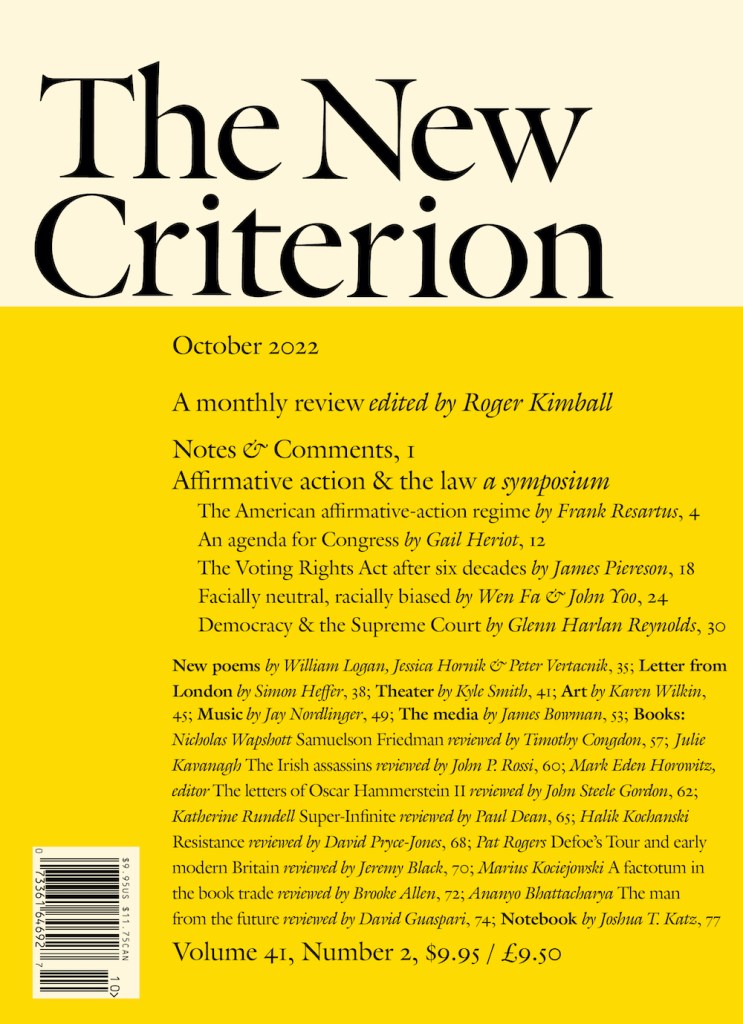
The American affirmative-action regime by Frank Resartus An agenda for Congress by Gail Heriot The Voting Rights Act after six decades by James Piereson Facially neutral, racially biased by Wen Fa & John Yoo Democracy & the Supreme Court by Glenn Harlan Reynolds
New poems by William Logan, Jessica Hornik & Peter Vertacnik
This week: is art censorship on the rise? The Art Newspaper’s chief contributing editor, Gareth Harris, joins Ben Luke to discuss his new book, Censored Art Today.
We look at the different ways in which freedom of expression is being curbed across the globe and at the debates around contested history and cancel culture. This episode’s Work of the Week is Diane Arbus’s Puerto Rican woman with a beauty mark, N.Y.C., 1965, one of the 90 images that feature in Diane Arbus: Photographs, 1956-1971, which opens at the Montreal Museum of Fine Arts, Canada, on 15 September. Sophie Hackett, the exhibition’s curator, discusses Arbus’s remarkable eye and technical brilliance.
As the Guggenheim Bilbao celebrates its 25th anniversary, Thomas Krens, the director and chief artistic officer of the Solomon R. Guggenheim Foundation from 1988 to 2008, reflects on the genesis and development of a museum that had a dramatic impact on contemporary art and museums’ role in the cultural regeneration of cities across the world.
• Jil Sander refashions the English garden in Hamburg
• Annette Messager on the art of making the strange familiar
• A dazzling Medici table-top in focus
• On Jeju Island, the Hawaii of South Korea
Plus: the restored Galleria Nazionale dell’Umbria, Inigo Jones’s Banqueting House, Joseph Wright of Derby’s brush with the divine, and reviews of Cézanne in Chicago, Milton Avery in London and a history of fancy dress
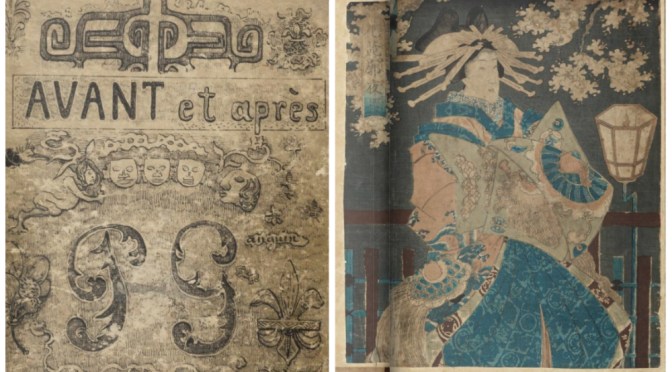
The Courtauld is delighted to have received a @GettyFoundation grant to investigate the last major manuscript by Paul Gauguin 'Avant et après (Before and After)'
— The Courtauld Research Forum (@CourtauldRes) August 17, 2022
Explore Paul Gauguin’s final manuscript
Below, you can explore Avant et après, the final manuscript of the highly influential French Post-Impressionist artist Paul Gauguin. It is available both in its original form, as well as translated.
Part-memoir and part-manifesto, Avant et après reveals important insights into Gauguin’s life, relationships and thoughts. It includes numerous drawings and monotype prints by the artist.
Avant et après is an important addition to what is already the most significant collection of works by Gauguin in the UK – joining amongst other works the masterpieces from his Tahitian period, Nevermore and Te Rerioa – and further strengthens The Courtauld’s resources for Gauguin scholarship.
On 29 June, Frieze announced the details of the first edition of its art fair in Seoul, South Korea. So for this last episode of the current season, we’re exploring the art scene and market in the Korean capital.
Ben Luke talks to the art historian and curator Jiyoon Lee about contemporary art in Seoul and beyond, and the origins of the current art scene in 1990s globalisation. The Art Newspaper’s associate editor, Kabir Jhala, speaks to two gallerists—Joorhee Kwon, deputy director at the Kukje Gallery and Emma Son, senior director at Lehmann Maupin, about the growing market and collector base, and the effect Frieze may have on the existing scene.
And this episode’s Work of the Week is Dahye Jeong’s A Time of Sincerity, a basket made with horsehair that this week won the Loewe Foundation Craft Prize. Kabir talks to the creative director at the fashion brand Loewe, Jonathan Anderson, about Jeong’s piece.
Frieze Seoul, COEX, Seoul, 2-5 September.
The Space Between: The Modern in Korean Art, Los Angeles County Museum of Art, 11 September-19 February 2023.
The 2022 Loewe Foundation Craft Prize, Seoul Museum of Craft Art, until 31 July.
This week: our associate editor, Kabir Jhala, and editor-at-large, Jane Morris, have been in Kassel, Germany, to see Documenta, the quinquennial international art exhibition.
They review the show and respond to the escalation of a long-running row over antisemitism and broader racism, which has resulted in a work being removed from the exhibition. Virginia Rutledge, an art historian and lawyer, discusses the dispute over Andy Warhol’s appropriation of a photograph by Lynn Goldsmith of the pop icon Prince. The case will be heard in the US Supreme Court this autumn and has potentially huge implications for artistic freedom. And this episode’s Work of the Week is An Outpost of Progress (1992), a drawing by the late Spanish artist Juan Muñoz, inspired by Joseph Conrad’s short story of the same name.
Documenta 15, Kassel, Germany, until 25 September.
Juan Muñoz: Drawings 1982-2000, Centro Botín, Santander, Spain, 25 June-16 October.
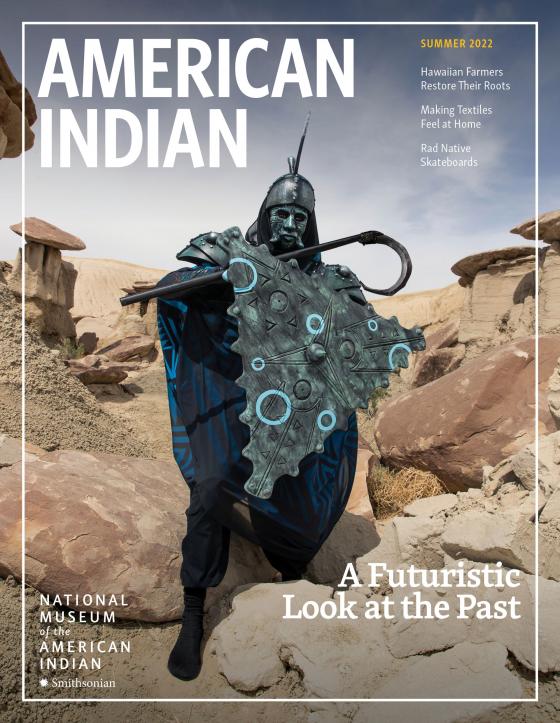
Watching Over the Past: Virgil Ortiz’s Futuristic Creations Are Perpetuating Cochiti Pueblo Pottery-Making Traditions
Virgil Ortiz still remembers the outings he took as a 6-year-old boy with his mother to creeks throughout their Pueblo of Cochiti in New Mexico. There, they would gather clay to mold into pots and storytellers—seated comical human or animal figures. His father was a drum maker and his mother and grandmother were both potters. He remembers giving prayers of thanks to Mother Earth for providing clay, a medium through which they could express themselves. “I was surrounded by art every day,” says Ortiz.
Henry Moore achieved international fame as a sculptor, despite once being denounced for promoting ‘the cult of ugliness’. And he also remained a most unassuming man, finds Laura Gascoigne, as two new exhibitions of his work prepare to welcome visitors.
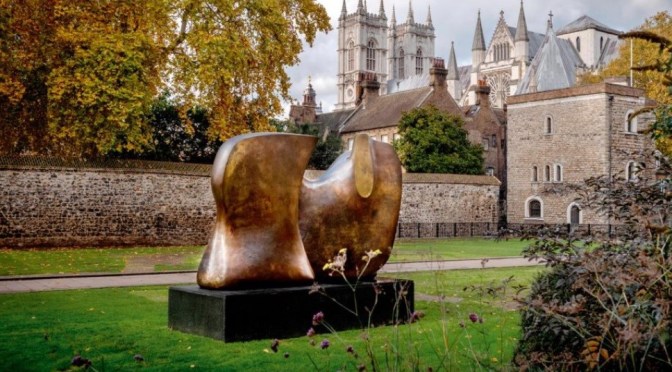
Sculptors are very rarely household names, but no one who lived through the 1960s could be unfamiliar with the name of Henry Moore. At the height of his international success, Moore’s monumental public sculptures in prominent locations — from the 12ft-high Knife Edge Two Piece (1962–65) outside London’s Houses of Parliament to the 26ft-long Reclining Figure (1963–64) outside the Lincoln Centre in New York, US — became such a feature of the urban landscape that they appeared in cartoons in the popular press. For a Modernist abstract sculptor, that was fame.
In the 1950s, Moore added a new subject to his signature themes of the mother and child and the reclining figure. As a young man, his first sight of Stonehenge by moonlight, in 1921, had left an indelible impression; 30 years later, he began a series of large bronze totemic forms recalling prehistoric monoliths.
Henry Moore with three of his Upright Motives c.1955.Photo: Barry Warner
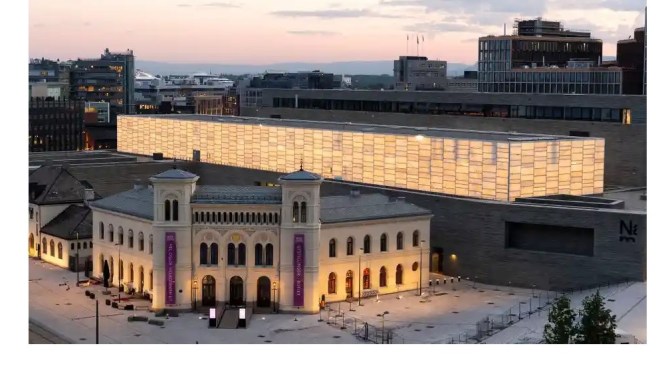
The Norwegian capital Oslo is getting a new national museum for classical and modern art, architecture and design. The museum’s collection includes around 100,000 objects, ranging from medieval tapestries to modern design classics and contemporary artworks.
There will be rooms dedicated to, among others, the works of Edvard Munch , including “The Scream,” 19th-century landscape painting, royal robes worn by the Norwegian queens, as well as works by prominent artists, such as Gustav Vigeland, Hannah Ryggen, Claude Monet, Vincent Van Gogh and Ida Ekblad.
News, Views and Reviews For The Intellectually Curious