
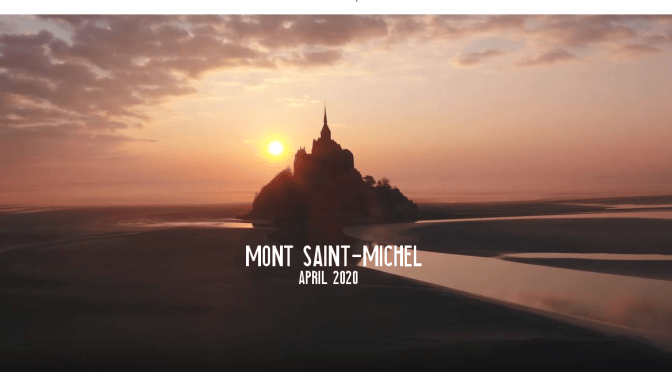
Filmed and Edited by: JÉRÉMIE ELOY, Wanali Films
“It is a magical experience to find yourself two days in the empty, silent Mont.”
Filmed on April 3, 2020
Le Mont-Saint-Michel is a tidal island and mainland commune in Normandy, France. The island is located about one kilometer off the country’s northwestern coast, at the mouth of the Couesnon River near Avranches and is 7 hectares in area.
The original site was founded by an Irish hermit, who gathered a following from the local community. Mont-Saint-Michel was used in the sixth and seventh centuries as an Armorican stronghold of Gallo-Roman culture and power until it was ransacked by the Franks, thus ending the trans-channel culture that had stood since the departure of the Romans in 460. From roughly the fifth to the eighth century, Mont Saint-Michel belonged to the territory of Neustria and, in the early ninth century, was an important place in the marches of Neustria.
When Louis XI of France founded the Order of Saint Michael in 1469, he intended that the abbey church of Mont Saint-Michel become the chapel for the Order, but because of its great distance from Paris, his intention could never be realised.
The wealth and influence of the abbey extended to many daughter foundations, including St. Michael’s Mount in Cornwall. However, its popularity and prestige as a centre of pilgrimage waned with the Reformation, and by the time of the French Revolution there were scarcely any monks in residence. The abbey was closed and converted into a prison, initially to hold clerical opponents of the republican regime. High-profile political prisoners followed, but by 1836, influential figures—including Victor Hugo—had launched a campaign to restore what was seen as a national architectural treasure. The prison was finally closed in 1863, and the mount was declared a historic monument in 1874. Mont Saint-Michel and its bay were added to the UNESCO list of World Heritage Sites in 1979, and it was listed with criteria such as cultural, historical, and architectural significance, as well as human-created and natural beauty.
From Wikipedia
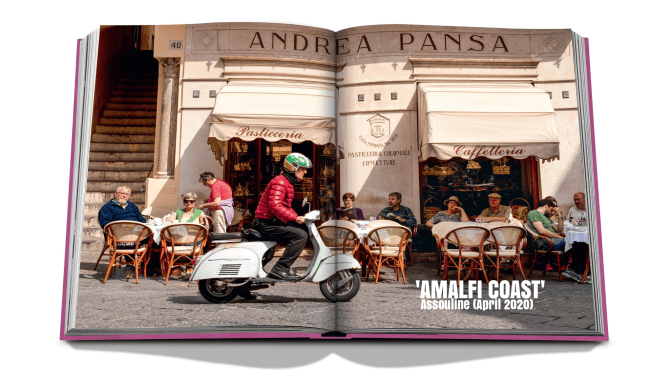
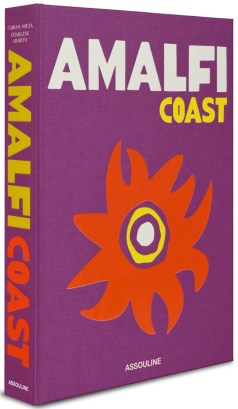 The Amalfi Coast is the pinnacle of the Italian dream. Tucked amongst the lemon blossoms and the bougainvillea is a line of thirteen towns that comprise the Amalfi Coast. Known for its vertical landscape, the villages are only accessible via the Strada Statale 163 — a narrow, winding, cliffside route that while unsettling to traverse, offers unparalleled views.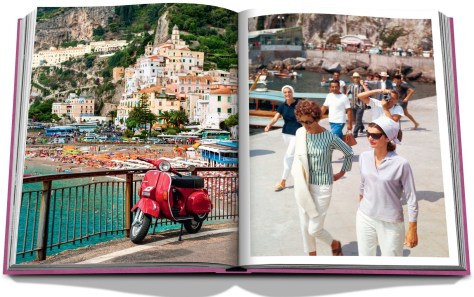

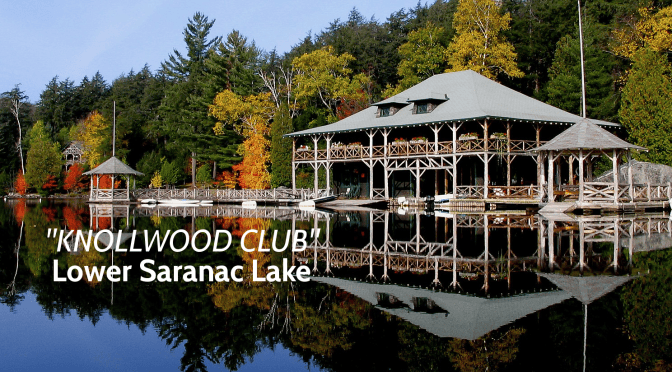
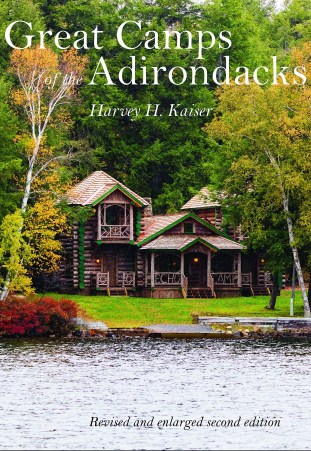 second and enlarged edition, here is the foremost guide to the historic camps within America’s spectacular forest preserve, the six million acre Adirondack Park.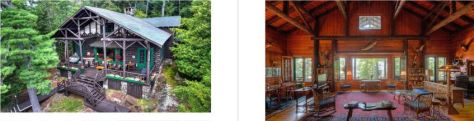
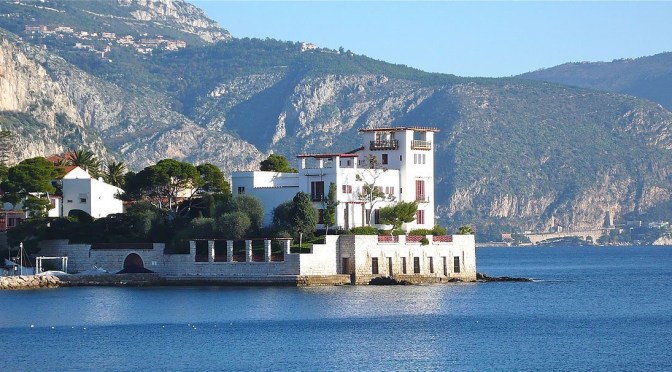
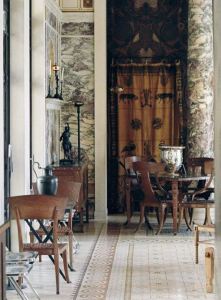 Throughout, the attention to detail is meticulous: mosaic floors of mythical beasts; intricately painted ceilings of interlocking wooden beams. The walls of the Andron, traditionally the male quarters of an ancient Greek household, are streaked with three types of Tuscan marble: ochre Siena, mauve Fleur de Pêcher, and grey-white Carrara. In Mrs Reinach’s bathroom, an immense bathtub weighing one tonne is balanced on two lion paws. Above its ornamental bronze taps, a low-relief frieze depicts the chariot of Demeter. From every window stretches a panorama of glittering blue.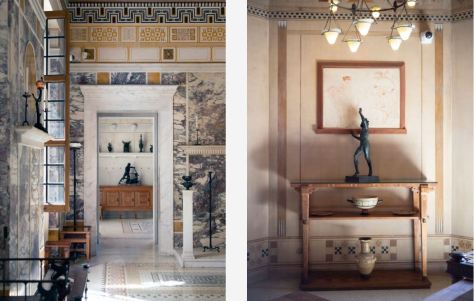
 Intellicurious