The worst predictions for costs have not come to pass, partly because Russia is selling plenty of wheat. But plenty of food-price woe may still await.
We examine the curious re-appearance of the polio virus in the West. And the trials of “Pink Sauce” reveal the perils of being a cottage-food producer—or consumer—in the social-media age.
The cover story this month focuses on Tokyo. Japan’s capital is a megalopolis made up of distinct neighbourhoods, each with their own character— from the outré trends of Harajuku and the neon maze of Shinjuku, to the technology and subcultures of Akihabara and the world’s best sushi in Ginza.
Elsewhere in the issue:
Belize: Discover Maya heritage, conservation triumphs and a kaleidoscopic barrier reef. Kent: A hike from Deal to Folkestone reveals storied landscapes and arty seaside towns. Namibia: A portrait of life in Kunene, a remote region of desert-adapted wildlife and star-studded night skies. New York: Sampling the soul food, jazz clubs and markets of Harlem, Manhattan’s most famous Black neighbourhood. Prague: Beyond the walls of the Old Town, the Czech capital is being reimagined by a new generation of locals. Tenerife: Discover the wilder side of the Canary Island on its northern coast. Trondheim: A new-found love of local produce is bringing fine cuisine to the former Viking capital. Toronto: The Canadian city is upping its hotel game with a host of new openings and high-profile restorations.
Emma Nelson, Tyler Brûlé, Charles Hecker and Stefanie Bolzen unpack the weekend’s biggest stories. Plus: Monocle’s Fiona Wilson has an update from Tokyo.
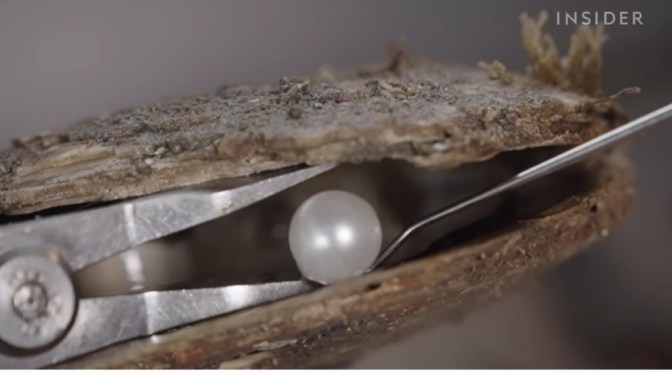
South Sea pearls are the largest cultured-pearl variety, sometimes reaching over 20 millimeters in diameter. The Pinctada maxima oyster can take up to five years to produce a single South Sea pearl, whereas more common freshwater oysters can take as little as three months and create dozens of pearls. This long cultivation process makes South Sea pearls rarer — and more expensive. A single South Sea pearl can cost $1,500, and a necklace can reach over $200,000. So, how are these pearls grown? And what makes them so expensive?
The September 2022 issue features travel inspiration, starting with the island of Elba, just a short ferry ride from the coast of mainland Tuscany. Picture-perfect all year round, it’s certainly a destination we love. We also head to Molise for the Campobasso Mysteries Festival, take a detour to nearby Abruzzo, step off the beaten track to hilltop Casoli, and explore the exquisite city of Lecce.
There are far too few workers in the U.S. to meet rising demand, a problem exacerbated by an aging population, low birthrates, and stifled immigration. It could become one of the biggest economic challenges of the next several decades.
This week’s top stories of the week include: 0:16 This teenager’s invention could change the world of electric cars 02:59 France is paying it’s drivers to get on their bikes 04:22 The psychological phenomenon that is hampering our response to climate change 05:33 Paris’s Riverside Booksellers are thriving once more
The World Economic Forum is the International Organization for Public-Private Cooperation. The Forum engages the foremost political, business, cultural and other leaders of society to shape global, regional and industry agendas. We believe that progress happens by bringing together people from all walks of life who have the drive and the influence to make positive change.
In the town of Saumur in France’s Loire Valley, the riders of the Cadre Noir represent excellence in the world of French equestrianism. The military-style academy trains elite riders who take part in top international competitions. Its expertise has been recognised by UNESCO, which listed it as Intangible Cultural Heritage in 2011. FRANCE 24 takes you behind the scenes of the stables.
The Cadre Noir is a corps of ecuyers, or instructors, at the French military riding academy École Nationale d’Équitation at Saumur in western France, founded in 1828. It also performs as an equestrian display team. Its name comes from the black uniforms that are still in use today.
News, Views and Reviews For The Intellectually Curious