Category Archives: Stories

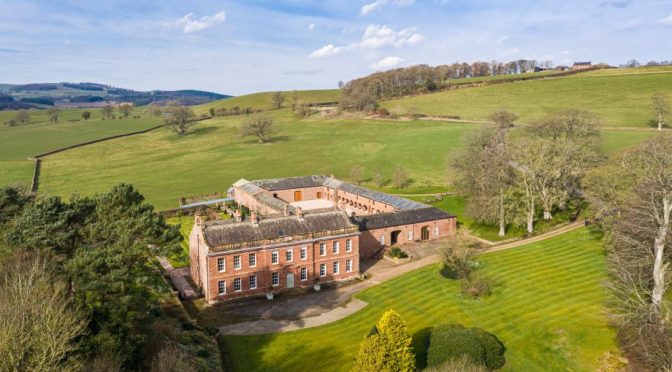
English View: The Nunnery In Eden Valley, Cumbria

An exquisite private estate in the Cumbrian countryside — complete with fabulous interiors and secret waterfalls in the grounds .

The Nunnery is — as the name suggests — a former Benedictine Nunnery that has been the recipient of years of renovation works, transforming the historic property into a breathtaking, spacious home. Penny Churchill reports.

Cumbria’s glorious Eden Valley has been well-named and the setting for imposing, Grade I-listed The Nunnery at Staffield, 10 miles from Penrith, on the fringes of the Lake District National Park, is typical of the area, with traditional livestock farms and rolling grassland falling away to the River Eden, against a distant backdrop of dark, moody fells.

The former country-house hotel, set in almost 52 acres of wonderfully private park and woodland close to the village of Kirkoswald, has been beautifully renovated, remodelled and extended by its present owners who acquired it in a fairly run-down state in the early 2000s.

Although the origins of The Nunnery can be traced to a mid-13th-century Benedictine nunnery, according to Country Life (November 23, 2000), the present ‘plain but imposing red sandstone house’ was built by Henry Aglionby in 1718.
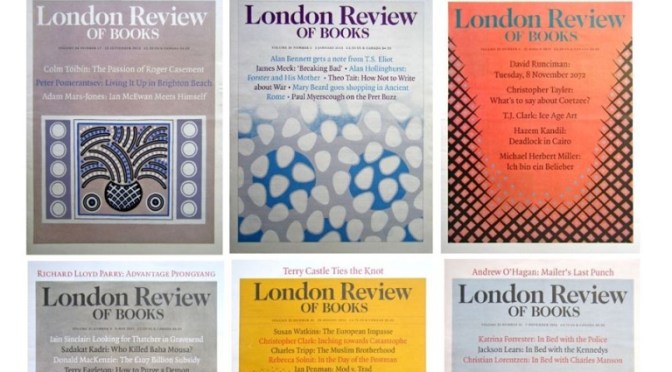
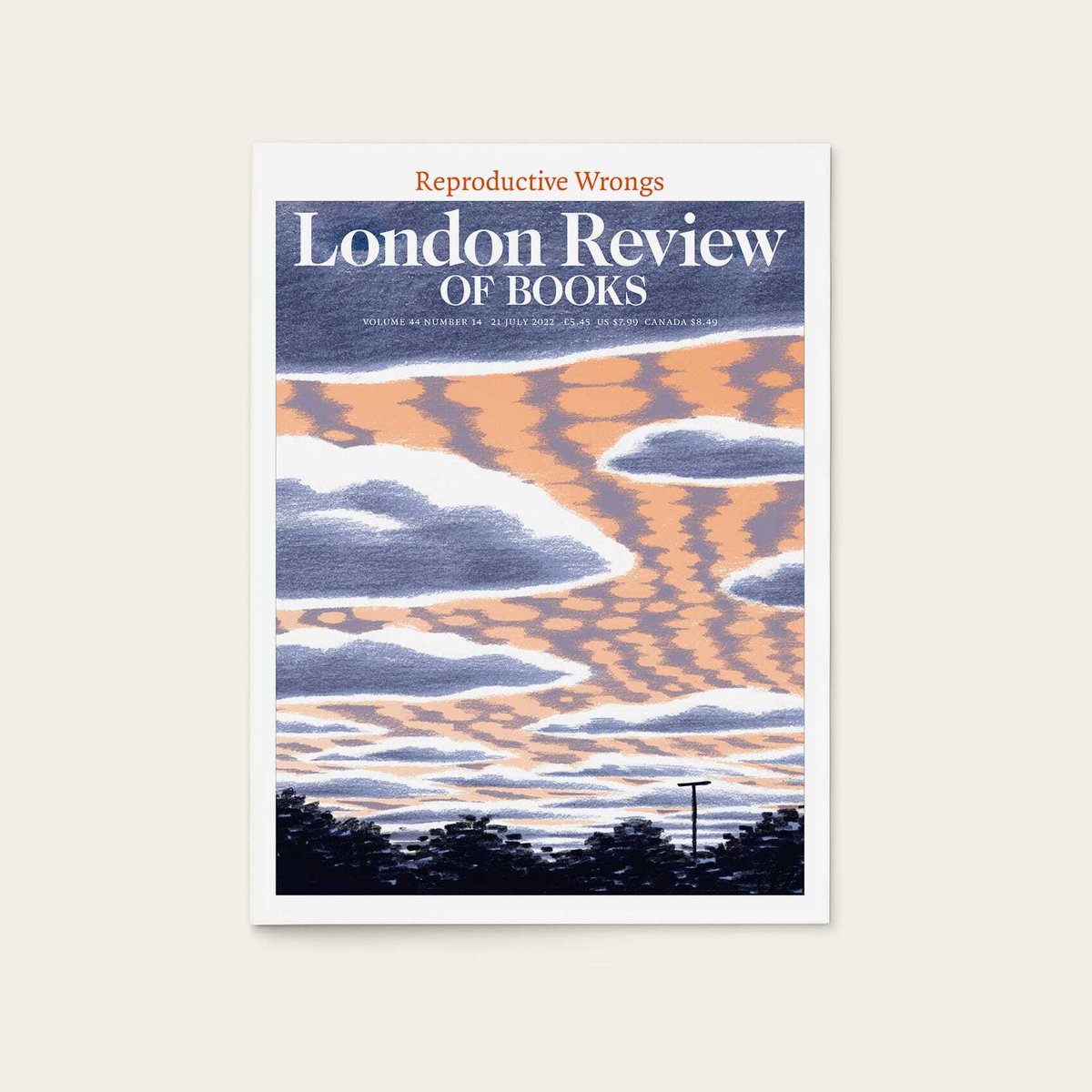
Preview: London Review Of Books – July 21, 2022

Image

Our new issue is now online, featuring 29 responses to the overturning of Roe v. Wade, Barbara Newman on medieval sanctuary, @moonjets on Shelley, Mimi Jiang on the end of Shanghai’s lockdown and @mmschwartz on the Bataclan verdict. https://lrb.co.uk

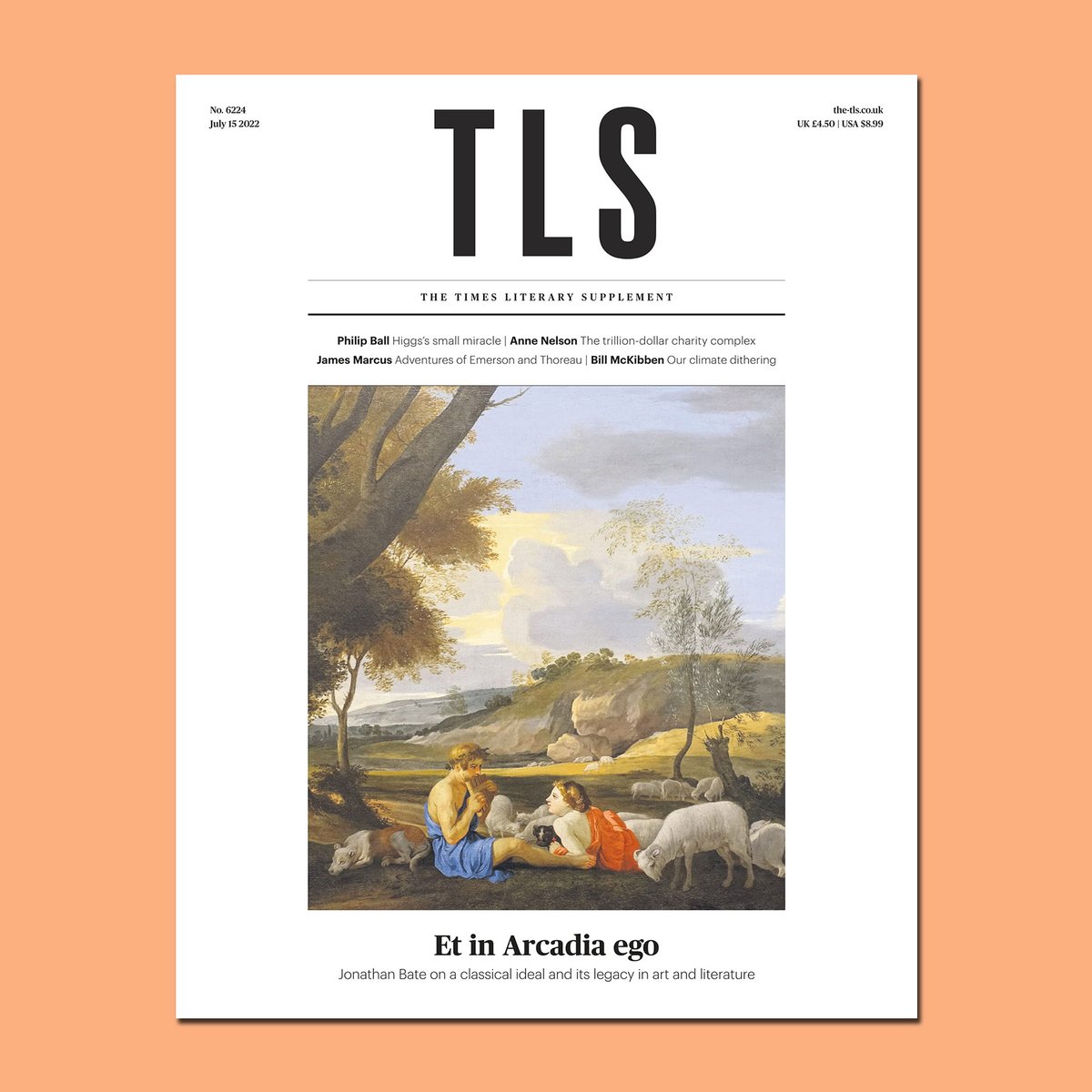
Preview: TLS/Times Literary Supplement – July 15, 2022

Image

This week’s TLS, featuring @profbate on Arcadia in art and literature; @philipcball on Peter Higgs; @anelsona on philanthropy and inequality; @billmckibben on our climate turning point; @jamesamarcus on Emerson and Thoreau; @ScurrRuth on open-air painting – and more.

Western Views: Idaho’s Evolving Frontier (PBS)

America Outdoors with Baratunde Thurston: Episode 2 | Idaho: Tied to the Land Life on the American frontier is evolving. To find out how, and what it means, Baratunde Thurston ventures into the wilds of Idaho in search of its outdoor culture. He finds ranchers and backcountry pilots sharing the wilderness with newly resettled refugees, and sees how climate change is playing havoc with the age-old salmon fishery.

Morning News: Brutal Imprisonment Of Alexei Navalny, Fertility Rates

Alexei Navalny, Russia’s most prominent opposition figure, has been transferred to a brutal prison. Other Kremlin opponents have been imprisoned or exiled, as Russia has grown more repressive since invading Ukraine.

The world’s population will hit 8bn this year; we discuss which regions are growing and which are not. And why clear wine bottles are a bad idea.

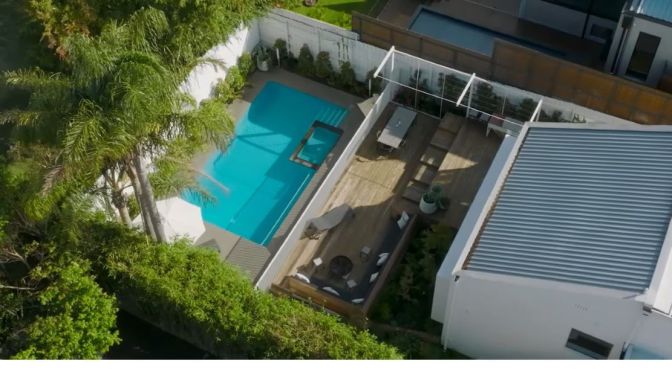
Home Renovations: May House, Malvern, Australia

When an architect designs a house with consideration and care, dwellings such as May House emerge. Taking a playful approach to colour and materiality, Neil Architecture reimagines a 1980s home as a relaxed, modern family residence.

Video timeline: 00:00 – The Local Project’s Print Publication 00:10 – Introduction to the House 00:45 – Complementary Design 01:01 – Exterior Renovations 02:03 – 1980s Materiality 03:12 – Landscape Architecture 04:09 – A House Made for Entertaining 04:42 – Timeliness Rejuvenation 05:17 – Subscribe to The Local Project’s Print Publication

When an architect designs a house, the design brief can often stipulate a complete renovation. However, Neil Architecture recognised the value of the original 1980s construction – settled into the leafy suburb of Malvern – and decided instead to complement the home with architectural additions.

To maintain the strong and simple form of the original structure, Neil Architecture covers the pre-existing truss with a perforated screen. Off-form concrete is used to create the carport, whilst a roughcast concrete render is applied to the fence – in doing so, the architect designs a house that interacts with the local built environment. As an architect designs a house, the intent can be expressed through the finer details of the scheme.

In May House, rusty red and green tones appear in the material palette, paying homage to the colours present in 1980s interior design. May House sees a 1980s residence both celebrated and reimagined, embraced and rejuvenated. Managing the external architecture and interior detail, the architect designs a house that is imbued with a sense of warmth and continuity; a house for the future that is inspired by the past.

Morning News: Replacing Boris Johnson, Fetuses’ Rights, Egypt Houseboats

The race to succeed Boris Johnson begins today. Numerous Conservative MPs have thrown their proverbial hats into the ring; they are fighting on ground largely staked out by Mr Johnson.

American anti-abortion activists believe that fetuses should have all the rights that people do. And why Egypt’s government has turned against its historic houseboats.

Opinion: Britain’s Perilous State, The Tik Tok Threat, Trumpism’s New DC Army

A selection of three essential articles read aloud from the latest issue of The Economist. This week, why Britain is in a dangerous state, why the world’s most exciting app is also its most mistrusted (10:49), and Trumpism’s new Washington army (18:38).

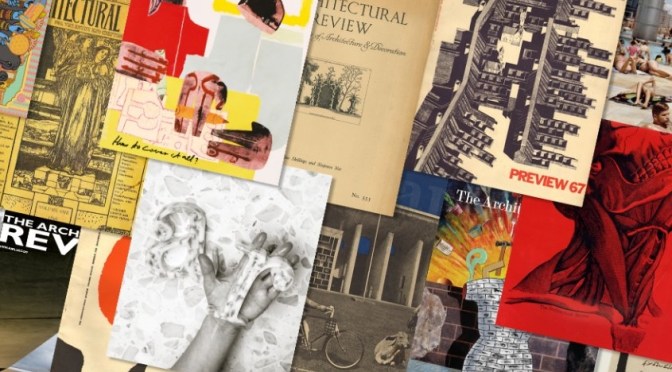
Preview: Architectural Review – July/August 2022

AR July/August 2022

For two and a half years, risks of contagion have justified restrictions on public life around the world, at times tipping towards punitive control and attacks on civil liberty. The essays in this issue examine some of the forces that encroach upon public spaces, whether they be the economic imperatives that govern late capitalist cities or anti‑democratic political regimes that grab common land. The affordances of public spaces are never singular and neither are their publics. The voices in this issue question assumptions about who – or what – the monolithic ‘public’ is, advocating spaces that make room for difference. Also featured are the commended projects of the inaugural AR Public awards, which take us from Paris, Dhaka, and Guiyuan Village in China, to Singapore, London and Bangkok. Public spaces are complex and often imperfect – a ‘versatile, if unevenly distributed, resourcescape’, to use Álvaro Sevilla-Buitrago’s phrase – but as the pandemic continues, it is crucial that designers and publics continue to negotiate them.

For two and a half years, risks of contagion have justified restrictions on public life around the world, at times tipping towards punitive control and attacks on civil liberty. The essays in this issue examine some of the forces that encroach upon public spaces, whether they be the economic imperatives that govern late capitalist cities or anti‑democratic political regimes that grab common land. The affordances of public spaces are never singular and neither are their publics. The voices in this issue question assumptions about who – or what – the monolithic ‘public’ is, advocating spaces that make room for difference. Also featured are the commended projects of the inaugural AR Public awards, which take us from Paris, Dhaka, and Guiyuan Village in China, to Singapore, London and Bangkok. Public spaces are complex and often imperfect – a ‘versatile, if unevenly distributed, resourcescape’, to use Álvaro Sevilla-Buitrago’s phrase – but as the pandemic continues, it is crucial that designers and publics continue to negotiate them.

Public

Keynote: Publicity, Álvaro Sevilla-Buitrago
Reputations: Michael Sorkin, Kate Wagner
Unceded land, unpublic use, Timmah Ball
Reclaiming Asunción, Laurence Blair
Pockets of promise in Gugulethu, Kathryn Ewing
Outrage: Legacies of Covid-19 in Shanghai, Flora Ng

Morning News: Sri Lanka’s President Steps Down, Big Tech Firms, Peter Brook

Gotabaya Rajapaksa, Sri Lanka’s president, announced he will step down on Wednesday after protestors occupied Colombo, the country’s capital, over the weekend.

Whoever succeeds him will inherit a host of thorny economic problems. Why Europe’s big tech firms are well placed to weather a downturn. And remembering Peter Brook, an extraordinary theatre director who died at the age of 93.