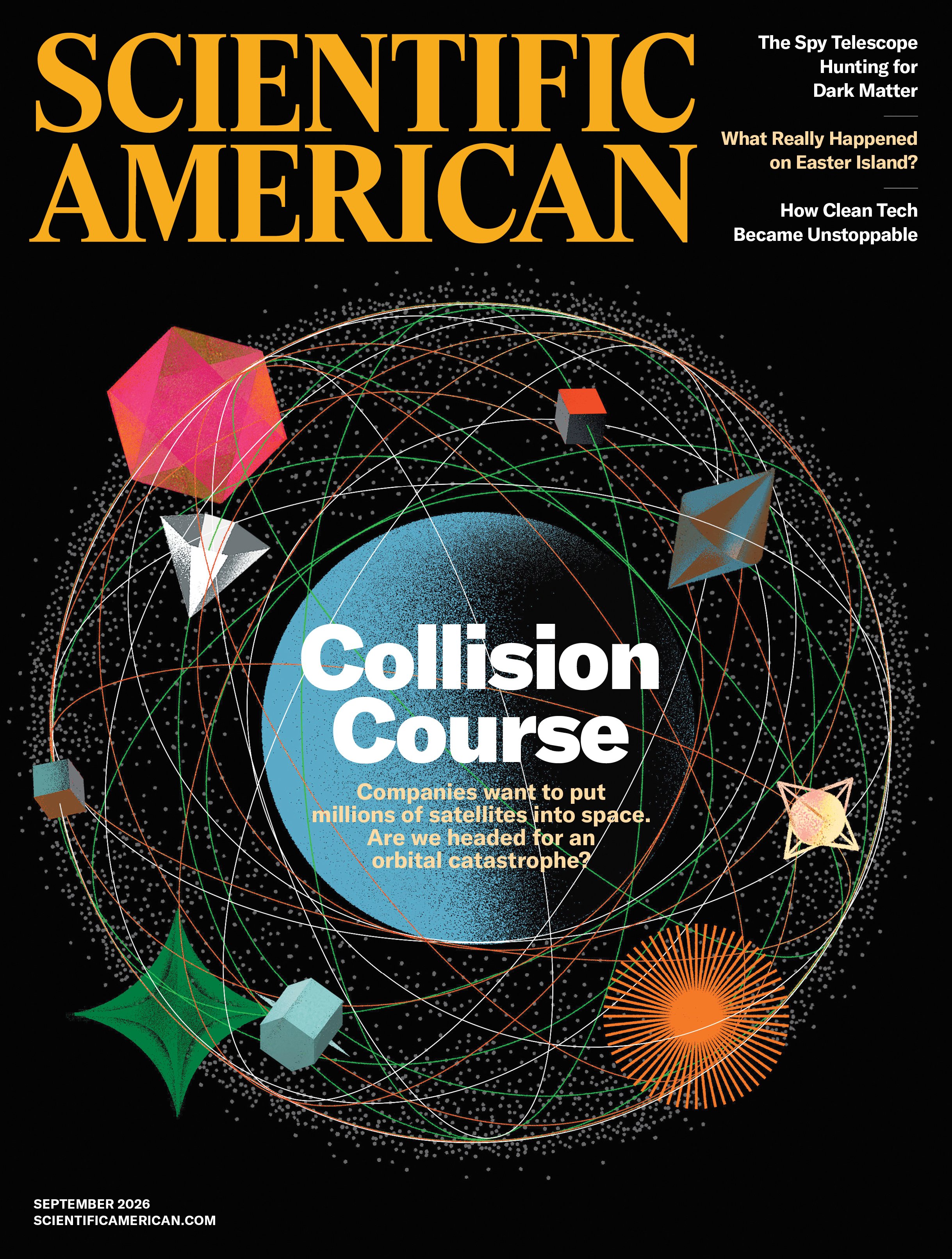
SpaceX and other companies want to put millions of satellites into space. Could orbit run out of room?
What really happened on Easter Island?
For decades, an influential theory blamed the Rapanui for their own downfall—a story made famous by Jared Diamond’s book Collapse. New evidence tells a different tale
How NASA turned a spy satellite into its new dark energy telescope
NASA’s Nancy Grace Roman Space Telescope will soon launch to unravel the mysteries of dark energy and dark matter
Why your brain turns life into stories
Neuroscience is revealing how our brains are wired for narrative
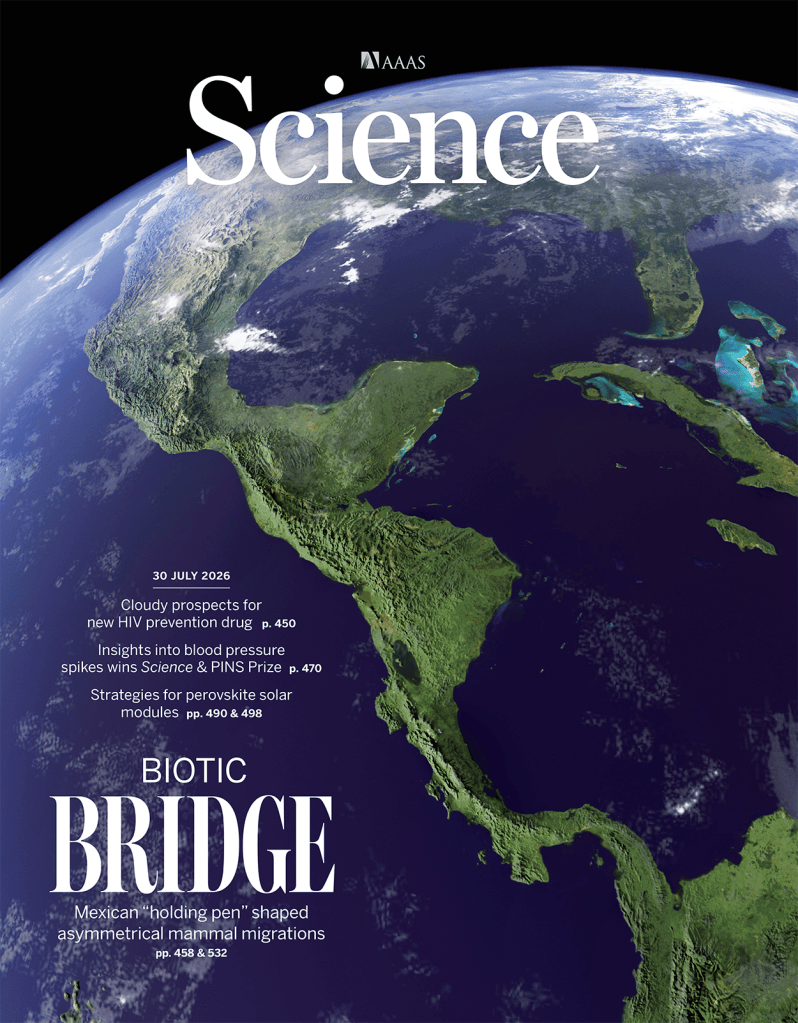
A 10-million-year biogeographic holding pen primed the Great American Biotic Interchange
For millions of years after the breakup of the supercontinent Gondwana, South America was disconnected from other landforms, a time period that has been referred to as its “splendid isolation.” This isolation allowed for the evolution of mammals with distinctive features, including xenarthrans, sprassodont carnivores, and notoungulates. The formation of the Panamanian land bridge facilitated connection of North and South American faunas, with a bias from north to south. Tseng et al. looked at fossils from low latitudes in México and found that northern mammals accumulated in the region before the connection (see the Perspective by McGuire and Williams). This allowed for more rapid dispersal south and further supports that the land bridge first formed during the Pliocene rather than the Miocene.