Taipei is a very modern city with a rich history. Many of the artists who live here are finding ways to keep Taiwan’s unique cultural traditions alive.
Video timeline: 00:00 Intro 00:54 Dadaocheng, meeting Zo Lin, foraging artist 02:14 Grassland’s Private Garden with foraging artist Tiffany Lai 06:41 Ximending, meeting comic artist Yeh Yu Tung 07:21 Wan Nan Building 08:11 Yeh Yu Tung’s Studio 10:23 Dadocheng Wharf 11:00 Taipei Main Station, Meeting Hsu Yenting, sound artist 12:35 Shing-Chen Street 14:04 Exhibition Hall Ever Burning 15:46 Jian-Guo Traditional Market, meeting contemporary artist Paco Uong 20:24 Taipei Tien-Hou Temple with collage artist Ni Jui Hung 22:13 Yat-Sen Park 22:53 Jui Hung’s Studio 24:50 Xiangshan
The host of this episode Allison Lin is an actress and photographer in Taipei, Taiwan. She studied interactive multimedia design at the Houston College of Art in the US. Allison meets the artists Zo Lin & Tiffany, Yeh Yu Tung (comic artist), Hsu YenTing (sound artist), Paco Uong (contemporary artist) and Ni Rui-Jung (collage artist).
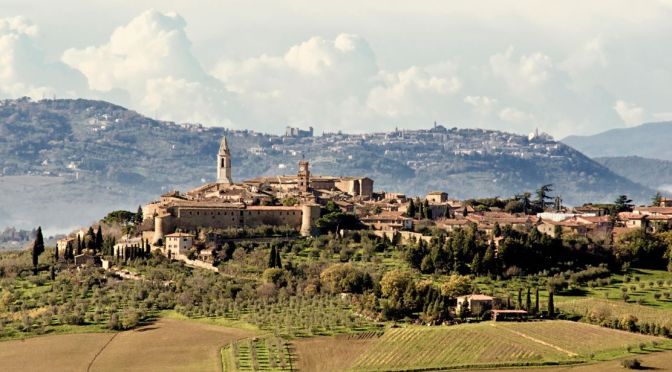
Pienza is a town in Tuscany, Italy. The central Piazza Pio II is framed by 15th-century buildings like the Pienza Cathedral and Piccolomini Palace. The latter was Pope Pius II’s summer residence and features a roof garden with valley views. Flemish tapestries and the pope’s embroidered cape are on display at the Diocesan Museum. West is the Pieve di Corsignano, a Romanesque church with a circular bell tower.
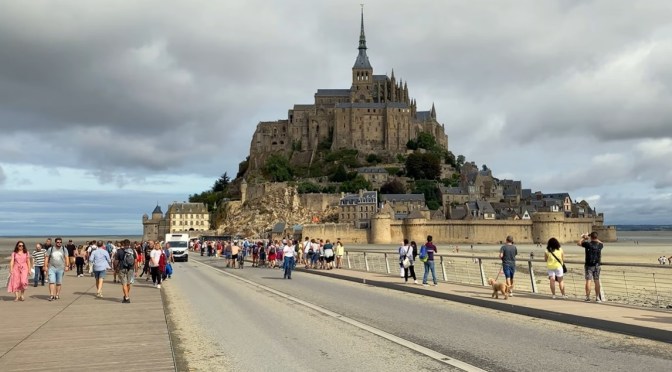
Mont-Saint-Michel, rocky islet and famous sanctuary in Manche département, Normandyrégion, France, off the coast of Normandy. It lies 41 miles (66 km) north of Rennes and 32 miles (52 km) east of Saint-Malo. Around its base are medieval walls and towers above which rise the clustered buildings of the village with the ancient abbey crowning the mount. One of the more popular tourist attractions in France, Mont-Saint-Michel was designated a UNESCO World Heritage site in 1979.
Mont-Saint-Michel is almost circular (about 3,000 feet [900 metres] in circumference) and consists of a granite outcrop rising sharply (to 256 feet [78 metres]) out of Mont-Saint-Michel Bay (between Brittany and Normandy). Most of the time it is surrounded by vast sandbanks and becomes an island only when the tides are very high. Before the construction of the 3,000-foot causeway that connects the island to land, it was particularly difficult to reach because of quicksand and very fast-rising tides. The causeway, however, has become a barrier to the removal of material by the tides, resulting in higher sandbanks between the islet and the coast.
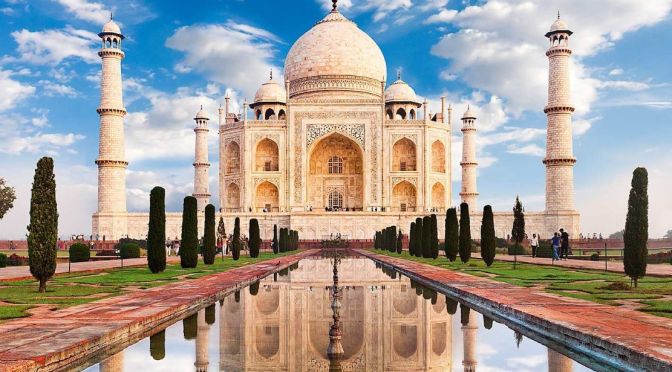
Taj Mahal, also spelled Tadj Mahall, mausoleum complex in Agra, western Uttar Pradesh state, northern India. The Taj Mahal was built by the Mughal emperor Shah Jahān (reigned 1628–58) to immortalize his wife Mumtaz Mahal (“Chosen One of the Palace”), who died in childbirth in 1631, having been the emperor’s inseparable companion since their marriage in 1612. India’s most famous and widely recognized building, it is situated in the eastern part of the city on the southern (right) bank of the Yamuna (Jumna) River. Agra Fort (Red Fort), also on the right bank of the Yamuna, is about 1 mile (1.6 km) west of the Taj Mahal.
In its harmonious proportions and its fluid incorporation of decorative elements, the Taj Mahal is distinguished as the finest example of Mughal architecture, a blend of Indian, Persian, and Islamic styles. Other attractions include twin mosque buildings (placed symmetrically on either side of the mausoleum), lovely gardens, and a museum. One of the most beautiful structural compositions in the world, the Taj Mahal is also one of the world’s most iconic monuments, visited by millions of tourists each year. The complex was designated a UNESCOWorld Heritage site in 1983.
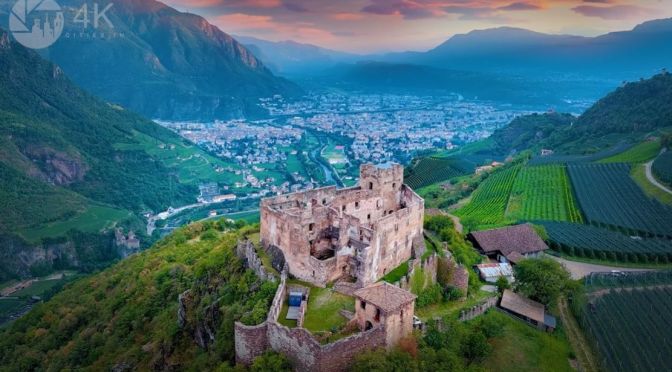
Bolzano is a city in the South Tyrol province of north Italy, set in a valley amid hilly vineyards. It’s a gateway to the Dolomites mountain range in the Italian Alps. In the medieval city center, the South Tyrol Museum of Archaeology features the Neolithic mummy called Ötzi the Iceman. Nearby is the imposing 13th-century Mareccio Castle, and the Duomo di Bolzano cathedral with its Romanesque and Gothic architecture.
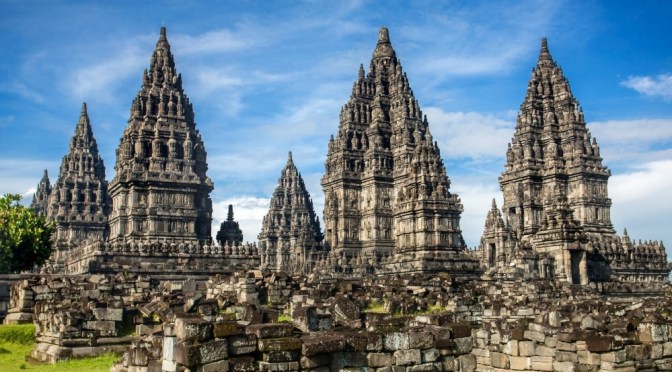
Yogyakarta (often called “Jogja”) is a city on the Indonesian island of Java known for its traditional arts and cultural heritage. Its ornate 18th-century royal complex, or kraton, encompasses the still-inhabited Sultan’s Palace. Also within the kraton are numerous open-air pavilions that host classical Javanese dance shows and concerts of gamelan music, characterized by gongs, chimes and plucked string instruments.
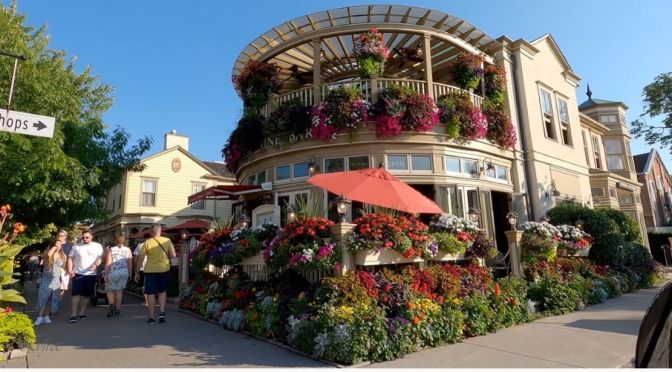
Niagara-on-the-Lake is a town in southern Ontario. It sits on the shores of Lake Ontario, at the mouth of the Niagara River. It’s known for its wineries and the summer Shaw Festival, a series of theatre productions. The flower-filled, tree-lined old town features 19th-century buildings, mainly along Queen Street. Near the river, 19th-century Fort George was built by the British to defend against American attacks.
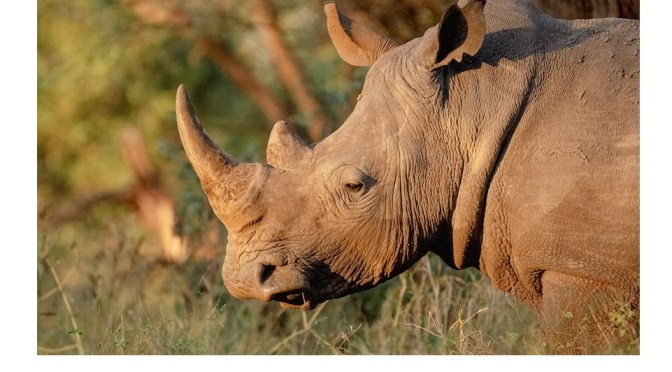
In Zimbabwe, the mighty rhino is making a comeback. In southern Africa, the animal was poached to near extinction in recent decades. We visit a wildlife sanctuary, with an elite anti-poaching team, to see how the animal is being bought back from the brink.
It’s one of the most successful rhino conservation projects in Africa. In south-eastern Zimbabwe, a private wildlife sanctuary is working hard to bring endangered rhinos back from the brink. In decades past, the mighty Black Rhino was poached to near extinction in southern Africa. Its horn, almost worth its weight in gold, makes it a target for organised poaching gangs.
In 1998, the privately-funded Malilangwe Trust had a population of 28 white and 28 black rhinos, imported from South Africa. Today its rhino population numbers in the hundreds. Reporter Michael Davie, an Australian born in Zimbabwe, returns home to witness this extraordinary wildlife success story. He spends time with the sanctuary’s highly trained anti-poaching team, the Malilangwe Scouts, the tip of the spear against the ever present poaching threat.
“Individually you can’t win against poaching and we need every one of us to fight against poachers,” says Patrick, a Sergeant in the Scouts. “You have to be a team, a strong one.” Davie captures all the incredible action of the hectic “rhino ops” where specialists dart the animals from helicopters then move in on 4WDs as they dash across the park. Led by ecologist Sarah Clegg, the rhino ops team collect vital data on the herd.
“They’ve got this reputation of being bad-tempered and dangerous and they are, but I think it’s mostly that they’re just such emotional creatures,” says Sarah, who’s studied the animal for more than two decades. “They’re just insecure, you know? And so they need more love.” Malilangwe increased its rhino population to such an extent that last year, it relocated some of its Black Rhino herd to nearby Gonarezhou National Park — a former killing ground for rhinos.
“It’s what we all aim for in our careers as conservationists,” says Sarah. “It’s a wild park, so being able to put the rhino back into that park is like waking it up again.” This visually stunning story has a powerful message of hope. “Everyone needs to know the rhino is special,” says Patrick.