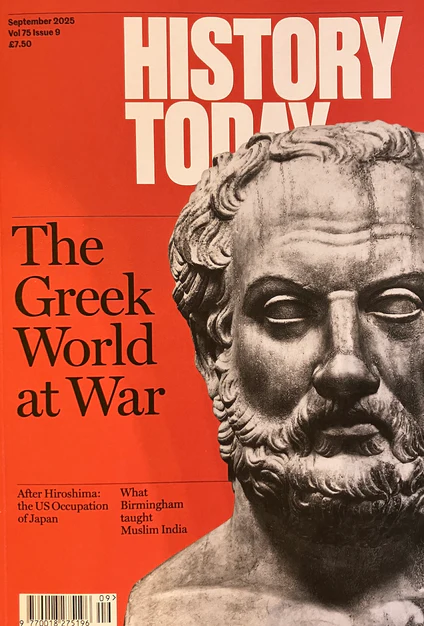
For the ancient Greeks, the Peloponnesian War was a conflict involving the entire world. For Thucydides, it was a lesson in the realities of human nature. Robin Waterfield
The Invention of the Eastern Question: Sir Robert Liston and Ottoman Diplomacy in the Age of Revolutions by Ozan Ozavcı offers the ‘sick man of Europe’ a second opinion.
Donald Trump now has the Attorney General he always wanted—an ally willing to harness the law to enable his agenda. By Ruth Marcus
Trump Sends in the National Guard
Is the President’s takeover of D.C. a dry run for other cities? By Margaret Talbot
Bill Belichick Goes Back to School
Can the legendary former Patriots coach transform U.N.C. football? By Paige Williams
The Family Fallout of DNA Surprises
Through genetic testing, millions of Americans are estimated to have discovered that their parents aren’t who they thought. The news has upended relationships and created a community looking for answers. By Jennifer Wilson
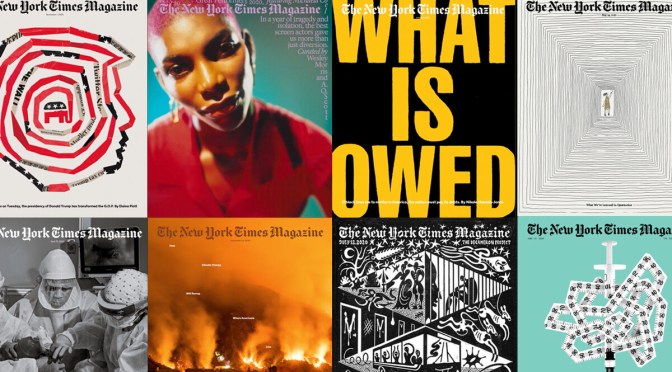
THE NEW YORK TIMES MAGAZINE: The 8.17.25 Issue features Trevor Quirk on how Hurricane Helene disconnected his community around Asheville, North Carolina from modern communication; Ben Austen on how Trump’s war on higher education is hitting community colleges; Bruce Schoenfeld on Stu Sternberg, the owner of the Tampa Bay Rays; and more.
When Helene disconnected my part of North Carolina for weeks, my neighbors and I had to relearn old ways of knowing what was happening — and what wasn’t. By Trevor Quirk
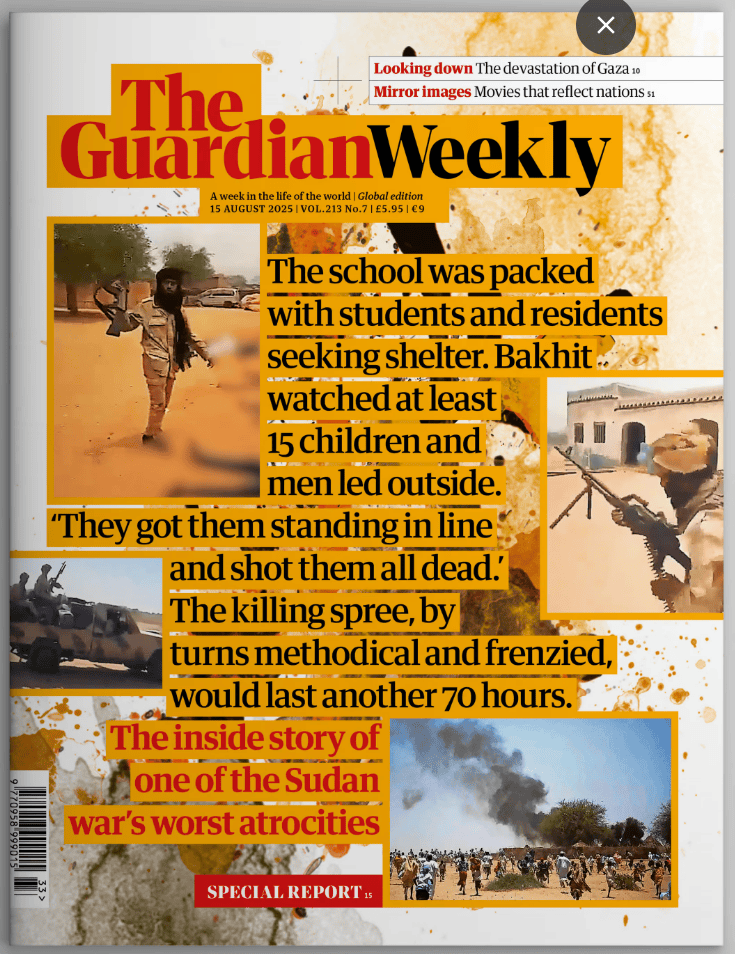
While the wars raging in Ukraine and Gaza have dominated global news agendas for months turning into years, relatively little attention has been paid to the ongoing civil war in Sudan – which for many western media outlets remains out of sight and largely out of mind.
This can’t be said of the Guardian’s Mark Townsend, who has reported tirelessly on the effects of the war between the Arab-led Rapid Support Forces and Sudanese military since it broke out in April 2023. It’s a conflict that has been characterised by repeated atrocities, forcing millions from their homes and causing the world’s largest humanitarian crisis.
In April this year, just as a British-led conference was being held in London to explore how to end the war, one such atrocity was unfolding in Zamzam refugee camp in North Darfur. Details were at first sketchy, but only now – thanks to the piecing together of intelligence reports and witness testimony – can it be revealed what happened during the attack on the camp by RSF forces and why it was not stopped.
As Mark’s remarkable account reveals, the 72-hour rampage in April may have taken the lives of more than 1,500 civilians in one of the most notorious war crimes of Sudan’s catastrophic conflict.
Five essential reads in this week’s edition
The big story | The ruins of Gaza, as seen from above Guardian international correspondent Lorenzo Tondo joins a Jordanian military airdrop for a rare chance to observe a landscape devastated by Israel’s offensive. With photography by Alessio Mamo
Science | The truth about sunscreen Too much exposure to the sun has traditionally been seen as a danger. Now claims that sunscreen is toxic flood the internet. Our science editor, Ian Sample, weighs up the evidence
Interview | Demis Hassabis, the cautious AI optimist The head of Google’s DeepMind tells Steve Rose how artificial intelligence could usher in an era of ‘incredible productivity’ and ‘radical abundance’. But who will it benefit?
Opinion | The world is in flames. But I’ve found some hope amid the gloom Columnist Jonathan Freedland makes a moral case for escapism, as a means of retaining the ability to see the world – and the people – around us
Culture | The films that capture a nation’s soul What single film best represents a nation? Twelve writers choose the one work they believe most captures their home’s culture and cinema – from a bold cricket musical to a nine-hour documentary, gritty crime dramas to frothy tales of revenge
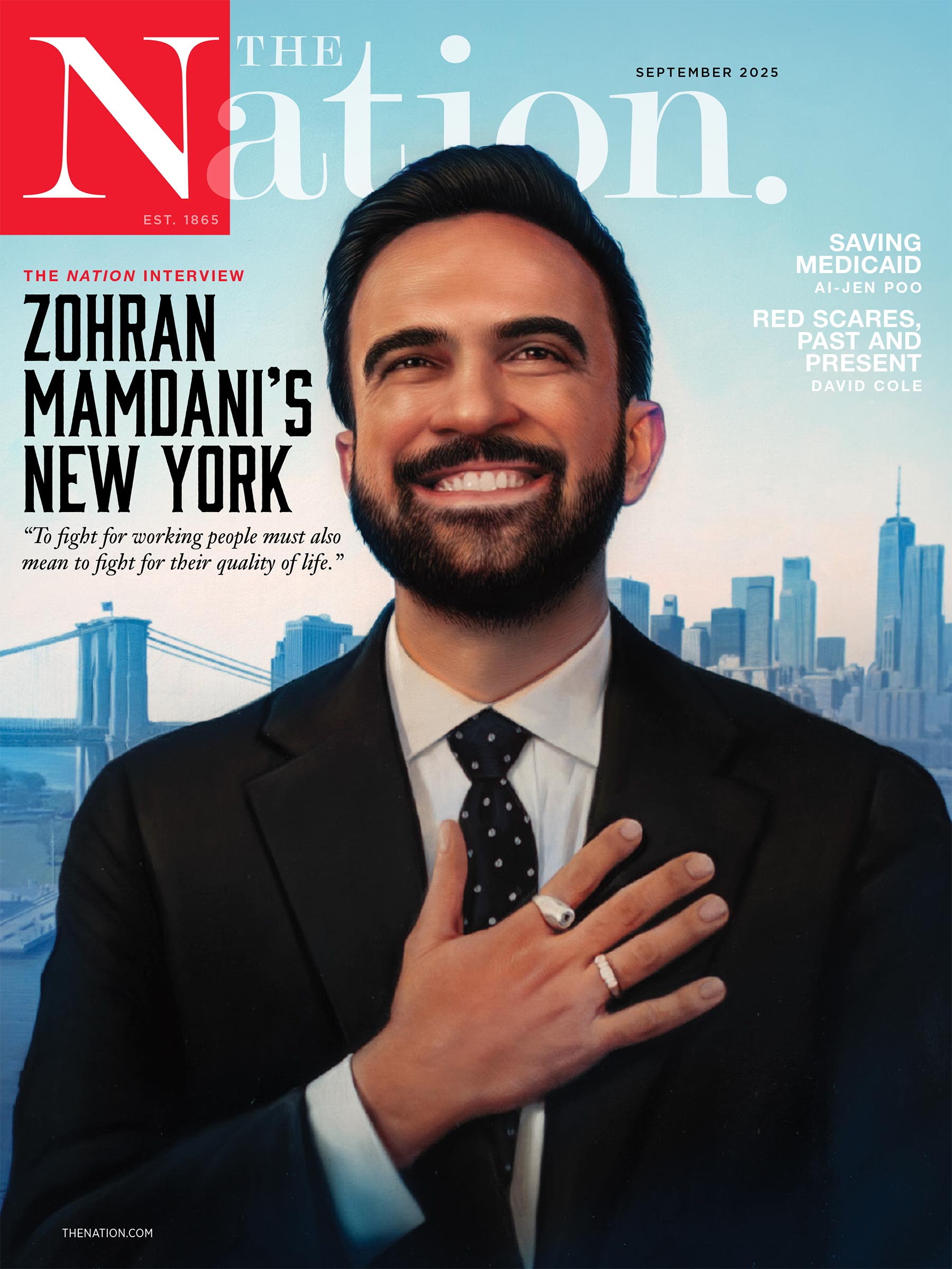
THE NATION MAGAZINE: The latest issue features ‘Zohran Mamdani’s New York’ – “To fight for working people must also mean fighting for their quality of life”
Fleeing lawmakers in Texas are unlikely to stop Republicans from redrawing the state’s congressional maps, but their effort has offered a rallying cry—and a reminder of the Democratic Party’s weaknesses. By Jonathan Blitzer
How an Ultra-Rare Disease Accelerates Aging
Teen-agers with progeria have effectively aged eight or nine decades. A cure could help change millions of lives—and shed light on why we grow old. By Dhruv Khullar
How Much Is Trump Profiting Off the Presidency?
An honest accounting of our Executive-in-Chief’s runaway self-enrichment. By David D. Kirkpatrick
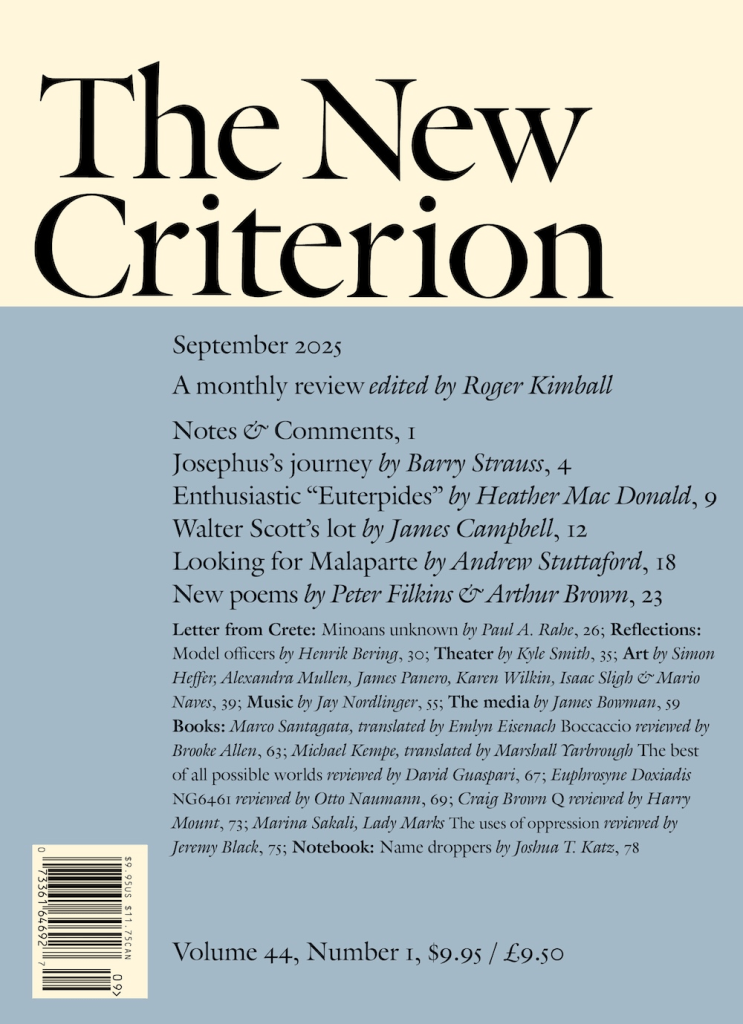
News, Views and Reviews For The Intellectually Curious