
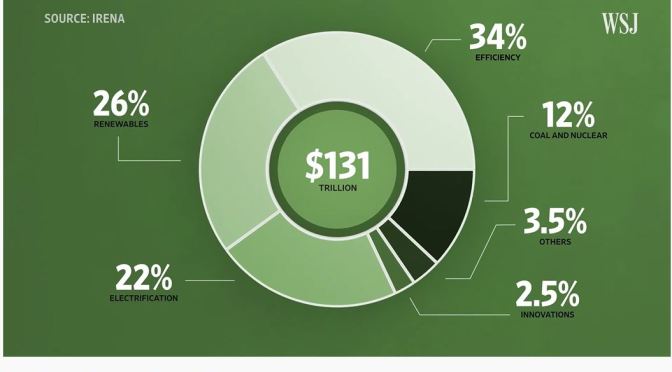
Money is a sticking point in climate-change negotiations around the world. As economists warn that limiting global warming to 1.5 degrees Celsius will cost many more trillions than anticipated, WSJ looks at how the funds could be spent, and who would pay. Illustration: Preston Jessee/WSJ
Tag Archives: Climate Change
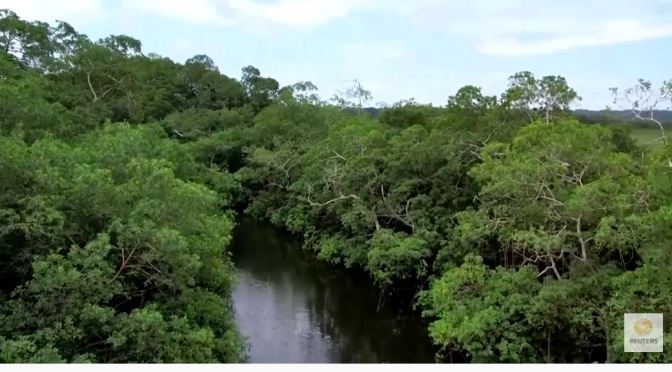
Nature: Mangrove Swamps Of Gabon, Central Africa
The towering trees in Gabon’s mangrove swamps have helped to make the Central African country one of the world’s few net absorbers of carbon. However, many are under threat from urbanization, with former swamps being illegally cleared for construction.

Analysis: Can Businesses Do Well By Doing Good?
Today consumers want to buy more sustainable products, employees want to work for firms that share their values, and in the investment world, ESG funds are all the rage. How are companies responding to these shifting demands and can businesses really do well by doing good?
00:00 – Can companies do well by doing good? 00:50 – Environment and climate change 06:50 – Employee wellbeing 09:51 – Workforce diversity 15:50 – Ethical supply chains 19:26 – Environmental Social Governance
Read more of our business coverage: https://econ.st/2XfyBBX

Cover Previews: Scientific American – November 2021

Urban Design: Paris’ Grand Plan To Become Europe’s Greenest City (Video)
From the Champs-Élysées to the Eiffel Tower, the French capital is getting the mother of all makeovers.

Morning News: Canada Election Aftermath, Cost Of Online Shopping Rises
Prime Minister Justin Trudeau remains in power after Monday’s election, but he emerges without the majority he wanted, and with his soft power damaged. He now faces a fourth wave of the pandemic and an emboldened far-right from a weaker position.
Child labour fell markedly in the 16 years after the turn of the millennium. Now it’s on the rise again. Efforts to prevent children from working can often exacerbate the problem. And we consider one of the more unusual ideas for combating climate change: potty-training cows.
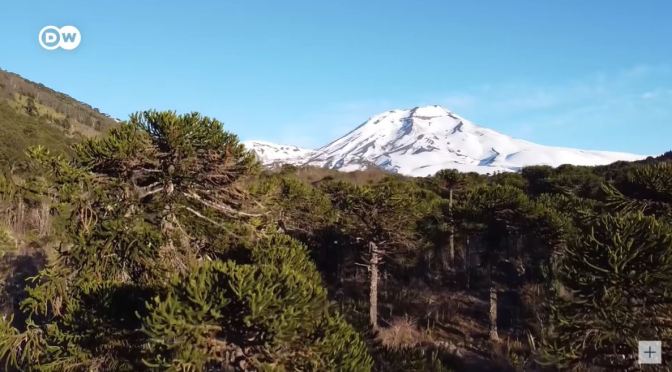
Conservation: Protecting Chile’s Araucaria Forests
The monkey puzzle tree is one of the oldest tree species in the world, dating back to the dinosaur age. Climate change and deforestation endanger them, but in areas inhabited by indigenous peoples in Chile, their numbers are increasing.
Araucaria araucana is an evergreen tree growing to 1–1.5 m in diameter and 30–40 m in height. It is native to central and southern Chile and western Argentina. Araucaria araucana is the hardiest species in the conifer genus Araucaria.
Science: Dead Trees Giving Off CO2, Massive Stars, Melting Ice & Biodiversity
How insects help release carbon stored in forests, and the upcoming biodiversity summit COP 15.
In this episode:
00:44 Fungi, insects, dead trees and the carbon cycle
Across the world forests play a huge role in the carbon cycle, removing huge amounts of carbon dioxide from the atmosphere. But when those trees die, some of that carbon goes back into the air. A new project studies how fast dead wood breaks down in different conditions, and the important role played by insects.
Research Article: Seibold et al.
09:37 Research Highlights
Massive stars make bigger planets, and melting ice moves continents.
Research Highlight: Why gassy planets are bigger around more-massive stars
Research Highlight: So much ice is melting that Earth’s crust is moving
12:04 The UN’s Convention on Biological Diversity
After several delays, the fifteenth Conference of the Parties (COP 15) to the United Nations Convention on Biological Diversity, is now slated to take place next year. Even communicating the issues surrounding biodiversity loss has been a challenge, and reaching the targets due to be set at the upcoming meeting will be an even bigger one.
Editorial: The scientific panel on biodiversity needs a bigger role
19:32 Briefing Chat
We discuss some highlights from the Nature Briefing. This time, cannibal cane toads and a pterosaur fossil rescued from smugglers.
Nature News: Australia’s cane toads evolved as cannibals with frightening speed
Research Highlight: A plundered pterosaur reveals the extinct flyer’s extreme headgear
National Geographic: Stunning fossil seized in police raid reveals prehistoric flying reptile’s secrets
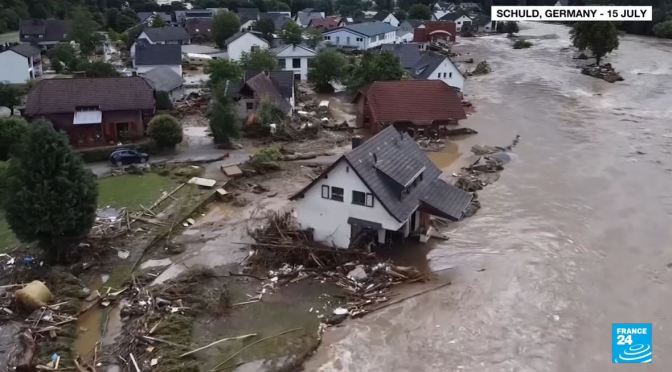
Climate: Europe To See Up To 20% More Flooding
Climate change has made extreme rainfall events of the kind that sent lethal torrents of waterhurtling through parts of Germany and Belgium last month at least 20% more likely to happen in the region, according to an international study published Tuesday (August 24).
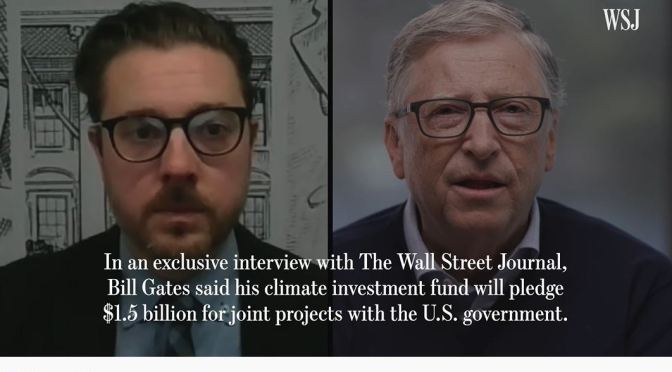
Interview: Bill Gates Will Commit $1.5B To Congress’ Enacted Climate Projects
Bill Gates’s investment fund will pledge $1.5 billion for climate projects if Congress enacts an infrastructure bill. The Microsoft co-founder and Energy Secretary Jennifer Granholm told the WSJ how public-private partnerships can spur innovation. Photo: Bill Gates via WSJ

