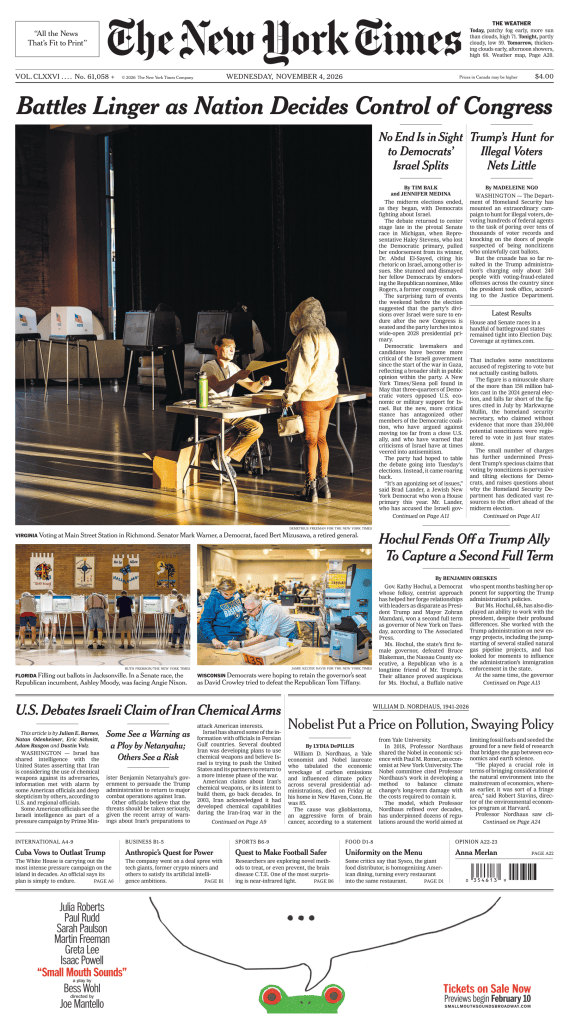
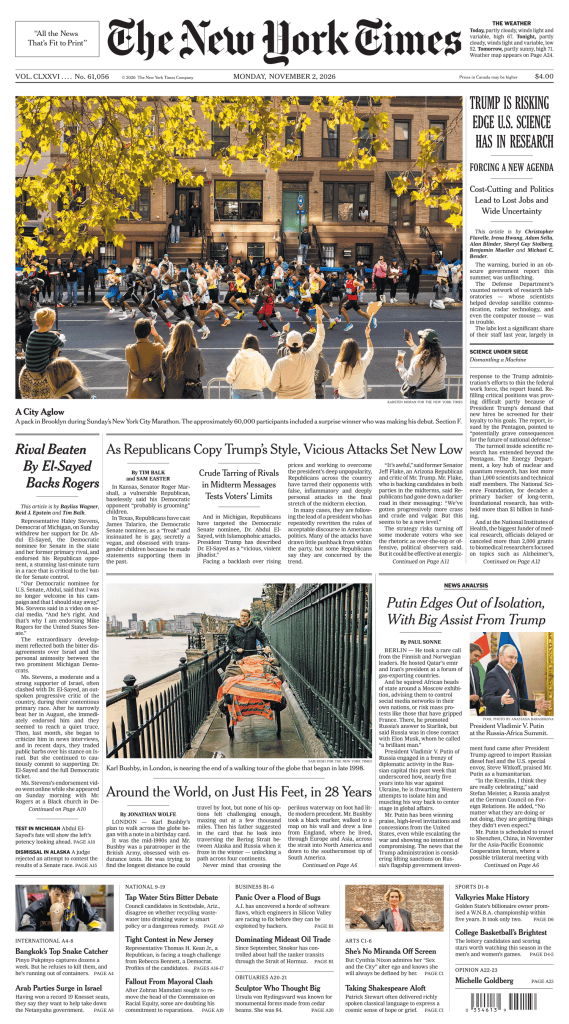
Democrats flipped seven Senate seats and overcame the Republicans’ House redistricting effort to capture control of Congress. President Trump told The New York Times that he would accept the results.
President Isaac Herzog has tried to avoid controversy and heal rifts in his largely ceremonial role. But his skills as a savvy mediator could be instrumental after an inconclusive election.
American women’s most listened-to podcast is Call Her Daddy. It is hosted by the glamorous Alex Cooper, whose shtick is grilling female celebrities on their sex lives. For example, she made Gwyneth Paltrow rank all her boyfriends according to their sexual skills. I hope her husband and kids didn’t bother listening to that episode. She recently hosted an actress named Sophia Bush. They discussed Sophia’s multiple divorces while Alex declared breathlessly that if a woman is questioning whether she can do better than her current husband, “the answer is always yes.” Sophia agreed. “The answer is always yes, and this idea that it’s too late or you’re too old, or who are you to want more – that’s patriarchy. That is crazy!” Something around here is crazy, yes, Ms. Bush.
Donald Trump has so dominated the news over the past decade that it is hard to imagine American politics without him. Yet now we are in the last 27 months of his presidency. And as this year ends and the next approaches, the national conversation turns toward the looming election cycle of 2028 and the vital question of who comes next. The Democratic nomination seems destined to be a complicated struggle between various factions and candidates. The outgoing Governor of California, Gavin Newsom, is a figure of ridicule yet strangely unsquashable. He remains the betting favorite. Senator Jon Ossoff, this magazine’s last cover star, is a contender. Alexandria Ocasio-Cortez is a telegenic and increasingly influential force – and Kamala Harris just won’t take no for an answer.
I’ve had hexes put on me by a university professor, had online vigilantes send packages of dogshit to my childhood home in New Jersey and been hounded by the trauma-informed journalists of the New York Times. CNN, Reuters, Agence France-Presse and other estimable sources have credited me with starting a dark…
In the fall of 2017, Virginia was going through its quadrennial tradition of giving the nation an electoral check-in on the president by holding an off-year gubernatorial election. The nation’s mood was, to say the least, heated. Four months earlier, at a baseball field in Alexandria, a radicalized and mentally imbalanced left-wing activist had nearly killed House whip Steve Scalise and three others in a shooting. So it was with some recklessness that Latino Victory Project, in
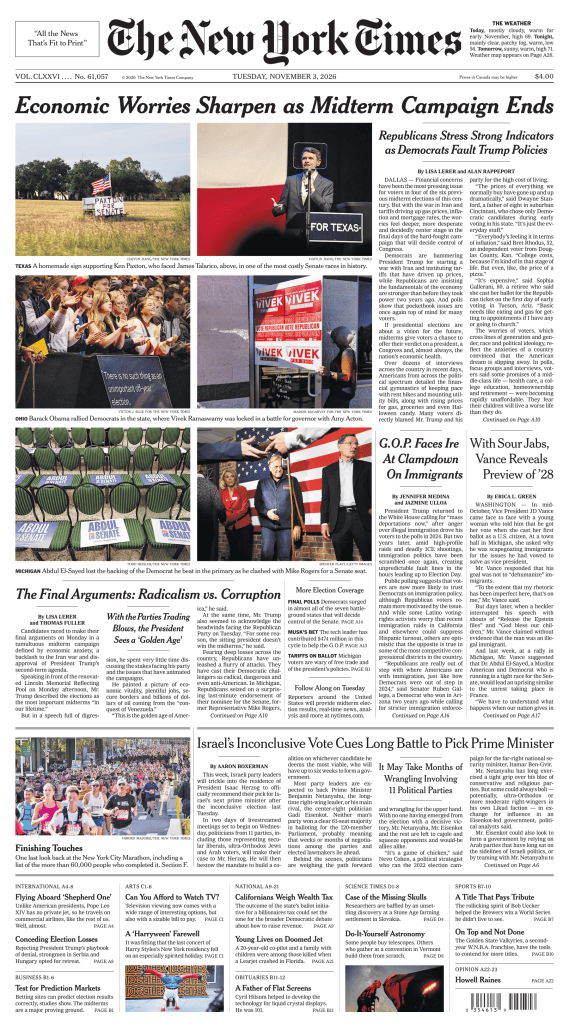
The midterm elections will offer the first nationwide verdict on President Trump’s second term. Tens of millions of early ballots have already been cast.
The energy-rich Gulf Arab countries are engaged in a flurry of mediation efforts to avert war between the U.S. and Iran, as many fear that the fighting will be worse this time around.
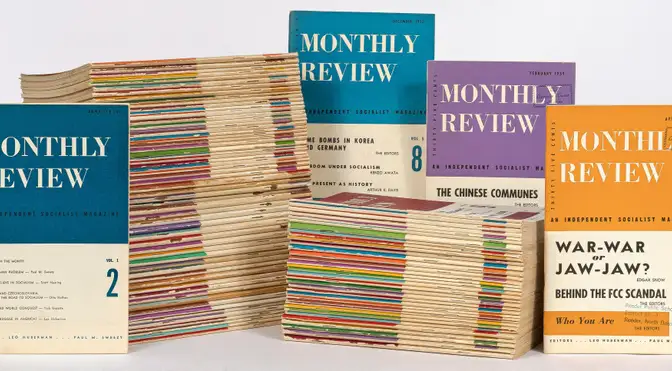
MONTHLY REVIEW MAGAZINE: The latest issue features the United States as the world’s chief enemy of sovereign elections.
Citing Dov Levin’s research, it counts 128 U.S. interventions in foreign elections from 1946 to 2014, rising after the Cold War, increasingly overt, and successful about 60 percent of the time before 2000. Methods include funding right-wing campaigns, dirty tricks, lawfare, social-media bots, aid threats, and CIA surrogates posing as “democracy assistance” groups. Recent examples include Venezuela, ending in Maduro’s abduction; $20 billion tied to electing Milei’s allies in Argentina; and Honduras, where Trump declared Asfura the winner. Leaked “Hondurasgate” tapes exposed regional manipulation schemes.
Nietzsche’s French Legacy
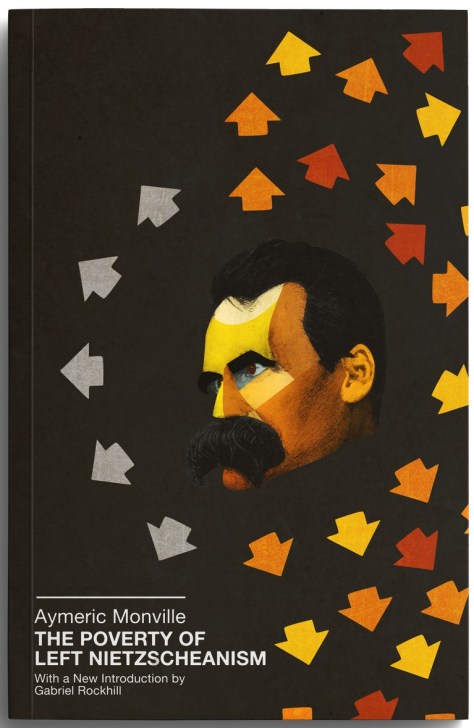
The Poverty of Left Nietzscheanism by Aymeric Monville
MR is pleased to be able to share with readers Gabriel Rockhill’s Introduction to The Poverty of Left Nietzscheanism by Aymeric Monville (Iskra Books, 2026). Rockhill provides readers with a thorough account of the rehabilitation of Nietzsche within French Theory and its consequences within the non-communist left. Fascism, Rockhill argues, “can only be understood and contested through materialist analysis and anticapitalist praxis”—a fitting preamble to a book that acts as “an insightful indictment of the dominant capitalist ideologies while clearly articulating the political path forward.”
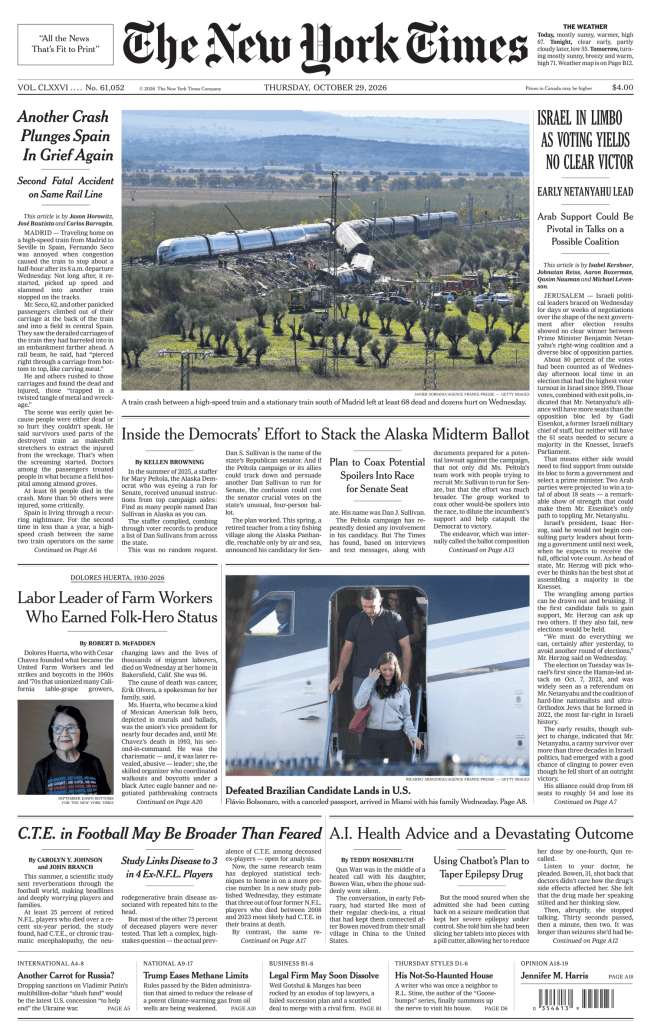
Party leaders will make competing cases to the Israeli president for either Benjamin Netanyahu or Gadi Eisenkot to get the first chance to build a governing coalition.
States like Saudi Arabia and the United Arab Emirates that have worked to rebalance from a dependence on energy have seen growth plunge in a year of strife.
Republicans, worried about losing control of Congress, are sending dire warnings about the opposing party. Democrats are keeping their focus on affordability, corruption and President Trump.
After losing ground in Israel’s election, Prime Minister Benjamin Netanyahu must draw on decades of political capital and reckon with old foes if he is to build a governing coalition.
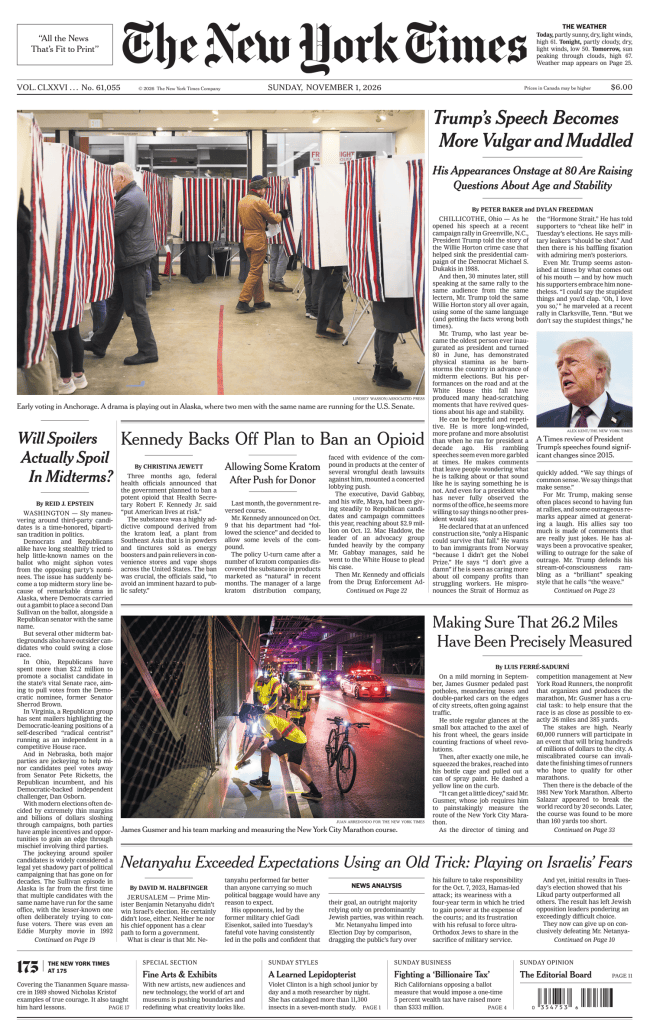
A Times review of President Trump’s public speeches found that he was more profane, more absolutist, longer-winded and less coherent than he was in 2016.
Notching wins from Washington, the Russian leader is talking with foreign leaders and could return to diplomatic center stage with possible summit meetings.
The optimists cite robust earnings growth; the pessimists see a bubble in danger of bursting. Plus, the pros’ forecasts for interest rates, international markets, the midterm elections, and more.
Prime Minister Benjamin Netanyahu is jockeying to stay in power and President Trump is in a midterm fight, yet Iran does not expect a major shift in policy.
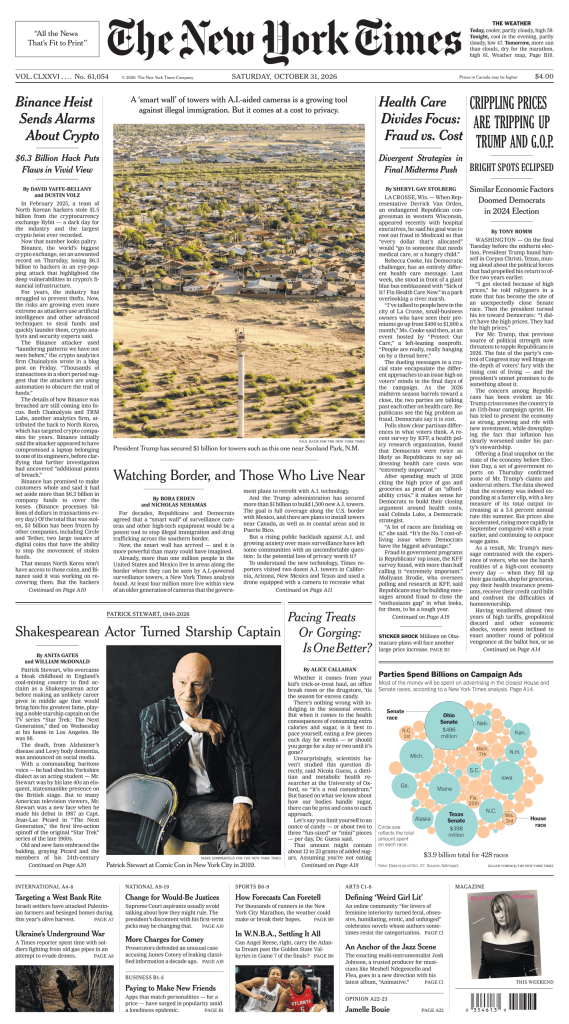
The largest cyber heist in history came as attackers increasingly use artificial intelligence and other advanced techniques to steal crypto and quickly launder the funds.
Deadlock is possible, as neither the bloc of Prime Minister Benjamin Netanyahu nor his main challenger have won a majority. But there are still paths to a new government.
The leading contenders, Prime Minister Benjamin Netanyahu and Gadi Eisenkot, aren’t substantially different in their approach to Israel’s security or in their opposition to a Palestinian state.
Gains for Arab-led parties have electrified Taibe, in central Israel, even as voters elsewhere in Israel say they have no place in any future government.
The largest cryptocurrency exchange said it was compromised in what could be the biggest crypto heist ever. One research lab attributed the theft to North Korea.
Deadlock is possible, as neither the bloc of Prime Minister Benjamin Netanyahu nor his main challenger appear likely to win a majority. But there are still paths to a new government.
The Israeli prime minister outperformed both expectations and his rivals by playing on Jewish voters’ fears of Arab political power and potential security threats.
France’s second city, five years into a presidential development plan, is grappling with the social strains that have fueled protests across the country.
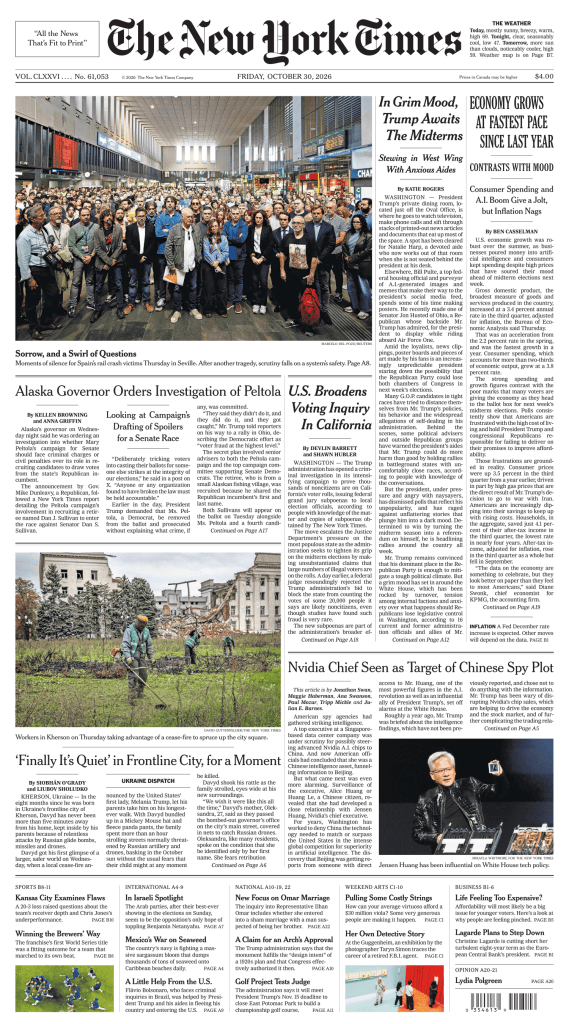
A Chinese businesswoman who had a close relationship with Jensen Huang was found to be passing intelligence to Beijing. President Trump was briefed and took no action.
The move followed a Times report about the role Mary Peltola’s Senate campaign played in recruiting candidates to draw votes from the Republican incumbent.
5 min read
News, Views and Reviews For The Intellectually Curious