Category Archives: Museums

Reviews: ‘The Week In Art’

This week, Philip Guston Now is unveiled at the Museum of Fine Arts in Boston after its controversial postponement in 2020; Ben Luke talks to Kate Nesin and Megan Bernard, two of the four curators on the team assembled by the museum to revise the exhibition, which was postponed by four museums in the wake of George Floyd’s murder. 

We discuss how the show and its interpretation have changed in the last two years. As Queer Britain, the UK’s first national LGBTQ+ museum opens its doors, Gareth Harris, chief contributing editor at The Art Newspaper, speaks to Matthew Storey, the curator of the museum’s inaugural exhibition, Welcome to Queer Britain. And in this episode’s Work of the Week, our acting digital editor, Aimee Dawson, talks to Candida Lodovica de Angelis Corvi, global director at the Colnaghi gallery, about a rediscovered work by the 17th-century artist Caterina Angela Pierozzi, on display at Colnaghi in London.

Philip Guston Now, Museum of Fine Arts, Boston, until 11 September; Museum of Fine Arts, Houston, 23 October-15 January 2023; the National Gallery of Art, Washington, DC, 26 February-27 August 2023; and Tate Modern, London, 3 October 2023-25 February 2024. To hear an in-depth discussion about Philip Guston with the curator Robert Storr, author of the book Philip Guston: A Life Spent Painting, listen to the episode of this podcast from 18 September 2020.
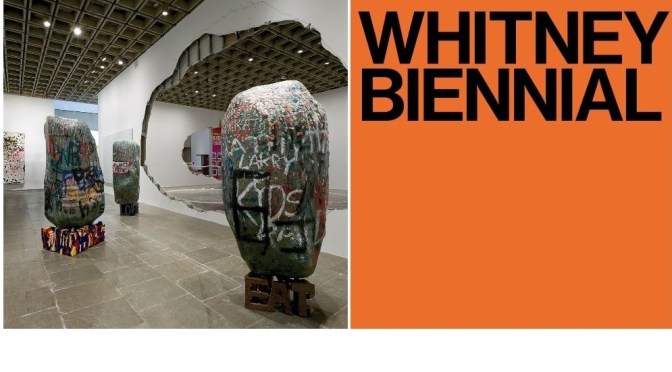
Museum Exhibits: Tour Of The Whitney Biennial 2022

The Whitney Biennial has surveyed the landscape of American art, reflecting and shaping the cultural conversation, since 1932. The eightieth edition of the landmark exhibition is co-curated by David Breslin, DeMartini Family Curator and Director of Curatorial Initiatives, and Adrienne Edwards, Engell Speyer Family Curator and Director of Curatorial Affairs. Titled Quiet as It’s Kept, the 2022 Biennial features an intergenerational and interdisciplinary group of sixty-three artists and collectives whose dynamic works reflect the challenges, complexities, and possibilities of the American experience today.

To learn more about the exhibition visit https://whitney.org/exhibitions/2022-…

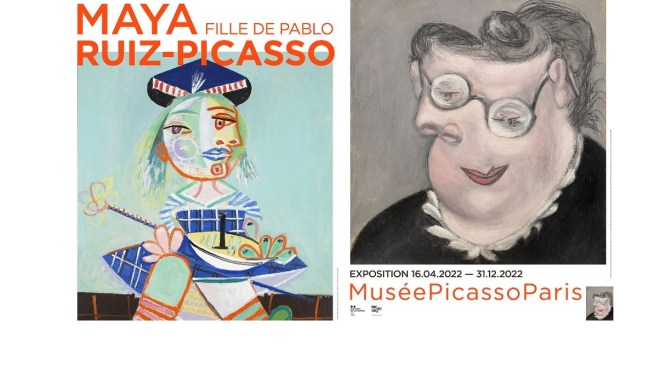
Exhibition Tours: Musée National Picasso-Paris

This exhibition celebrates the addition of nine masterpieces to the French national collections – six paintings, two sculptures and a sketchbook – via the country’s gifts-in-lieu scheme, which was introduced on 31 December 1968, allowing inheritance tax to be paid in kind. This unique acquisition mode is key to the very identity of Musée Picasso, which was founded in 1979 specifically to house the donation made by Pablo Picasso under this system.

Pablo Ruiz Picasso was a Spanish painter, sculptor, printmaker, ceramicist and theatre designer who spent most of his adult life in France.

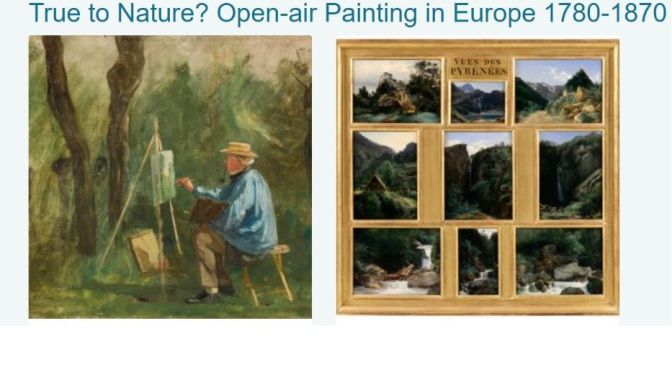
Art: ‘True To Nature-Open Air Painting’ (Fitzwilliam)

True to Nature: Open-air Painting in Europe 1780-1870 Explore the inventive ways artists in the 18th and 19th centuries recorded fleeting moments in nature, capturing the effects of light, drama, and atmosphere first-hand in the open air.

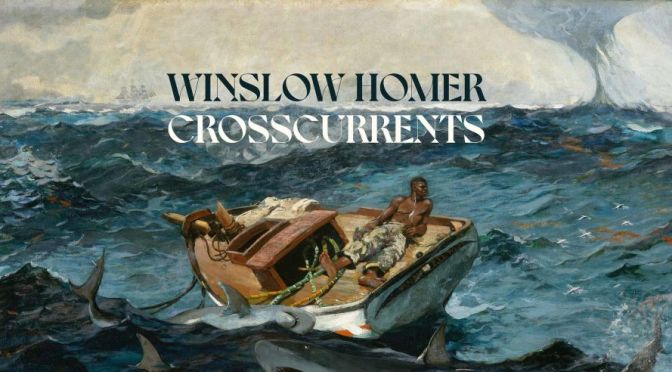
Art Exhibitions: ‘Winslow Homer – Crosscurrents’

Join Stephanie Herdrich, Associate Curator of American Painting and Sculpture, and Sylvia Yount, Lawrence A. Fleischman Curator in Charge—both of the American Wing—for a virtual tour of “Winslow Homer: Crosscurrents.” This ambitious survey reconsiders Homer’s work through the lens of conflict, a theme that crosses his prolific career.

A persistent fascination with struggle permeates his art—from emblematic images of the Civil War and Reconstruction that examine the effects of the conflict on the landscape, soldiers, and formerly enslaved to dramatic scenes of rescue and hunting as well as monumental seascapes and dazzling tropical works painted throughout the Atlantic world.

The centerpiece of the exhibition is Homer’s iconic “The Gulf Stream” (The Met), a painting that reveals his lifelong engagement with charged subjects of race and the environment. Featuring 88 oils and watercolors, “Crosscurrents” represents the largest critical overview of Homer’s art and life in more than a quarter of a century.

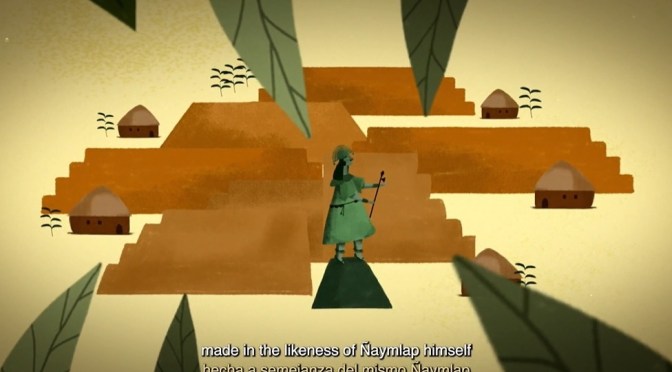
Short Films: ‘The Legend of Ñaymlap’ – An Andean Origin Story Of Peru (2022)

In the Denver Art Museum’s Art of the Ancient Americas galleries, we worked with Mexico City-based animators Hola Combo to create animations to help tell the origin stories that explain the relationship between ancient American communities and the their environment. For the Andes, we chose a story that loosely relates to the works on display. “The Legend of Ñaymlap” is an ancient story from Peru’s northern coastal communities and supposedly records the origins of the Sicán or Lambayeque dynasty (about 750–1375 CE). Within this origin story, there is a moral about the relationship between the deities and the land. As the ruler turns away from the deities, rain and floods devastate the land, starving the community.

Reviews: ‘The Week In Art’

This week: the Art Basel and UBS Global Art Market Report 2022 is out—is the market’s recovery as good as it sounds? 

We talk to Melanie Gerlis, art market columnist for The Art Newspaper and the Financial Times, about the sixth edition of the market report, what the headline figures tell us and what we can read between the lines.

As the exhibition Hideouts: The Architecture of Survival, opens at the Zacheta National Gallery of Art in Warsaw—focusing on the spaces in Poland and Ukraine used by Holocaust survivors to escape Nazi persecution—we talk to the artist behind it, Natalia Romik. Though long planned, the show has gained a troubling topicality as the Russian invasion and destruction of Ukraine continues.

And in this episode’s Work of the Week, coinciding with the 150th anniversary of Piet Mondrian’s birth, we discuss his painting Victory Boogie Woogie (1942-44). Caro Verbeek, the co-curator of Mondrian Moves, an exhibition opening this week at the Kunstmuseum den Haag in the Hague, the Netherlands, tells us about the feverish creation and unfinished nature of the Dutch artist’s final work.

Natalia Romik’s exhibition, Hideouts: The Architecture of Survival, Zachęta National Gallery of Art, Warsaw, until 17 July; TRAFO Center for Contemporary Art, Szczecin, Poland, 4 August-6 November

Mondrian Moves, Kunstmuseum den Haag, the Hague, Netherlands, 2 April-25 September. Mondrian Evolution, Fondation Beyeler, Basel, Switzerland, 5 June-9 October; K20, Düsseldorf, Germany, 29 October-10 February 2023

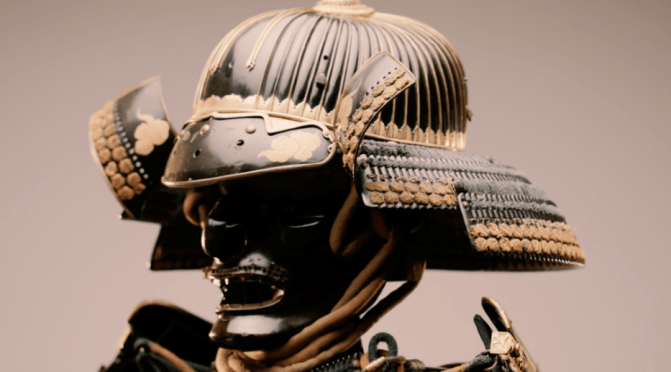
Views: ‘Seeing The Samurai’ With Japanese Armour

This fascinating Japanese armour was part of the first diplomatic gift between Japan and Britain. It is over 400 years old and one of the first documented Japanese armours to have been seen on British soil.

Learn more about this amazing object in this short film. See the armour in our exhibition Japan: Courts and Culture at The Queen’s Gallery, London from 8 April 2022 – 26 February 2023.

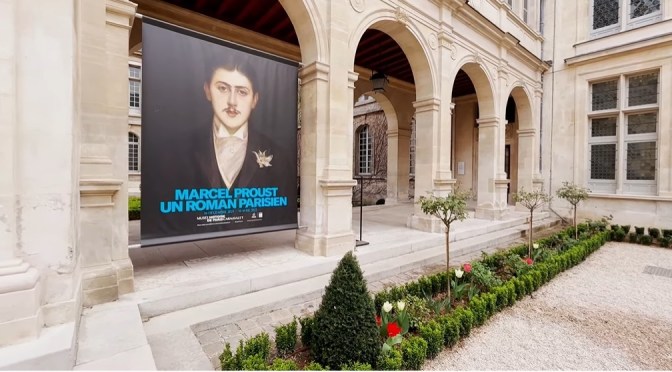
Tours: ‘Marcel Proust’ – Carnavalet Museum, Paris

The Carnavalet Museum – History of Paris is celebrating the 150th anniversary of the birth of Marcel Proust (1871–1922).

Dedicated to the relationship between Marcel Proust and Paris, where he spent most of his life, the exhibition Marcel Proust, a Parisian novel will investigate the city’s place in Proust’s novel.

The first section of the exhibition will explore the world Marcel Proust inhabited in Paris. Having been born and died in Paris, Proust’s life unfurled in the very restricted area encompassed by Parc Monceau, Place de la Concorde, Auteuil, Bois de Boulogne and l’Étoile. Paris was of immense importance in the development of Marcel Proust’s literary vocation, from the time of his earliest writings in the late 1890s with his fellow-pupils at the Lycée Condorcet, to his entry into the city’s high society and encounters with people who would be decisive to his life.

The second part of the exhibition opens on the fictional Paris created by Marcel Proust. Following the architecture of the novel In Search of Lost Time and evoking emblematic places in the city, it offers a journey through the novel and the history of the capital, focusing on the book’s central characters. The city of Paris, represented poetically in the novel, is the setting for the quest of the narrator, the author’s alter ego, until the revelation of his vocation as a writer.