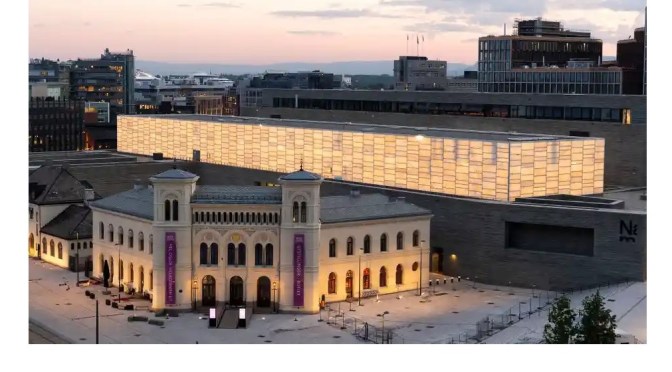
The Norwegian capital Oslo is getting a new national museum for classical and modern art, architecture and design. The museum’s collection includes around 100,000 objects, ranging from medieval tapestries to modern design classics and contemporary artworks.
There will be rooms dedicated to, among others, the works of Edvard Munch , including “The Scream,” 19th-century landscape painting, royal robes worn by the Norwegian queens, as well as works by prominent artists, such as Gustav Vigeland, Hannah Ryggen, Claude Monet, Vincent Van Gogh and Ida Ekblad.
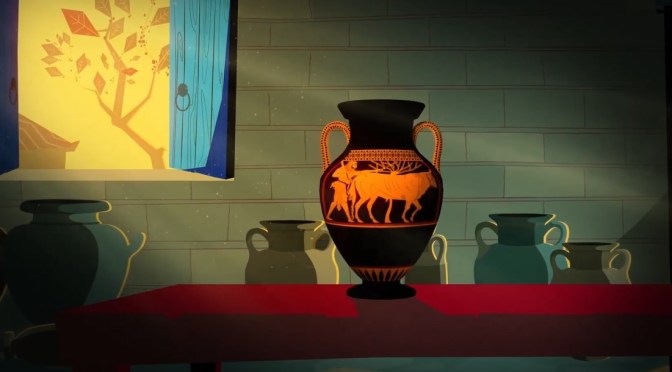
In this five-minute animated video, journey back to the 6th-century BCE workshop of the Athenian master Andokides and witness an ancient artist’s moment of creative ingenuity. For generations Athenian vase painters had employed black-figure technique, in which the figure is painted in a mixture of clay and water called slip and details are incised with a sharp tool.
At some point—we don’t know precisely when or why—a vase painter had the idea to reverse the scheme, leaving the figures the color of the clay and painting details with a brush. We now call this red-figure technique. Learn how ancient vase painters created vases in both styles and marvel at the technical virtuosity of the multi-step firing process that contributed to their distinctive, high-contrast look.
We talk to the writer and critic Amy Castor about what effect the tumbling crypto markets might have on the until-now booming world of non-fungible tokens or NFTs.
As Norway’s vast new National Museum opens, we speak to its director Karin Hindsbo. And this episode’s Work of the Week is Folding Screen with Indian Wedding, Mitote, and Flying Pole, made in Mexico in the late 17th century. It is one of the major pieces in a new show at the Los Angeles County Museum of Art, called Archive of the World: Art and Imagination in Spanish America, 1500–1800. Ilona Katzew, the curator of the exhibition, talks in depth about the meanings and purpose of the work.
You can read Amy Castor’s thoughts on crypto and NFTs at amycastor.com.
The National Museum in Oslo opens on 11 June.
Archive of the World: Art and Imagination in Spanish America, 1500–1800, Los Angeles County Museum of Art, 12 June-30 October.
This week, Picasso and the Old Masters: as shows pairing the Spaniard with Ingres and El Greco open in London and Basel respectively.
Ben Luke talks to Christopher Riopelle (curator of Picasso Ingres: Face to Face at the National Gallery) and Carmen Giménez (curator of Picasso-El Greco at the Kunstmuseum in Basel) about the profound influence of historic artists on Picasso’s rupturing of tradition. In this episode’s Work of the Week, The Art Newspaper’s contemporary art correspondent, Louisa Buck, talks to Chris Levine, the creator of Lightness of Being, one of the best known recent portraits of Queen Elizabeth II, as the British monarch celebrates 70 years on the throne. And as the Polish government replaces yet another museum director, what can be done about political interference in museum governance? Ben talks to Goranka Horjan, director of Intercom, the International Committee for Museum Management, and Bart De Baere, chair of the Museum Watch programme at the International Committee for Museums and Collections of Modern Art (Cimam).
Picasso Ingres: Face to Face, National Gallery, London, until 9 October. Picasso-El Greco, Kunstmuseum, Basel, 11 June-25 September.
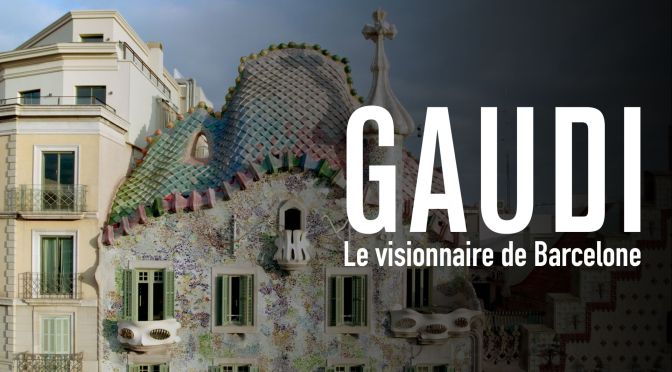
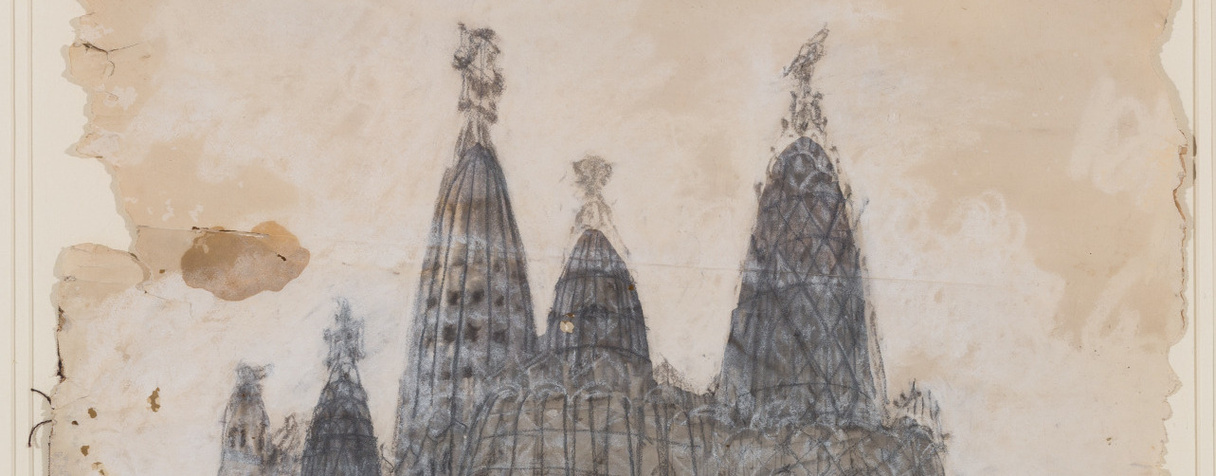
The Musée d’Orsay is hosting the first major exhibition devoted to Antoni Gaudí organized in France in Paris in fifty years. In an immersive museographic experience, it will show the spectacular creations of this unique artist, in particular, presenting sets of furniture never before exhibited in France. It will offer a new vision of the artist as a unique and singular figure, a non-isolated genius who practiced in a Catalonia in the midst of social, political and urbanistic upheaval.
The exhibition will focus on showing the architect’s creative process at a time of an exceptional local artistic profusion linked to “Modernism” or the Art Nouveau movement in Spain, supported by distinguished patrons, anxious to distinguish Catalonia, a land of Mediterranean identity. Gaudí’s workshop, his many collaborators, and his sophisticated working techniques will be the guiding line of the exhibition to make the public understand the extraordinary inventive capacity of the architect who defied all the creation of the moment.
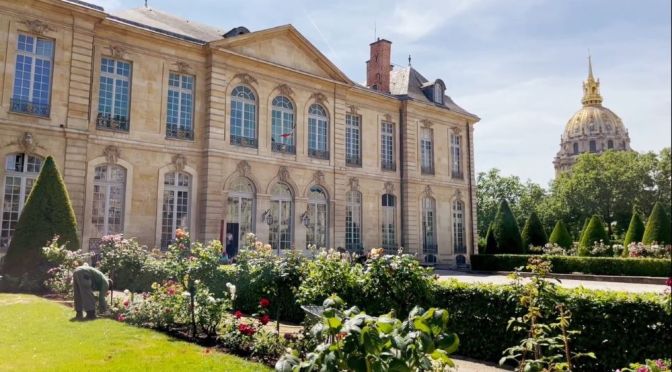
The Musée Rodin in Paris, France, is a museum that was opened in 1919, primarily dedicated to the works of the French sculptor Auguste Rodin. It has two sites: the Hôtel Biron and surrounding grounds in central Paris, as well as just outside Paris at Rodin’s old home, the Villa des Brillants at Meudon, Hauts-de-Seine.
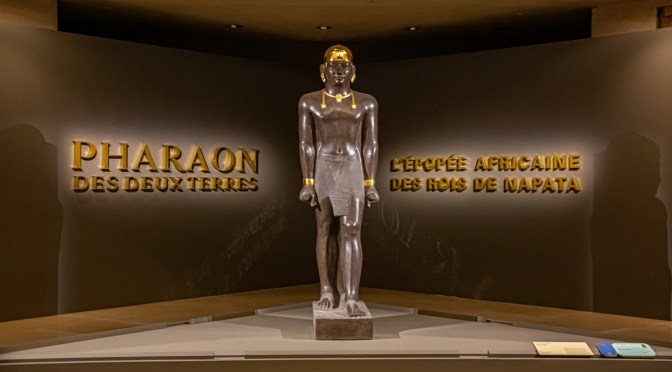
PHARAOH OF THE TWO LANDS – The African Story of the Kings of Napata
28 April – 25 July 2022
OVERVIEW
In the 8th century BC, a kingdom grew up around the Nubian capital, Napata. In about 730 BC, the Nubian king Piankhy conquered Egypt and founded the 25th Dynasty of Kushite kings, who ruled for more than fifty years over a kingdom stretching from the Nile Delta to the confluence of the White and Blue Niles. The most famous of those kings is the pharaoh Taharqa.
The exhibition highlights the importance of this vast kingdom, located in what is now northern Sudan. It is organised in connection with the Louvre’s archaeological campaign in Sudan, which focused for ten years on the site of Muweis before moving some 30 kilometres northwards to El-Hassa, not far from the pyramids of Meroe.
This week: is heritage in Ukraine being attacked and looted, and what can be done to protect it?
Ben Luke talks to The Art Newspaper’s museums and heritage editor, Tom Seymour, who has been to the Ukrainian-Polish border with the International Council of Museums (ICOM), to witness museum materials being sent into Ukraine to help institutions there. Then, Tom talks to Sophie Delepierre, the head of heritage protection at ICOM, about the organisation’s efforts in Ukraine and elsewhere.
As a major exhibition of the work of Paul Cezanne opens at The Art Institute of Chicago, ahead of its journey to Tate Modern later in the year, Ben talks to Gloria Groom and Caitlin Haskell, the curators of the Chicago exhibition. And for this episode’s Work of the Week, our acting digital editor, Aimee Dawson, asks Oliver Lanzenberg, the grandson of the artist Nicola L., about his grandmother’s work Gold Femme Commode (1969/1993). The piece is part of a show at Alison Jacques, one of a number of exhibitions opening to coincide with the second edition of London Gallery Weekend.
Tom’s full report into ICOM’s work for Ukraine is in the next print edition of The Art Newspaper and online soon.
The organisation Sophie mentions is NEMO, the Network of European Museum Organisations, ne-mo.org.
Cezanne, The Art Institute of Chicago, 15 May-5 September; Tate Modern, London, 5 October-12 March 2023.
May 11, 2022 – In this episode of Getty Art + Ideas, Getty photographs curator Paul Martineau discusses Imogen Cunningham’s trajectory, focusing on key artworks made throughout her life.
“When Cunningham passed away, I think in part her reputation was based on her personality, the fact that she had lived so long, the fact that she was full of witty quips, and she wouldn’t let anyone boss her around. But I think in some ways that eclipsed the work.”
Born in Portland, Oregon, in 1883, photographer Imogen Cunningham joined a correspondence course for photography as a high schooler after seeing a magazine ad. Over the course of her 70-year career, Cunningham stirred controversy with a nude portrait of her husband, photographed flowers while minding her young children in her garden, captured striking portraits of famous actors and writers for Vanity Fair, and provided insight into the life of nonagenarians when she herself was in her 90s. Although photography was a male-dominated field, Cunningham made a name for herself while also supporting the work of other women artists. Her long, varied career is the subject of the new exhibition Imogen Cunningham: A Retrospective at the Getty Center.
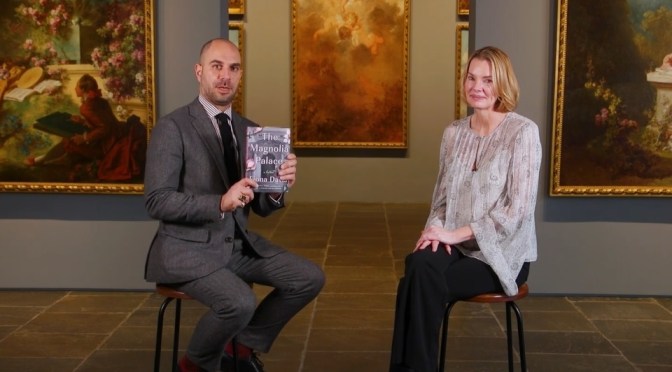
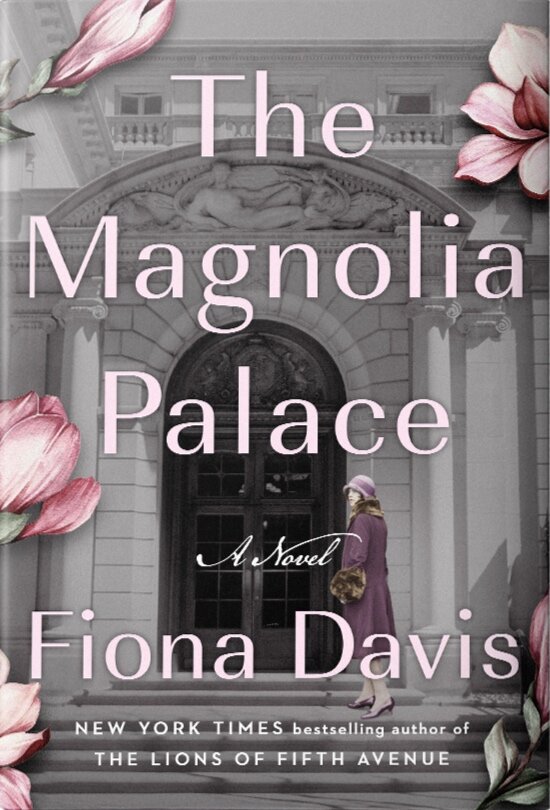
Fiona Davis, author of THE MAGNOLIA PALACE, discusses art, history, and writing with Xavier F. Salomon, Deputy Director and Peter Jay Sharp Chief Curator at The Frick Collection.
They speak in the Fragonard room at Frick Madison, the temporary home of The Frick Collection.
About THE MAGNOLIA PALACE Fiona Davis, New York Times bestselling author of The Lions of Fifth Avenue, returns with a tantalizing novel about the secrets, betrayal, and murder within one of New York City’s most impressive Gilded Age mansions.

 Intellicurious