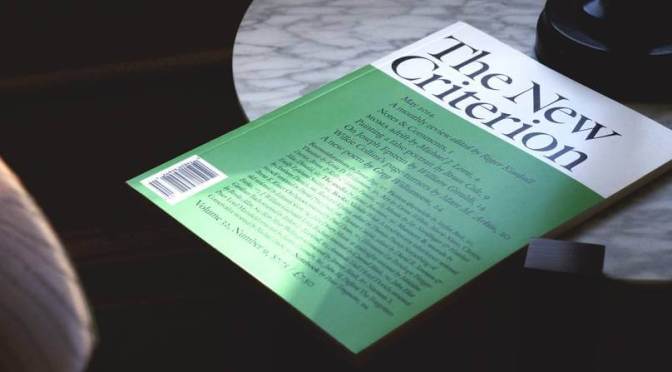
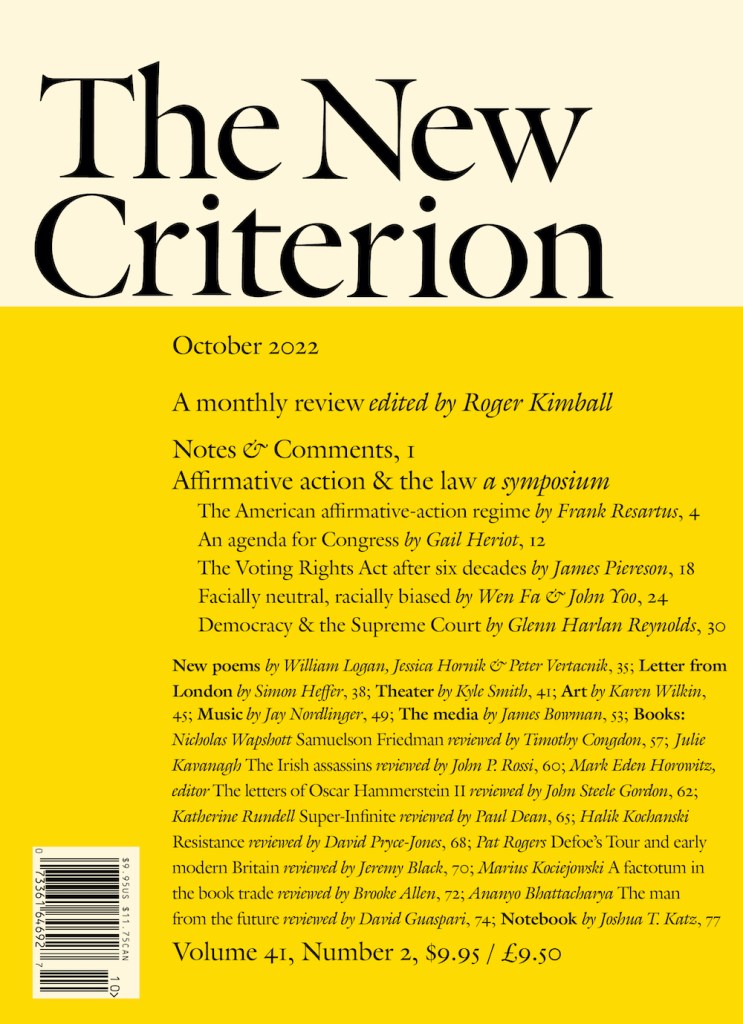
The American affirmative-action regime by Frank Resartus An agenda for Congress by Gail Heriot The Voting Rights Act after six decades by James Piereson Facially neutral, racially biased by Wen Fa & John Yoo Democracy & the Supreme Court by Glenn Harlan Reynolds
New poems by William Logan, Jessica Hornik & Peter Vertacnik
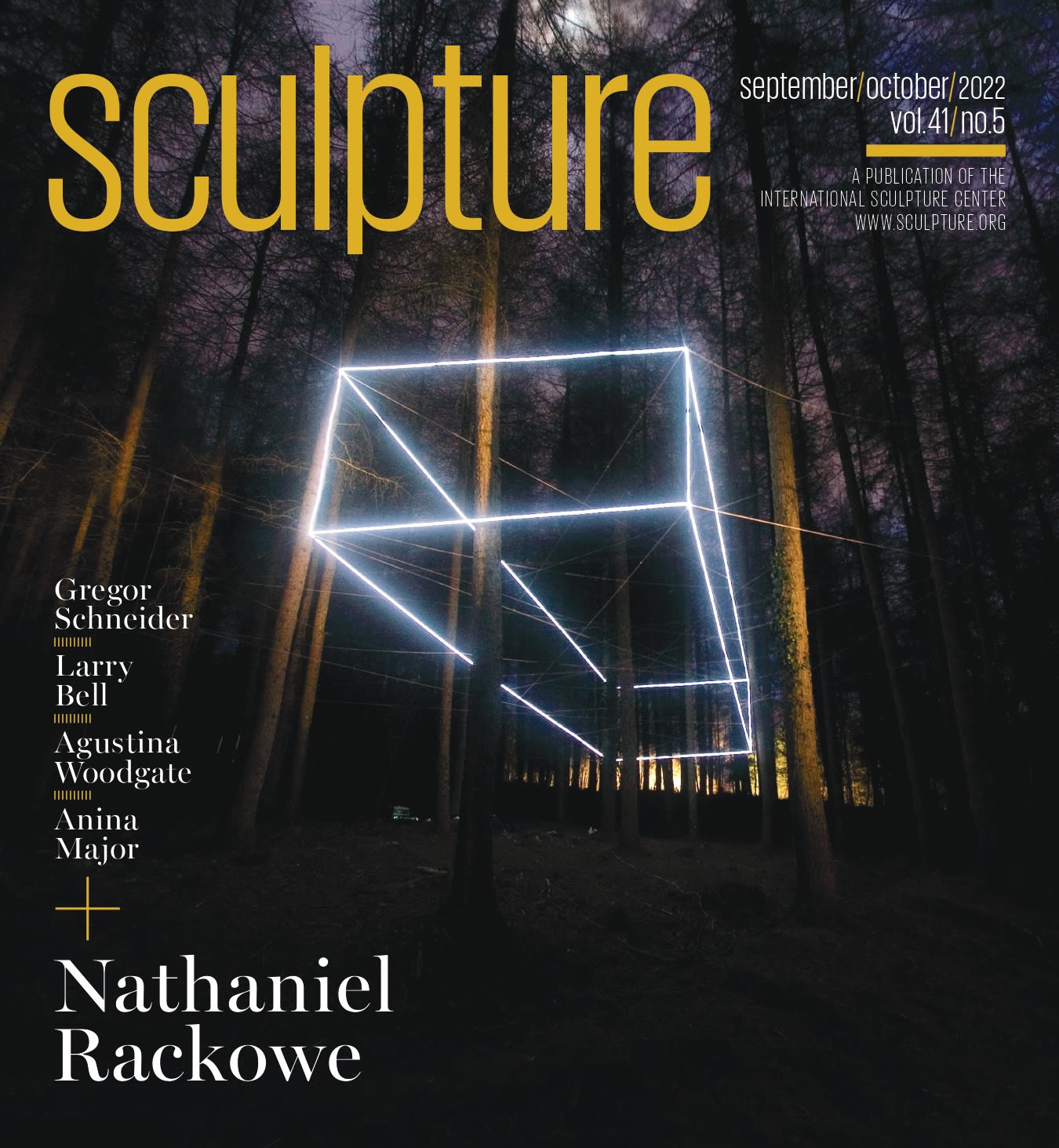
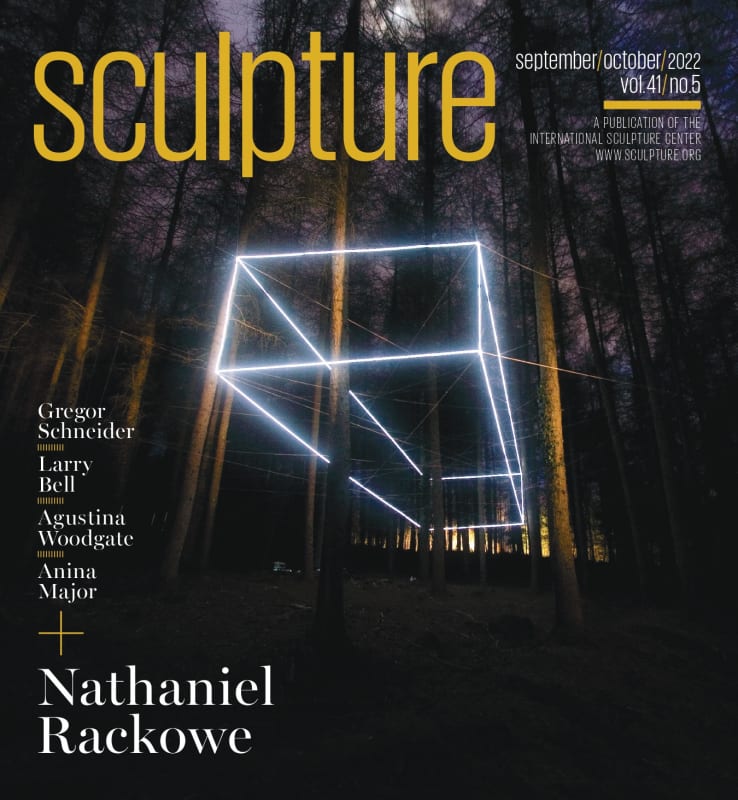
Nathaniel Rackowe’s large-scale, futuristic works are fundamentally influenced by modern urban architecture. Spanning sculpture, installation, and public art, his practice is concerned with abstracting the metropolis into units of form. Scaffolding poles, cement blocks, corrugated sheets, Perspex, glass, and fluorescent tubing are the building blocks of his sculptural vocabulary. The British artist has created cuboids of light that seem to hover eerily in the air (“Spin” series, 2006–ongoing), upturned sheds that appear frozen in mid-explosion (“Black Shed Expanded” series, 2008–ongoing), and flanks of moving mechanical doors edged with fluorescent lights that close in claustrophobically on visitors (Sixty Eight Doors, 2005). It’s no surprise that he is an admirer of science fiction writers such as Philip K. Dick and Iain M. Banks and films like Brazil (1985) and Blade Runner (1982).
This week: is art censorship on the rise? The Art Newspaper’s chief contributing editor, Gareth Harris, joins Ben Luke to discuss his new book, Censored Art Today.
We look at the different ways in which freedom of expression is being curbed across the globe and at the debates around contested history and cancel culture. This episode’s Work of the Week is Diane Arbus’s Puerto Rican woman with a beauty mark, N.Y.C., 1965, one of the 90 images that feature in Diane Arbus: Photographs, 1956-1971, which opens at the Montreal Museum of Fine Arts, Canada, on 15 September. Sophie Hackett, the exhibition’s curator, discusses Arbus’s remarkable eye and technical brilliance.
As the Guggenheim Bilbao celebrates its 25th anniversary, Thomas Krens, the director and chief artistic officer of the Solomon R. Guggenheim Foundation from 1988 to 2008, reflects on the genesis and development of a museum that had a dramatic impact on contemporary art and museums’ role in the cultural regeneration of cities across the world.
• Jil Sander refashions the English garden in Hamburg
• Annette Messager on the art of making the strange familiar
• A dazzling Medici table-top in focus
• On Jeju Island, the Hawaii of South Korea
Plus: the restored Galleria Nazionale dell’Umbria, Inigo Jones’s Banqueting House, Joseph Wright of Derby’s brush with the divine, and reviews of Cézanne in Chicago, Milton Avery in London and a history of fancy dress
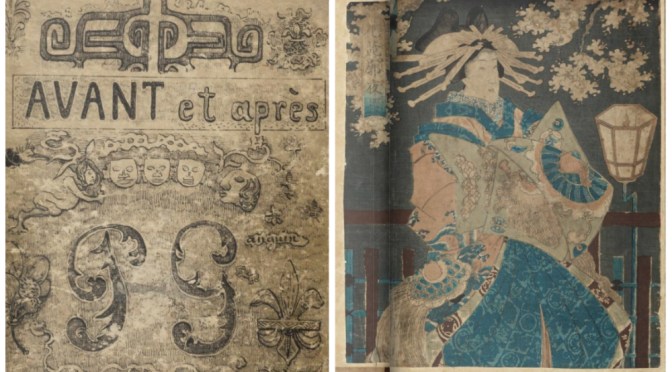
The Courtauld is delighted to have received a @GettyFoundation grant to investigate the last major manuscript by Paul Gauguin 'Avant et après (Before and After)'
— The Courtauld Research Forum (@CourtauldRes) August 17, 2022
Explore Paul Gauguin’s final manuscript
Below, you can explore Avant et après, the final manuscript of the highly influential French Post-Impressionist artist Paul Gauguin. It is available both in its original form, as well as translated.
Part-memoir and part-manifesto, Avant et après reveals important insights into Gauguin’s life, relationships and thoughts. It includes numerous drawings and monotype prints by the artist.
Avant et après is an important addition to what is already the most significant collection of works by Gauguin in the UK – joining amongst other works the masterpieces from his Tahitian period, Nevermore and Te Rerioa – and further strengthens The Courtauld’s resources for Gauguin scholarship.
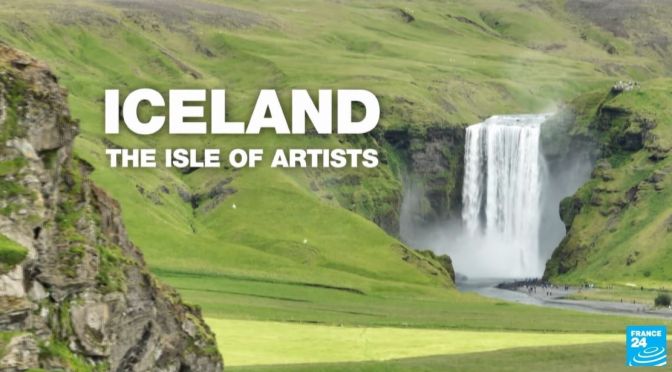
Unpronounceable volcanoes, Björk, Vikings, Game of Thrones – these are some of the things you might think of relating to Iceland. This remote and fascinating island, located in the middle of the Atlantic Ocean with a population of 360,000 people, is one of the most creative nations in the world. Is it due to isolation, the inspiration from nature or its centuries-old folklore legends? Eve Jackson goes to the land of ice and fire to find out why Iceland has such an exceptional and disproportionate amount of artists.
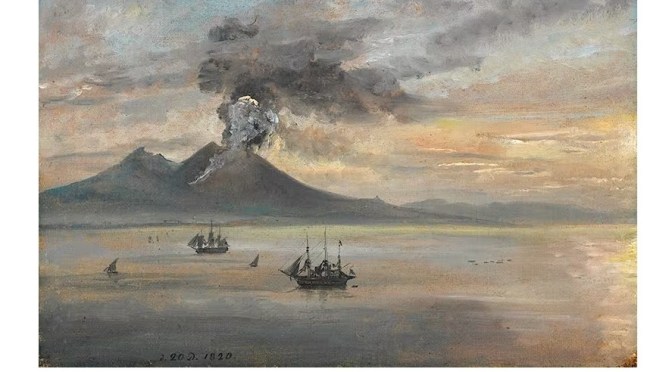
‘It is desirable for a Painter, at least once in his life, to witness the Eruption of a volcano.’ – Pierre-Henri de Valenciennes (1799). Join exhibition contributor Clive Oppenheimer, Professor of Volcanology at the Department of Geography at the University of Cambridge, and explore the ‘Volcanoes’ section of True to Nature. #TrueToNature is open at the Fitzwilliam Museum until 29 August 2022 https://fitz.ms/ttn
“The underworld, the afterlife, is fairly dank, dark, shadowy; quite frankly, it’s a bit boring. Somewhat like waiting at a bus depot.”
Homer’s Odyssey depicts an afterlife that is relatively dull, with heroic actions and glory reserved for the living. Nonetheless, people in Southern Italy in the fourth century BCE were captivated by the underworld and decorated large funerary vases with scenes of the afterlife—the domain of Hades and Persephone, where sinners like Sisyphus are tortured for eternity and heroes like Herakles and Orpheus performed daring feats.
Little is known about precisely how these vases were used and seen in death rituals. A new book by Getty Publications, Underworld: Imagining the Afterlife in Ancient South Italian Vase Painting, brings together 40 such vases and explores new research on them.
In this episode, Getty Museum curator of antiquities David Saunders discusses these enormous and often elaborate vases, explaining the myths they depict and what is known about the ways in which they were used. Saunders is editor of Underworld.
‘Je vois red’ raged Louise Bourgeois (1911–2010) on one of the loose sheets of paper that she made notes on, most often about herself and her work and, in this case, about the painting Natural history #2 (1944; Easton Foundation, New York), which struck her as all going wrong. Slipping between two languages, Bourgeois’s fury conforms to the themes of rage, the death drive and childhood aggression that the art historian Mignon Nixon has traced in the artist’s work in reference to the ideas of the psychoanalyst Melanie Klein.
News, Views and Reviews For The Intellectually Curious