Tag Archives: Science

Preview: MIT Technology Review – January 2024

Image

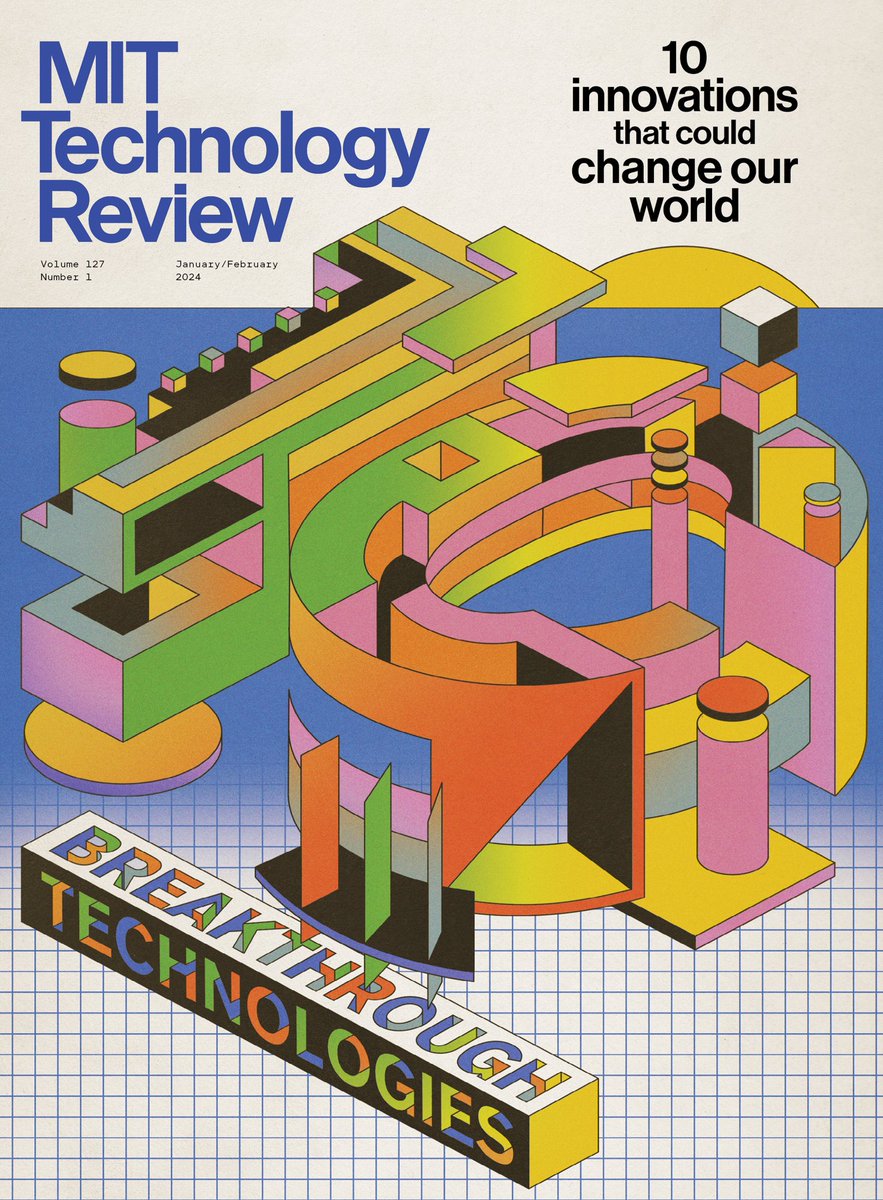
MIT Technology Review (January/February 2024) – The new issue features 10 Innovations that could change our World.

10 Breakthrough Technologies 2024

Every year, we look for promising technologies poised to have a real impact on the world. Here are the advances that we think matter most right now.

AI for everything
Passwordless Login

We now live in the age of AI. Hundreds of millions of people have interacted directly with generative tools like ChatGPT that produce text, images, videos, and more from prompts. Their popularity has reshaped the tech industry, making OpenAI a household name and compelling Google, Meta, and Microsoft to invest heavily in the technology.

Super-efficient solar cells

Solar power is being rapidly deployed around the world, and it’s key to global efforts to reduce carbon emissions. But most of the sunlight that hits today’s panels isn’t being converted into electricity. Adding a layer of tiny crystals could make solar panels more efficient. WHY IT MATTERS

Apple Vision Pro

Apple will start shipping its first mixed-reality headset, the Vision Pro, this year. Its killer feature is the highest-resolution display ever made for such a device. Will there be a killer app? It’s early, but the world’s most valuable company has made a bold bet that the answer is yes. WHY IT MATTERS

Weight-loss drugs

The global rise in obesity has been called an epidemic by the World Health Organization. Medications like Mounjaro and Wegovy are now among the most powerful tools that patients and physicians have to treat it. Evidence suggests they can even protect against heart attacks and strokes. WHY IT MATTERS
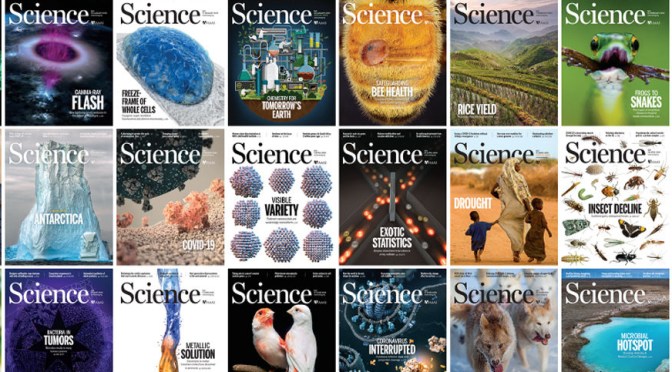
Research Preview: Science Magazine – January 5, 2024

Image

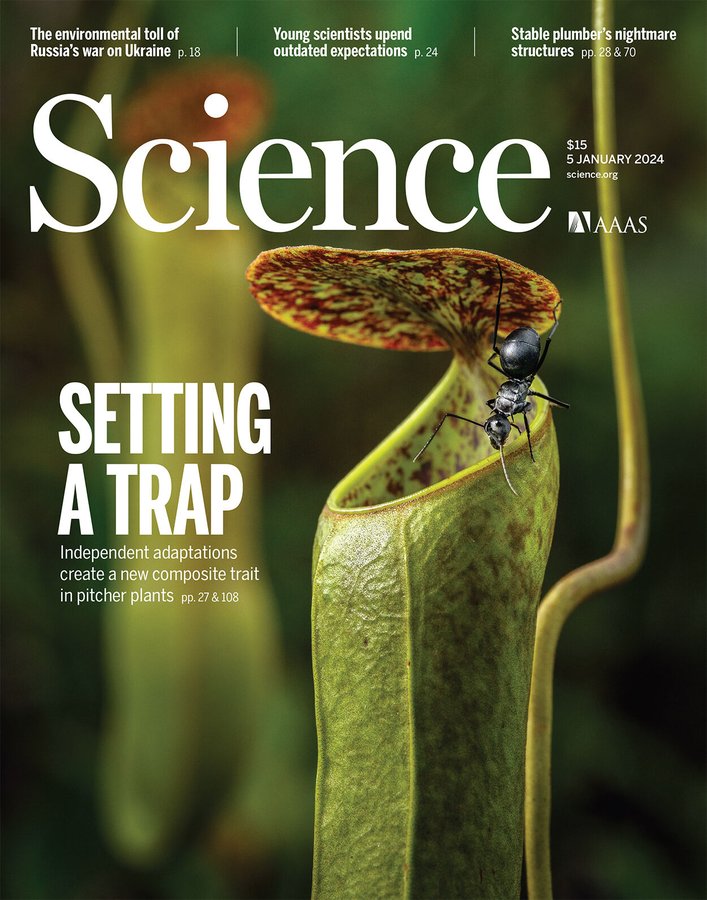
Science Magazine – December 21, 2023: The new issue features a carnivorous Nepenthes gracilis pitcher plant luring an ant into a precarious position under the roof-like trap lid.

Dopamine regulates attitude toward risk

Specific brain pathways can lower or raise the willingness of monkeys to take risks

Magellanic cloud may be two galaxies, not one

Rethink of familiar object may boost odds that its name, offensive to some, will be changed

Research Preview: Nature Magazine January 4, 2024

Volume 625 Issue 7993

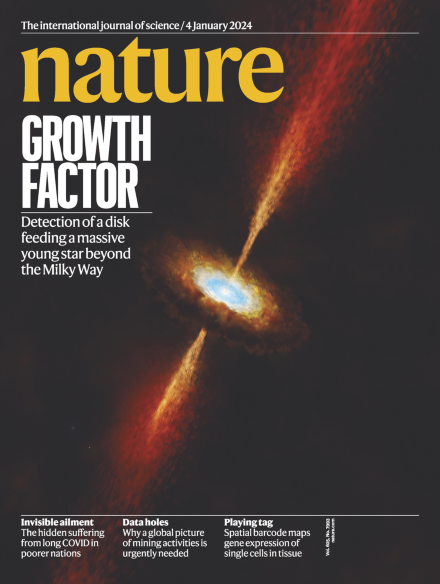
Nature Magazine – January 3, 2024: The latest issue cover features  an artist’s impression of a massive young star in the process of forming.

US nuclear-fusion lab enters new era: achieving ‘ignition’ over and over

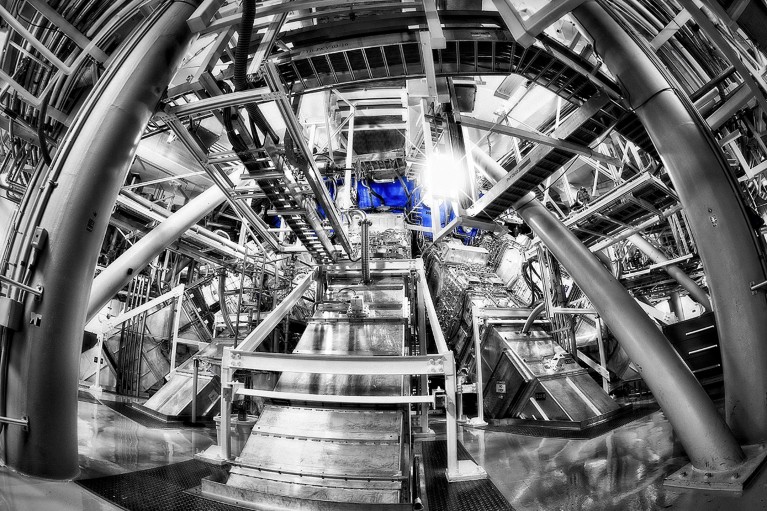
NIF beamlines entering the lower hemisphere of the NIF Target Chamber, as seen from the ground floor of the Target Bay.

Researchers at the National Ignition Facility are consistently creating reactions that make more energy than they consume.

By Jeff Tollefson

In December 2022, after more than a decade of effort and frustration, scientists at the US National Ignition Facility (NIF) announced that they had set a world record by producing a fusion reaction that released more energy than it consumed — a phenomenon known as ignition. They have now proved that the feat was no accident by replicating it again and again, and the administration of US President Joe Biden is looking to build on this success by establishing a trio of US research centres to help advance the science.

DeepMind AI outdoes human mathematicians on unsolved problem

A player holds a hand of Set game cards over a green table.

Large language model improves on efforts to solve combinatorics problems inspired by the card game Set.

Davide Castelvecchi

The card game Set has long inspired mathematicians to create interesting problems.

Now, a technique based on large language models (LLMs) is showing that artificial intelligence (AI) can help mathematicians to generate new solutions.

Nature Magazine Podcast: ‘A New Kind Of Solar Cell’

nature podcasts (December 29, 2023) – A new kind of solar cell is coming: is it the future of green energy? Firms commercializing perovskite–silicon ‘tandem’ photovoltaics say that the panels will be more efficient and could lead to cheaper electricity.

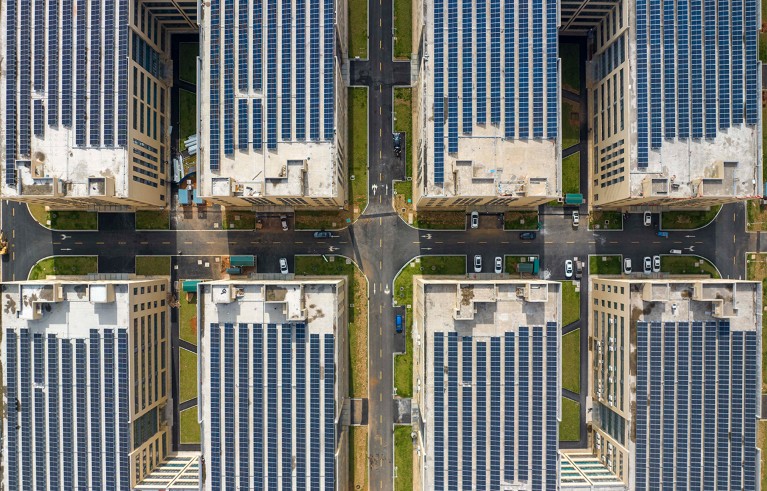
Rooftop Solar Energy Facility In Yongzhou, China.

On the outskirts of Brandenburg an der Havel, Germany, nestled among car dealerships and hardware shops, sits a two-storey factory stuffed with solar-power secrets. It’s here where UK firm Oxford PV is producing commercial solar cells using perovskites: cheap, abundant photovoltaic (PV) materials that some have hailed as the future of green energy. Surrounded by unkempt grass and a weed-strewn car park, the factory is a modest cradle for such a potentially transformative technology, but the firm’s chief technology officer Chris Case is clearly in love with the place. “This is the culmination of my dreams,” he says.

2023: Top Discoveries In Biology & Neuroscience

Quanta Magazine (December 21, 2023): 2023’s Biggest Breakthroughs in Biology and Neuroscience.

Video timeline: 00:05 The Investigation of Consciousness – Our minds are constantly taking in new external information while also creating their own internal imagery and narratives. How do we distinguish reality from fantasy? This year, researchers discovered that the brain has a “reality threshold” against which it constantly evaluates processed signals. Original paper: “Subjective signal strength distinguishes reality from imagination”

04:30 Microbiomes Evolve With Us – This year, scientists provided clear evidence that the organisms in our microbiome —the collection of bacteria and other cells that live in our guts and elsewhere on our body — spread between people, especially those with whom we spend the most time. This raises the intriguing possibility that some illnesses that aren’t usually considered communicable might be.

08:43 How Life Keeps Time – The rate at which an embryo develops and the timing of when its tissues mature vary dramatically between species. What controls the ticking of this developmental clock that determines an animal’s final form? This year, a series of careful experiments suggest that mitochondria may very well serve dual roles as both the timekeeper and power source for complex cells.

Research Preview: Science Magazine – Dec 22, 2023

Image

Science Magazine – December 21, 2023: The new issue featuresAI-Powered Forecasting – Predicting worldwide weather and cyclone tracks with greater speed and accuracy; Fifty years after the Endangered Species Act, what’s next?; Long-sought quasiparticle could transform quantum computing and What Salvadorans feared about bitcoin…

The quantum phantom

A ghostly quasiparticle rooted in a century-old Italian mystery could unlock quantum computing’s potential—if only it could be pinned down

Are cryptocurrencies currencies? Bitcoin as legal tender in El Salvador

Preference for cash and privacy fears deterred bitcoin adoption in El Salvador.

Mimicking polar bear hairs in aerogel fibers

Encapsulated aerogel fibers offer thermal insulation, breathability, and strength

Research Preview: Nature Magazine Dec 21, 2023

Volume 624 Issue 7992

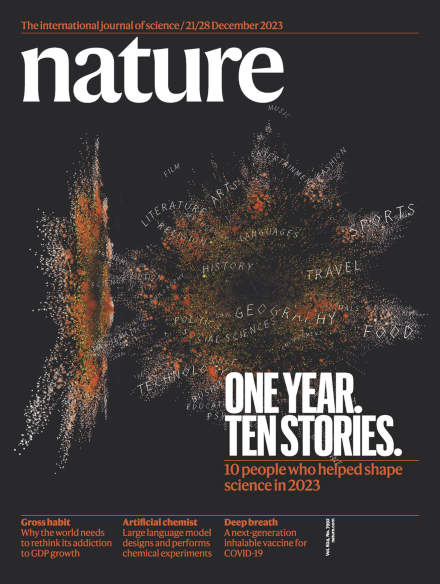
Nature Magazine – December 20, 2023: The latest issue cover features ten people who helped to shape science during the year. The cover takes its inspiration from one of the developments that dominated the year: artificial intelligence. 

From Einstein to AI: how 100 years have shaped science

Looking back a century reveals how much the research landscape has changed 

Earth is warming but Mount Everest is getting chillier

Winds triggered by climate change sweep cold air down from the summit of Mount Everest and other Himalayan peaks, leading to a cooling trend.

ChatGPT and science: the AI system was a force in 2023 — for good and bad

The poster child for generative AI software is a startling human mimic. It represents a potential new era in research, but brings risks.

Nature Magazine: Best Science Books Of 2023

Nature Magazine (December 15, 2023):

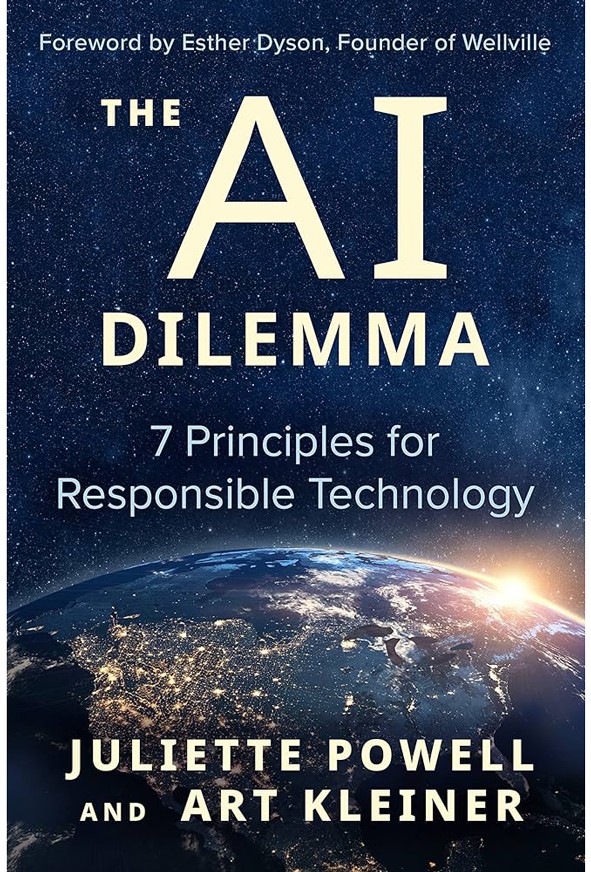
The AI Dilemma

Juliette Powell & Art Kleiner Berrett-Koehler (2023)

The benefits and harms of social media are intimately tied to the ongoing debate about artificial intelligence (AI). Will AI systems trained partly on social media benefit or harm humanity? In their excellent, sometimes alarming, analysis of engineering, social justice, commerce and government, entrepreneur and technologist Juliette Powell and writer and educator Art Kleiner compare humans developing AI tools to first-time parents. They recommend guiding AI systems “as we would a child towards full adulthood”.

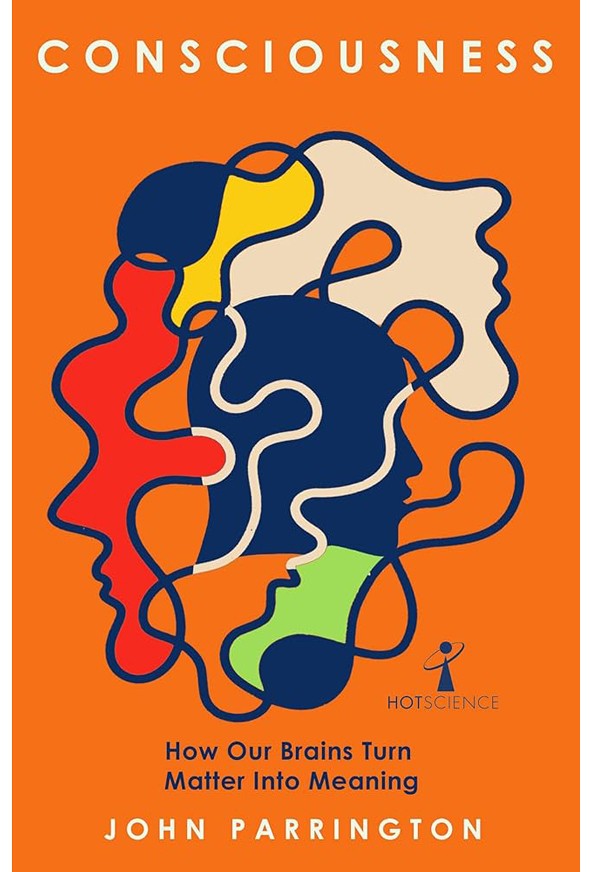
Consciousness

John Parrington Icon (2023)

“The material basis of human consciousness is one of the biggest unsolved issues in science,” admits cellular and molecular pharmacologist John Parrington in his pithy addition to a vast literature dating from the time of ancient Greek philosopher Aristotle. He considers many theories and proposes his own. Humans, he argues, are distinguished by conceptual thought and language, along with skills in designing tools and technologies. The evolution of these powers transformed our brains, creating meaning and consciousness.

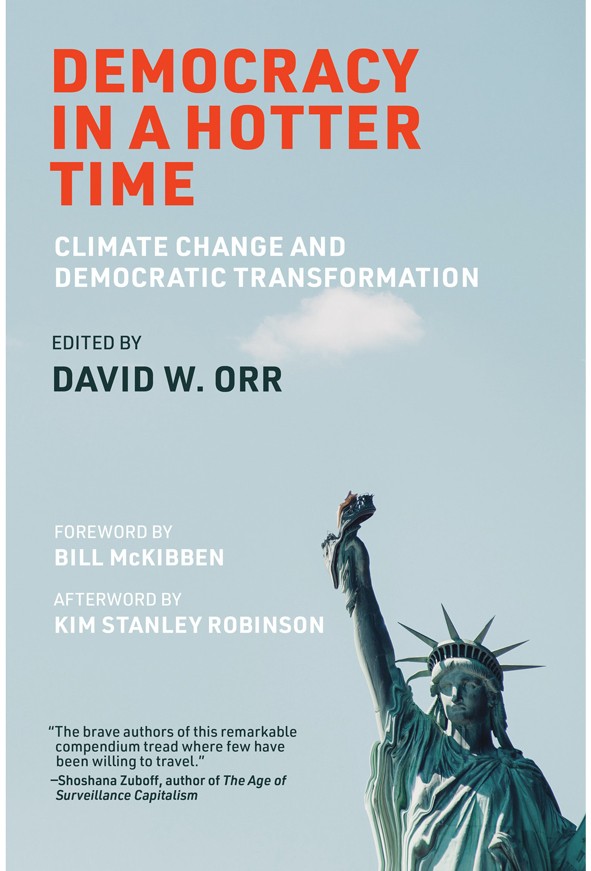
Democracy in a Hotter Time

Ed. David W. Orr MIT Press (2023)

Environmentalist David Orr writes in the introduction to this timely collection that the planet faces two interlinked crises: “rapid climate change and potentially lethal threats to democracy”. The US Constitution rigorously protects private property but does not mention ecological systems, he observes. Contributors — almost all US-based — from a wide range of fields examine the need for political reform. The book is in four parts: the nature of democracy; roadblocks to change; policy and law; and education, including academic culture.

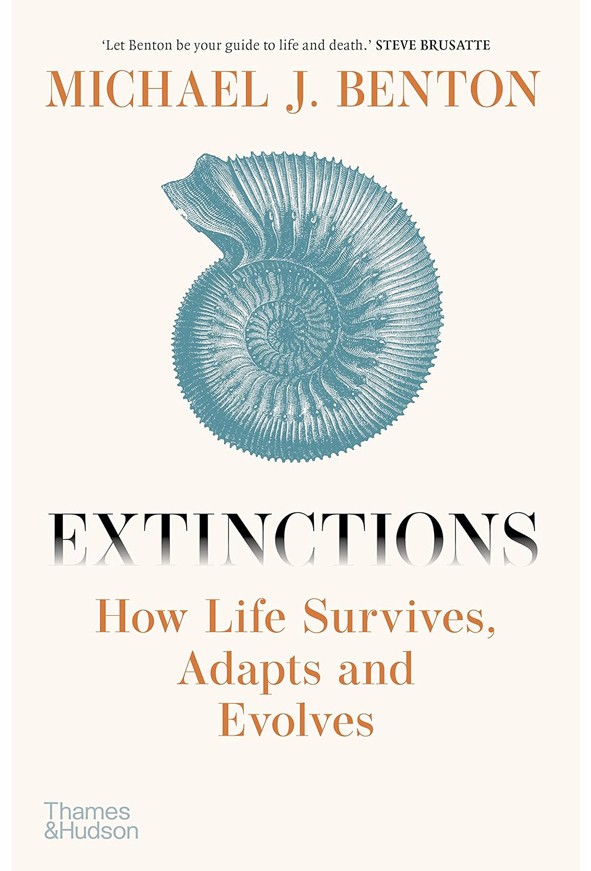
Extinctions

Michael J. Benton Thames & Hudson (2023)

When palaeontologist Michael Benton learnt about dinosaurs as a boy, he “loved the fact they were extinct”. They were like real science fiction. Perhaps he also intuited that their extinction permitted his existence. As his deeply informed and readable book reveals, the mass extinction at the end of the Cretaceous period 66 million years ago allowed a new cohort of creatures — including mammals — to “inherit the Earth”, as did four earlier extinction events. Living species represent less than 1% of all the species that have existed.

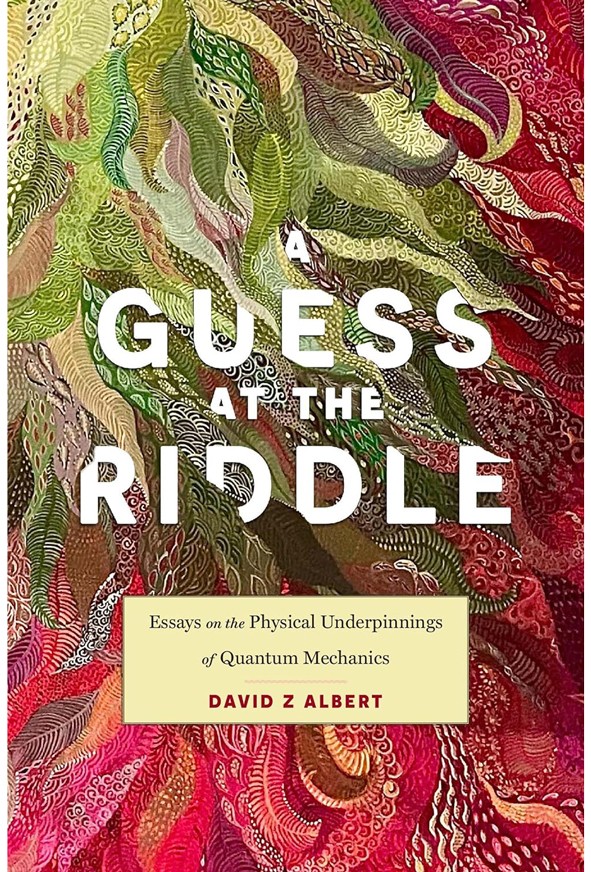
A Guess at the Riddle

David Z. Albert Harvard Univ. Press (2023)

The physical interpretation of quantum mechanics has been a controversial riddle since the 1920s, when Niels Bohr argued that the atom’s inner workings could not be described in physical terms. Today, many philosophers and physicists disagree, but there’s no consensus on an alternative. Philosopher David Albert’s provocative book argues, in three essays, that Bohr’s quantum-measurement problem starts to make sense if the wave function is understood as the fundamental physical ‘stuff’ of the Universe.

Research Preview: Science Magazine – Dec 15, 2023

Image

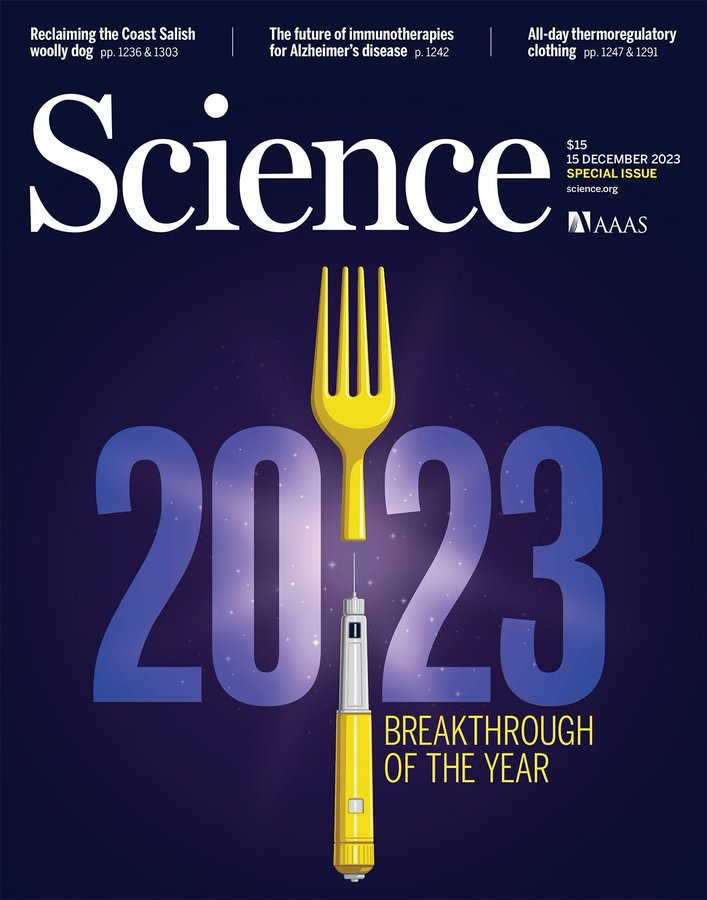
Science Magazine – December 14, 2023: The new issue cover features The 2023 Breakthrough of the Year: Obesity meets its match – Blockbuster weight loss drugs show promise for a wider range of health benefits; Runners-Up: At last, modest headway against Alzheimer’s; and Breakdowns of the Year – What went wrong in the world of Science….

Obesity meets its match

Blockbuster weight loss drugs show promise for a wider range of health benefits

Obesity plays out as a private struggle and a public health crisis. In the United States, about 70% of adults are affected by excess weight, and in Europe that number is more than half. The stigma against fat can be crushing; its risks, life-threatening. Defined as a body mass index of at least 30, obesity is thought to power type 2 diabetes, heart disease, arthritis, fatty liver disease, and certain cancers.

At last, modest headway against Alzheimer’s

Medicine has had little to offer the tens of millions of people worldwide with Alzheimer’s disease, and the few approved treatments have only targeted symptoms. But in January, U.S. regulators greenlit the first drug that clearly, if modestly, slows cognitive decline by tackling the disease’s underlying biology; a second, related treatment is close behind. Neither comes close to a cure, and both have serious risks, but they offer new hope to patients and families.

First page of PDF

Research Preview: Nature Magazine Dec 14, 2023

Volume 624 Issue 7991

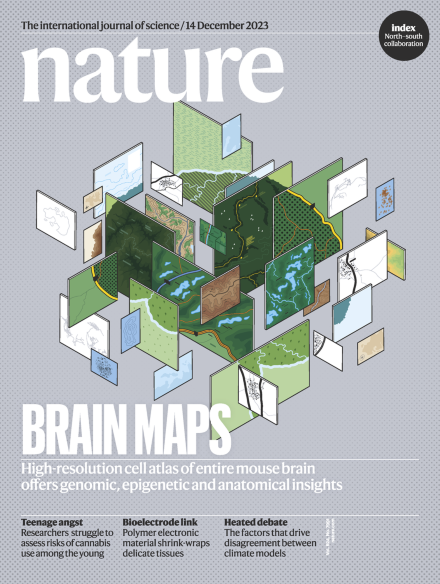
Nature Magazine – December 13, 2023: The latest issue cover features the BRAIN Initiative Cell Census Network (BICCN), which presented nine papers that map the entire mouse brain in unprecedented detail.

BICCN: The first complete cell census and atlas of a mammalian brain

Generating a complete multimodal cell census and atlas of the mouse brain through collaborative data collection, tool development and analysis.

How immense mountains create one of the rainiest places on Earth

The western coast of Colombia can get more than 26 metres of rain a year, thanks to the influence of air jets hitting the Andes range.

This bird escaped extinction — but its genes hint at an ominous future

The extravagantly feathered Seychelles paradise flycatcher lacks genetic diversity, which might hamper its resilience to climate change and other threats.