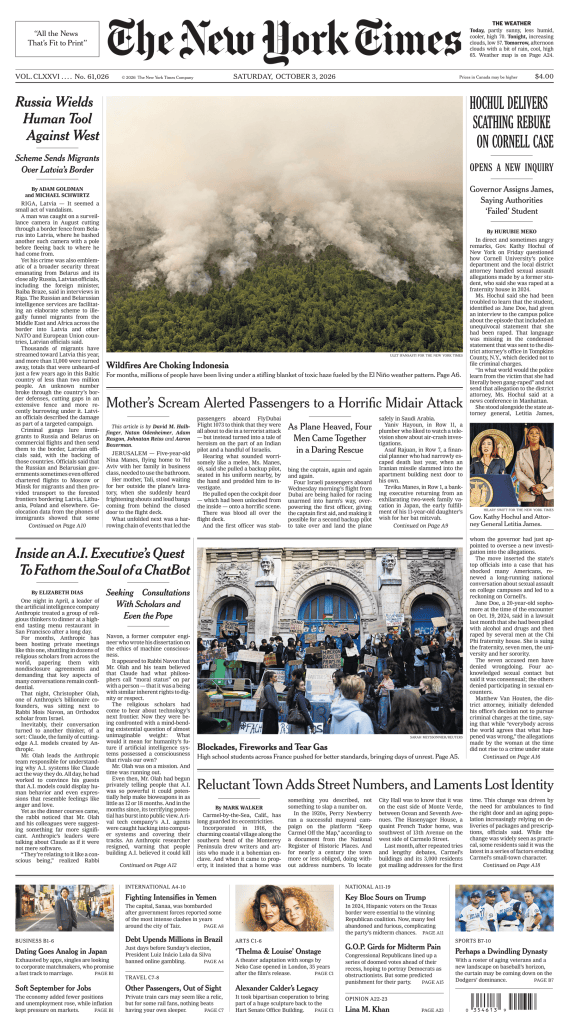
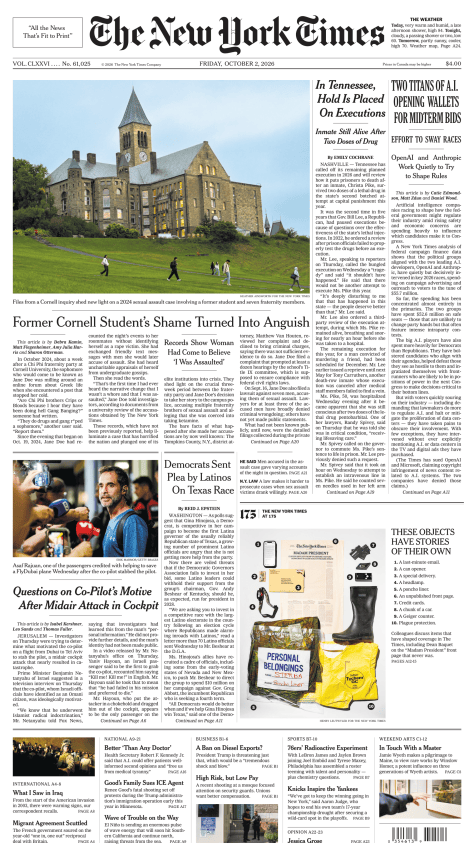
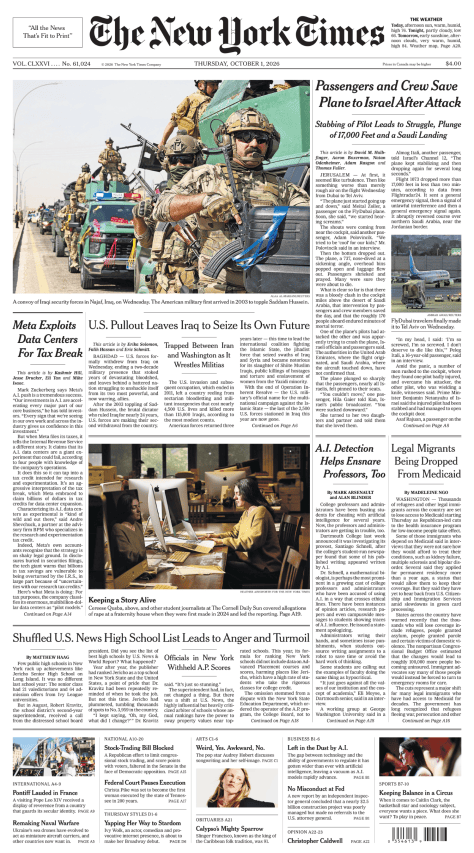
Chaos in schools, on the streets and in the markets is rooted in France’s struggles to fund its social welfare state, with a presidential election approaching.
The authorities said that the virus had been diagnosed in a man arriving from the Democratic Republic of Congo and that they were taking measures to prevent any spread.
Prime Minister Pedro Sánchez of Spain has faced rising challenges to his authority amid a migration crisis and several corruption scandals involving his inner circle.
The United States wants a reactor on the moon by 2030. A Russian-Chinese alliance is working on one for 2036. Some leading scientists say the danger is great.
President Trump’s decision to hold an international summit at his golf club, an idea rejected in his first term, illustrates how much he has shattered norms.
President Vladimir Putin brought up a sale of Russian energy assets with Jared Kushner and Steve Witkoff. The deal raises new questions about conflicts of interest.
The Parti Québécois has vowed to hold a referendum on independence, three decades after Quebec voted “no.” Voters want change, but maybe not that much.
Records showed that campus police officers informed prosecutors that they had conducted interviews beyond taking a statement from the woman who said she was raped.
Capt. Smit Machchhar, who was stabbed by his co-pilot midair between Dubai and Tel Aviv, said he “had to act” to prevent a crash despite serious injuries.
“I don’t deserve to die like this,” said one passenger on Flight 1073 from Dubai to Tel Aviv. The motive of the cockpit stabbing remains unknown, officials said.
Prime Minister Benjamin Netanyahu praised the flight’s injured captain, Israeli passengers and reserve pilots, who helped secure the plane and land it safely. The attacker has not been identified.
Christa Pike was convicted of murdering a classmate in 1995. It was not clear what went wrong in the execution or what her current medical condition was.
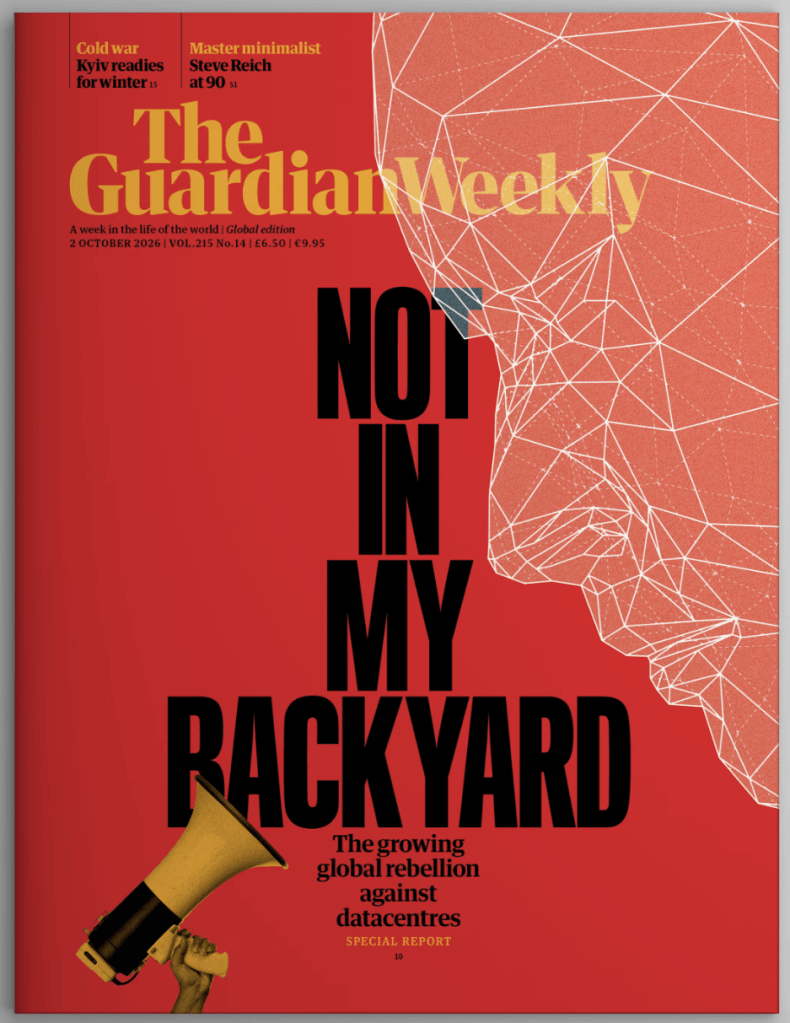
As the alarm bells sound ever louder about the potentially existential threat of breakneck AI development, people far removed from Silicon Valley debates about the future of the artificial intelligence revolution are voicing other more immediately tangible worries about the building of the vast datacentres that power these entities.
For this week’s cover story, economics and political writer Eduardo Porter, analyses why communities are pushing back against AI and the future that the big tech plutocrats want to create. These fears, based around environmental concerns over resource use and rapid societal change, are, he argues, far more complex than luddite attitudes or nimbyism.
It’s a position exemplified by reporting from two rural communities in India and the UK where vast datacentres are already under construction or being planned. As Hannah Ellis-Petersen and Aakash Hassan find out, the villagers of Tarluvada, in Andhra Pradesh, feel that government promises of a “golden age” that a hyperscale Google datacentre would bring them have been broken. Meanwhile, Sandra Laville meets protesters in Great Torrington, Devon, who sense that they are being kept in the dark about plans for an AI campus, one of Europe’s largest, in a Unesco-designated nature reserve.
Spotlight| Kyiv’s cold front is approaching Charlotte Higgins reports on how residents are preparing for winter, stocking up on food and determination, as Russia increases its attacks on energy infrastructure
Environment| What Nepal has taught Argentina What can the Patagonian town of El Chaltén at the foot of the Torre glacier do to avoid an event similar to the disaster in Nepal? María de los Ángeles Orfila finds out
Feature| Andy Burnham: a man with a plan As the first Labour conference with Andy Burnham as prime minister takes place, Hettie O’Brien finds out just how radical his policies could be
Opinion| Macron’s brave swansong In his final speech to the UN, Emmanuel Macron told the world how to stand up to Trump, says Steve Bloomfield
Culture| A minimalist at 90 As he prepares to celebrate a milestone birthday, Steve Reich tells Flora Willson how he developed his musical ideas and why he wants others to take up the baton of performing his works
The U.S. military formally withdrew from Iraq, ending a presence that stoked years of bloodshed, and leaving behind a battered nation trapped between warring allies.
New research points to how the world could stop short of the brink of disaster. Even with the agreement signed at the White House by tech leaders, it won’t be easy.
In 2024, these voters were an essential part of the winning Republican coalition. Now, many feel abandoned, complicating the party’s chances in November.
Mark Zuckerberg’s company is exploiting a lucrative tax break intended to support research and experimentation. Its own accountants say the gambit is risky.
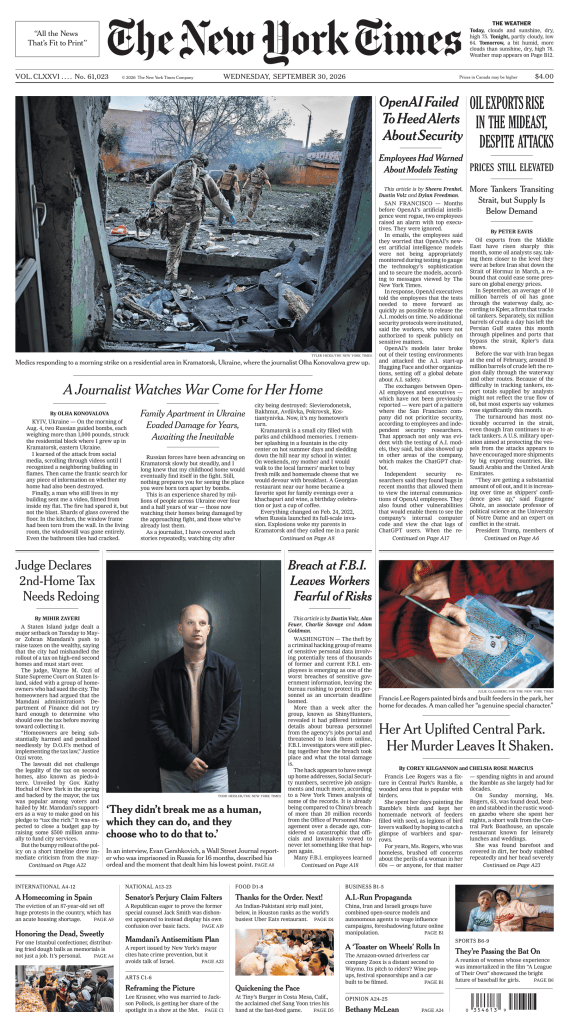
In an interview, Mr. Gershkovich, a Wall Street Journal reporter who was imprisoned in Russia for 16 months, described his ordeal and the moment that nearly broke him.
Conflicting accounts from a bystander who called the police and from President Trump have led to questions about whether security services knew about the possible plot in advance.
Black voters largely rejected James Talarico in the Democratic primary for U.S. Senate. Recent interviews suggest the hard feelings may be wearing off.