The Globalist Podcast (October 11, 2023) – The latest from Israel and the implications for Benjamin Netanyahu’s political future as the conflict between Israel and Hamas enters its fifth day.
Plus: a leak in a Finnish gas pipeline is ‘not an accident’ and how businesses are changing Tokyo’s skyline.
The Globalist Podcast (October 10, 2023) – The latest on the Israel-Hamas crisis: the various international players impacted by the violence and take the long view. Plus: as populist right-wing parties are coming to power across Europe, what can we expect in Poland’s upcoming elections?
‘Editor’s Picks’ Podcast (October 2, 2023) – A selection of three essential articles read aloud from the latest issue of The Economist. This week, the search for the antidote to ageing, why a bigger EU is a better EU (11:30), and Japan’s world-leading toilet culture (25:30).
‘Editor’s Picks’ Podcast (September 25, 2023) – A selection of three essential articles read aloud from the latest issue of The Economist. This week, how to win a long war in Ukraine, what Asia’s economic revolution means for the world (11:05) and why a disgraced comedian is the symbol of a cruel, misogynistic and politically vacant era in Britain (18:52).
‘Editor’s Picks’ Podcast (September 18, 2023) – Three essential articles read aloud from the The Economist. This week, an analysis of how AI can revolutionize scienceand how a fresh wave of hard-right populism is stalking Europe.
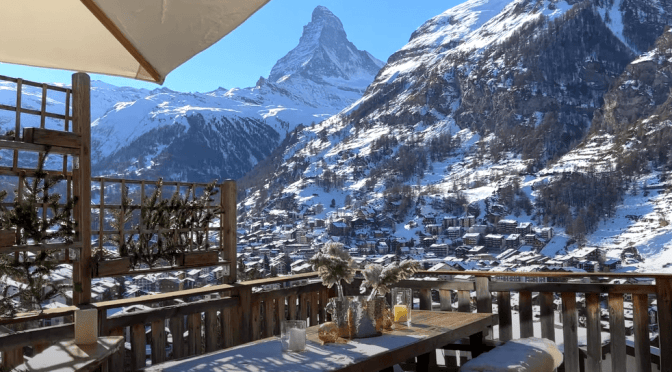
The Traveler (September 17, 2023) – A tour of Zermatt, in southern Switzerland’s Valais canton, a mountain resort renowned for skiing, climbing and hiking. The town, at an elevation of around 1,600m, lies below the iconic, pyramid-shaped Matterhorn peak. Its main street, Bahnhofstrasse is lined with boutique shops, hotels and restaurants, and also has a lively après-ski scene. There are public outdoor rinks for ice-skating and curling.
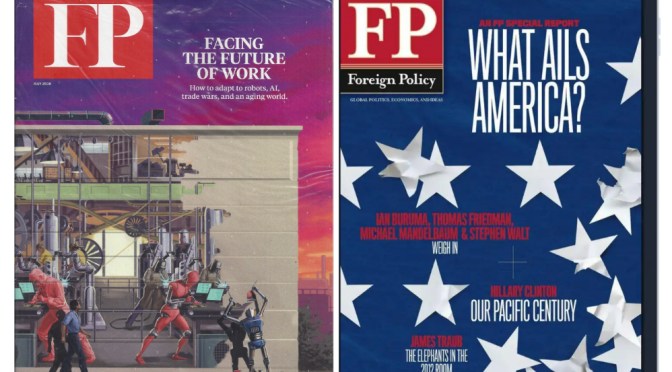
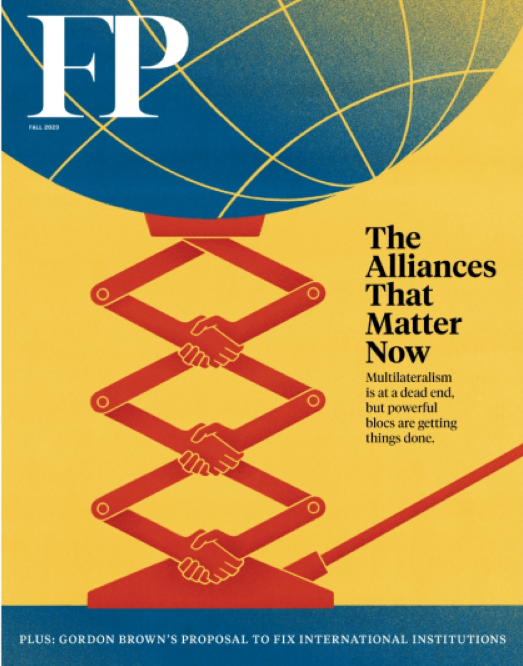
Foreign Policy Magazine – Fall 2023: The new issue features The G-7 Becomes a Power Player – Russia’s war and China’s rise are turning a talking shop into a fledgling alliance of democracies; Vivek Ramaswamy’s Foreign Policies Raise Eyebrows in Washington – The GOP’s rising star offers up a grab bag of ideas cribbed from Eminem to Richard Nixon and more…
Russia’s war and China’s rise are turning a talking shop into a fledgling alliance of democracies.
By G. John Ikenberry, a professor of politics and international affairs at Princeton University.
Time and again over the last century, the United States and the other liberal democracies in Europe, East Asia, and elsewhere have found themselves on the same side in grand struggles over the terms of the world order. This political grouping has been given various names: the West, the free world, the trilateral world, the community of democracies. In one sense, it is a geopolitical formation, uniting North America, Europe, and Japan, among others. It is an artifact of the Cold War and U.S. hegemony, anchored in NATO and Washington’s East Asian alliances.
End American dependence on Taiwan’s semiconductor factories. Declare economic independence from China. Give India an AUKUS-like submarine deal. And stage a dramatic visit to Moscow to broker a deal to end Russia’s full-scale invasion of Ukraine.
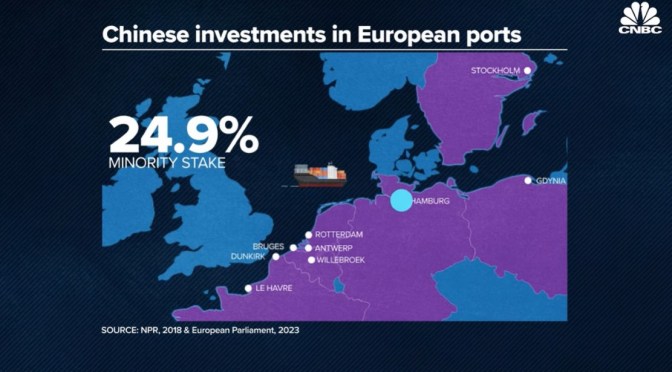
CNBC International (August 30, 2023) – China has invested heavily in Europe, particularly in the wake of the global financial crisis of 2008 when the region was strapped for cash. This means that Chinese firms are now shareholders in many key European infrastructure projects.
These include ports, wind and solar farms, telecommunications, airports – the list goes on. But there are growing fears that Beijing could use its strategic investments to further its own political ambitions. A recent dispute between the Baltic nation of Lithuania and Beijing shed light on potential reactions from China.
It’s led European governments to step up their scrutiny of Chinese investments and attempt to figure out how to redesign their relationship with Beijing. Dr Yu Jie from Chatham House told CNBC that we’re going to see more frictions regarding Chinese investment in Europe looking ahead.
World Economic Forum (August 12, 2023) – This week’s top stories of the week include:
0:15Scientists discover self healing metals – They have the ability to weld tiny cracks back together again without human intervention. Scientists were studying how microscopic cracks spread through platinum using a machine that repeatedly pulled on the ends of the metal. But after 40 minutes, the damage began to heal itself. The scientists said it was ‘absolutely stunning’ to watch first-hand. The finding revises some of our basic theories about metals.
1:42Who owns a song written by AI – Music made with artificial intelligence has made headlines this year. In April, an AI-generated track cloned the voices of Drake and The Weeknd. Heart on My Sleeve racked up 20 million streams on Spotify, Tiktok and Twitter before copyright claims by Universal Music Group saw it pulled from platforms. The pop star Grimes has taken a different route, offering to split royalties with anyone who uses her voice on an AI track. The limits of creative copyright were once clear but AI has introduced uncertainty.
4:50These special microbes kill harmful bacteria – The food industry struggles with persistent pathogens, such as Salmonella which causes fever, diarrhoea and stomach pain. In 2021, 96,000 cases of salmonellosis were reported in the EU. The illness costs up to €3 billion a year in health bills and lost productivity. These phage food safety solutions have been created by Phageguard. Phages are the most abundant organisms in nature and a natural solution to bacteria which they infect and dissipate. As well as being natural and safe, phages are specific to each target pathogen and unlike antibiotics, they don’t lead to side-effects or antimicrobial resistance (AMR)
6:24 Prescribing fruit and veg could save millions of lives – In the US, fruit and veg prescriptions would prevent almost 300,000 heart attacks and strokes and give people an extra 260,000 years of good health if they were offered to people with diabetes aged 40-79.
_____________________________________________
The World Economic Forum is the International Organization for Public-Private Cooperation. The Forum engages the foremost political, business, cultural and other leaders of society to shape global, regional and industry agendas. We believe that progress happens by bringing together people from all walks of life who have the drive and the influence to make positive change.
News, Views and Reviews For The Intellectually Curious


 The Traveler


 CNBC International