Category Archives: Stories

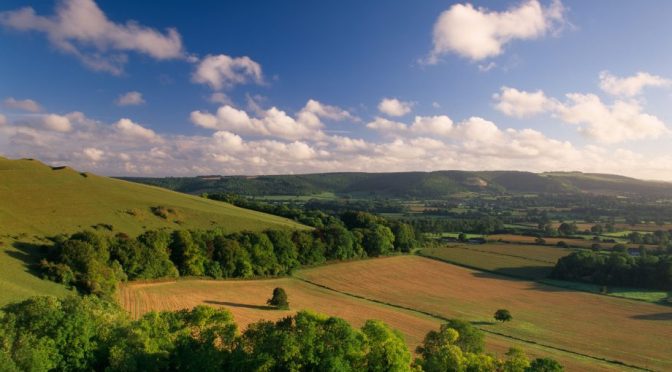
Dorset Views: Is This Thomas Hardy’s Wessex?

Thomas Hardy’s depictions of a fictional Wessex and his own dear Dorset are more accurate than they may at first appear, says Susan Owens.

We feel a frisson when a real place plays a key part in a novel. The Cobb at Lyme Regis will always be associated with silly Louisa Musgrove and her tumble in Jane Austen’s Persuasion and Knole in Kent with Virginia Woolf’s hero-heroine Orlando. Thomas Hardy, however, took the use of known locations to another level. He may have invented the characters in his novels, but he made them walk along actual roads, look across valleys at real views and live in recognisable villages and towns — sometimes, even in identifiable buildings.

For all its operatic symbolism, Tess of the d’Urbervilles (1891) is a novel in which practical footwear matters. Among its heart-breaking moments is when Tess’s walking boots are discovered stuffed in a hedge where she had hidden them, mistaken for a tramp’s pair and taken away, forcing her to walk many miles back home along a rough road in pretty, but thin-soled, patent-leather ones.

A map depicting Hardy’s Wessex by Emery Walker, drawn for Tess of the d’Urbervilles. Credit: BBC / Album

Those who live in the country come to know land by ear as much as by eye. Hardy’s characters are expert in this — even in the dark and when drunk, as in Desperate Remedies (1871): ‘Sometimes a soaking hiss proclaimed that they were passing by a pasture, then a patter would show that the rain fell on some large-leafed root crop, then a paddling plash announced the naked arable.’


Profiles: British Sculptor Henry Moore (1898-1986)

Henry Moore achieved international fame as a sculptor, despite once being denounced for promoting ‘the cult of ugliness’. And he also remained a most unassuming man, finds Laura Gascoigne, as two new exhibitions of his work prepare to welcome visitors.

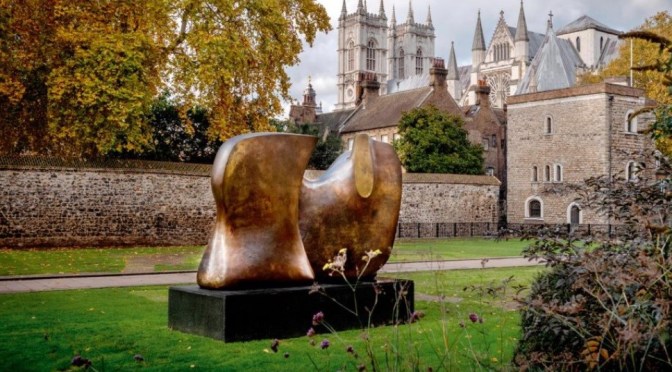
Sculptors are very rarely household names, but no one who lived through the 1960s could be unfamiliar with the name of Henry Moore. At the height of his international success, Moore’s monumental public sculptures in prominent locations — from the 12ft-high Knife Edge Two Piece (1962–65) outside London’s Houses of Parliament to the 26ft-long Reclining Figure (1963–64) outside the Lincoln Centre in New York, US — became such a feature of the urban landscape that they appeared in cartoons in the popular press. For a Modernist abstract sculptor, that was fame.

In the 1950s, Moore added a new subject to his signature themes of the mother and child and the reclining figure. As a young man, his first sight of Stonehenge by moonlight, in 1921, had left an indelible impression; 30 years later, he began a series of large bronze totemic forms recalling prehistoric monoliths.

Henry Moore with three of his Upright Motives c.1955.Photo: Barry Warner

Read more

Magazines: The Good Life France – Summer 2022

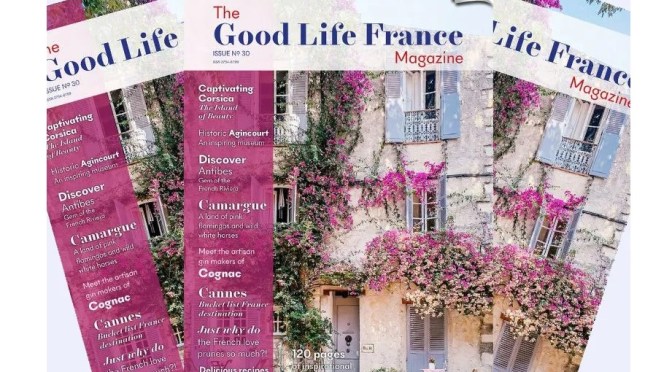
Front cover of The Good Life France Magazine Summer 2022 issue

The Good Life France Magazine Summer 2022

Discover the intoxicating island of Corsica, a well-kept secret island of beauty where 80% of visitors are from France. Head south to arty Arles, once a Roman colony, adored by artists and now a cultural hotspot, and the wetlands of the Camargue where wild white horses and pink flamingoes roam. We explore gorgeous Antibes on the Mediterranean coast, nothing like its more well known neighbours Nice and Cannes where we also go to find out more about this bucket list beauty. In the north, discover the historic department of Aisne in Picardy – the ancient cradle of France, and Agincourt, a land of glorious countryside and a super museum dedicated to its famous battle.

Ocean Sports Fishing: ‘Hooked On Bluefin’

“They’re the biggest, baddest fish in the ocean. They will break your heart, they will break your soul, they will break your back, they’ll break your gear. It’s an emotional rollercoaster.”

Costa Films’ “Hooked on Bluefin” unpacks the centuries-old culture of fishing for bluefin tuna — one of the most highly-valued gamefish on the planet. A coast-to-coast adventure, this film explores everything it takes to bring one of these mighty fish from ocean to table.

World Economic Forum: Top Stories Of The Week

This week The World Economic Forum are highlighting 4 top stories:

  • What is hyperinflation,
  • the impact of climate change on the Alps,
  • a record breaking super computer and
  • the world’s first autonomous ship.

The World Economic Forum is the International Organization for Public-Private Cooperation. The Forum engages the foremost political, business, cultural and other leaders of society to shape global, regional and industry agendas. We believe that progress happens by bringing together people from all walks of life who have the drive and the influence to make positive change.

Reviews: ‘The Week In Art’

This week: why is Tate rejecting an archive of material relating to Francis Bacon, 18 years after acquiring it?

Our London correspondent Martin Bailey tells us about his recent scoop that Tate is returning a thousand documents and sketches said to have come from the studio of Francis Bacon to Barry Joule, a close friend of the artist, who donated them to Tate in 2004. We then discuss the material with Martin Harrison, the pre-eminent Bacon scholar and editor of the catalogue raisonné of Francis Bacon’s work published in 2016, and to Sophie Pretorius, the archivist at the Estate of Francis Bacon, who went through the Barry Joule archive item by item. Victoria Munro, the director of the Alice Austen House Museum in New York, discusses this still too-little-known photographer, and her documentation of immigration to the United States and the lives of queer women in the 19th and early 20th centuries. And this episode’s Work of the Week is Weißes Bild (1994), a painting by the late Luxembourg-born artist Michel Majerus, now on view at Art Basel—Aimee Dawson, acting digital editor, is at the fair and talks to Giovanni Carmine, curator of the Unlimited section, in which the painting appears.

Sophie Pretorius’s essay Work on the Barry Joule Archive is in the book Francis Bacon: Shadows published by the Estate of Francis Bacon and Thames and Hudson. 

For more on the Alice Austen House Museum, visit aliceausten.org. The podcast My Dear Alice is out in the autumn.

Art Basel, until 19 June.

Morning News: ‘Russian Davos’ Agenda, Violence In Brazil, World Art Review

What’s on the agenda of this year’s “Russian Davos”? Plus: we speak with the head of the Latin America desk at Reporters Without Borders and give you the latest art and culture news.

Cover Preview: Outdoor Photography – June 2022

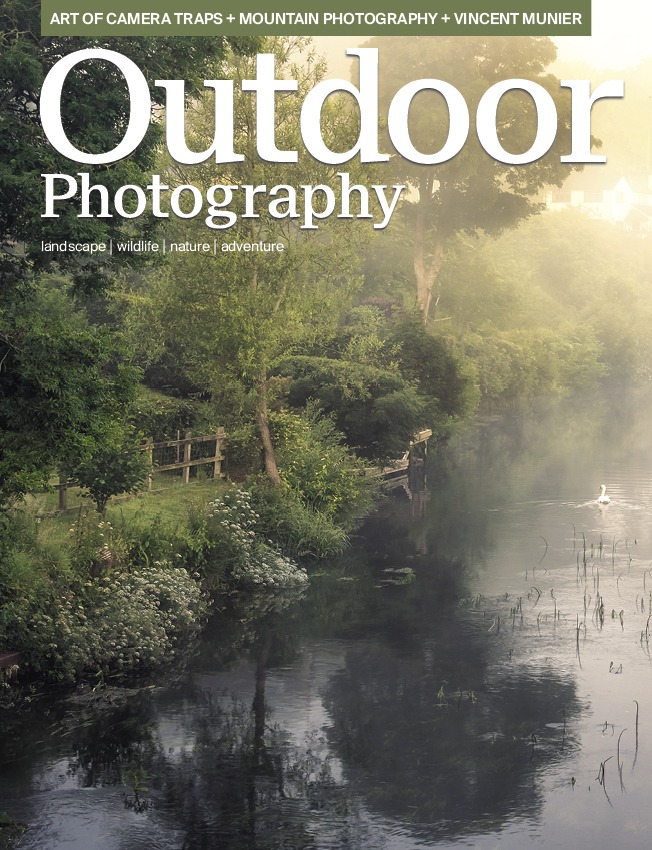
Outdoor Photography 282 Cover

In Outdoor Photography issue 280

Chris Frost captures the magic of Dorset’s hidden woods
Essential tips for successful mountain photography
James Roddie introduces the art of camera trapping
Vincent Munier discusses his stunning new nature film

+