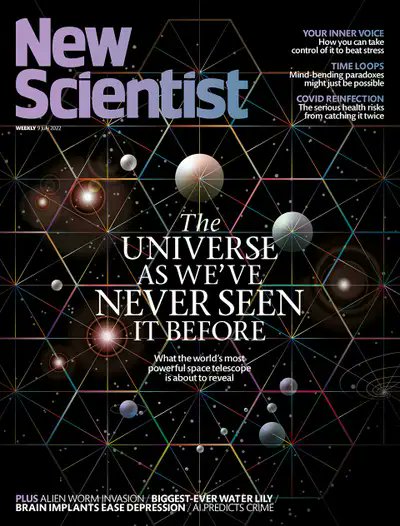
FEATURES – How to understand your inner voice and control your inner critic
FEATURES – 7 big questions the James Webb Space Telescope is about to answer
NEWS– Covid-19: What are the risks of catching the virus multiple times?
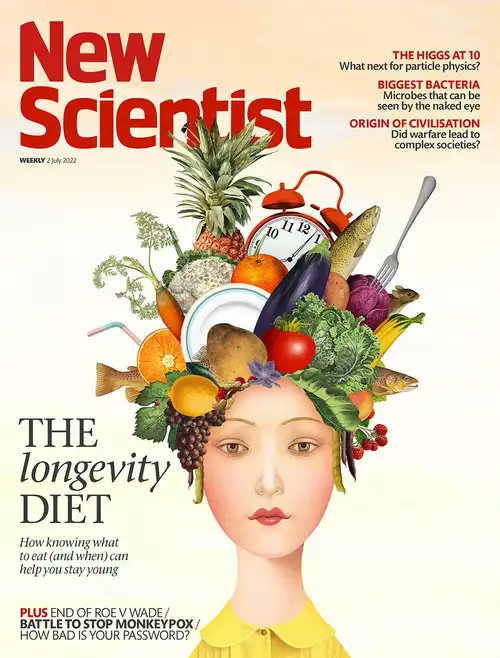
In this week’s issue: We’re about to see the first full-colour images from the James Webb Space Telescope – here’s what we can expect Available at newsstands and via our app for digital and audio editions. https://newscientist.com/issue/3394/
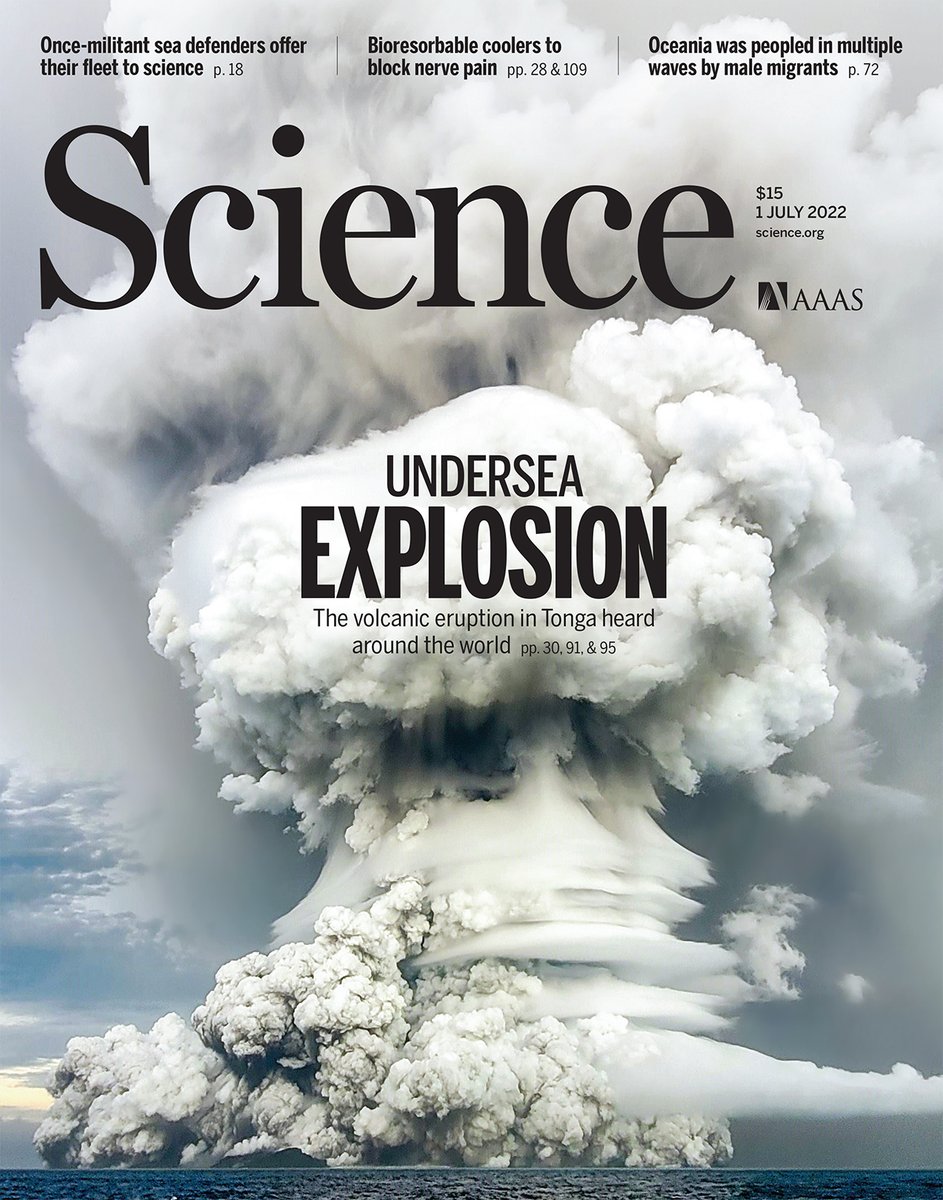
An ash and gas plume rises from Hunga volcano, Tonga, on 14 January 2022. Global geophysical observations reveal that the climactic eruption that followed on 15 January produced a broad range of atmospheric waves, with pressure wave amplitudes comparable with those from the 1883 Krakatau eruption. While propagating over the world’s oceans, the remarkable atmospheric waves generated complex fast-traveling tsunamis. See pages 30, 91, and 95.
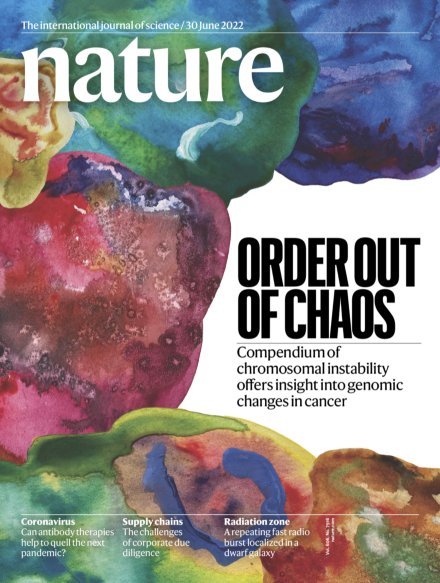
The cover shows an artistic representation of various cancer cells. The large-scale gains, losses and rearrangements of DNA seen in chromosomal instability are a typical feature of cancer — but there is no comprehensive framework to decode the causes of this genomic variability and their possible links to disease. In this week’s issue, Florian Markowetz, Geoff Macintyre and their colleagues present such a framework with a compendium of 17 signatures of chromosomal instability that can be used to predict how tumours might respond to drugs and that help to identify future therapeutic targets. The team created the compendium by examining 7,880 tumours representing 33 types of cancer. In a separate paper, Nischalan Pillay and colleagues examined 9,873 cancers to generate
The promise of a new diet that can add as much as a decade to your life is certainly tempting – and might well be proven to work – but for now should be swallowed with a pinch of salt
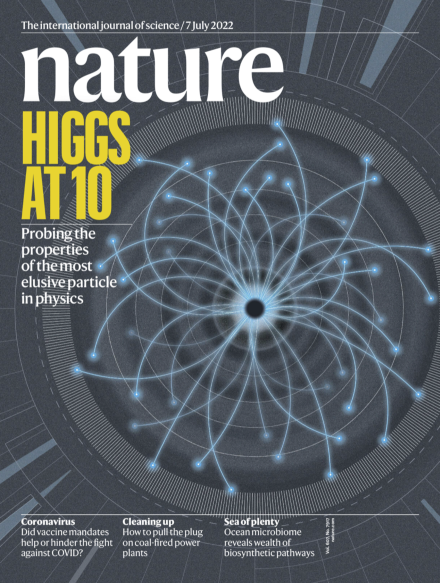
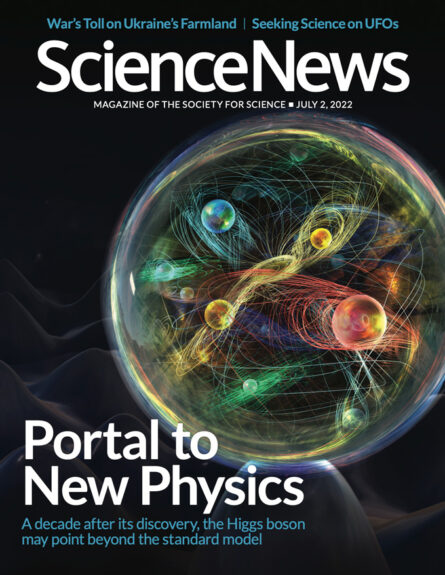
FEATURES Ten years after the Higgs discovery, what now for particle physics?
NEWS 75 per cent of the world’s top websites allow bad passwords
NEWS Largest known bacteria in the world are visible to the naked eye
NEWS Was warfare responsible for the origin of complex civilisation?
Enteric viruses, such as norovirus, cause a significant health burden around the world and are generally considered to only spread via the faecal-oral route.
However, new research in mice suggests that saliva may also be a route of transmission for these viruses, which the authors say could have important public health implications.
How devouring space rocks helped Jupiter to get so big, and what analysing teeth has revealed about the diet of the extinct super-sized megalodon shark.
For decades there have been hints of the existence of tetraneutrons, strange systems composed of four neutrons, and now researchers may have created one in the lab. This breakthrough could tell us more about the strong nuclear force that holds matter together.
Last Friday the US supreme court struck down the constitutional right to abortion. In the wake of this ruling, Nature has been turning to research to ask what we can expect in the coming weeks and months.
Overheating is a major problem for today’s computers, but those of tomorrow might stay cool by circumventing a canonical boundary on information processing