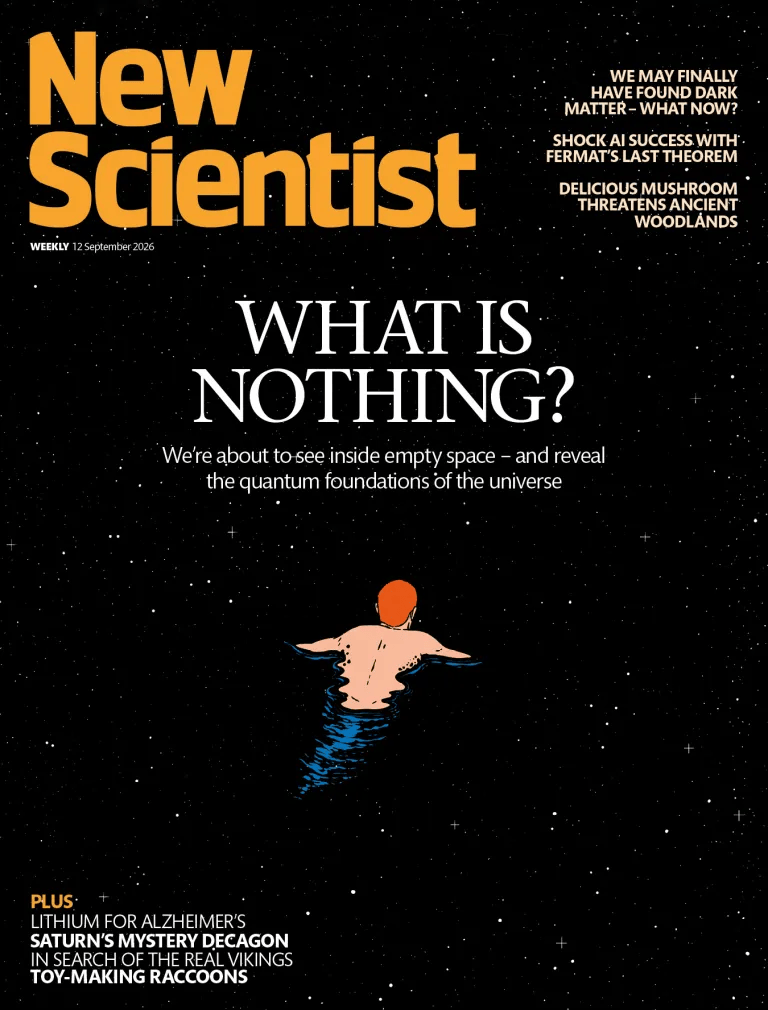
NEW SCIENTIST MAGAZINE – SEPTEMBER 12, 2026

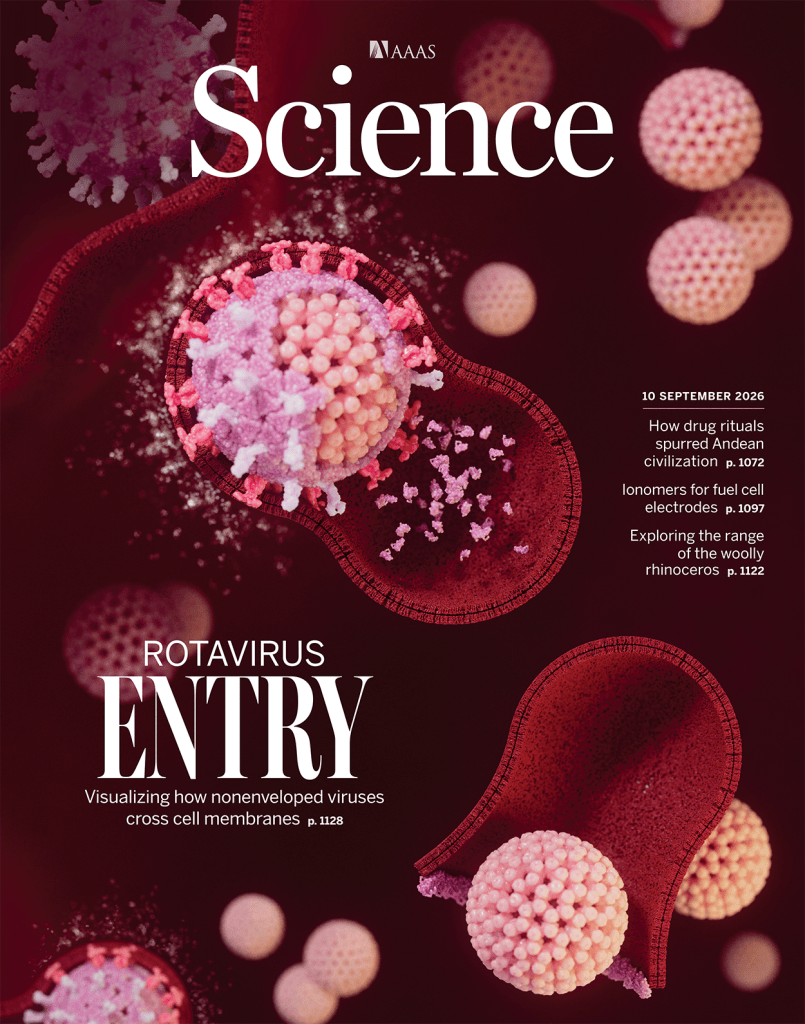
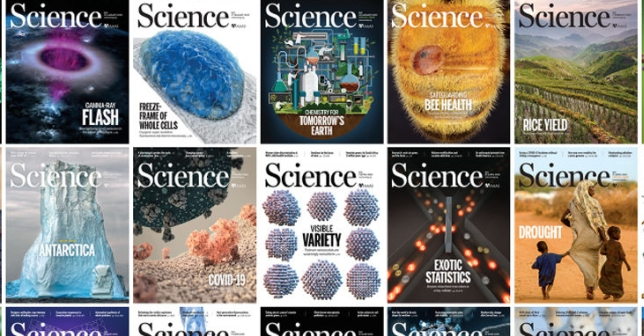
SCIENCE MAGAZINE: The latest issue features ‘Rotavirus Entry’ – Visualizing how nonenveloped viruses cross cell membranes…
Early results from the $1 billion SinoProbe II project hint at how continental fragments assemble and evolve
Trump administration officials argue the change is necessary to reduce wildfire risk in national forests
Study in mice strengthens T cells’ ties to neurodegenerative conditions like Alzheimer’s
Platinum-based drugs cause mutations and liver aging in children treated for cancer
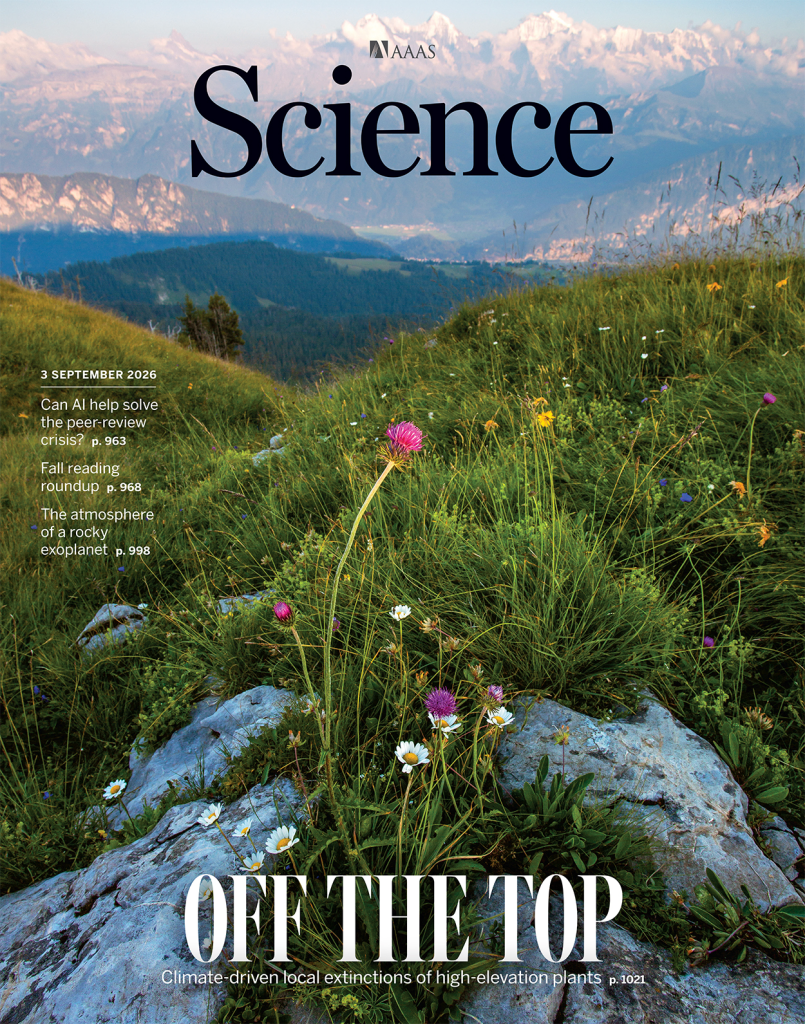
Global cooperation revealed a huge landslide likely initiated the cascade of events
Hatchery-raised trout with double Y chromosomes can eradicate invasive populations
Watching pups’ deaths could affect the mental health of staff, officials say
Trials of noninvasive technologies enroll pregnant and postpartum women

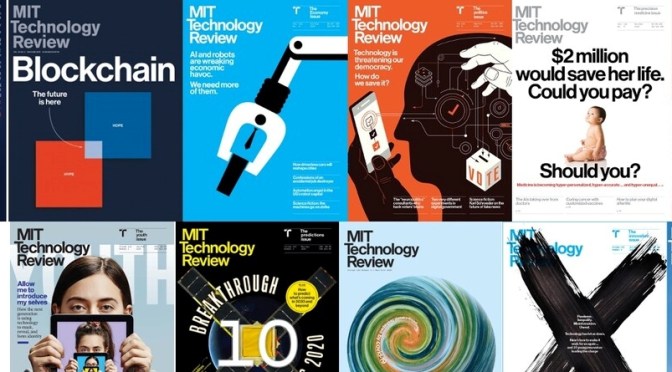
MIT TECHNOLOGY REVIEW: The Kids issue features… What does growing up in an age of chatbots and agents mean for kids’ future? From the role AI plays in their day-to-day lives to how they cope with the existential dread that comes with climate change, young people are asserting their smarts to define their relationship with technology and the world around them. Plus!…
Does an AI-filled future seem like promise or peril to today’s teens and tweens? We went right to the source.
Today’s world is a mess of troubling trends. Some groups are trying to help kids navigate their anxieties about it all.
AI companion toys for neurodivergent children promise connection and therapy, but can they deliver for the long haul?
LLMs need vastly more data than children to learn language. Understanding why could help us create more efficient models—and reveal more about developing minds.
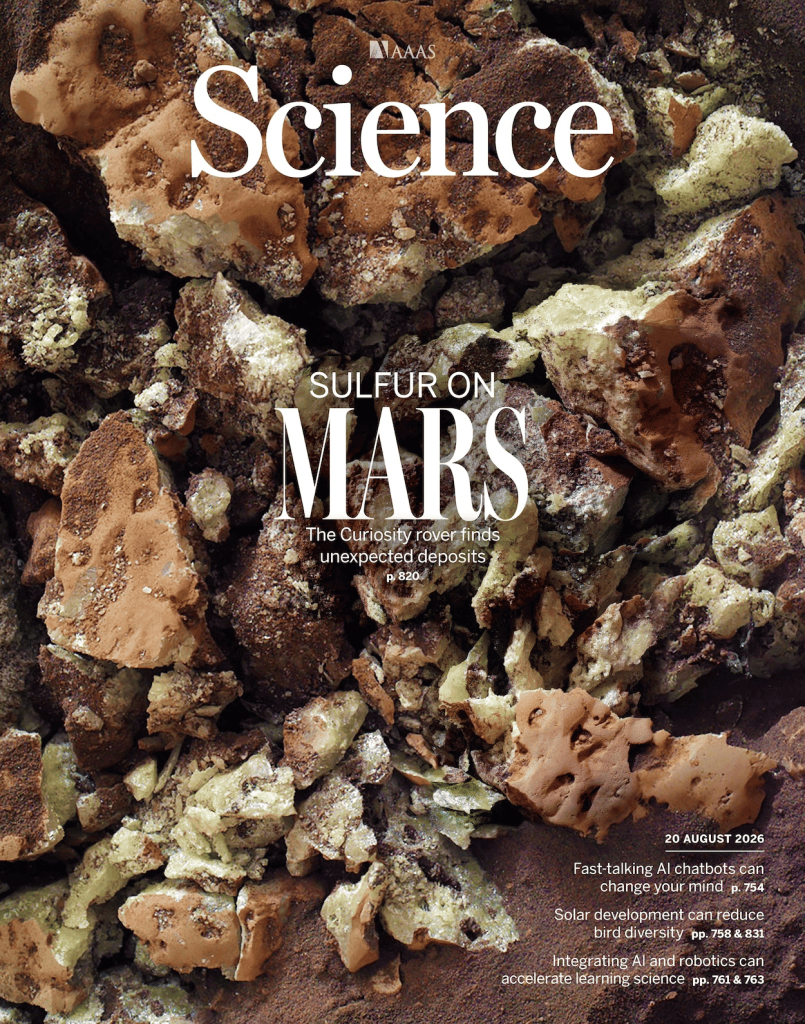
SCIENCE MAGAZINE: The latest issue features ‘Sulfur On Mars’ – The Curiosity rover finds unexpected deposits….
AI chatbots are becoming experts at changing people’s minds. What gives them an edge?
Sensory inputs influence different blood vessel networks, affecting the precision of brain scans
Chang’e-7 will send a hopping craft into a polar crater to directly sample lunar ice
Two scientists’ cars burned at proposed Sardinian site for the next-generation gravitational-wave observatory
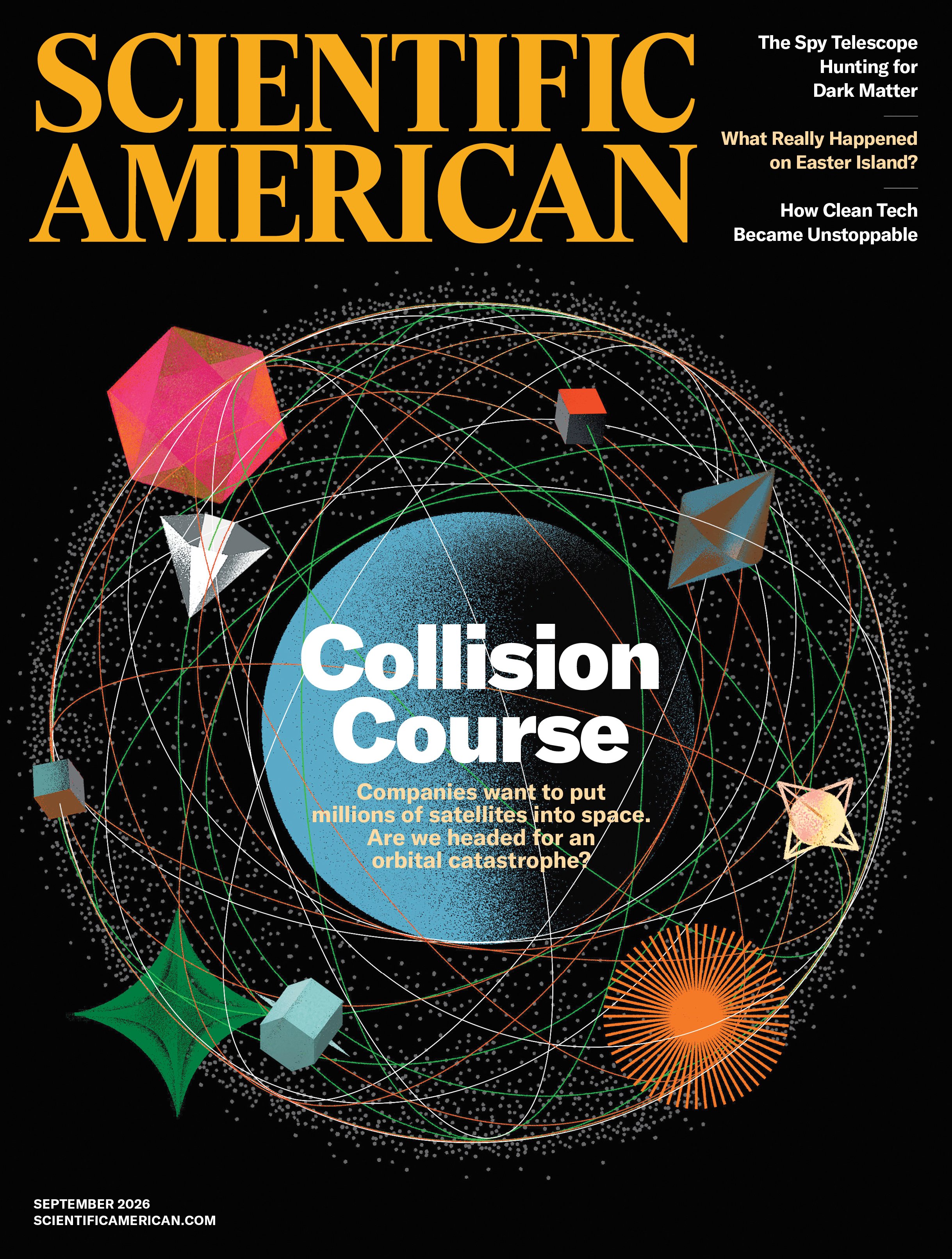
SpaceX and other companies want to put millions of satellites into space. Could orbit run out of room?
For decades, an influential theory blamed the Rapanui for their own downfall—a story made famous by Jared Diamond’s book Collapse. New evidence tells a different tale
NASA’s Nancy Grace Roman Space Telescope will soon launch to unravel the mysteries of dark energy and dark matter
Neuroscience is revealing how our brains are wired for narrative
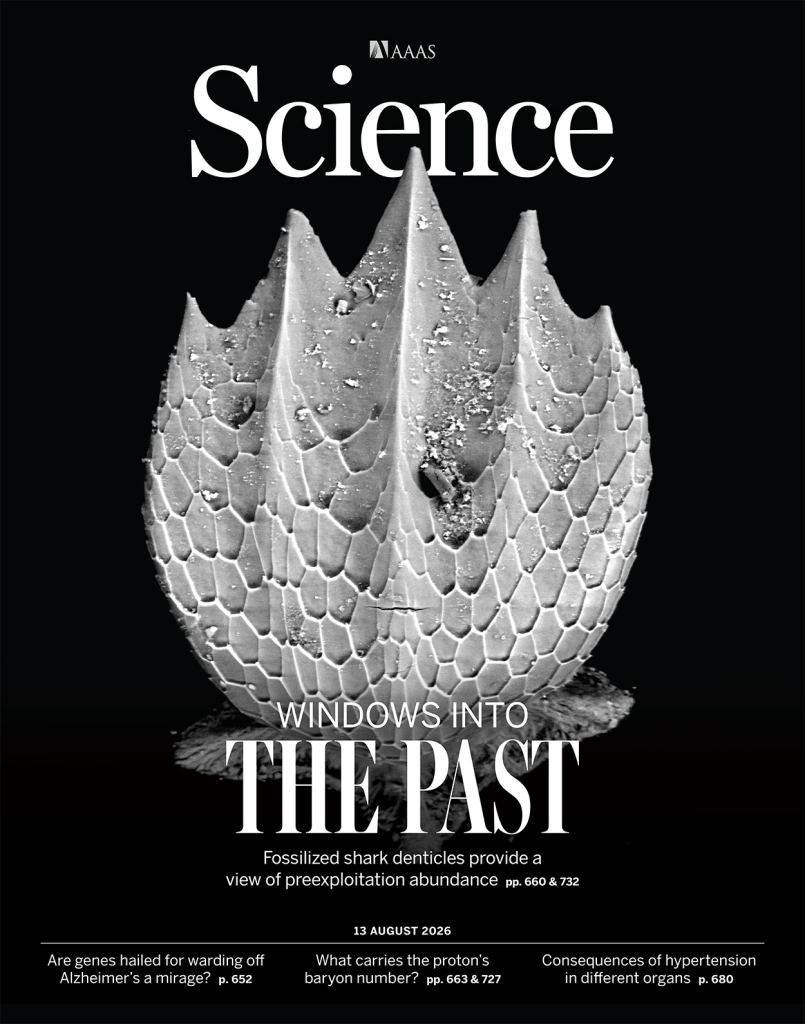
SCIENCE MAGAZINE: The latest issue features ‘Windows Into The Past’ – Fossilized shark denticles provide a view of preexploitation abundance.
Modeling suggests infamous “Kessler syndrome” would make the swarms unsustainable
Studies probe the limits of new sodium channel blockers
Long-sought particle, made of force-carrying gluons, represents a new type of matter
After a record-low snowpack, federal authorities canceled dam releases for managing fish and sandbars
Study of mitochondria suggests new treatment strategy for Alzheimer’s and other diseases

SCIENCE MAGAZINE: The latest issue features ‘Let Them Roam’ – Understanding Bison population structure can aid restoration.
In the DNA of bison, scientists find clues to the animals’ past—and keys to safeguarding their future
A network of seismometers measured atmospheric turbulence during Hurricane Isaac’s landfall
Global ice or ocean changes may explain a mysterious lag in the gas’ rise
Satellite quartet demonstrates record-breaking ability to predict solar explosions’ arrivals at Earth
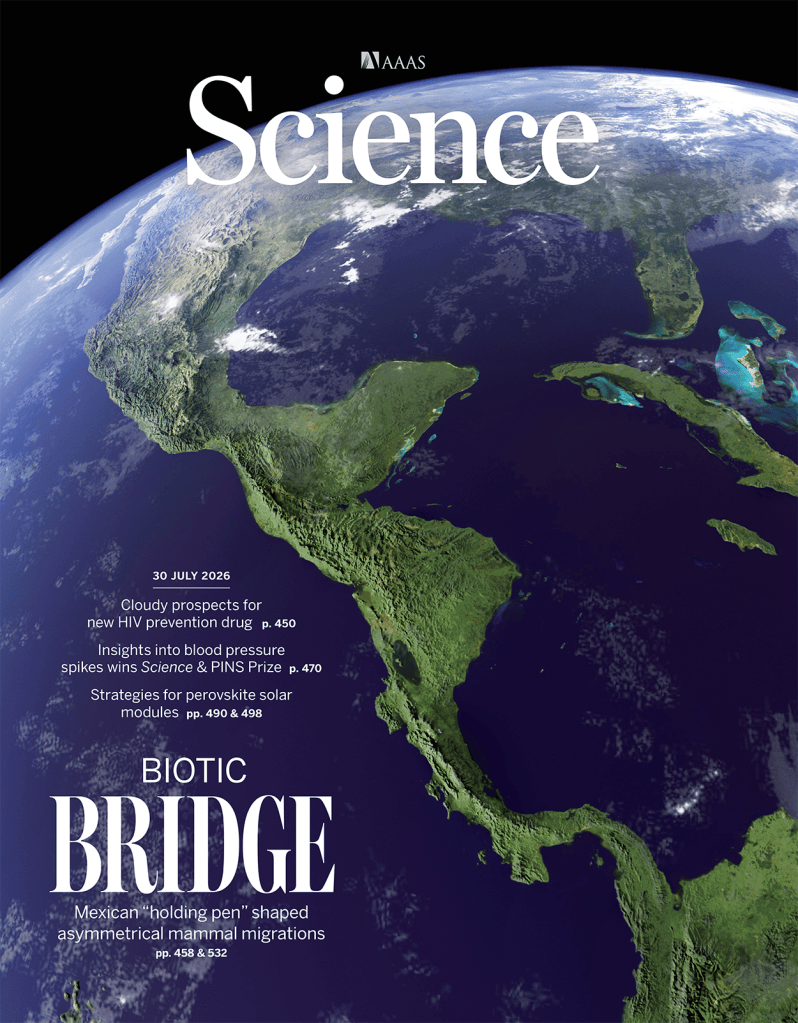
SCIENCE MAGAZINE: The latest issue features ‘Biotic Bridge’ – Mexican “holding pen” shaped asymmetrical mammal migrations….
For millions of years after the breakup of the supercontinent Gondwana, South America was disconnected from other landforms, a time period that has been referred to as its “splendid isolation.” This isolation allowed for the evolution of mammals with distinctive features, including xenarthrans, sprassodont carnivores, and notoungulates. The formation of the Panamanian land bridge facilitated connection of North and South American faunas, with a bias from north to south. Tseng et al. looked at fossils from low latitudes in México and found that northern mammals accumulated in the region before the connection (see the Perspective by McGuire and Williams). This allowed for more rapid dispersal south and further supports that the land bridge first formed during the Pliocene rather than the Miocene.
Analyses of hundreds of collisions find black holes pair up in at least three ways
More than half of AI “unicorns” have never published a paper or preprint
“ Landmark” paper finds European contact introduced the disease
The Great American Biotic Interchange informs the dynamics of modern species invasions
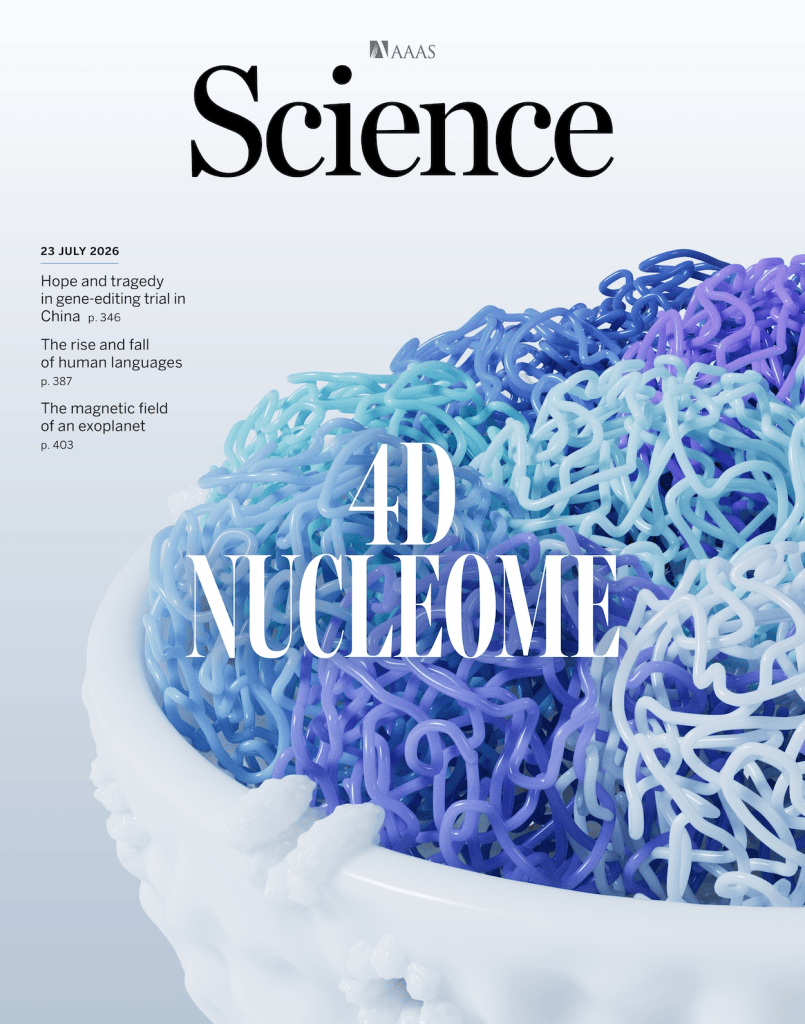
SCIENCE MAGAZINE: The latest issue features Strands of DNA-like thread coil, loop, and spill upward, evoking the genome’s dynamic three-dimensional architecture within the nucleus of a living cell.
Pioneering studies are underway amid difficult conditions to address Bundibugyo’s threat
Genetic studies reveal rare example of identical transmissible tumors
National Academies report says more rigorous results will boost confidence in fast-growing field
Teghaza meteorite hints at surprisingly Earth-like crust and shows Mars was already losing its water 4.1 billion years ago