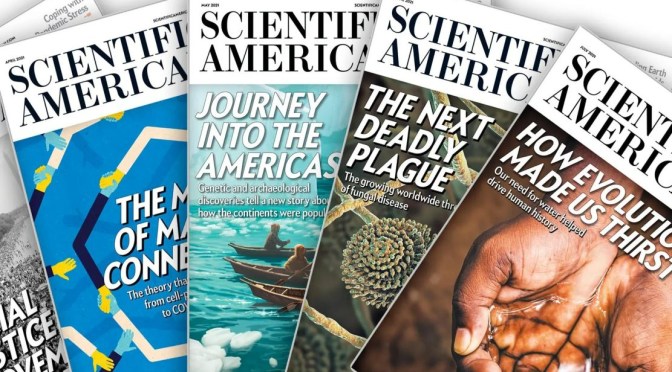
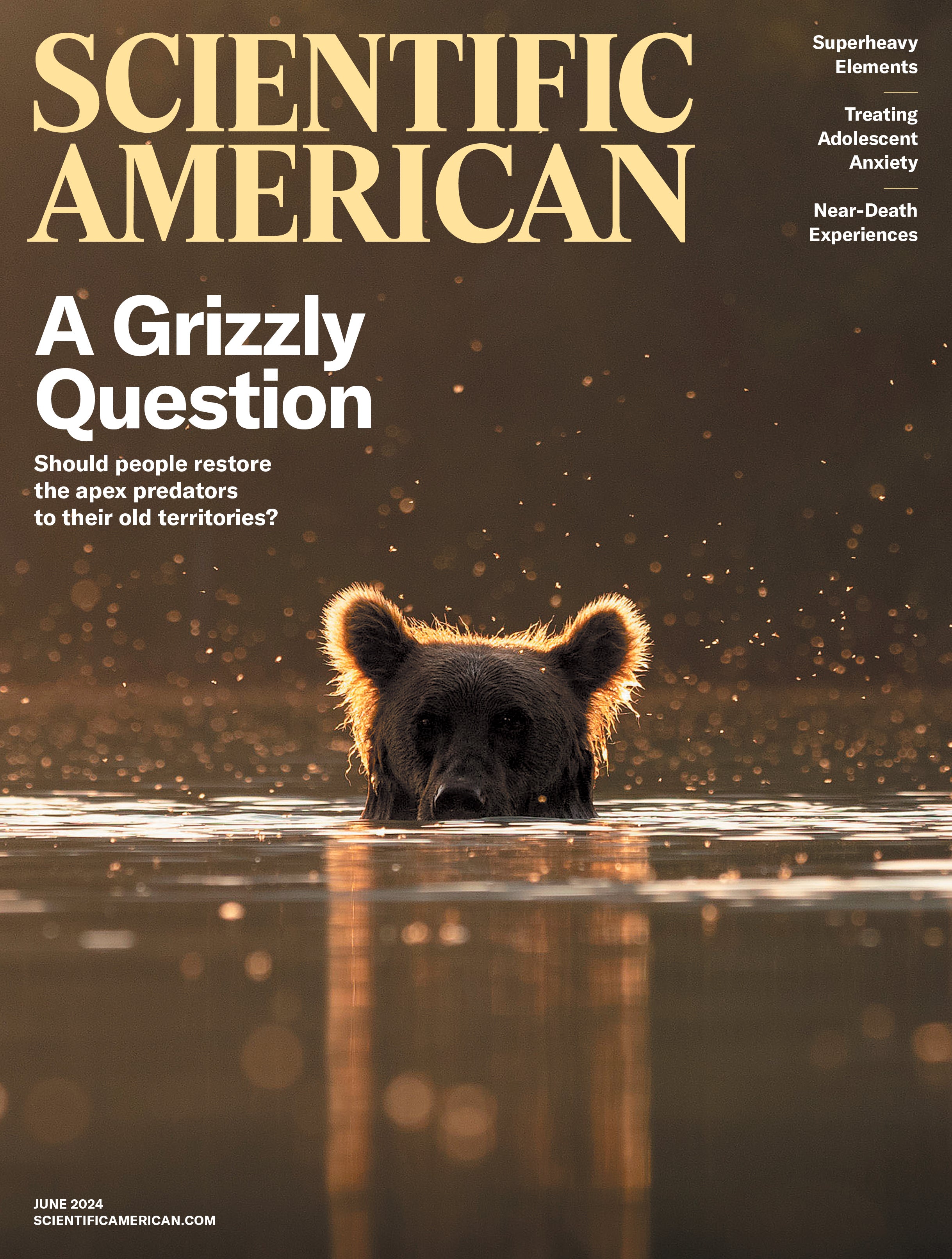

Scientific American (May 15, 2024): The June 2024 issue features:
Grizzly Bears Will Finally Return to Washington State. Humans Aren’t Sure How to Greet Them
BENJAMIN CASSIDY
Lifting the Veil on Near-Death Experiences
RACHEL NUWER

Scientific American (May 15, 2024): The June 2024 issue features:
BENJAMIN CASSIDY
RACHEL NUWER

‘
In AU$940 million deal, PsiQuantum will build “utility scale” facility
Draft evaluation calls 2016 decision to change oral vaccines a “failure”
Novel effort comes as study finds key receptor for avian flu virus in udders, where the virus flourishes
‘
The Chang’e-6 mission aims to land in the Moon’s oldest and largest crater, where it will collect rocks to bring back to Earth.
The tissue developed into functioning kidneys and produced urine
From extreme cold to strong magnets and high pressures, the Synergetic Extreme Condition User Facility (SECUF) provides conditions for researching potential wonder materials

‘

Claudia Sheinbaum Pardo would be first researcher to lead the country, but critics worry she’ll be as hostile to science as her predecessor
Scientists test bighorn sheep, bears, moose, rats, and dozens of other species to track how SARS-CoV-2 moves between humans and wildlife
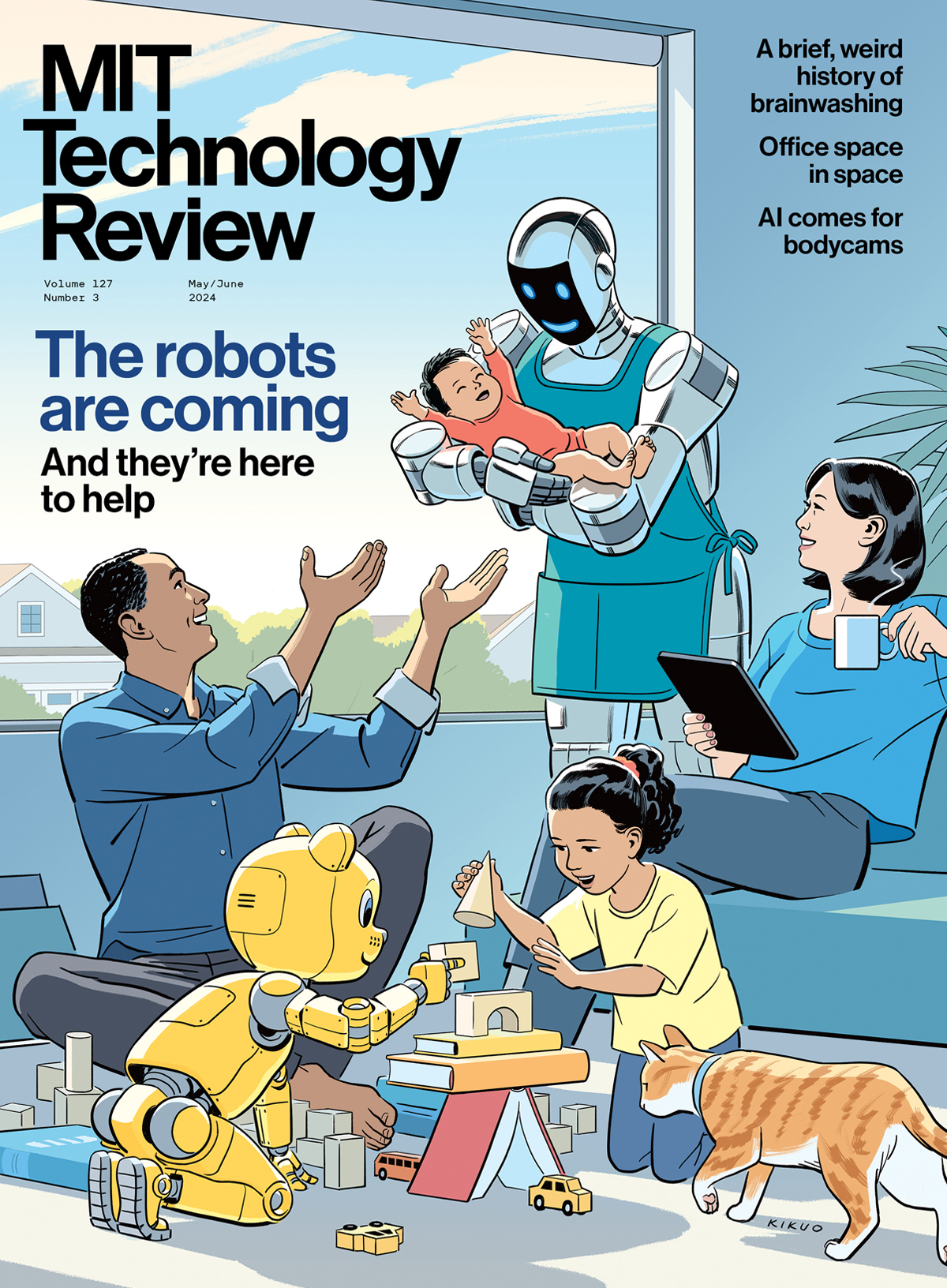

Who says we can’t still build things? In this issue: a look at the robots we’ve always wanted; a new model for space exploration; and efforts to flood-proof Louisiana’s coastline. Plus a wild, weird history of brainwashing; designing cheese with AI; and glow-in-the dark petunias.
Researchers are using generative AI and other techniques to teach robots new skills—including tasks they could perform in homes.

‘
Vitamin D modulates intestinal epithelial cell function to enhance antitumor microbes
The gut microbiome has been shown to modulate the response of cancer patients to therapy, but precisely how microbiota affect anticancer immunity is still being elucidated. Giampazolias et al. report that vitamin D bioavailability in mice influences the composition of the gut microbiome (see the Perspective by Franco and McCoy). After dietary manipulation, vitamin D levels were observed to affect gut bacteria, which in turn improved cancer immunotherapy and antitumor immunity. In humans, low vitamin D levels were correlated with tumor development, and gene signatures of vitamin D activity were associated with improved patient responses to immunotherapy. These findings highlight the connection between vitamin D and the immune system through gut bacteria and may have applications for improving cancer therapies.
Lake Tanganyika contains one of the most impressive adaptive radiations, with about 250 species of cichlid occupying a variety of niches. Much research has focused on understanding the drivers of this and other adaptive radiations. Trembo et al. looked in depth at 57 of these cichlid species with regard to their behavior, ecomorphology, and genomics. They found that one behavior in particular, a tendency to explore, was related to niche adaptation, and they identified a regulatory gene that is highly associated with this behavior. These findings suggest the existence of an adaptive syndrome driven in part by a tendency to explore what is new.
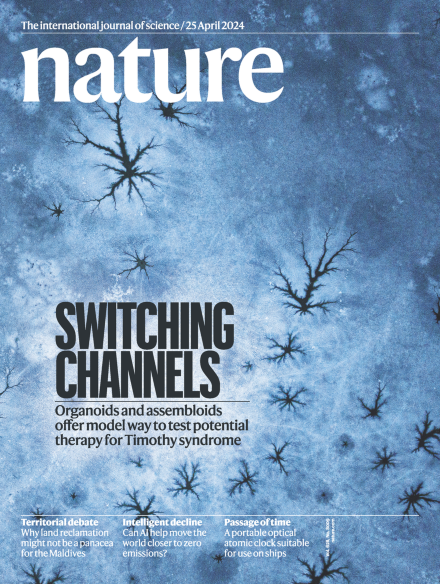
‘
Antarctic observatory gathers the first clear evidence of mysterious subatomic particles from space.
The gigantic animals have worked out an unusual way to exfoliate — a perfect way to deal with whale lice.
Static electricity generated by the foot striking the ground can be captured to kill pathogens.
Finds in pyramid at Guatemalan site suggest that remains were disinterred and desecrated in a public ritual.
‘

NASA’s JWST telescope traces burst to a supernova but finds a puzzling lack of heavy elements
Exposing monitor lizards to thousands of young cane toads helped them survive once the adult toads invaded
Suit seeks to overturn state law targeting graduate and postdocs from China and other “countries of concern”
Meteorites suggest tumult occurred around the time of the Moon’s formation
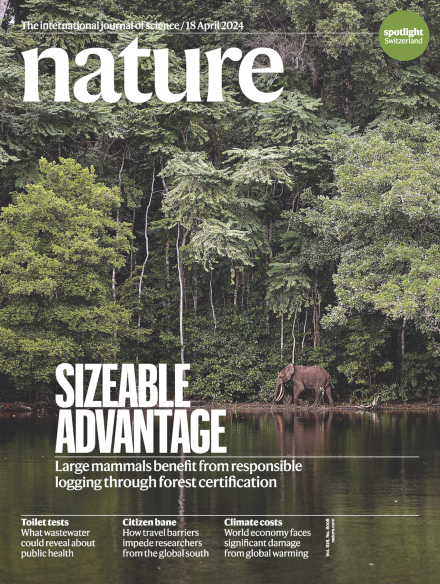
‘
‘
Long-lived compounds emitted by industry reach the oceans and are then ferried by bubbles into the atmosphere.
Astronomers spot the first planet outside the Solar System to boast a phenomenon reminiscent of a rainbow.
The bioengineered immune players called CAR T cells last longer and work better if pumped up with a large dose of a protein that makes them resemble stem cells.
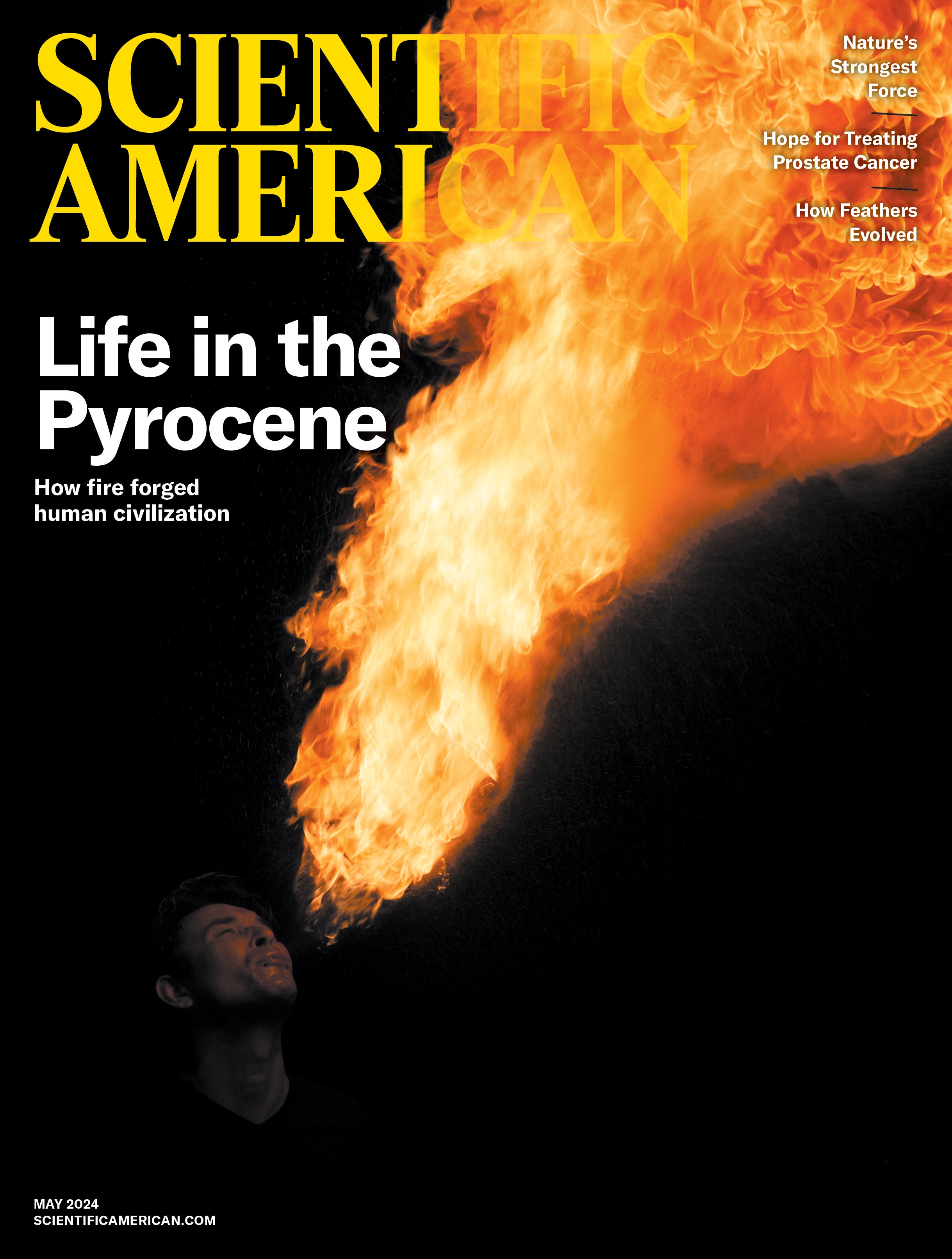
Ancient prophecies of worlds destroyed by fire are becoming realities. How will we respond?
New discoveries demystify the bizarre force that binds atomic nuclei together

 Intellicurious