 A selection of three essential articles read aloud from the latest issue of The Economist. This week, the chance to flatten the climate curve, when, why and how to lift coronavirus lockdowns (9:25) and the arrest of Africa’s most wanted man (17:25).

A selection of three essential articles read aloud from the latest issue of The Economist. This week, the chance to flatten the climate curve, when, why and how to lift coronavirus lockdowns (9:25) and the arrest of Africa’s most wanted man (17:25).
The Shakespearean actor, most recognized for his performances in the sci-fi franchises “X-Men” and “Star Trek,” recently returned to the role of Captain Jean Luc Picard in the CBS All Access series “Star Trek: Picard.” But as “CBS This Morning” co-host Tony Dokoupil found out, Sir Patrick Stewart is much more down-to-earth than his title might imply.
Sir Patrick Stewart OBE (born 13 July 1940) is an English actor, director and producer whose work has included roles on stage, television and film, in a career spanning six decades. He has been nominated for Olivier, Golden Globe, Emmy, Screen Actors Guild, and Saturn Awards.
Beginning his career with a long run with the Royal Shakespeare Company, Stewart received the 1979 Laurence Olivier Award for Best Actor in a Supporting Role for his performance in Antony and Cleopatra in the West End. Stewart’s first major screen roles were in BBC-broadcast television productions during the mid-late 1970s, including Hedda, and the I, Claudius miniseries.
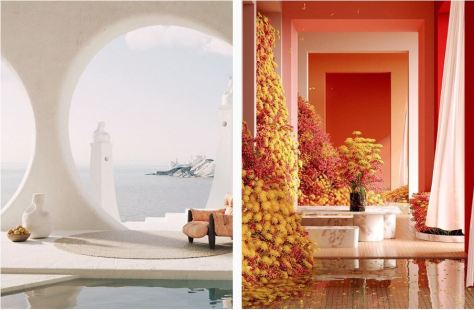

Alexis Christodoulou, a self-taught 3D artist living in Cape Town, South Africa has spent the last 6 years building a collection of works focusing on imaginary architecture. While working professionally as a copywriter for the last decade, Alexis taught himself 3D rendering as a hobby.
From a lifelong fascination of digital worlds and 3D graphics from playing video games a boy, Alexis became frustrated with the lack of modern aesthetics represented therein. The images he creates are a simple extension of this desire to see fantastic spaces come to life that echo a more modern and clean aesthetic.
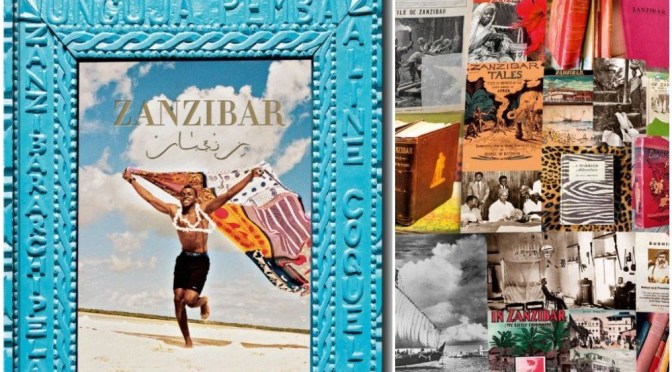
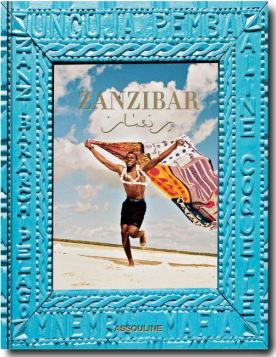 Off the coast of East Africa in the Indian Ocean sits an archipelago known as Zanzibar. It all started ten million years ago when the island of Pemba separated from mainland Africa and then ten thousand years ago, the island of Unguja followed suit. Thus, begins the legend of Zanzibar.
For centuries, Zanzibar has been the haven and gateway for explorers including Richard Burton and David Livingstone to penetrate the unknown African Continent. Forward to present day, and it is still possible to experience the unique wildlife whether that is by scuba diving off the coast of a private island, infinite lagoons, visiting mangroves or endemic wild forests; getting lost and immersing yourself into the historical labyrinthine streets of Stonetown.
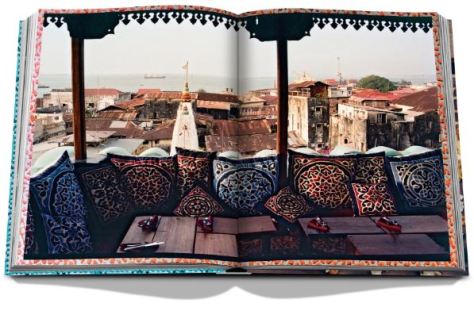
This cluster of islands is at a crossroads of cultures, featuring Omani architecture, Portuguese and British heritages as well as Swahili rituals.
Photographer Aline Coquelle shares an intimate portrait of a community bursting with life. With original photography, a disappearing, indigenous culture is preserved and celebrated. This volume invites the reader to experience the paradise that is Zanzibar.
With a degree in art history and anthropology, nomadic Parisian photographer Aline Coquelle has always traveled the world—she has lived and worked in Central and South America, Asia, and Africa and has been visiting Zanzibar for over twenty years. She contributes to prestigious international publications, and shoots marketing campaigns for luxury brands. Coquelle often works with silver film in order to keep alive the magic of old-time photography because she believes “transcending tradition is the new modernity” and her gelatin silver prints are sought by collectors worldwide. Her other books with Assouline are Palm Springs Style (2005); The Cartier Polo Games (2006); Polo: The Nomadic Tribe (2009); The Italian Dream: Wine, Heritage, Soul (2016); and Be Extraordinary, The Spirit of Bentley (2017).
Mirella Ricciardi is a renowned photographer and author. Her childhood in Kenya has inspired her work and she has published several volumes of photographs including Vanishing Africa (1971), African Saga (1981), and Vanishing Amazon (1991).
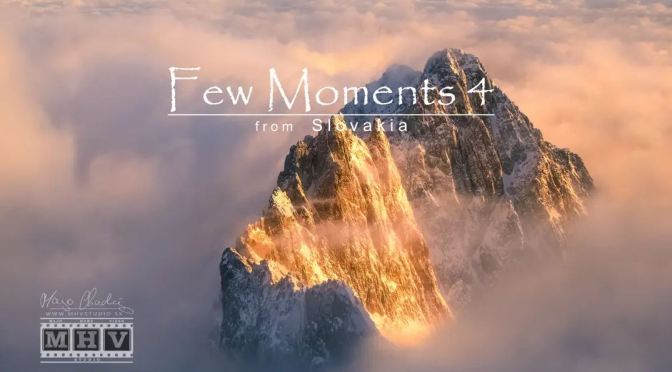
Filmed and Edited by: Majo Chudý
This is the fourth part of the time-lapse videos from the Few Moments series. The images were obtained in national parks and several localities in Slovakia.
Special thanks:
Astronomical Institute of the Slovak Academy of Sciences for the possibility of making a time-lapse sequence from the interior of the observatory during scientific observation.
levanduland.sk for the possibility of spending the night and shooting in the most fragrant field in Slovakia. And I’m honored to have been the first to spend the night and photograph the Milky Way in this awesome place.
 Monocle 24’s “The Stack” speaks to Marianne Julia Strauss on her new book “Do You Read Me?” on the best bookshops around the globe. Then, author Patrick McGinnis on his new release “Fear Of Missing Out”.
Syndicated columnist Mark Shields and New York Times columnist David Brooks join Judy Woodruff to discuss the week in politics, including President Trump’s call to reopen houses of worship despite the pandemic, controversial comments from Trump and former Vice President Joe Biden, public opinion on reopening the country, the battle over mail-in voting and Trump’s firing of inspectors general.
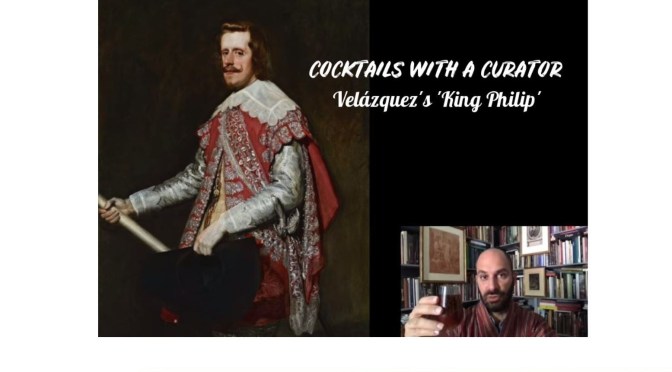
In this week’s episode of “Cocktails with a Curator,” join Xavier F. Salomon, Peter Jay Sharp Chief Curator, as he discusses the sole Velázquez painting at the Frick, “King Philip IV of Spain,” while enjoying a Fitifiti, the popular Spanish cocktail. Examine the extraordinary details and painterly skills that illustrate why the artist is regarded by many (including Xavier) as the greatest European painter who ever lived, and why this work was Henry Clay Frick’s favorite