
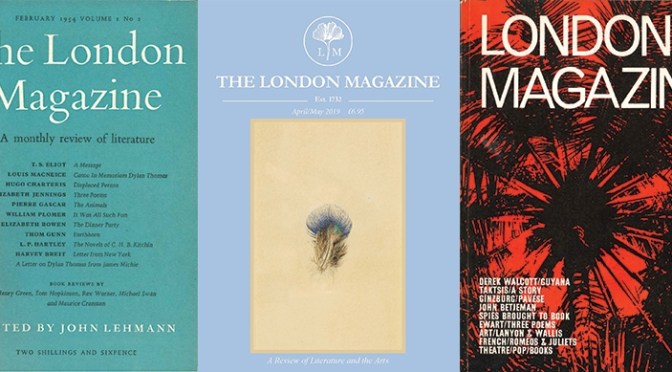
The London Magazine · December / January 2027
Moons, Monsters & Music
The 2026 Short Story Prize winners, ten new poets, Auden reconsidered and Intan Paramaditha on the monsters families make
The London Magazine, founded in 1732 and still going, closes its year with a December/January issue built around the three winners of its 2026 Short Story Prize. Around them sit ten new poets, from Victoria Chang to Vona Groarke, essays on falling in and out of love with Auden and on London’s Gospel Oaks, and reviews of Alberto Manguel, Mary Ruefle, Tom McCarthy and Bach. And in an interview, the magazine talks to the Indonesian novelist Intan Paramaditha about where monsters really come from.
The editors frame the issue with the Italian novelist Domenico Starnone, who told the magazine earlier this year, “We have an absolute need for models.” Writers learn by imitating, he argued, until they know the rules of the literary game well enough to bend or break them, and the results, however modest beside their models, are their own. Much of this issue is about that game, and how hard its rules are to learn.
Here is the issue, with our notes on the threads that run through it.
The Cover
Phases of the Moon
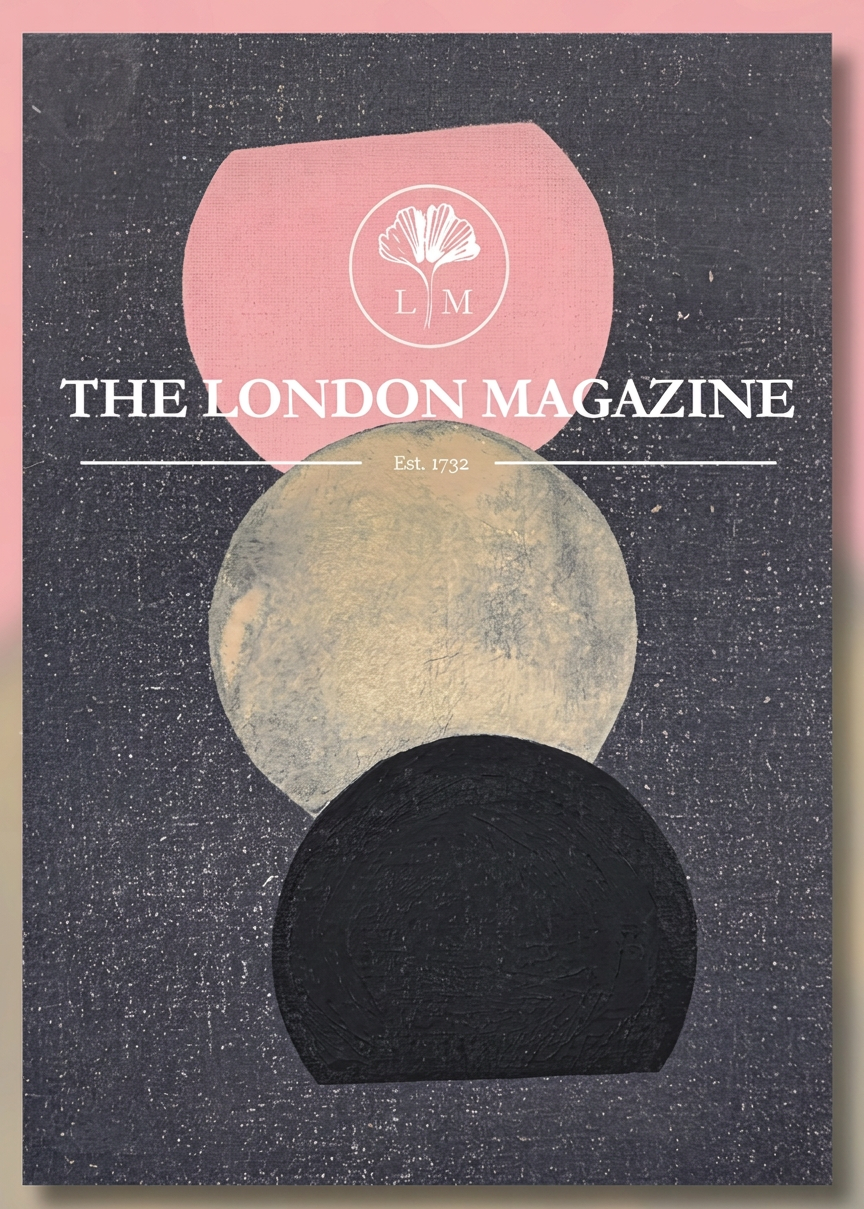
Cover · Jean Wolff, 2025
Three discs climb the cover like a slow eclipse on a speckled charcoal ground: a black half-moon at the base, a pale, mottled cream moon above it, and at the top a pink disc sliced flat, framing the magazine’s ginkgo-leaf monogram. The painting is Jean Wolff’s Phases of the Moon (acrylic on canvas, 38.1 × 27.94 cm, 2025), and Wolff’s art runs through the issue.
Fiction: The Short Story Prize 2026
By Paul Hammond · First Prize, Short Story Prize 2026
The judges, the novelists Camilla Grudova, Tim MacGabhann and Ayşegül Savaş, gave first place and £1,000 to Hammond, an Irish writer in London who teaches creative writing at Royal Holloway and is writing a novel about growing up in Dublin. MacGabhann was drawn into the story’s atmosphere of hurt and confusion and its slow, assured build; Savaş admired its attention to the strangeness of intimacy and the turns that lead people towards and away from each other. Hammond says the story began wild and overcomplicated and grew simpler and quieter over time.
2. Egg Watch
By Sam Reese · Second Prize
Grudova praised the subtle uncanniness and fear running through Reese’s story, which examines masculinity and care through images that build a sinister atmosphere. Reese has published two story collections and books on jazz, loneliness and American short fiction, has edited Sonny Rollins’s notebooks, and has translations of Tanizaki and Shiga forthcoming from NYRB.
By Luciana Arbus-Scandiffio · Third Prize
A narrator surrounded by generations of women trying to escape their mothers’ lives slips into a Las Vegas fantasy of male comfort. Grudova singled out its humour and its similes involving balsamic vinegar and cocktail sauce, calling it a “bright blue and salmon pink story”. Arbus-Scandiffio, a former Wallace Stegner Fellow in Poetry at Stanford, is publishing her first piece of fiction.
Features
By Jeremy Wikeley · Essay
Wikeley first met W. H. Auden’s poems as a schoolboy and was hooked at once, drawn to their mood of English adolescent dread and to a voice that seemed to know things about the world he did not. Rereading Auden as an adult, he finds himself falling back in love and out of it again: it is hard, he admits, to tell when the poems are good and when they are bad, and that uncertainty is itself a sign of their power to fuse incompatible elements into worlds that hold together for a moment.
He doubts how much of that genius Auden controlled. The horror and dislocation in the early poems, Wikeley suggests, belong to a boy who grew up during the First World War and dreaded the next one. Language, in his account, speaks through poets as much as they speak through it, and writing happens behind doors closed to the writer as well as the reader. Part of him still resents Auden, he confesses, and part of him knows he will fall under the spell again. Poetry, he concludes, is a game played best when you don’t know you are playing it.
By Camilla Cassidy · Essay
Cassidy explores London’s Gospel Oaks.
Reviews
Thomas Morris Tena on Alberto Manguel’s The Reverse Side of the Tapestry · Books
Reviewing the new book by Manguel, the Argentine-Canadian writer best known for his books about reading, Morris Tena enters the elusive world of translation. A single adjective makes his case: Nabokov’s “mellow moon”, which Javier Marías rendered in Spanish as luna pulposa, a fleshy, pulpy moon. Translation, he shows, walks the line between imitation and invention, and that border is a hard one to patrol.
Jack Barron on Mary Ruefle · Books
Barron reviews the latest from the American poet and essayist Mary Ruefle.
Ned Green on Johann Sebastian Bach · Music
Green tries to understand what drove Bach to write his monumental Mass in B minor.
William Burns on Tom McCarthy · Books
Burns reviews Tom McCarthy’s new book.
Poetry
10. New Poems
Ten Poets · Poetry
The issue carries new poems by Caleb Leow, Victoria Chang, Matthew Caley, Phoebe Stuckes, Lucy Holme, Alex Matraxia, Eugene O’Hare, Claudine Toutoungi, Penny Boxall and Vona Groarke. Among them, Toutoungi turns to ekphrasis, the poem written in response to a work of art, to dissect Francisco de Zurbarán’s Agnus Dei, his painting of a bound sacrificial lamb. Read them whole, in print.
Also at The London Magazine
11. The Monsters We Make: An Interview with Intan Paramaditha
Interview by Sadiya Ansari · Books & Ideas
Paramaditha’s Night of a Thousand Hells, translated from Indonesian by Stephen J. Epstein and Tiffany Tsao, came out in English in October and is a finalist for the National Book Award for Translated Literature. Two sisters, Mutiara and Maya, learn that their youngest sister, Annisa, took part in suicide bombings of a church and an Islamic study group for trans women. The novel, which Ansari says fuses feminist gothic with Islamic mysticism and Indonesian folklore, unpicks the roles their grandmother assigned them: bride, traveller and caretaker.
The attack echoes the 2018 Surabaya bombings carried out by middle-class families. Paramaditha tells Ansari that the problem was less the radicals than the comfortable, conservative middle class that shuts out people unlike itself while calling itself peaceful. She recalls the Suharto years, when Islam was suppressed, and the resurgence after 1998 that made public piety a pressure of its own. She also talks about her grandmother’s weretiger stories, her love of retelling old tales, and her belief that monsters, and mad women, are made by families and the larger structures behind them. Her three sisters, she says, are a way of asking who is left out of feminist sisterhood.
The interview discusses terrorism and violence against LGBTQ+ people.
The Threads
Music in many keys. An orchestra day, the Blue Man Group in Las Vegas and Bach’s B minor Mass make for an issue that keeps returning to music. (1, 3, 8)
Monsters at home. Paramaditha’s claim that monsters are made in families finds echoes in the prizewinners: the uneasy care of ‘Egg Watch’ and the generations of women in ‘I ❤ the Blue Man Group’. (11, 2, 3)
Imitation and invention. Starnone’s need for models runs through the issue: Wikeley wrestling with Auden, a Nabokov moon remade in Spanish, Toutoungi answering Zurbarán in verse, and Green asking what moved Bach. (4, 6, 10, 8)
Under the spell. Wikeley’s love for Auden, cooling and rekindling, sits beside reviews of Manguel, Ruefle and McCarthy: criticism as a record of how our attachments to writers change. (4, 6, 7, 9)
Places that hold us. Cassidy’s London oaks, Hammond’s Dublin childhood behind his novel in progress, and Paramaditha’s Indonesia, seen from inside and from abroad. (5, 1, 11)
Before You Close the Issue
Starnone says we learn to write by imitating models we can never match. Wikeley says the game works only when we forget we are playing. Which of them is right?
Pre-order the December / January issue →
Or subscribe to The London Magazine: the magazine says code FIFTEEN15 saves over 20% on six print issues, with two archive copies, while its fifteen codes last.
Drawn from The London Magazine, December / January 2027, its editors’ note on the issue, its Short Story Prize announcement and its interview with Intan Paramaditha. Visit the homepage at thelondonmagazine.org.
— The Editors, Intellicurious —

