This week we are covering the Science special issue on mass incarceration. Can a dog find a body? Sometimes. Can a dog indicate a body was in a spot a few months ago, even though it’s not there now?
There’s not much scientific evidence to back up such claims. But in the United States, people are being sent to prison based on this type of evidence. Host Sarah Crespi talks with Peter Andrey Smith, a reporter and researcher based in Maine, about the science—or lack thereof—behind dog-sniff evidence.
With 2 million people in jail or prison in the United States, it has become incredibly common to have a close relative behind bars. Sarah talks with Hedwig Lee, a sociologist at Washington University in St. Louis, about the consequences of mass incarceration for families of the incarcerated, from economic to social.
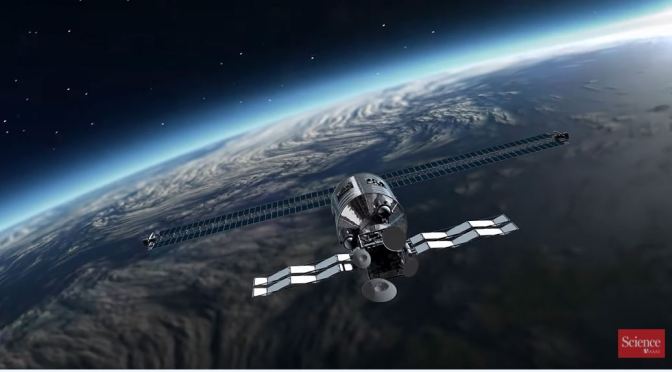
For millennia, bright lights sprinkled across our celestial sphere have guided great explorers, passed on storied traditions, and lent insight into the nature of our universe. Now, they have competition: thousands of satellites circling the globe in low orbit. Read the story: https://www.science.org/content/artic…
The neurons behind acupuncture’s effect on inflammation, and how antibiotics affect gut bacteria.
In this episode:
00:54 The neuronal basis for acupuncture’s effect on inflammation
In mice, electroacupuncture has been shown to reduce inflammation, but only when certain points on the body are stimulated. Why this is has puzzled scientists, but now, researchers have identified the specific neurons that are involved. They hope that this knowledge could be used in future to help treat certain inflammatory-related diseases.
Antibiotics are known to cause damage to the communities of bacteria that live in our guts. To better understand why this happens, a team has mapped the effects that different antibiotics have on individual gut-bacteria species, which may offer new insights into preventing this collateral damage.
We discuss some highlights from the Nature Briefing. This time, the latest species to be declared extinct in the US, and a potential planet that orbits three stars.
Tracing the history of hepatitis B through ancient DNA, how metals and proteins mix to make mussels’ tough adhesive, and a look at efficient, rechargeable magnesium and calcium batteries.
AI weather forecasters, mapping the human brain and the 2021 science Nobel prizes.
In this episode:
00:52 Improving the accuracy of weather forecasts with AI
Short-term rain predictions are a significant challenge for meteorologists. Now, a team of researchers have come up with an artificial-intelligence based system that weather forecasters preferred to other prediction methods.
A group of researchers are undertaking an enormous task: to make a cellular atlas of the entire brain. This week, they publish a suite of papers that has accomplished this feat for one part of the brain — the motor cortex.
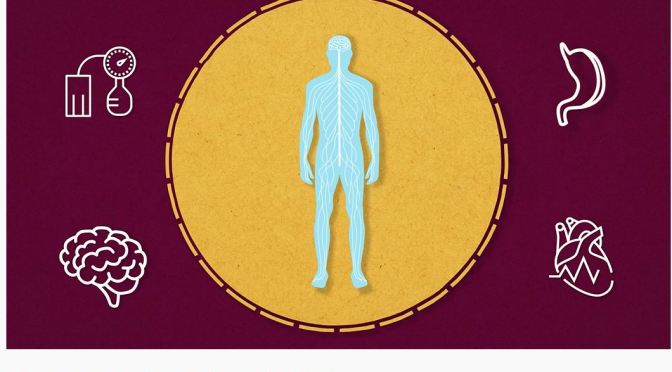
Your brain is keenly aware of what’s going on inside your body at all times. Some things are obvious – like when you feel hungry or thirsty. But some things you never notice – like how blood vessels all over your body simultaneously contract as you stand up, so you don’t lose blood flow to your brain. But how does your brain know when to send the signal to squeeze? It’s all part of concept scientists call interoception – the dialogue between your brain and the rest of your body.
Interoception is involved in everything from keeping us balanced while we walk, to keeping our blood pressure and heart rate steady. It even appears to influence our moods and emotions. And thanks to recent discoveries, we’re learning more about how interoception works. Researchers identified two special channels in neurons that react to touch and named them PIEZO1 and PIEZO2. Since first identifying these pressure sensors, researchers have found PIEZOs in internal organs like the heart, lungs, and blood vessels lining the stomach… suggesting many physiological functions involve mechanical forces that our brain and other parts of our nervous system must monitor and influence. As the study of interoception grows, scientists are hopeful the field could lead to breakthroughs in treating heart disease, controlling blood pressure, relieving anxiety and depression, and treating a number of other disorders. Learn more about Scripps Research at scripps.edu.
Today, most newborns get some biochemical screens of their blood, but whole-genome sequencing is a much more comprehensive look at an infant—maybe too comprehensive?
Staff Writer Jocelyn Kaiser joins host Sarah Crespi to discuss the ethical ins and outs of whole-genome screening for newborns, and the kinds of infrastructure needed to use these screens more widely. Sarah also talks with three contributors to a series of vignettes on the importance of active learning for students in science, technology, engineering, and math. Yuko Munakata, professor in the department of psychology and Center for Mind and Brain at the University of California, Davis, talks about how the amount of unstructured time and active learning contributes to developing executive function—the way our brains keep us on task. Nesra Yannier, special faculty at Carnegie Mellon University and inventor of NoRILLA, discusses an artificial intelligence–driven learning platform that helps children explore and learn about the real world. Finally, Louis Deslauriers, senior preceptor in the department of physics and director of science teaching and learning at Harvard University, laments lectures: why we like them so much, why we think we learn more from lectures than inquiry-based learning, and why we’re wrong.
News, Views and Reviews For The Intellectually Curious


 Intellicurious