
- COVER STORIES

The Casarabe people lived in southwest Amazonia around AD 500–1400, but understanding of this culture has been limited because the archaeological remains are covered in dense forest. In this week’s issue, Heiko Prümers and his colleagues reveal the discovery of new Casarabe settlements in the Bolivian Amazon. The researchers used lidar to scan the forest, revealing 2 large settlements (each covering more than 100 hectares) and 24 smaller sites, 15 of which had previously been known to exist.

The cover image shows Cotoca, one of the two large settlements, in which earthen mounds (one more than 20 metres high) and long causeways can clearly be seen. The team suggests that these results are the first evidence of agrarian-based, low-density urbanism in western Amazonia. They conclude that the region was not as sparsely populated in pre-Hispanic times as was previously thought.
Cover image: Heiko Prümers/DAI.
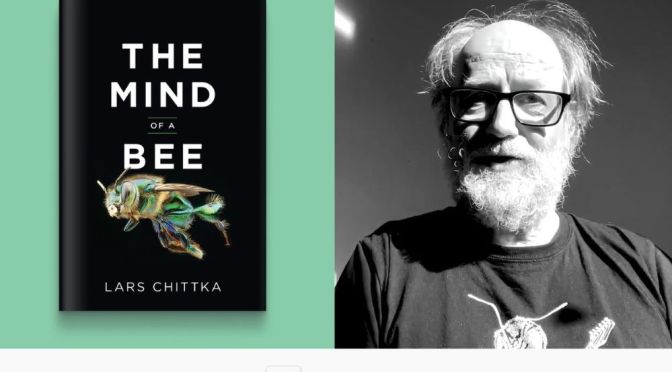
Most of us are aware of the hive mind—the power of bees as an amazing collective. But do we know how uniquely intelligent bees are as individuals? In The Mind of a Bee, Lars Chittka draws from decades of research, including his own pioneering work, to argue that bees have remarkable cognitive abilities.
He shows that they are profoundly smart, have distinct personalities, can recognize flowers and human faces, exhibit basic emotions, count, use simple tools, solve problems, and learn by observing others. They may even possess consciousness. Taking readers deep into the sensory world of bees, Chittka illustrates how bee brains are unparalleled in the animal kingdom in terms of how much sophisticated material is packed into their tiny nervous systems.
He looks at their innate behaviors and the ways their evolution as foragers may have contributed to their keen spatial memory. Chittka also examines the psychological differences between bees and the ethical dilemmas that arise in conservation and laboratory settings because bees feel and think. Throughout, he touches on the fascinating history behind the study of bee behavior. Exploring an insect whose sensory experiences rival those of humans, The Mind of a Bee reveals the singular abilities of some of the world’s most incredible creatures.
Science Magazine – June 3, 2022: A 10th-century Maya structure at Chichen Itza, Mexico, is often called the Observatory for its expansive view of the sky and a design seemingly guided by key positions of the Sun, Moon, and planets. The historic Maya anchored their calendars and rituals to celestial events, and their astronomical knowledge is now coming into sharper focus thanks to new analyses of archaeological relics and insights from today’s Maya.
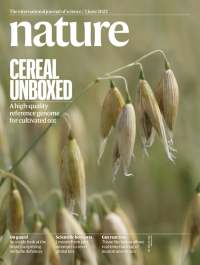
With six sets of chromosomes, the hexaploid cultivated oat (Avena sativa L.) has a complex evolutionary history. In this week’s issue, Nick Sirijovski and his colleagues present a high-quality reference genome for A. sativa alongside those for its close relatives the diploid Avena longiglumis and the tetraploid Avena insularis. By examining the three genomes, the researchers were able to trace genomic reorganizations in the crop’s evolution. They were also able to map the genes for important agronomic traits, highlighting gene families linked to human health and nutrition. With health and sustainability high on global agendas, the team hopes this new resource will bolster genomics-assisted breeding and trait studies to address these challenges and more.
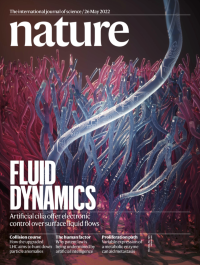
Cilia are characterized by slender, threadlike projections, which are used by biological organisms to control fluid flows at the microscale. Attempts to mimic these structures and engineer cilia-like systems to have broad applications have proved problematic. In this week’s issue, Wei Wang and colleagues present electronically controlled artificial cilia that can be used to create flow patterns in near-surface liquids. The researchers use surface-mounted platinum strips, each about 50 micrometres long, 5 micrometres wide and 10 nanometres thick, and capped on one side with titanium. Applying an oscillating potential with an amplitude of around 1 volt to the cilia drives ions on to and off of the exposed platinum surface. These ions create asymmetric forces that generate a beating pattern that can be used to pump surface liquids in various flow geometries. The cover shows an artist’s impression of the artificial cilia in action.
The sudden surge of monkeypox cases outside Africa has alarmed public health authorities around the world. In Europe and North America it’s the first time community transmission has been recorded among people with no links to west or central Africa. So what is happening?
Ian Sample talks to virologist Oyewale Tomori about why monkeypox is flaring up, whether we should fear it, and what we can learn from countries such as Nigeria and the Democratic Republic of the Congo, which have been tackling this virus for decades.
The puzzle of Palaeospondylus – Over a hundred years ago, archaeologists discovered fossils of the aquatic animal Palaeospondylus. But since then researchers have been unable to place where this animal sits on the tree of life. Now, new analysis of Palaeospondylus’s anatomy might help to solve this mystery.
A strong, silk-based version of mother of pearl, and the parrots that use their heads when climbing.
Research Highlight: Silk imitates mother of pearl for a tough, eco-friendly material
Research Highlight: A ‘forbidden’ body type? These parrots flout the rules
Archaeologists have used LiDAR to uncover evidence of an ancient civilization buried in the Bolivian Amazon. The team’s work suggests that this area was not as sparsely populated in pre-Hispanic times as previously thought.
Research article: Prümers et al.
News and Views: Large-scale early urban settlements in Amazonia
Nature Video: Lost beneath the leaves: Lasers reveal an ancient Amazonian civilisation
We discuss some highlights from the Nature Briefing. This time, the debate surrounding the first transplant of pig kidneys into humans, and the plants grown in lunar soil.
Nature News: First pig kidneys transplanted into people: what scientists think

 Intellicurious