The ousting of Ethiopia’s army from the Tigray region might precipitate far wider conflict—within the country and far beyond its borders. And ahead of the Fourth of July, we find no good films about the holiday.
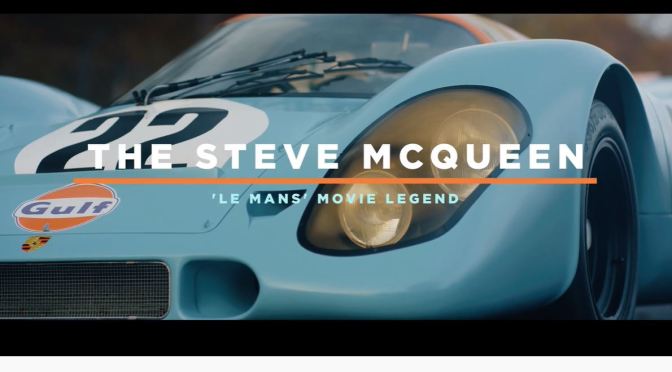
Too often the word ‘iconic’ is applied to a car, but rarely is the term truly justified. In the case of the 1970 Porsche 917K, chassis no. 031/026, the car that contested the 1970 24 Hours of Le Mans in the hands of Hailwood and Hobbs, resplendent in full blue and orange Gulf livery, and a car that featured in much of the original racing footage used in Steve McQueen’s Le Mans movie, the word ‘iconic’ doesn’t really even come close to doing it justice.
RM Sotheby’s is honored to offer this incredibly iconic racing car and ‘Le Mans Legend’ movie star at its flagship Monterey auction on 13-14 August in California. To any automotive or motorsport enthusiast, the Porsche 917 needs no introduction, and it is the car’s early 917K coupe form, that truly ignites the passions of these enthusiasts most strongly.
Commonly regarded as ‘The World’s Greatest Sports Car’, boasting a near-perfect flat-12 cylinder, air-cooled engine that could propel the car to speeds in excess of 230 mph, the Porsche 917 set a standard for design, engineering, and sheer performance that took endurance sports car design to new levels and which proved dominant over three incredible seasons of World Championship racing.
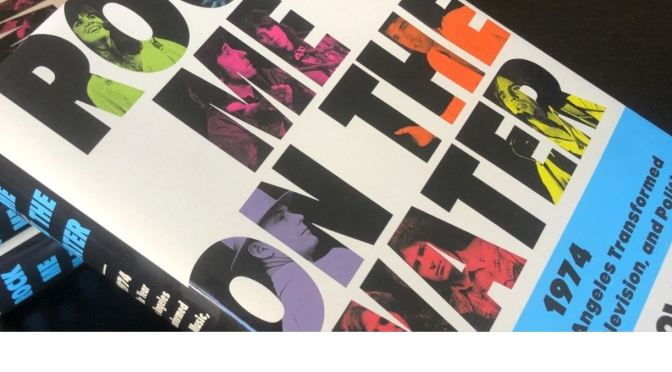
A new book argues the 1970’s was a moment when TV, movies, and music all shifted into a new gear, changing the cultural landscape in ways that continue to today. Jeffrey Brown has a conversation with author Ron Brownstein about his book “Rock Me on the Water: 1974-The Year Los Angeles Transformed Movies, Music, Television, and Politics.” This segment is part of our arts and culture series, CANVAS.
Five stories to know for April 26: Academy Awards 2021, vaccinated Americans to visit Europe, India COVID cases and the sunken Indonesian submarine.
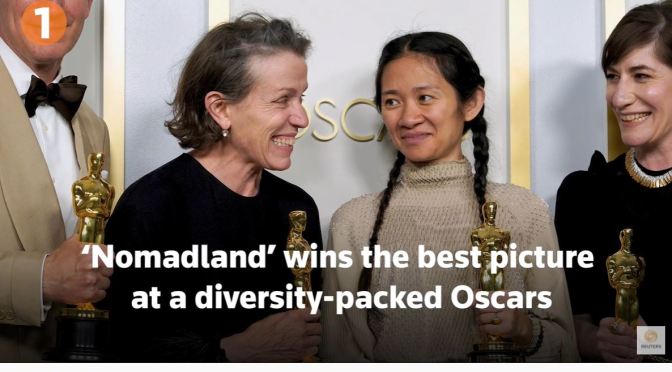
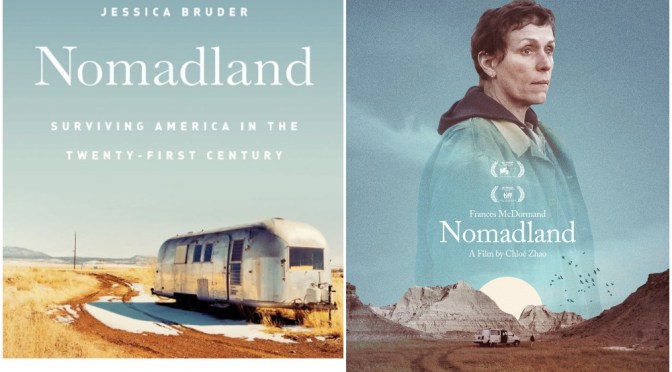
1. ‘Nomadland’ won the Oscar award for best picture and its director Chloe Zhao made history winning the best director. She is the first Asian woman and only the second woman ever to take home the prize. Britain’s Anthony Hopkins won the best actor trophy for his role as a man battling dementia in “The Father.” The Oscar had been widely expected to go to the late Chadwick Boseman for his final film, “Ma Rainey’s Black Bottom.”
2. Following one of the most consequential court cases in recent U.S. history, Hollywood wasted no time in reflecting on the state of race relations and police use of force at the Oscars.
3. Summer travel to Europe could be on the horizon for vaccinated Americans. Ursula von der Leyen said the continent will ease existing travel restrictions.
4. India: COVID-19 cases hit a record for a fifth day, as countries including Britain, Germany and the United States pledged to send urgent medical aid.
5. A missing Indonesian submarine has been found, broken into at least three parts, at the bottom of the Bali Sea.
The latest selection for our “Now Read This” book club, Jessica Bruder’s “Nomadland,” documents a growing phenomenon in the country — a “wandering tribe” of seasonal workers. It has inspired a new movie of the same name. The film was the big winner at the British Academy Film Awards, and has multiple Oscar nominations. Jeffrey Brown has the latest for our ongoing arts and culture series, CANVAS.
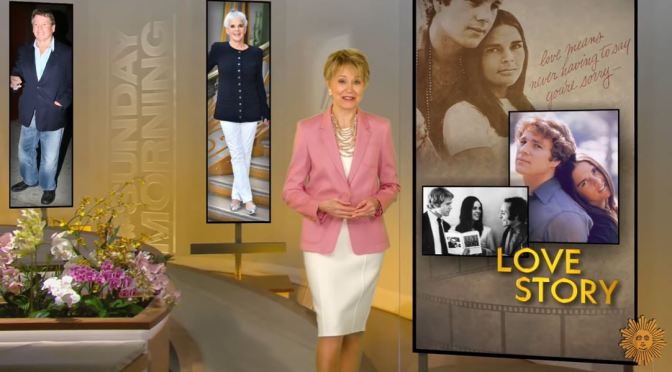
Turner Classic Movies host Ben Mankiewicz interviews the stars of the classic tearjerker, “Love Story,” to talk about the making of an unlikely box office blockbuster, and asks: What does “Love means never having to say you’re sorry” really mean?
Theoretical Physicist, String Theorist and Professor, Brian Greene looks at how time travel is portrayed in popular films. You can get his new book, Until the End of Time, here: https://amzn.to/3pTGyVx
Until the End of Time is Brian Greene’s breathtaking new exploration of the cosmos and our quest to understand it. Greene takes us on a journey across time, from our most refined understanding of the universe’s beginning, to the closest science can take us to the very end. He explores how life and mind emerged from the initial chaos, and how our minds, in coming to understand their own impermanence, seek in different ways to give meaning to experience: in story, myth, religion, creative expression, science, the quest for truth, and our longing for the timeless, or eternal.
Through a series of nested stories that explain distinct but interwoven layers of reality-from the quantum mechanics to consciousness to black holes-Greene provides us with a clearer sense of how we came to be, a finer picture of where we are now, and a firmer understanding of where we are headed. Yet all this understanding, which arose with the emergence of life, will dissolve with its conclusion. Which leaves us with one realisation: during our brief moment in the sun, we are tasked with the charge of finding our own meaning. Let us embark.
The launch of Disney+ has brought a bit of magic to a company whose stock had taken a nosedive after the coronavirus shut down theme parks and movie theaters. WSJ explains how Disney’s streaming platform has become a top competitor in an already crowded field. Photo illustration: Jacob Reynolds/WSJ
The World in 2021 will start to look beyond covid-19: to the launch of an asteroid-smashing space probe, the next step in the fight against climate change and China’s supremacy at the box office. Here are five stories to watch out for.
Video timeline: 00:00 – Top five stories for 2021 00:39 – Democracy under threat 04:17 – The electric revolution revs up 06:55 – A chance to turn a corner on climate change 10:39 – China v Hollywood: battle of the box offices 14:40 – Defending the planet
News, Views and Reviews For The Intellectually Curious