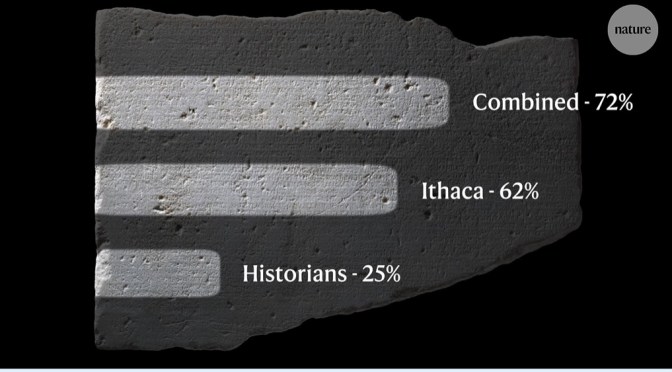
The origins of ancient inscriptions are often shrouded in mystery. Writing carved into stone millennia ago can be hard to read and is often missing entire sections of the text. Now a neural network, trained on thousands of existing inscriptions, could help historians figure out when and where a piece of writing comes from – as well as fill in missing words and characters.
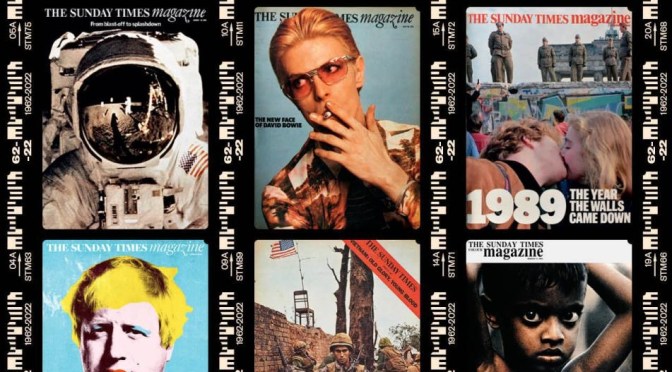
The Sunday Times Magazine, launched on February 4, 1962, was revolutionary — the first colour supplement published by a UK newspaper https://t.co/79wW3FW2G2
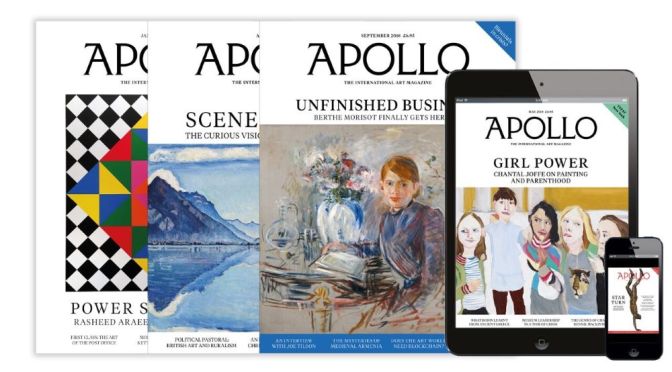
Plus: a touring display of Islamic arts in France, the hellish mining scenes of George Bissell, Madame de Pompadour’s porcelain, and a preview of Asia Week New York
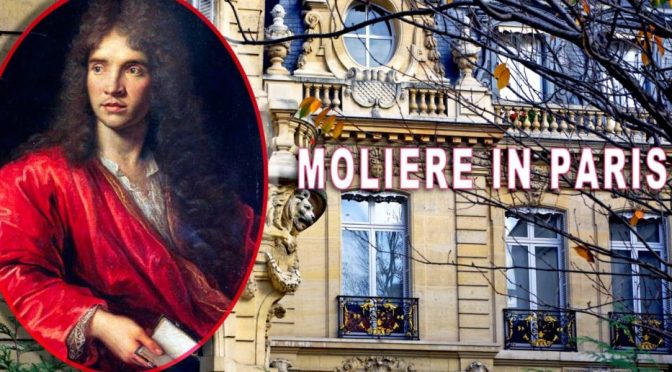
He’s known as the father of French #theatre, but the influence of #Molière goes well beyond France. His impact is still felt today all over the world. To mark the 400th #anniversary of the famed playwright’s birth, we speak to Georges Forestier, professor at the Sorbonne and a specialist in the works of Molière. We also take you on a tour of Molière’s Paris.
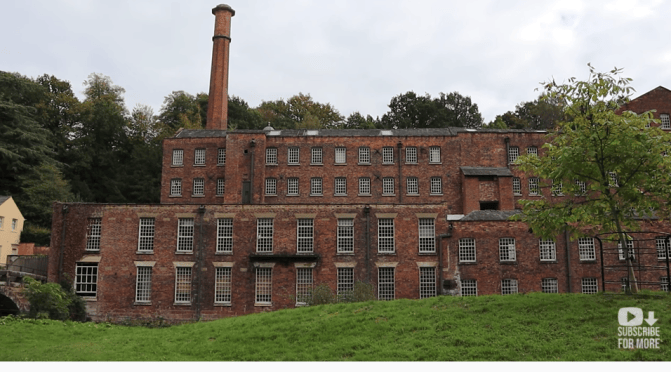
At the beginning of the Industrial Revolution Quarry Bank Mill became one of the most important Cotton Mills in England. Samual Greg embraced the Industrial Revolution to create a powerhouse of the Cotton Milling industry.
180 years after the end of the Industrial Revolution this Cotton Mill is still intact and in full working order. Maintained by the National Trust you can take a day tour of this fascinating Cotton Mill and find out about the Greg family, his workers, including children as young as 8 and the community he created in the village of Styal. You can see the machinery in operation and learn how the fluffy cotton plant is turned into a workable yarn as the volunteers run the machines and show you.
Greg built his family home on the grounds of Quarry Bank Mill, you can view the property or visit the darker side with the apprentice house, home to up to 90 children, working in the mill in return for food and board.
Timeline: 0:00 Intro 1:08 What to see at Quarry Bank 2:01 Cotton Industrial Revolution 2:25 Samual Greg builds Quarry Bank 3:32 The Great Wheel 4:09 Process to make cotton yarn 7:31 Quarry Bank House 10:26 Styal Village 11:53 Apprentice House (Child Labour) 16:44 Steam Power comes to Quarry Bank 19:02 The Gardens
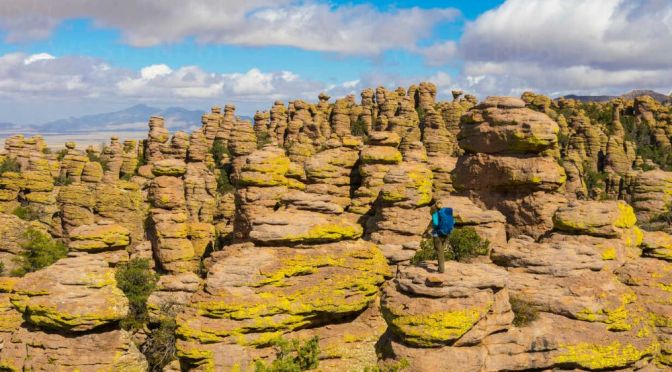
Join ranger Theresa Ferraro as she talks about the history, people, and geology of Chiricahua National Monument—located in one of Arizona’s seven sky islands.
Chiricahua National Monument is a unit of the National Park System located in the Chiricahua Mountains of southeastern Arizona. The monument was established on April 18, 1924, to protect its extensive hoodoos and balancing rocks.
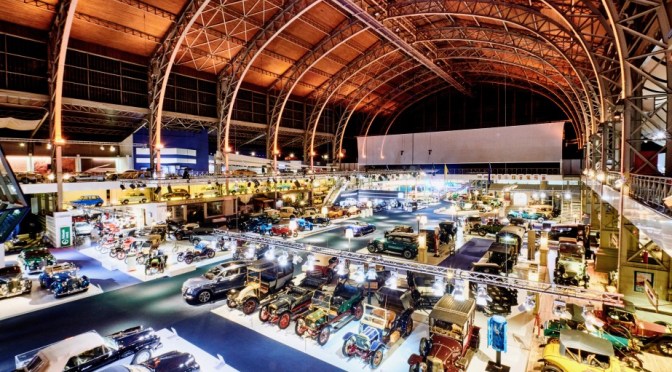
Autoworld, “Treasury of the history of the automobile”
Autoworld is a private museum that rents its buildings from the community. Its passionate and experienced staff are committed to making Autoworld a leading location in both the automobile and events sector, that draws its legitimacy from its rich history.
The Mahy collection Autoworld was built on the extensive and well preserved car collection of the Mahy family, one of the largest in the world. Founder Ghislain Mahy (1907-1999) was a passionate mechanic from a young age and went on to restore dozens of cars throughout his life. Together with his sons Hans and Ivan, he built a collection of about 1000 vehicles, amongst which you can find many Belgian brands such as Minerva, Germain, FN, Imperia, Fondu, Vivinus, Nagant, Belga-Rise and Miesse. When the Autoworld museum was established in 1986, it incorporated 200 automobiles from the Mahy collection. The opening in 1986 While the passion and collection of the Mahy family forms the heart of the museum, it were the dedication and perseverance of late King Albert II, Minister Louis Olivier and Herman De Croo that ensured Autoworld officially came to life in 1986. The majestic esplanade, triumphal arch and colonnades of the Parc du Cinquantenaire proved to be the ideal location for the treasury of the automobile history. The main purpose of Autoworld was and remains to display decades of evolution in technology, comfort, safety and environment.
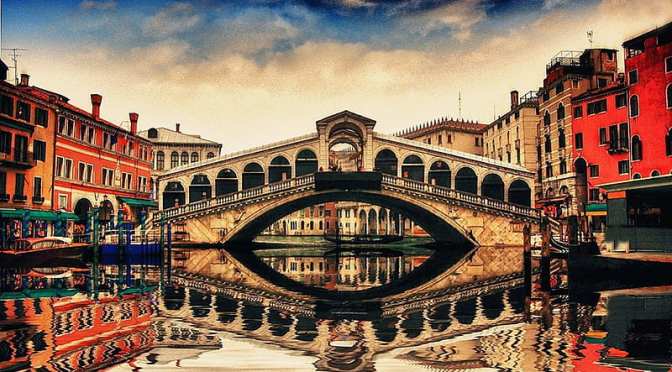
The Rialto bridge is one of the four bridges, together with the Accademia bridge, the Scalzi bridge and the Constitution bridge, that cross the Grand Canal, in the city of Venice. Of the four, the Rialto bridge is the oldest. According to the chronicles, the first passage on the Grand Canal consisted of a bridge of boats.
The growing importance of the Rialto market, on the eastern bank of the canal, increased the traffic on the floating bridge. Around 1250, it was replaced by a wooden bridge. In the first half of the 15th century, two rows of shops were built along the sides of the bridge; the proceeds from the rents, collected by the State Treasury, contributed to the maintenance of the bridge.
In 1310 the bridge was damaged during the retreat of the rioters led by Bajamonte Tiepolo. In 1444, however, it collapsed under the weight of the large crowd gathered to witness the passage of the procession of the bride of the Marquis of Ferrara. In 1503 the construction of a stone bridge was proposed for the first time.
In the following decades, several projects were evaluated. The work was completed in 1591, with the help of the architects Antonio and Tommaso Contin, who were his nephews, as sons of his son-in-law Bernardino Contin.
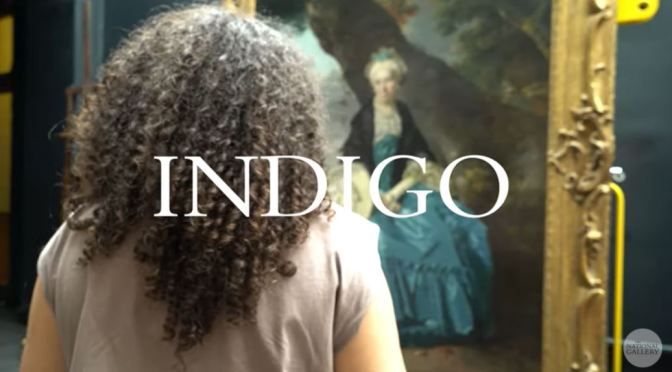
Our Conservation Fellow, Kendall Francis takes a closer look at indigo, a blue dye and pigment extracted from the leaves of plants, and how it is used and represented in paintings in our collection.
Kendall’s research reveals histories that are not explicitly portrayed in the paintings and highlights the important contributions from a wider range of people, including the enslaved people who cultivated the crops and extracted the indigo against their will. Supported using public funding by Arts Council England.
News, Views and Reviews For The Intellectually Curious



 Intellicurious