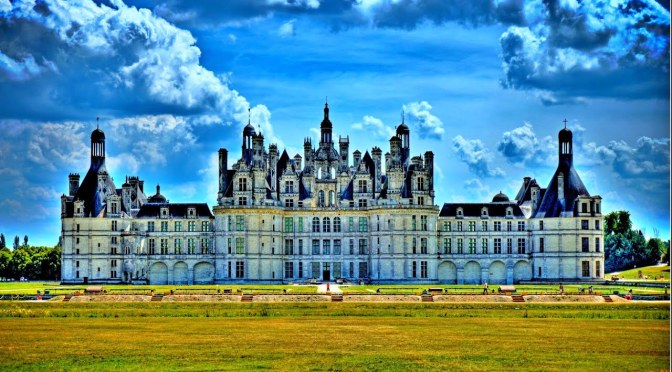
The Château De Chambord in Chambord, the Loire Valley, France, is One of the Most Recognisable Châteaux in the World Because of Its Very Distinctive French Renaissance Architecture Which Blends Traditional French Medieval Forms With Classical Renaissance Structures. Commissioned by King François the First and Imagined by the Great Leonardo Da Vinci, the Chateau De Chambord is the Largest and Most Majestic Castle of the Loire. Much More Than a Castle, Chambord Has Captured the Imagination of Visitors and Architecture Lovers Alike for Centuries. It is a Symbol of the French Renaissance and of the Power of a Passionate Ruler Who Revered the Arts.
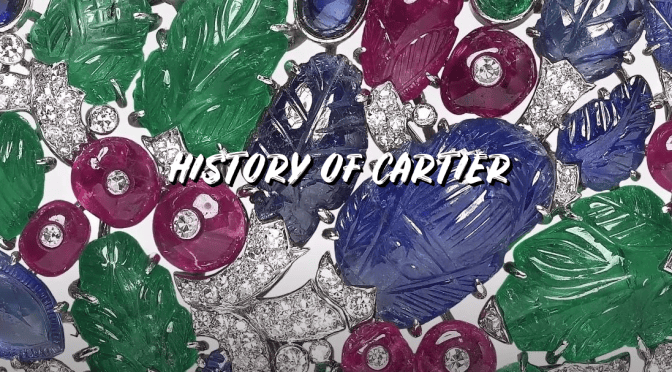
Meet Pascale Lepeu, Curator of the Cartier Collection, and see the incredible trove of historic Cartier jewellery that is held within. From elegant diamond tiaras of the Belle Époque to remarkable Art Deco tutti frutti bracelets and more, discover the enormous influence that Cartier has had on the world of high jewellery. An extract from the Christie’s Education online course, History of Jewellery Design: 1880–Now.
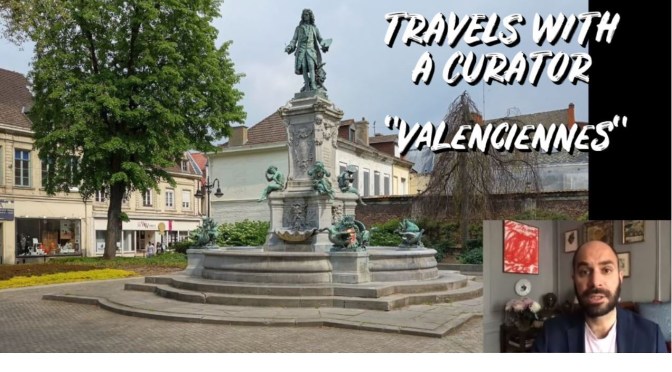
In this week’s episode of “Travels with a Curator,” travel with Xavier F. Salomon, Peter Jay Sharp Chief Curator, to Valenciennes, the birthplace of the Rococo painter Jean-Antoine Watteau. Delve into the historical events surrounding Watteau’s “Portal at Valenciennes” (ca. 1710–11), a scene of soldiers at rest near the ramparts of the town. Known for his depictions of garden frolics, Watteau seldom portrayed military life—“The Portal” is one of only three such paintings that survive today.
Valenciennes is a commune in the Nord department in northern France. It lies on the Scheldt river. Although the city and region experienced a steady population decline between 1975 and 1990, it has since rebounded.
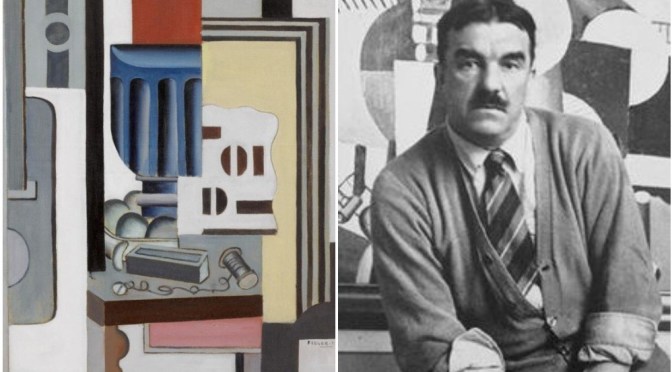
Vice Chairman Lucian Simmons sits down to describe one of his favorite works – Fernand Léger’s Nature Morte. After surviving World War I, Léger joined an influx of artists searching for “purity” or a so-called “return to order.” Executed in 1925, Léger’s still life is an outstanding example of the artist’s classical period, where the artist found a new stride. Nature Morte will be offered as a highlight of the Sotheby’s Impressionist and Modern Evening auction in New York.
…what perhaps absorbed him most was a suite of 10 paintings of one of the weeping willows he had planted on the shores of his pond in 1893, when he had purchased the property to construct his aquatic paradise. The tree had grown in girth and grandeur over the intervening years, its leafy arms now extending out over the dappled waters like an impassioned conductor energizing an orchestra.
The trees in Monet’s water garden are much less known than the flowers, but they were central to his vision of what that ideal space should include and thus dear to his heart. In 1912, when severe winds and rains wreaked havoc on his horticultural handiwork, what Monet mourned most was the damage to his willows.
Weeping willows, of course, evoke mourning by their very appearance no less than by their appellation, their drooping tendrils the very symbol of sorrow. It’s therefore not surprising, given Monet’s sensitivity to his nation’s plight, that he turned to this tree to express the trauma of the moment.
In this week’s episode of “Cocktails with a Curator,” Curator Aimee Ng studies Thomas Gainsborough’s scandalous portrait of Grace Dalrymple Elliott. Discover why this painting met with a negative reception when it was shown at the Royal Academy in 1782. Mrs. Elliott later moved to France, where she lived through the Reign of Terror and died in 1823 in the outskirts of Paris. This week’s complementary cocktail is the Pimm’s Cup, a traditional summer drink in Britain.
Thomas Gainsborough RA FRSA was an English portrait and landscape painter, draughtsman, and printmaker. Along with his rival Sir Joshua Reynolds, he is considered one of the most important British artists of the second half of the 18th century.
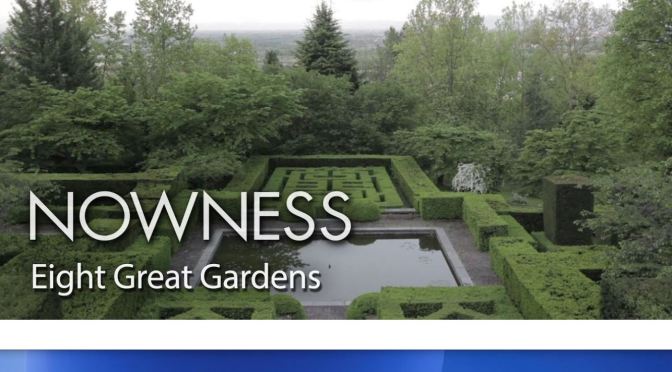
Do you love plants and all things to do with gardens? In our #GreatGardens series, we revisit our top eight episodes which feature the planet’s wildest sub-tropical landscapes and quintessential rural retreats.
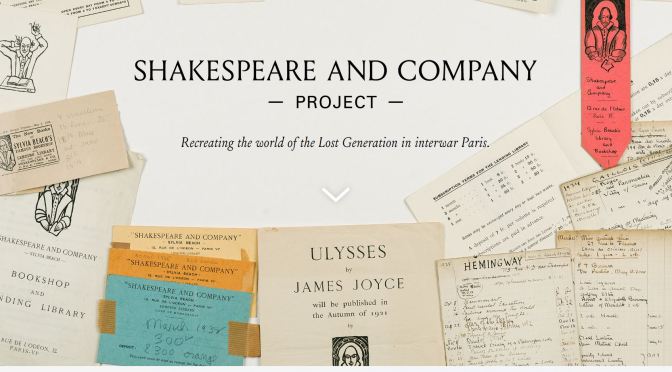
What do these writers have in common? They were all members of the Shakespeare and Company lending library.
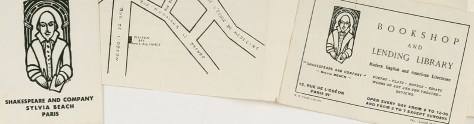
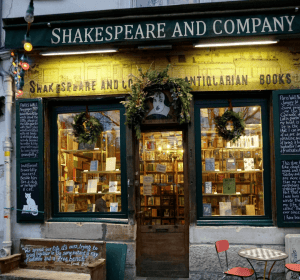
In 1919, an American woman named Sylvia Beach opened Shakespeare and Company, an English-language bookshop and lending library in Paris. Almost immediately, it became the home away from home for a community of expatriate writers and artists now known as the Lost Generation. In 1922, she published James Joyce’s Ulysses under the Shakespeare and Company imprint, a feat that made her—and her bookshop and lending library—famous around the world. In the 1930s, she increasingly catered to French intellectuals, supplying English-language publications from the recently rediscovered Moby Dick to the latest issues of The New Yorker. In 1941, she preemptively closed Shakespeare and Company after refusing to sell her last copy of Joyce’s Finnegans Wake to a Nazi officer.
The Shakespeare and Company Project uses sources from the Beach Papers at Princeton University to reveal what the lending library members read and where they lived. The Project is a work-in-progress, but you can begin to explore now. Search and browse the lending library members and books. Read about joining the lending library. Download a preliminary export of Project data. In the coming months, check back for new features and essays.
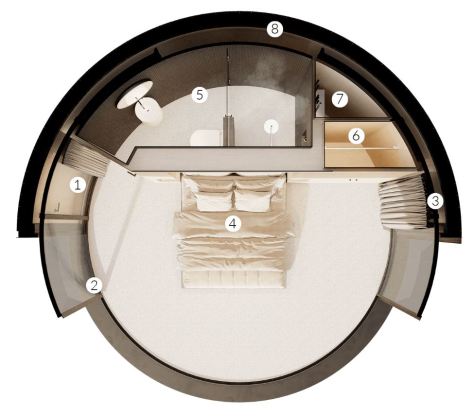
LUMIPOD is built around a LUMICENE® window. This new concept uses curved glass in aluminium frames sliding between two rails, allowing the interior space to be occasionally transformed into an outdoor space.
.
1. Curved entry door
2. Lumicene curved reversible window
3. Curtains
4. 14m² bedroom with panoramic view!
5. Bathroom and toilets
6. Wardrobe
7. Technical room
8. Curved wood-frame walls
Closed, LUMIPOD is a comfortable cocoon but fully immersed in Nature.
In a single gesture, LUMIPOD eliminates the boundary between interior and exterior for an unforgetable experience.
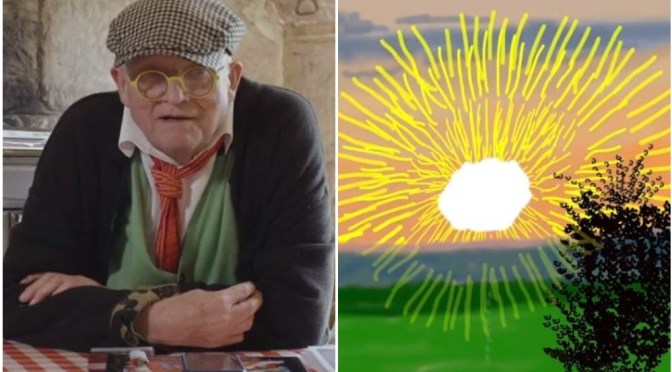
In this short and uplifting video, the influential British painter David Hockney talks about looking and painting for more than 60 years – and shares a story that made him reflect on our time.
“The world is very, very beautiful if you look at it. But most people don’t look very much. They scan the ground in front of them so they can walk, but they don’t really look at things incredibly well, with intensity. I do, and I’ve always known that.” In March 2020, Hockney sent out his iPad drawing ‘Do Remember They Can’t Cancel the Spring’ (2020) in response to the coronavirus outbreak. In this video, he shares the story of how a philosopher on a news program was asked how he could be optimistic with the current news: “And he said: Well, that’s television. Bad news sells.” The reporter then inquired what the good news was, to which the philosopher responded: “Well, the arrival of spring,” Hockney continues laughing.
In the video, you also get to experience the world premiere of an animation technique, which Hockney himself calls “time-based brush painting.”
David Hockney (b.1937) is a British painter, printmaker, photographer and stage designer, who is considered among the most influential and versatile British artists of the 20th century. Hockney is a notable contributor to the pop art movement in Britain, both in its foundation and growth, beginning with his participation in an annual exhibition called ‘Young Contemporaries’ in 1960, which also marked the start of his recognition in the art world. Hockney is the recipient of several prestigious awards including the Praemium Imperiale for Painting (1989), and the Lifetime of Artistic Excellence Award (Pratt Institute) in 2018.
His work can be found in numerous collections worldwide, including National Gallery of Australia in Canberra, National Portrait Gallery and Tate Gallery in London, Museum of Modern Art and Metropolitan Museum of Art in New York, Centre Pompidou in Paris, De Young Museum in San Francisco, Louisiana Museum of Modern Art in Humlebæk, and Museum of Contemporary Art in Tokyo.
David Hockney was interviewed by Marc-Christoph Wagner at his home in France in March 2019.
Many thanks to David Hockney for providing the works and the animation shown in the video. Camera: Jakob Solbakken Edited by Roxanne Bagheshirin Lærkesen Produced by Marc-Christoph Wagner Copyright: Louisiana Channel, Louisiana Museum of Modern Art, 2020 Supported by Nordea-fonden
News, Views and Reviews For The Intellectually Curious

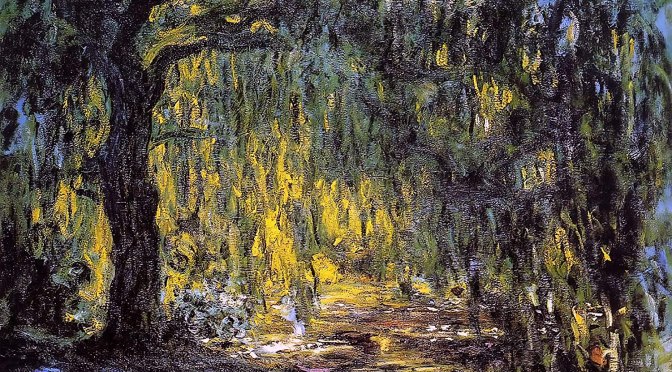
 …what perhaps absorbed him most was a suite of 10 paintings of one of the weeping willows he had planted on the shores of his pond in 1893, when he had purchased the property to construct his aquatic paradise. The tree had grown in girth and grandeur over the intervening years, its leafy arms now extending out over the dappled waters like an impassioned conductor energizing an orchestra.
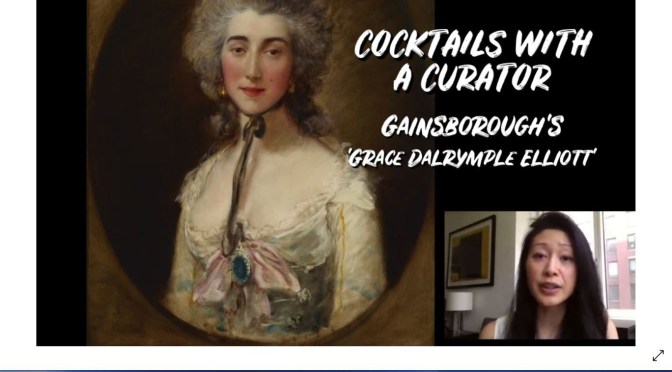
 In this week’s episode of “Cocktails with a Curator,” Curator Aimee Ng studies Thomas Gainsborough’s scandalous portrait of Grace Dalrymple Elliott. Discover why this painting met with a negative reception when it was shown at the Royal Academy in 1782. Mrs. Elliott later moved to France, where she lived through the Reign of Terror and died in 1823 in the outskirts of Paris. This week’s complementary cocktail is the Pimm’s Cup, a traditional summer drink in Britain.
 Gertrude Stein