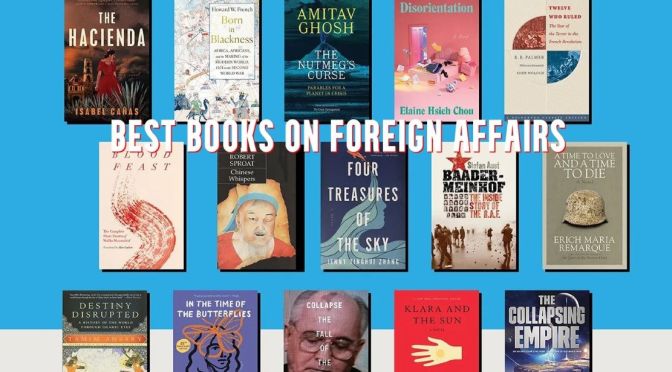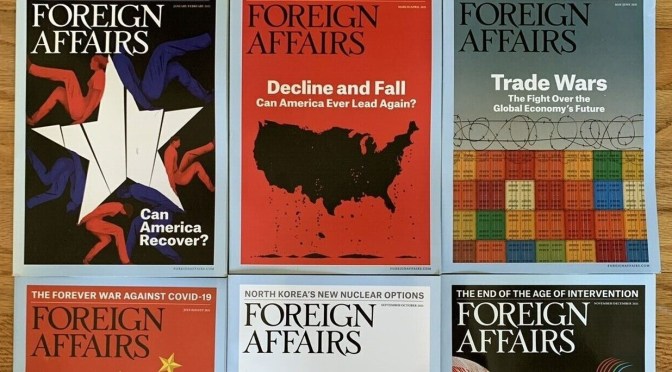

FOREIGN AFFAIRS MAGAZINE (February 25, 2025): The latest issue features ‘The Center Will Not Hold’ – How an Order Ends…

FOREIGN AFFAIRS MAGAZINE (February 25, 2025): The latest issue features ‘The Center Will Not Hold’ – How an Order Ends…

FOREIGN AFFAIRS MAGAZINE (February 5, 2025): Today, about 20 percent of southeastern Ukraine is under Russian occupation, including Crimea and large parts of the Donetsk, Luhansk, Kherson, and Zaporizhzhia regions. Russian President Vladimir Putin has painted the war in Ukraine as a nationalist campaign to repel Western advances and reclaim territory that, in his view, rightfully belongs to Russia. But conquest has another motivation: economic gain. If Russia maintains military control over these regions, it may be hoping to reap that benefit. At this stage, however, it is hardly clear that they would become economic assets for Moscow; supporting the war-torn territories could just as easily become a drain on its coffers.
The human costs of this war are enormous. Russian forces are ruling occupied Ukraine with an iron fist, engaging in a ruthless campaign of torture, kidnapping, violence, and arbitrary killing. Any assessment of the war’s economic consequences should not minimize its awful depravity or the immense suffering it has inflicted. But its economic outcome will affect future judgments of Putin’s decision to invade in February 2022. If Russia benefits economically from the occupation of Ukraine, the war may be remembered as a strategic success, albeit a coldblooded one. If Russia instead suffers economically, the invasion will be seen as a self-defeating, barbaric blunder.

FOREIGN AFFAIRS MAGAZINE (February 3, 2025): Donald Trump begins his presidency with ambitions of being a peacemaker. He laid out this vision in his inaugural address, declaring that his administration “will measure our success not only by the battles we win but also by the wars we end, and perhaps most importantly, by the wars we never get into.” Later that day, he basked in the success of the hostage cease-fire deal in Gaza, including by bringing the families of Israeli hostages to the inaugural parade. “We’re getting a lot of people out in a short period of time,” he proclaimed.
There is no doubt that Trump helped secure the cease-fire deal. But to be a peacemaker who transforms the Middle East, he has more work to do. The main issues he confronts are Gaza and Iran. In Gaza, Israel and Hamas have different views of what is required to achieve the second phase of the deal, which would save the remaining hostages and produce a permanent cease-fire. Iran, meanwhile, is accelerating its nuclear program—with its “foot on the gas pedal” according to Rafael Grossi, the head of the International Atomic Energy Agency. Tehran thus continues to existentially threaten Israel. Both issues are likely to dominate upcoming talks between Trump and Israeli Prime Minister Benjamin Netanyahu at the White House.
DAVID MAKOVSKY is the Director of the Program on Arab-Israel Relations at the Washington Institute of Near East Policy and an Adjunct Professor of Middle East Studies at Johns Hopkins University School of Advanced International Studies. He served as a Senior Adviser to the special envoy of Israeli-Palestinian negotiations in the Office of the Secretary of State during the Obama administration.
DENNIS ROSS is Counselor at the Washington Institute for Near East Policy and a Professor at Georgetown University. A former U.S. Envoy to the Middle East, he served in senior national security positions in the Reagan, George H. W. Bush, Clinton, and Obama administrations.
Share &
Download
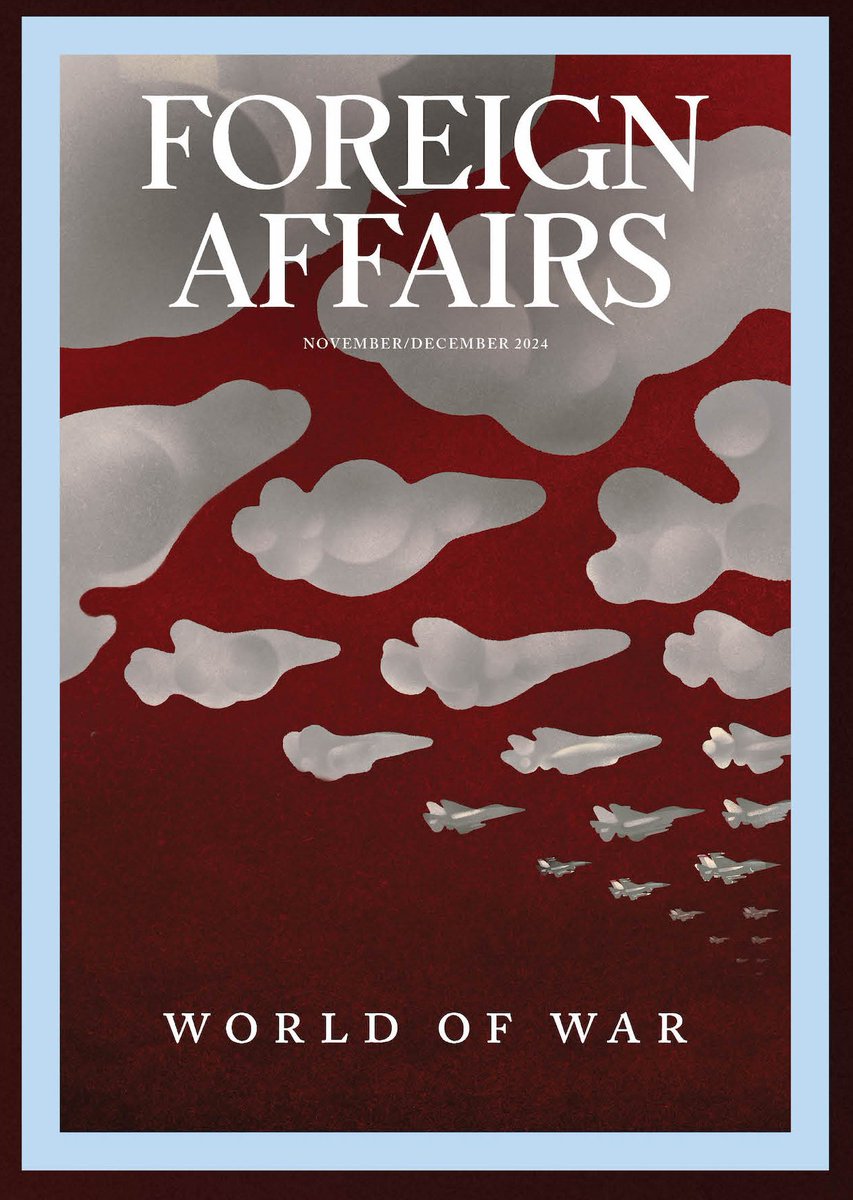

Understanding—and Preparing for—a New Era of Comprehensive Conflict
By Mara Karlin
Managing Risk in the Face of Escalation

The World Still Needs America—and America Still Needs the World by Condoleezza Rice
And They’re Already Here by Mark A. Milley and Eric Schmidt

Biden and the Search for a New American Strategy
“America is back.” In the early days of his presidency, Joe Biden repeated those words as a starting point for his foreign policy. The phrase offered a bumper-sticker slogan to pivot away from Donald Trump’s chaotic leadership. It also suggested that the United States could reclaim its self-conception as a virtuous hegemon, that it could make the rules-based international order great again. Yet even though a return to competent normalcy was in order, the Biden administration’s mindset of restoration has occasionally struggled against the currents of our disordered times. An updated conception of U.S. leadership—one tailored
Making the Case for Trump’s Foreign Policy
Si vis pacem, para bellum is a Latin phrase that emerged in the fourth century that means “If you want peace, prepare for war.” The concept’s origin dates back even further, to the second-century Roman emperor Hadrian, to whom is attributed the axiom, “Peace through strength—or, failing that, peace through threat.”
And China Is Reaping the Benefits

And What America Should Learn From It
By now, Chinese President Xi Jinping’s ambition to remake the world is undeniable. He wants to dissolve Washington’s network of alliances and purge what he dismisses as “Western” values from international bodies. He wants to knock the U.S. dollar off its pedestal and eliminate Washington’s chokehold over critical technology. In his new multipolar order, global institutions and norms will be underpinned by Chinese notions of common security and economic development, Chinese values of state-determined political rights, and Chinese technology. China will no longer have to fight for leadership. Its centrality will be guaranteed.
America’s Competition With China Must Be Won, Not Managed


by Tara Zahra
In a timely and thought-provoking book, Zahra delves into the tumultuous years between World War I and World War II to argue that it was resistance to globalism and globalization that ended up weakening Europe’s then-fragile democracies, eventually contributing to the continent’s slide into dictatorship. READ THE REVIEW

by Gary Bass
Bass’s magnificent book, an account of the post–World War II Tokyo war-crimes trial, encourages a deeper understanding of the Asian experience of war and occupation. His work also sheds light on an enduring debate about liberalism and international politics, showing how the trial played formative roles both in postwar Asian politics and in the making of the postwar global human rights regime. READ THE REVIEW

by Martin Wolf
In a sophisticated and expansive account, Wolf, a veteran economics commentator, suggests that the root cause of today’s political and economic malaise lies in the breakdown of the relationship between capitalism and liberal democracy—and the failure of institutions to counter poverty and marginalization. READ THE REVIEW
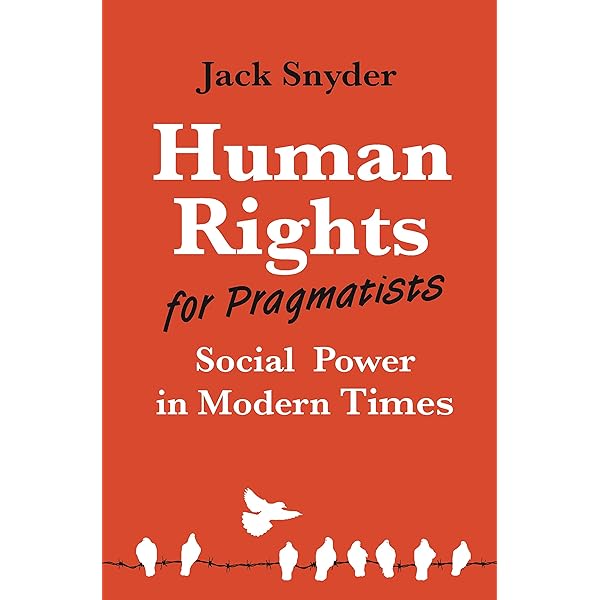
by Jack Snyder
In this masterful work, Snyder offers a bold explanation for why, how, and when societies make progress in expanding political rights and freedoms, arguing that breakthroughs occur when human rights serve the interests of a country’s dominant political coalition .READ THE REVIEW

by Peter Trubowitz and Brian Burgoon
Trubowitz and Burgoon argue in this groundbreaking study that the current backlash against the Western-led liberal international order can be traced to the 1990s, when the United States and European governments encouraged globalization at the expense of social and economic protections at home. READ THE REVIEW

by Charles S. Maier
Moving beyond the standard account of the twentieth century as an epic struggle between democracy and autocracy, Maier examines how a wide range of actors tried to harness industrial modernity in the pursuit of power and material interests, weaving an alternative narrative about the explosive interplay of economic privilege and political grievance. READ THE REVIEW
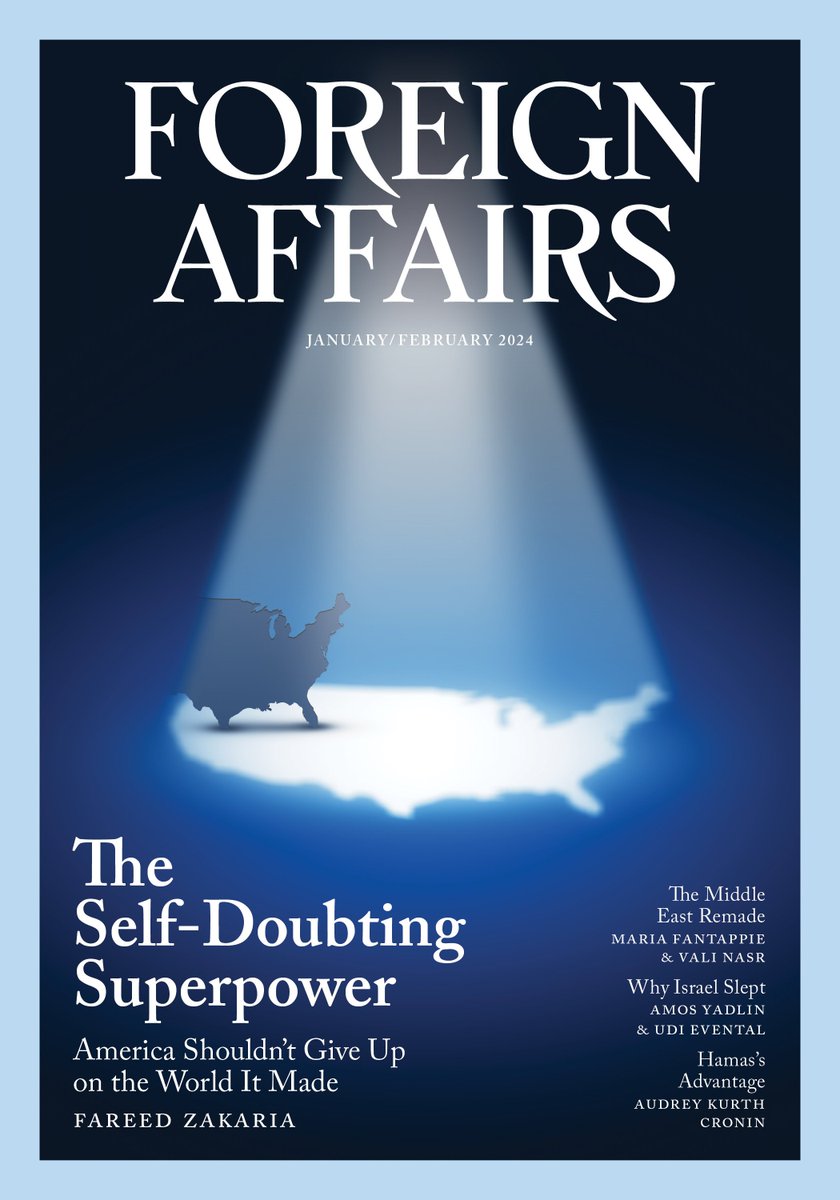
America Shouldn’t Give Up on the World It Made
Most Americans think their country is in decline. In 2018, when the Pew Research Center asked Americans how they felt their country would perform in 2050, 54 percent of respondents agreed that the U.S. economy would be weaker. An even larger number, 60 percent, agreed that the United States would be less important in the world. This should not be surprising; the political atmosphere has been pervaded for some time by a sense that the country is headed in the wrong direction. According to a long-running Gallup poll, the share of Americans who are “satisfied” with the way things are going has not crossed 50 percent in 20 years. It currently stands at 20 percent.
The War in Gaza and the Search for Security
By Amos Yadlin and Udi Evental
In a barbaric surprise attack launched by Hamas on October 7, more Jews were slaughtered than on any day since the Holocaust. Thousands of elite Hamas militants from the Gaza Strip infiltrated small communities and cities in southern Israel, where they proceeded to commit sadistic, repulsive crimes against humanity, filming their vile deeds and boasting about them to friends and family back home.
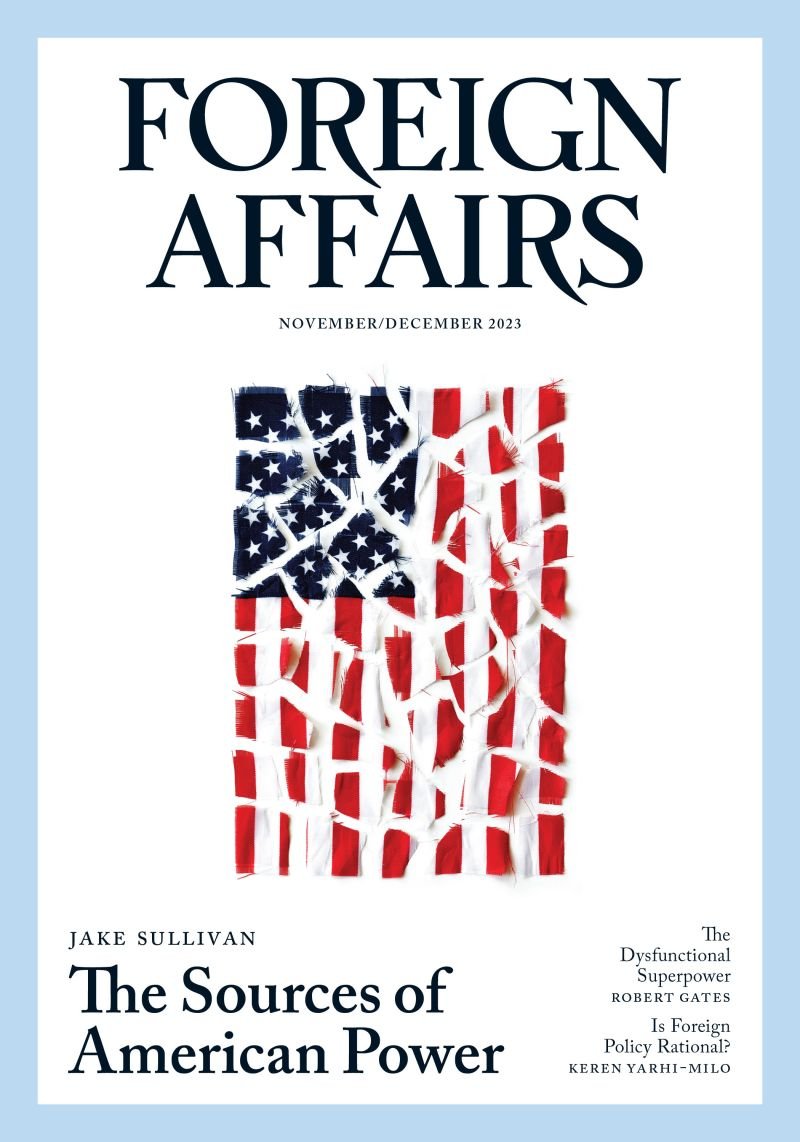
A Foreign Policy for a Changed World
Nothing in world politics is inevitable. The underlying elements of national power, such as demography, geography, and natural resources, matter, but history shows that these are not enough to determine which countries will shape the future. It is the strategic decisions countries make that matter most—how they organize themselves internally, what they invest in, whom they choose to align with and who wants to align with them, which wars they fight, which they deter, and which they avoid.
Can a Divided America Deter China and Russia?
The United States now confronts graver threats to its security than it has in decades, perhaps ever. Never before has it faced four allied antagonists at the same time—Russia, China, North Korea, and Iran—whose collective nuclear arsenal could within a few years be nearly double the size of its own. Not since the Korean War has the United States had to contend with powerful military rivals in both Europe and Asia. And no one alive can remember a time when an adversary had as much economic, scientific, technological, and military power as China does today.