Although our galleries are temporarily closed we wanted to share the Andy Warhol exhibition at Tate Modern with you. Join Tate curators Gregor Muir and Fiontán Moran as they discuss Warhol through the lens of the immigrant story, his LGBTQI identity and concerns with death and religion.
Meet the man behind the brand. It’s a Warhol you might not know, with some artworks you may not have seen before.
Octavian Report “Rostrum” spoke with him about a major theme in Shakespeare’s work and life: disease. Specifically, pandemic plagues, which ravaged London repeatedly throughout Shakespeare’s career, shuttering the theaters, and which appear (obliquely and otherwise) in some of his greatest plays.
The latest episode of the Rostrum’s coronavirus series features James Shapiro, the Larry Miller professor of English and comparative literature at Columbia University, and a leading expert on Shakespeare. Shapiro has published widely on this subject, most recently Shakespeare in a Divided America. He is also an advisor to the Royal Shakespeare Company and to the Public Theater.
James S. Shapiro (born 1955) is Professor of English and Comparative Literature at Columbia University who specialises in Shakespeare and the Early Modern period. Shapiro has served on the faculty at Columbia University since 1985, teaching Shakespeare and other topics, and he has published widely on Shakespeare and Elizabethan culture.
Miller’s Penguin book covers and ironic titles catch the art world’s eye
These covers are closer to still life studies, rather than two-dimensional posters. Experimenting with different paper sizes and angles, he occasionally shows their spines, and the shadows they cast. It is a celebration of books as treasured objects. His drawings – in particular his studies for his large-scale oil paintings with their notes scribbled down the margins – are some of his most intimate works to date.
The ensuing images are humorous, sardonic and nostalgic at the same time, while the painting style hints at the dog-eared, scuffed covers of the Penguin classics themselves.
Starting with Jay Jopling in 1996, when Miller exhibited in a group show at London’s Institute of Contemporary Art, his works have garnered many a famous fan. Amongst which are AC/DC’s guitarist Angus Young, David Bailey, and Elton John – whose work amusingly, if a little painfully, bears the title ‘International Lonely Guy.’
George Michael, with his Harland Miller piece ‘Incurable Romantic Seeks Dirty Filthy Whore‘ commanded £237,500 in the posthumous auction of his art collection last year.
Sarah Watkinson is Wytham Woods’ first poet in residence. She leads us through a delicate maze of woodland and words, weaving together nature, research and poetry. In their work, scientists are objective: they don’t express opinions, they don’t talk about themselves. Poetry would seem science’s diametrical opposite: it’s traditionally inward-looking and self-reflective. Sarah’s writing combines her scientific background and her love for form and words in the most delicate and unexpected way: observing the world, for her, is a form of poetry.
As you will see from my portfolio, travel plays a huge part in my image-making. I visited nine countries in 2017 alone, and close to twenty since my journey into architectural photography began. I have always been fascinated by different cultures, foods, textures and colours. It is this love for travel, combined with my deep passion for photography, that keeps me motivated and dedicated to putting in the long lonely hours of research and logistical planning to then get out with the camera time and time again.
I hail from the fine city of Norwich in the United Kingdom, having spent the best part of thirty years growing up there it was a place I always returned to after travelling. Since January 2019 I have taken to the road full-time to undertake a nomadic lifestyle with my girlfriend Jade as we strive to grow a better photography and adventure tour business.
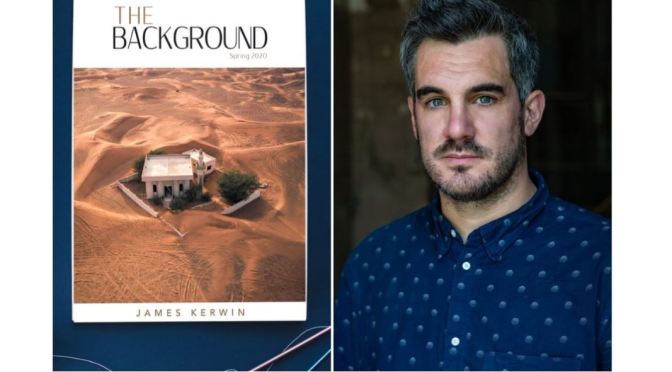
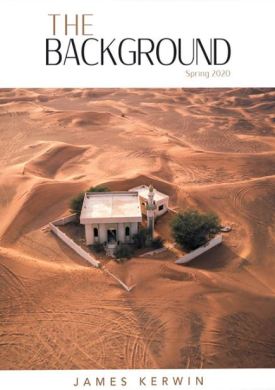
THE BACKGROUND MAGAZINE
PRODUCED THREE TIMES A YEAR, “THE BACKGROUND” IS A DIGITAL AND PREMIUM PRINT MAGAZINE THAT IS WRITTEN AND PRODUCED BY MYSELF, JAMES KERWIN. THE FIRST EDITION CONTAINS 100 PAGES AND HAS TAKEN HOURS OF THOUGHT. THE UNIQUE MAGAZINE IS PACKED FULL OF IMAGERY, TRAVEL HACKS AND TIPS AS WELL AS ADVICE ON WHERE TO PHOTOGRAPH, THINGS TO SEE AND HISTORICAL INFORMATION RELATING TO MY INTERIOR AND ABANDONED ARCHITECTURE LOCATIONS. THINK OF THIS MAGAZINE AS A TYPE OF MEMOIRS OF MY LAST FOUR MONTHS OF NOMADIC TRAVEL PHOTOGRAPHY.
From an Apollo Magazine online interview (Feb 22, 2020):
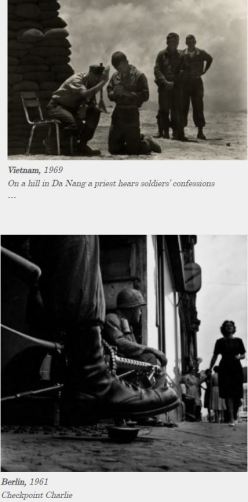
McCullin is reluctant to place himself in the company of artists, partly because he never wants to feel that he’s ‘arrived’ – ‘The moment that happens, I know I’m finished’ – but also because of the nature of his material. ‘There’s a shadow that comes over my life when I think […] that I’ve earned my reputation out of other people’s downfall. I’ve photographed dead people and I’ve photographed dying people, and people looking at me who are about to be murdered in alleyways. So I carry the guilt of survival, the shame of not being able to help dying people.’
On top of a hill a few miles from Don McCullin’s house in Somerset is a dew pond, a perfectly circular artificial pond for watering livestock. Nobody knows how long it has been there; some dew ponds date back to prehistoric times, and it’s tempting to think that this one served the Bronze Age hill-fort that overlooks the site. McCullin is obsessed with the pond. For more than 30 years, whenever he has had the time, he has walked up the hill and stood there with his camera waiting for the right moment to take a photograph. Often, the moment never comes: he can spend hours there, just looking. ‘It’s as if it has a hold over me,’ he tells me when I visit him at home in early January. ‘I can’t leave it alone, I photograph it all the time. And yet I think I’ve done my best picture the first time I ever did it. I can’t tell you how.’
The plan was simple: he would embark on a journey through his life in food in pursuit of the meal to end all meals. It’s a quest that takes him from necking oysters on the Louisiana shoreline to forking away the finest French pastries in Tokyo, and from his earliest memories of snails in garlic butter, through multiple pig-based banquets, to the unforgettable final meal itself.
This question has long troubled Jay Rayner. As a man more obsessed with his lunch than is strictly necessary, the idea of a showpiece last supper is a tantalizing prospect. But wouldn’t knowledge of your imminent demise ruin your appetite? So, Jay decided to cheat death.
Jay Rayner’s Last Supper is both a hugely entertaining account of a life built around mealtimes and a fascinating global exploration of our relationship with what we eat. It is the story of one hungry man, in eight courses.
Excerpts from a New York Times article (Feb 28, 2020):
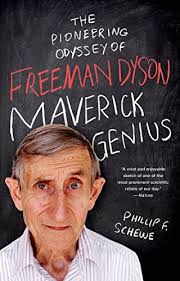
“Life begins at 55, the age at which I published my first book,” he wrote in “From Eros to Gaia,” one of the collections of his writings that appeared while he was a professor of physics at the Institute for Advanced Study — an august position for someone who finished school without a Ph.D. The lack of a doctorate was a badge of honor, he said. With his slew of honorary degrees and a fellowship in the Royal Society, people called him Dr. Dyson anyway.
Freeman J. Dyson, a mathematical prodigy who left his mark on subatomic physics before turning to messier subjects like Earth’s environmental future and the morality of war, died on Friday at a hospital near Princeton, N.J. He was 96.
As a young graduate student at Cornell University in 1949, Dr. Dyson wrote a landmark paper — worthy, some colleagues thought, of a Nobel Prize — that deepened the understanding of how light interacts with matter to produce the palpable world. The theory the paper advanced, called quantum electrodynamics, or QED, ranks among the great achievements of modern science.
“Drive-thru” coronavirus testing is to be introduced on the NHS – with suspected cases swabbed in their own cars.
The new scheme is part of efforts to relieve pressure on ambulance and hospital services, amid concern they could soon be overwhelmed by the number of tests they are carrying out.
News, Views and Reviews For The Intellectually Curious


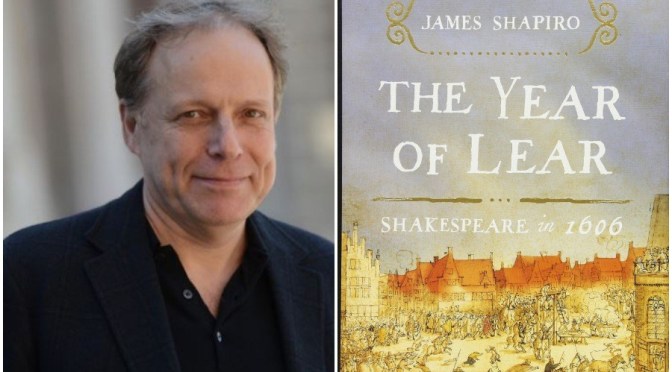
 Octavian Report “Rostrum” spoke with him about a major theme in Shakespeare’s work and life: disease. Specifically, pandemic plagues, which ravaged London repeatedly throughout Shakespeare’s career, shuttering the theaters, and which appear (obliquely and otherwise) in some of his greatest plays.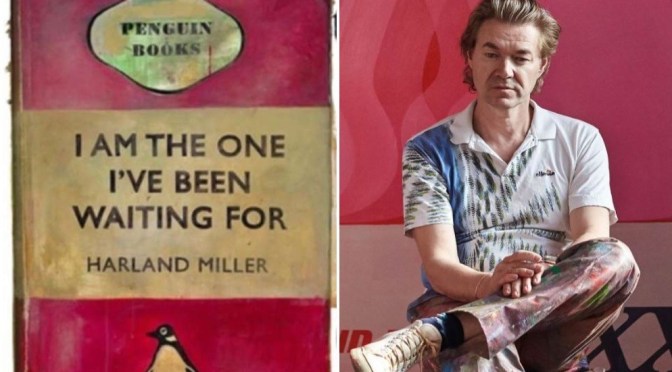
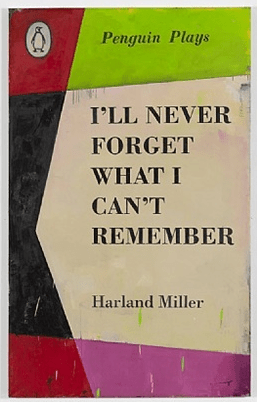 Miller’s Penguin book covers and ironic titles catch the art world’s eye

 As you will see from my portfolio, travel plays a huge part in my image-making. I visited nine countries in 2017 alone, and close to twenty since my journey into architectural photography began. I have always been fascinated by different cultures, foods, textures and colours. It is this love for travel, combined with my deep passion for photography, that keeps me motivated and dedicated to putting in the long lonely hours of research and logistical planning to then get out with the camera time and time again.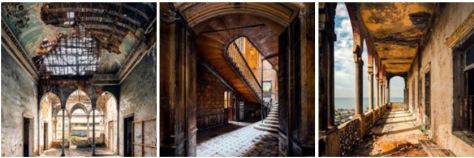
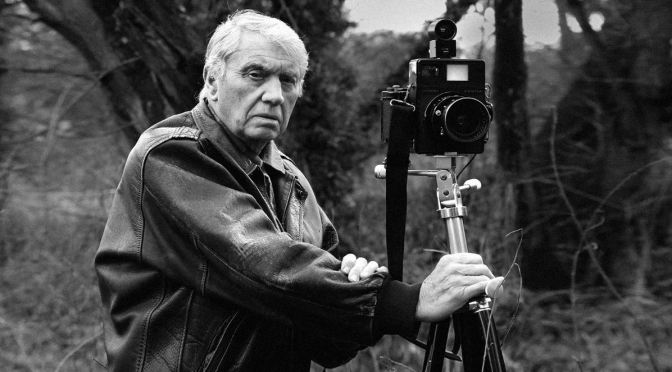
 comes over my life when I think […] that I’ve earned my reputation out of other people’s downfall. I’ve photographed dead people and I’ve photographed dying people, and people looking at me who are about to be murdered in alleyways. So I carry the guilt of survival, the shame of not being able to help dying people.’
  On top of a hill a few miles from Don McCullin’s house in Somerset is a dew pond, a perfectly circular artificial pond for watering livestock. Nobody knows how long it has been there; some dew ponds date back to prehistoric times, and it’s tempting to think that this one served the Bronze Age hill-fort that overlooks the site. McCullin is obsessed with the pond. For more than 30 years, whenever he has had the time, he has walked up the hill and stood there with his camera waiting for the right moment to take a photograph. Often, the moment never comes: he can spend hours there, just looking. ‘It’s as if it has a hold over me,’ he tells me when I visit him at home in early January. ‘I can’t leave it alone, I photograph it all the time. And yet I think I’ve done my best picture the first time I ever did it. I can’t tell you how.’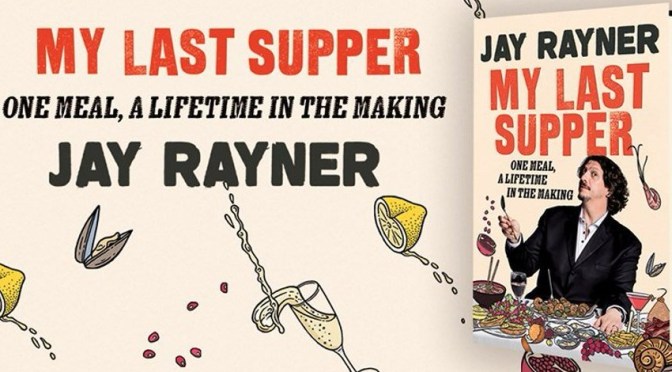
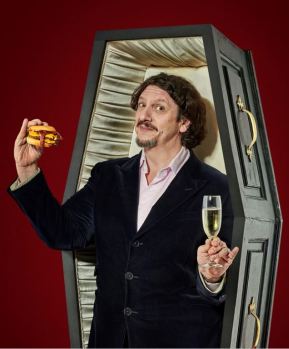 The plan was simple: he would embark on a journey through his life in food in pursuit of the meal to end all meals. It’s a quest that takes him from necking oysters on the Louisiana shoreline to forking away the finest French pastries in Tokyo, and from his earliest memories of snails in garlic butter, through multiple pig-based banquets, to the unforgettable final meal itself.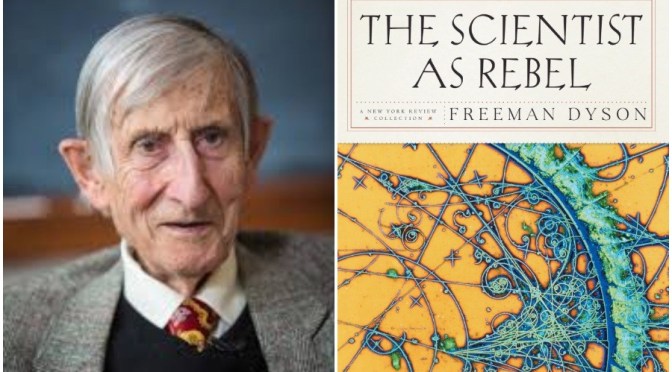
 “Life begins at 55, the age at which I published my first book,” he wrote in “From Eros to Gaia,” one of the collections of his writings that appeared while he was a professor of physics at the Institute for Advanced Study — an august position for someone who finished school without a Ph.D. The lack of a doctorate was a badge of honor, he said. With his slew of honorary degrees and a fellowship in the Royal Society, people called him Dr. Dyson anyway.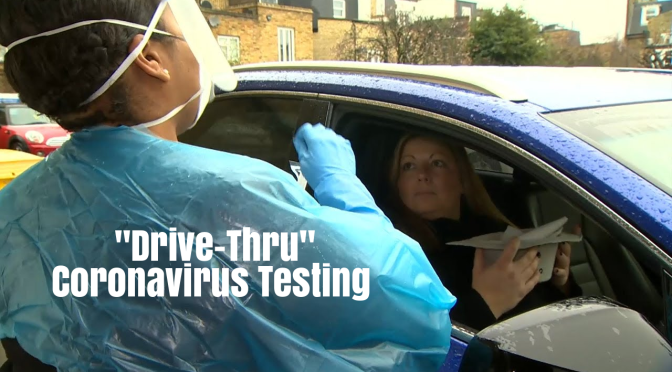
 Intellicurious