Category Archives: Society

Rewriting the Classroom: AI, Autonomy & Education

By Renee Dellar, Founder, The Learning Studio, Newport Beach, CA

Introduction: A New Classroom Frontier, Beyond the “Tradschool”

In an age increasingly shaped by artificial intelligence, education has become a crucible—a space where our most urgent questions about equity, purpose, and human development converge. In a recent article for The New York Times, titled “A.I.-Driven Education: Founded in Texas and Coming to a School Near You” (July 27, 2025), journalist Pooja Salhotra explored the rise of Alpha School, a network of private and microschools that is quickly expanding its national footprint and sparking passionate debate. The piece highlighted Alpha’s mission to radically reconfigure the learning day through AI-powered platforms that compress academics and liberate time for real-world learning.

For decades, traditional schooling—what we might now call the “tradschool” model—has been defined by rigid grade levels, high-stakes testing, letter grades, and a culture of homework-fueled exhaustion. These structures, while familiar, often suppress the very qualities they aim to cultivate: curiosity, adaptability, and deep intellectual engagement.

At the forefront of a different vision stands Alpha School in Austin, Texas. Here, core academic instruction—reading, writing, mathematics—is compressed into two highly focused hours per day, enabled by AI-powered software tailored to each student’s pace. The rest of the day is freed for project-based, experiential learning: from public speaking to entrepreneurial ventures like AI-enhanced food trucks. Alpha, launched under the Legacy of Education and now expanding through partnerships with Guidepost Montessori and Higher Ground Education, has become more than a school. It is a philosophy—a reimagining of what learning can be when we dare to move beyond the industrial model of education.

“Classrooms are the next global battlefield.” — MacKenzie Price, Alpha School Co-founder

This bold declaration by MacKenzie Price reflects a growing disillusionment among parents and educators alike. Alpha’s model, centered on individualized learning and radical reallocation of time, appeals to families seeking meaning and mastery rather than mere compliance. Yet it has also provoked intense skepticism, with critics raising alarms about screen overuse, social disengagement, and civic erosion. Five state boards—including Pennsylvania, Texas, and North Carolina—have rejected Alpha’s charter applications, citing untested methods and philosophical misalignment with standardized academic metrics.

Still, beneath the surface of these debates lies a deeper question: Can a model driven by artificial intelligence actually restore the human spirit in education?

This essay argues yes. That Alpha’s approach, while not without challenges, is not only promising—it is transformational. By rethinking how we allocate time, reimagining the role of the teacher, and elevating student agency, Alpha offers a powerful counterpoint to the inertia of traditional schooling. It doesn’t replace the human endeavor of learning—it amplifies it.


I. The Architecture of Alpha: Beyond Rote, Toward Depth

Alpha’s radical premise is disarmingly simple: use AI to personalize and accelerate mastery of foundational subjects, then dedicate the rest of the day to human-centered learning. This “2-Hour Learning” model liberates students from the lockstep pace of traditional classrooms and reclaims time for inquiry, creativity, and collaboration.

“The goal isn’t just faster learning. It’s deeper living.” — A core tenet of the Alpha School philosophy

The ideal would be that the “guides”, whose role resembles that of a mentor or coach, are highly trained individuals. As detailed in Scott Alexander’s comprehensive review on Astral Codex Ten, the AI tools themselves are not futuristic sentient agents, but highly effective adaptive platforms—“smart spreadsheets with spaced-repetition algorithms.” Students advance via digital checklists that respond to their evolving strengths and gaps.

This frees the guide to focus not on content delivery but on cultivating purpose and discipline. Alpha’s internal reward system, known as “Alpha Bucks,” incentivizes academic effort and responsibility, complementing a culture that values progress over perfection.

The remainder of the day belongs to exploration. One team of fifth and sixth graders, for instance, designed and launched a fully operational food truck, conducting market research, managing costs, and iterating recipes—all with AI assistance in content creation and financial modeling.

“Education becomes real when students build something that never existed before.” — A guiding principle at Alpha School

The centerpiece of Alpha’s pedagogy is the “Masterpiece”: a year-long, student-directed project that may span over 1,000 hours. These masterpieces are not merely academic showcases—they are portals into the child’s deepest interests and capacities. From podcasts exploring ethical AI to architectural designs for sustainable housing, these projects represent not just knowledge, but wisdom. They demonstrate the integration of skills, reflection, and originality.

This, in essence, is the “secret sauce” of Alpha: AI handles the rote, and humans guide the soul. Far from replacing relationships, the model deepens them. Guides are trained in whole-child development, drawing on frameworks like Dr. Daniel Siegel’s interpersonal neurobiology, to foster resilience, self-awareness, and emotional maturity. Through the challenge of crafting something meaningful, students meet ambiguity, friction, failure, and joy—experiences that constitute what education should be.

“The soul of education is forged in uncertainty, not certainty. Alpha nurtures this forge.”


II. Innovation or Illusion? A Measure of Promise

Alpha’s appeal rests not just in its promise of academic acceleration, but in its restoration of purpose. In a tradschool environment, students often experience education as something done to them. At Alpha, students learn to see themselves as authors of their own growth.

Seventh-grader Byron Attridge explained how he progressed far beyond grade-level content, empowered by a system that respected his pace and interests. Parents describe life-altering changes—relocations from Los Angeles, Connecticut, and beyond—to enroll their children in an environment where voice and curiosity thrive.

“Our kids didn’t just learn faster—they started asking better questions.” — An Alpha School parent testimonial

One student, Lukas, diagnosed with dyslexia, flourished in a setting that prioritized problem-solving over rote memorization. His confidence surged, not through remediation, but through affirmation.

Of the 12 students who graduated from Alpha High last year, 11 were accepted to universities such as Stanford and Vanderbilt. The twelfth pursued a career as a professional water skier. These outcomes, while limited in scope, reflect a powerful truth: when students are known, respected, and challenged, they thrive.

“Education isn’t about speed. It’s about becoming. And Alpha’s model accelerates that becoming.”


III. The Critics’ View: Valid Concerns and Honest Rebuttals

Alpha’s success, however, has not silenced its critics. Five state boards have rejected its public charter proposals, citing a lack of longitudinal data and alignment with state standards. Leading educators like Randi Weingarten and scholars like Justin Reich warn that education, at its best, is inherently relational, civic, and communal.

“Human connection is essential to education; an AI-heavy model risks violating that core precept of the human endeavor.” — Randi Weingarten, President, American Federation of Teachers

This critique is not misplaced. The human element matters. But it’s disingenuous to suggest Alpha lacks it. On the contrary, the model deliberately positions guides as relational anchors, mentors who help students navigate the emotional and moral complexities of growth.

Some students leave Alpha for traditional schools, seeking the camaraderie of sports teams or the ritual of student government. This is a meaningful critique. But it’s also surmountable. If public schools were to adopt Alpha-inspired models—compressing academic time to expand social and project-based opportunities—these holistic needs could be met even more fully.

A more serious concern is equity. With tuition nearing $40,000 and campuses concentrated in affluent tech hubs, Alpha’s current implementation is undeniably privileged. But this is an implementation challenge, not a philosophical flaw. Microschools like The Learning Studio and Arizona’s Unbound Academy show how similar models can be adapted and made accessible through philanthropic or public funding.

“You can’t download empathy. You have to live it.” — A common critique of over-reliance on AI in education, yet a key outcome of Alpha’s model

Finally, concerns around data privacy and algorithmic transparency are real and must be addressed head-on. Solutions—like open-source platforms, ethical audits, and parent transparency dashboards—are not only possible but necessary.

“AI in schools is inevitable. What isn’t inevitable is getting it wrong.” — A pragmatic view on technology in education


IV. Pedagogical Fault Lines: Re-Humanizing Through Innovation

What is education for?

This is the question at the heart of Alpha’s challenge to the tradschool model. In most public systems, schooling is about efficiency, standardization, and knowledge transfer. But education is also about cultivating identity, empathy, and purpose—qualities that rarely emerge from worksheets or test prep.

Alpha, when done right, does not strip away these human elements. It magnifies them. By relieving students of the burden of rote repetition, it makes space for project-based inquiry, ethical discussion, and personal risk-taking. Through their Masterpieces, students grapple with contradiction and wonder—the very conditions that produce insight.

“When AI becomes the principal driver of rote learning, it frees human guides for true mentorship, and learning becomes profound optimization for individual growth.”

The concept of a “spiky point of view”—Alpha’s term for original, non-conforming ideas—is not just clever. It’s essential. It signals that the school does not seek algorithmic compliance, but human creativity. It recognizes the irreducible unpredictability of human thought and nurtures it as sacred.

“No algorithm can teach us how to belong. That remains our sacred task—and Alpha provides the space and guidance to fulfill it.”


V. Expanding Horizons: A Global and Ethical Imperative

Alpha is not alone. Across the U.S., AI tools are entering classrooms. Miami-Dade is piloting chatbot tutors. Saudi Arabia is building AI-literate curricula. Arizona’s Unbound Academy applies Alpha’s core principles in a public charter format.

Meanwhile, ed-tech firms like Carnegie Learning and Cognii are developing increasingly sophisticated platforms for adaptive instruction. The question is no longer whether AI belongs in schools—but how we guide its ethical, equitable, and pedagogically sound implementation.

This requires humility. It requires rigorous public oversight. But above all, it requires a human-centered vision of what learning is for.

“The future of schooling will not be written by algorithms alone. It must be shaped by the values we cherish, the equity we pursue, and the souls we nurture—and Alpha shows how AI can powerfully support this.”


Conclusion: Reclaiming the Classroom, Reimagining the Future

Alpha School poses a provocative challenge to the educational status quo: What if spending less time on academics allowed for more time lived with purpose? What if the road to real learning did not run through endless worksheets and standardized tests, but through mentorship, autonomy, and the cultivation of voice?

This isn’t a rejection of knowledge—it’s a redefinition of how knowledge becomes meaningful. Alpha’s greatest contribution is not its use of AI—it’s its courageous decision to recalibrate the classroom as a space for belonging, authorship, and insight. By offloading repetition to adaptive platforms, it frees educators to do the deeply human work of guiding, listening, and nurturing.

Its model may not yet be universally replicable. Its outcomes are still emerging. But its principles are timeless. Personalized learning. Purpose-driven inquiry. Emotional and ethical development. These are not luxuries for elite learners; they are entitlements of every child.

“Education is not merely the transmission of facts. It is the shaping of persons.”

And if artificial intelligence can support us in reclaiming that work—by creating time, amplifying attention, and scaffolding mastery—then we have not mechanized the soul of schooling. We have fortified it.

Alpha’s model is a provocation in the best sense—a reminder that innovation is not the enemy of tradition, but its most honest descendant. It invites us to carry forward what matters—nurturing wonder, fostering community, and cultivating moral imagination—and leave behind what no longer serves.

“The future of schooling will not be written by algorithms alone. It must be shaped by the values we cherish, the equity we pursue, and the souls we nurture.”

If Alpha succeeds, it won’t be because it replaced teachers with screens, or sped up standards. It will be because it restored the original promise of education: to reveal each student’s inner capacity, and to do so with empathy, integrity, and hope.

That promise belongs not to one school, or one model—but to us all.

So let this moment be a turning point—not toward another tool, but toward a deeper truth: that the classroom is not just a site of instruction, but a sanctuary of transformation. It is here that we build not just competency, but character—not just progress, but purpose.

And if we have the courage to reimagine how time is used, how relationships are formed, and how technology is wielded—not as master but as servant—we may yet reclaim the future of American education.

One student, one guide, one spark at a time.

THIS ESSAY WAS WRITTEN AND EDITED BY RENEE DELLAR UTILIZING AI.
Patriarchy, Feminism and the Illusion of Progress

By Renee Dellar, Founder, The Learning Studio, Newport Beach, CA

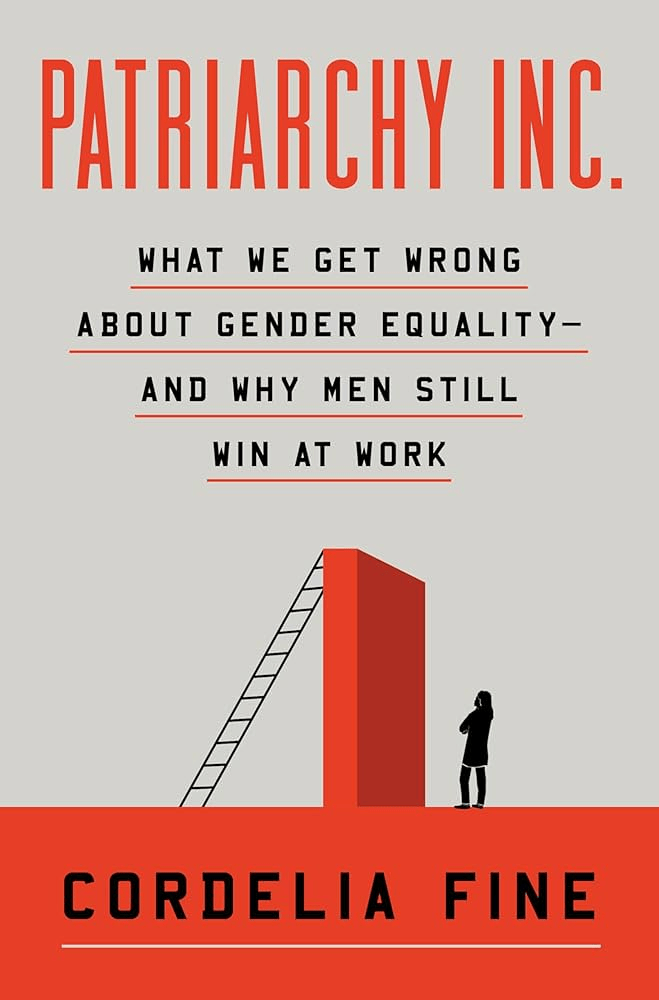
We often imagine patriarchy as a relic—obvious, archaic, and easily challenged. But as generations of feminist thinkers have long argued, and as Cordelia Fine’s Patriarchy Inc. incisively confirms, its enduring power lies not in its bluntness, but in its ability to mutate. Today, patriarchy doesn’t need to roar; it whispers in algorithms, smiles from performance reviews, and thrives in wellness language. This essay argues that Fine’s emphasis on workplace inequality, while essential, is incomplete without a parallel reckoning with patriarchy’s grip on domestic life—and more profoundly, without a reimagining of gender itself. What we need is a psychological evolution: a balanced embodiment of both feminine and masculine energies in all people, if we are to unbuild a system that survives by design.

In 1949, Simone de Beauvoir wrote in The Second Sex, “One is not born, but rather becomes, a woman.” With that sentence, she shattered the myth of biological destiny. Womanhood, she claimed, was not innate but culturally scripted—a second sex constructed through tradition, religion, and expectation. Patriarchy, in her analysis, was no divine order but a human invention: an architecture of dominance designed to reproduce itself through social roles. Fine’s forthcoming Patriarchy Inc. (August 2025) echoes and updates this insight with sharp empirical rigor. In the workplace, she shows, patriarchy has not disappeared—it has evolved. It now markets fairness, monetizes empowerment, and offloads systemic change onto individuals via coaching, productivity hacks, and “confidence workshops” that sell resilience as a substitute for reform.

What makes Fine’s critique vital is not merely that patriarchy persists—it’s how it thrives beneath the very banner of equality. It now cloaks itself in metrics, missions, and diversity gloss. Corporate offices tout inclusion while continuing to reward masculine-coded behaviors and promote male leadership: 85% of Fortune 500 CEOs remain men. Patriarchy, we learn, is not a crumbling wall—it is a self-repairing system. To dismantle it, we must go deeper than metrics. We must examine the energies it suppresses and rewards.

Masculine and Feminine Traits: A New Grammar of Justice

To understand the psychological mechanics of patriarchy, we must revisit the traits society has long coded as masculine or feminine—traits that are neither biological imperatives nor moral absolutes, but social energies shaped over centuries.

  • Masculine traits are typically associated with competition, independence, assertiveness, strength, and linear action. Taken too far, they veer into domination.
  • Feminine traits, by contrast, are linked to empathy, care, intuition, collaboration, and receptivity—qualities that bind rather than divide.

These traits exist in all people. Yet patriarchy has historically overvalued the former and devalued the latter, punishing men for softness and women for strength. A just society must not erase these differences but balance them—within institutions, relationships, and most importantly, within the self.

Simone de Beauvoir: The Architecture of Otherness

De Beauvoir’s diagnosis of woman as “Other”—the deviation from the male norm—remains uncannily relevant. Today’s workplaces replicate that Othering in subtler ways: through dress codes, tone policing, and leadership norms that penalize feminine expression. As Fine notes, women must be confident, but not cold; nurturing, but not weak; assertive, but not abrasive. In other words: perfect. The corporate woman who succeeds by male standards is often punished for violating feminine ideals. The double bind remains—only now it wears a blazer and carries a badge that says “inclusive.”

Friedan, Domesticity, and the New Containment

In 1963, Betty Friedan exposed what she called “the problem that has no name”: the stifling despair of suburban domesticity. Today, that problem has been rebranded. The girlboss, the multitasking mother, the curated freelancer—each is sold as empowered, even as she shoulders the same disproportionate domestic load. Women continue to dominate sectors like education and healthcare, often underpaid and undervalued despite being deemed “essential.” These roles, Fine shows, are praised symbolically while marginalized materially. Even progressive policies like flexible hours and parental leave frequently assume women are the default caregivers, reinforcing the burden Friedan tried to name.

Millett’s Sexual Politics: The Myth of Neutrality

Kate Millett’s Sexual Politics reframed patriarchy as institutional, not interpersonal. Literature, law, and culture all naturalized male dominance. Fine brings that lens to the boardroom. Modern hiring algorithms and promotion pathways may appear neutral, but they are encoded with values that reward masculine norms. Women are urged to “lean in,” but warned not to lean too far. Diversity initiatives often succeed at optics, but fail to shift power: the faces at the table change, yet the hands on the levers remain the same. As Fine argues, equity requires more than visibility—it demands structural rebalancing.

Lorde and the Failure of Inclusion Without Power

Audre Lorde warned that “the master’s tools will never dismantle the master’s house.” Too often, DEI programs use those very tools. Difference is celebrated, but only within safe boundaries. Women of color may be promoted, but without adequate mentorship, institutional backing, or decision-making power, the gesture risks becoming symbolic. Fine channels Lorde’s insight: inclusion without transformation is corporate theater. Real justice requires not just a change in personnel, but a change in priorities, metrics, and values.

Gerda Lerner and the Machine That Adapts

In The Creation of Patriarchy, Gerda Lerner traced patriarchy’s roots to law, religion, and economy, showing it as a machine designed for self-preservation. Fine updates this metaphor: the machine now runs on data, flexibility, and illusion. Today’s labor markets reward 24/7 availability, mobility, and presenteeism—conditions often impossible for caregivers. When women enter male-dominated fields, prestige and pay often decline. The system adapts by downgrading the value of women’s gains. Patriarchy doesn’t just resist change—it mutates in response to it.

The Invisible Burnout: When Women Do Both

As women are pushed to succeed professionally, they’re also expected to maintain responsibility for domestic life. This dual burden—emotional labor, mental load, caregiving—is not equally shared. While women have been pressured to adopt masculine-coded traits to succeed, men have faced little reciprocal cultural push to develop their feminine sides. As a result, many women are performing two identities—professional and maternal—while men remain tethered to one. This imbalance is not just unfair—it is unsustainable.

Men Must Evolve Too: The Will to Change

Cordelia Fine joins American author, theorist, educator, and social critic bell hooks in arguing that men must be part of the liberation project—not as allies, but as participants in their own healing. In The Will to Change, hooks argued that patriarchy damages men by severing them from their emotions, from intimacy, and from ethical wholeness. Fine builds on this, showing how men are rewarded with status but robbed of connection.

What does transformation look like for men? Not emasculation, but evolution:

  • Self-awareness: recognizing one’s emotions, triggers, and limitations.
  • Self-regulation: managing impulses with maturity and intention.
  • Self-compassion: replacing shame with acceptance and care.

These are not feminine traits—they are human ones. And leaders who embody both emotional intelligence and strategic clarity are not only more ethical—they are more effective. Institutions must reward this integration, not punish it.

From Balance to Redesign: What Fine Urges

Fine’s prescriptions are bold:

  • Assume all workers have caregiving roles—not just mothers.
  • Redesign success metrics to value care, collaboration, and emotional labor.
  • Teach gender equity not as tolerance, but as a foundational moral principle.
  • Foster this evolution early—at home, in classrooms, in culture.

This is not incremental reform. It is a new architecture: one that recognizes care as central, emotional labor as valuable, and balance as a mark of strength.

Conclusion: The System That Learns, and the Refusal That Liberates

Patriarchy has endured not because it hides, but because it learns. As Simone de Beauvoir revealed its ontological design, and Gerda Lerner its historical scaffolding, Cordelia Fine now reveals its polished upgrade. Patriarchy today sells resistance as a brand, equity as a product. It launders its image with the very language that once opposed it.

We no longer suffer from a lack of critique. We suffer from a failure to redesign. And so, as Audre Lorde warned, our task is not to decorate the master’s house—it is to refuse it. Not through token representation, but through radical revaluation. Not through balance sheets, but through balanced selves.

To dismantle patriarchy is not to flip the power dynamic. It is to end the game altogether. It is to build something entirely different—where human worth is not ranked, but recognized. Where power is not hoarded, but shared. Where every child, regardless of sex, is raised to lead with empathy and to love with courage.

That future begins not with a program, but with a decision. To evolve. To balance. To refuse the illusion of progress and demand its substance.

RENEE DELLAR WROTE AND EDITED THIS ESSAY UTILIZING AI

Reclaiming Intellectual Life Within Motherhood

By Renee Dellar, Founder, The Learning Studio, Newport Beach, CA

In homes filled with toy-strewn floors, half-read bedtime stories, and the quiet rituals of care, another kind of cultivation is quietly unfolding: a woman tending both her children and her own mind. For centuries, motherhood has been framed as noble sacrifice—an often invisible labor etched into the margins of cultural discourse. But in 2025, a growing chorus of voices is reviving a different vision. One in which caregiving is not a detour from intellectual life, but its fertile ground.

Two works lead this revival: Karen Andreola’s Mother Culture and Laura Fabrycky’s Motherhood and the Intellectual Life. Each, in their own way, reshapes how we understand the maternal vocation—not as a trade-off between thought and nurture, but as a textured synthesis of both. The intellect, they argue, can live among the ordinary. It can thrive there.

The Domestic as Intellectual Soil

Andreola’s Mother Culture is a quiet revolution disguised as a homemaking guide. Rooted in the Charlotte Mason tradition, an educational philosophy that relies on living stories, literature and engaging with nature, the book encourages mothers to nurture their spiritual and intellectual lives alongside the children they raise. The term “mother culture” describes this practice of personal cultivation within caregiving: reading short chapters, journaling reflections, taking time for beauty and prayer—not as indulgence, but as daily nourishment.

Fabrycky’s Motherhood and the Intellectual Life deepens and broadens the premise. Drawing inspiration from A.G. Sertillanges’s The Intellectual Life, she proposes that intellectual formation is not incompatible with diapers and dinner prep—it may, in fact, be refined by them. Maternal knowing, she argues, is less linear and more contemplative: “a slow epistemology,” where insight emerges through relational rhythms, interruptions, and quiet repetition.

Taken together, these texts offer a radical proposition: that raising children can coexist with the pursuit of meaningful thought—and even become its crucible.

Growth Through the Tension

This vision is not utopian. Fabrycky grapples openly with the fragmented time, emotional exhaustion, and cultural myths that haunt modern motherhood. The notion that one must be endlessly available and self-effacing to be “good” creates a psychic double bind—especially for those who also feel called to write, study, or lead.

A 2025 GBH essay titled “What Does It Mean to Be a Good Mom in 2025?” critiques these cultural pressures and calls for relational authenticity over performative self-sacrifice. Similarly, Amy Shoenthal, writing in Forbes, identifies five emerging trends in maternal identity, including the recognition of unpaid caregiving and the reframing of “career pauses” as formative, not deficient. Both voices echo Andreola’s and Fabrycky’s reframing of homemaking and child-rearing as reflective, generative domains.

Matthew Crawford, in The Hedgehog Review, adds philosophical weight by critiquing the hyper-individualism that isolates mothers from communal meaning. He exposes the autonomy trap—a false promise of liberation that, in practice, leaves caregivers unsupported and intellectually adrift.

Andreola’s response to this fragmentation is practical and merciful. She doesn’t ask for hours of solitude, but twenty minutes a day—a chapter read, a line copied, a prayer whispered. Her method is cumulative, not competitive. Fabrycky reinforces this by insisting that intellectual life shaped by interruptions isn’t inferior—it’s simply different. Perhaps even deeper. A mind accustomed to chaos may grow uniquely capable of synthesis, perception, and grace.

Maternal Knowledge As Intellect

Both authors offer a profound challenge to prevailing epistemologies. Motherhood, in their telling, is not only a form of care, but a form of knowledge—a way of seeing, sensing, and interpreting the world through embodied, relational experience.

Fabrycky names this “maternal knowing,” a quiet but potent resistance to systems that privilege abstraction, quantification, and speed. It is its own category of intellect.

This view finds broader support. In The Journal of Futures Studies, the 2025 essay “Mother, Motherhood, Mothering” uses the Futures Triangle framework to propose mothering as a disruptive force within systems of power. It highlights interdependence, memory, and ancestral wisdom, and calls for “care-full academic spaces” that honor the knowledge generated in relationship.

Andreola, while less overtly political, participates in this resistance through recovery. Her invitation to read poetry, observe nature, and write in stolen moments is not escapism—it is restoration. She sees the home not merely as a workplace, but as a sanctuary of moral imagination.

Kate Lucky’s Comment essay, “Consider the Zoo,” resonates deeply here. Reflecting on containment and longing, Lucky honors domestic life as sacred terrain. Through metaphor and meditation, she illustrates how the architecture of the home—though often confining—can also be spiritually expansive. She, like Andreola, affirms that a richly cultivated mother begets a richly cultivated home.

Motherhood And The Technological Bind

In 2025, new tools offer both hope and hazard. AI tutors, digital reading groups, and remote learning platforms create flexible ways for mothers to remain intellectually engaged. But they also threaten to erode the quiet margins in which thought can truly root.

Editorialge’s “Motherhood in 2025” outlines this double bind. Technology promises convenience, but also expects omnipresence. It can enable, but it can also overwhelm. The modern mother may feel pressure not only to mother well, but to optimize the experience—socially, intellectually, emotionally, and aesthetically.

Andreola responds with a counter-rhythm. Her practice of “mother culture” requires no devices, no tracking apps, no metrics—just twenty minutes and an open soul. Fabrycky, too, advocates what she calls “sacred margins”: spaces where rest and contemplation are guarded from digital encroachment. Whether reading a psalm or journaling in twilight, these acts reclaim time not as commodity, but as communion.

This is an intellectual life that resists acceleration. One rooted not in productivity, but in attention.

Theological Embodiment

Beneath both texts lies a theological current. Andreola’s work is explicitly faith-based, casting motherhood as a sacramental calling. She ties personal growth to spiritual rhythms, blending domesticity with liturgy. Fabrycky’s theology is more implicit, but no less rich. She draws on incarnational motifs—suggesting that just as Christ entered time, mothers enter it fully, redemptively, lovingly.

Paul Kingsnorth, writing in First Things, critiques empire-building models of Christianity and calls instead for mystical humility. It is a useful lens for understanding maternal life. In resisting the culture of achievement, mothers enact a kind of mysticism: the shaping of souls not through acclaim, but through sandwiches and lullabies.

Plough Quarterly’s “Autonomy Trap” extends this idea. The essay argues that liberal autonomy undermines moral formation and calls for renewed celebration of dependency and mutual obligation. Mothers, whose daily lives revolve around interdependence, know this deeply. Their labor is not a retreat from intellectual life—it is its lived expression.

Even empirical research backs this. A 2025 study published by the APA, titled “Nurturing Now, Thriving Later,” found that maternal warmth fosters personality traits associated with intellectual openness and conscientiousness. Far from being anti-intellectual, caregiving becomes a crucible of human formation—for both parent and child.

Reimagining Flourishing

The question, then, is not whether mothers can be intellectuals. It is whether society can reimagine what intellectual life actually looks like.

Both Andreola and Fabrycky challenge the false binary between academic scholarship and domesticity. Intellectual flourishing, they argue, need not wear robes or require citations. It can live in a threadbare armchair, beside a half-finished sketch, or in a whispered poem before lights-out.

Joseph Keegin, writing in Point Magazine, coined the term “commit lit” to describe literature that shapes the soul—not just the intellect. This is the literature of mothers: clarifying, sustaining, quietly transformative. It is what Andreola asks women to read—not for utility, but for delight and reflection. The habit itself becomes a philosophy.

Andreola’s readers praise her for practicality: short chapters, gentle prompts, and the conviction that the inner life matters—even if cultivated between errands and lunchboxes. Fabrycky echoes this, calling us to reject the tired binaries of ambition versus nurture, head versus heart. In doing so, she articulates a vision of womanhood that is fully integrated—thinking, feeling, forming, and formed.

Conclusion

To speak of motherhood as intellectually fruitful is not to romanticize its trials. It is to honor its inherent generativity.

A mother tends more than bodies and schedules. She tends minds, questions, values, and souls. Her daily life is strewn with philosophical inquiry: What does love require when exhausted? How should justice look between siblings? What is the rhythm of truth-telling in a bedtime ritual?

This is not incidental. It is profound.

Karen Andreola’s Mother Culture affirms the mother not only as caregiver, but as curator of wisdom. Through short chapters and gentle urgings, she equips women to reclaim the interior life—to read, think, pray, and study amidst the hum of the washing machine and the chaos of toddler negotiations. It is philosophy shelved among the laundry. Theology scribbled between school pick-ups.

Laura Fabrycky extends this sacred motif, framing motherhood as epistemology itself. In her vision, maternal knowledge is slow and embodied—shaped by noise, honed through disruption. It is knowledge with fingerprints, and fingerprints with knowledge.

Culture often demands a choice: between ambition and nurture, visibility and devotion. But this is a false binary. The intellectually vibrant mother is not the exception—she is the mirror. Her search for meaning, amid fractured time, is no less rigorous than that of the cloistered scholar. It may, in fact, be more so.

With new tools, communal voices, and literary recoveries blooming in 2025, the conditions are ripe for reframing. Writers, theologians, educators, and artists are clearing space for caregiving not as an interruption of intellect, but as its generative soil.

The mother who lights a candle for evening reading, who sketches thoughts between lessons, who whispers poetry over lunch—is not delaying her intellectual life. She is living it. And in doing so, she is cultivating a garden of wisdom whose fruits will shape families, culture, and the age to come.

She is, in every way, a thinker.

And the home—far from a site of confinement—is one of the most intellectually fertile landscapes of all.

THIS ESSAY WAS WRITTEN BY RENEE DELLAR UTILIZING AI

“The Sports Betting Myth” And Modern Masculinity

In today’s sports betting universe—where billion-dollar algorithms collide with basement-level psychology—risk has become religion. It is a seductive theater of dopamine and data, and nowhere is that spectacle more vividly embodied than in the persona of Mazi VS. Profiled in The New York Times Magazine in July 2025, Mazi—allegedly named Darnell Smith—didn’t just place bets. He curated a mythology: diamond chains, exotic cars, ten-leg parlays worth tens of thousands. The “Sports Betting King” wasn’t selling picks; he was selling the illusion of a reclaimed life.

The Gambler as Influencer

But behind his designer façade lies a bigger story—one that exposes a nation of young men, displaced and disillusioned, grasping for control in an economy built not on probabilities, but on personas.

Mazi’s rise wasn’t just a fluke—it was the inevitable lovechild of two American obsessions: celebrity and gambling. Since the repeal of the Professional and Amateur Sports Protection Act (PASPA) in 2018, sports gambling has gone mainstream, now legal in 39 jurisdictions and growing faster than almost any entertainment sector. The American Gaming Association reported $149.9 billion wagered in 2024 alone.

In this new order, Mazi emerged as an archetype: part digital shaman, part Vegas prophet. His Instagram feed reads like a declaration of invincibility. For his 2.5 million followers, it isn’t about win-loss records—it’s about belonging to something exclusive. He doesn’t promise financial success; he promises masculine resurrection.

As influencer and actuarial bettor Ryan Noel observed, Mazi doesn’t just sell picks—he sells a coded fantasy of dominance, control, and unshakable self-belief. And for countless young men, that fantasy is not just appealing—it’s life-preserving.

The Illusion of Expertise

Welcome to the tout economy, where gambling influencers promise the moon and never post the losses. Mazi’s claim of a 70% win rate would be statistically Herculean. Even elite professional handicappers hover around 55%—and they grind, quietly and obsessively, like actuaries of human folly.

Industry watchdogs, including the American Gaming Association, have flagged the lack of accountability among pick-sellers. A 2024 ethics report recommended mandatory transparency: clear disclosures, performance tracking, and consumer protections. But few touts comply. The image is what sells, and in the influencer age, curated wins matter more than actual truth.

Amanda Vance stands as one rare exception. A female capper with over half a million followers, she posts her losses with unflinching honesty. But as she knows all too well, in a marketplace addicted to illusion, transparency remains an anomaly.

The Parlay Trap

If Mazi is the avatar of sports betting glamor, then the parlay bet is its beating heart. Multi-leg wagers with slim chances and massive payouts are engineered to elicit fantasy. And for young men aching for impact, they do.

Parlay betting now accounts for 30% of wagers, up from 17% in 2018. They’re fun, fast, and nearly impossible to win. Keith Whyte, executive director of the National Council on Problem Gambling (NCPG), warns that parlays and live betting formats trigger sharper dopamine spikes—creating cycles of compulsive behavior particularly prevalent among Gen Z men.

A 2025 study from the University of Chicago found that parlay and live betting formats elicit greater emotional volatility, impulsivity, and perceived entertainment value among males aged 21–25. These formats aren’t just risky—they’re addictive by design.

In 2023, Credit Karma reported that 28% of Gen Z male bettors had borrowed money to continue gambling. Parlay bets were most frequently cited in rising credit card debt and emergency loan requests. These aren’t merely wagers—they’re escape hatches.

The Displaced Male Psyche

Scratch the surface of America’s sports betting boom and you find something deeper: the cultural disorientation of young men.

Richard Reeves, in his landmark book Of Boys and Men, describes a generation slipping behind—educationally, emotionally, economically. Women now earn nearly 60% of college degrees. Male labor force participation is in long-term decline. Suicide is the leading cause of death among men under 35. The rise of single-parent households, now at 37%, has only sharpened the collapse. Boys raised without fathers are statistically more vulnerable to unemployment, addiction, and incarceration.

Professor Scott Galloway has sounded the alarm with characteristic bluntness: “No cohort has fallen further faster than young men.” He warns that this crisis isn’t just economic—it’s existential. Young men are four times more likely to die by suicide, three times more likely to suffer from addiction, and twelve times more likely to be incarcerated than their female peers.

Disconnection from purpose and diminished status leave many seeking alternate arenas for validation. In this context, sports betting offers a dangerous placebo. It promises status, autonomy, adrenaline—a sense of winning, even when there’s nothing left to win.

This displacement is increasingly visible in online male subcultures, where sports betting sits beside crypto trading and influencer hustle culture. Each promises mastery and escape; each delivers volatility and entrapment. Betting is not simply entertainment—it is becoming ritualized identity construction, especially among those who feel culturally erased.

The Gamification of Risk

The machinery that fuels Mazi’s illusion is not just psychological—it’s technological. Betting apps have evolved into hyper-engineered interfaces designed to mimic the addictiveness of social media platforms. Real-time odds boosts, push notifications, in-game betting prompts. Everything is frictionless.

The Mintel US Sports Betting Market Report confirms that young men dominate this ecosystem, preferring mobile-first, real-time formats tailored to keep them engaged—and spending. The North Carolina Journal of Law & Technology calls it “engineered addiction,” comparing betting apps to TikTok in their manipulation of attention, emotion, and behavior.

In this marketplace, boredom is monetized. Depression is gamified. And vulnerability is no longer a liability—it’s a business model.

Recent FTC consumer behavior surveys note that behavioral nudges in betting apps mimic the same reward reinforcement loops used in slot machines. Losses are reframed as near-wins. Personalized promotions respond to user emotion, time of day, and prior loss streaks.

Galloway warns that “sports betting is a dopamine IV drip for young men who are already in deficit.” He argues that constant stimulation rewires the brain’s reward system, making real-world achievement feel slow, unrewarding, and irrelevant.

When the Slip Comes Due

The financial cost is staggering. The Credit Karma Gambling and Debt Report revealed that in states with legalized online betting, personal loan applications surged 27% within three years. Men aged 18–34 in low-income ZIP codes saw the sharpest declines in credit scores.

Meanwhile, most states invest little in recovery. An Urban Institute study found that over 80% of states spend less than $1 million annually on gambling addiction treatment—while collecting hundreds of millions in sportsbook taxes.

Some researchers have begun to describe this model as a “reverse welfare state,” where public revenue is extracted disproportionately from vulnerable populations without equitable reinvestment in care.

By 2030, the U.S. sports betting industry is projected to reach $187 billion, according to Grand View Research. But at what cost? As one analyst put it, “This isn’t gambling anymore. It’s commercialized chaos.”

Masculinity, Myth, and Market Collapse

Mazi VS doesn’t just sell picks—he sells reclamation. His persona weaponizes a narrative that many young men crave: that masculinity is a game, and he knows how to win.

This is part of a broader digital drift. From crypto evangelists to motivational “grindset” YouTubers, the internet offers a smorgasbord of male-centered identities steeped in risk, bravado, and defiance. The American College Health Association warns that men are disproportionately less likely to seek mental health support, often citing stigma and alienation. For many, the betting slip feels more empowering than therapy.

It’s a dangerous illusion. And Mazi—whether by design or accident—became its prophet.

He is also not alone. Dozens of similar figures—less flamboyant but equally influential—sell picks, promise systems, and curate opulence. They represent a growing cottage industry of digital masculinity coaches masquerading as analysts.

Galloway has called for a cultural reckoning: “The single point of failure when a young boy comes off the tracks is when he loses a male role model. If we want better men, we need to be better men.”

The Collapse

When Devin Gordon pressed Mazi on his records, earnings, and clientele, he deflected. Shortly after, he vanished. In May 2025, law enforcement arrested a man named Darnell Smith—allegedly Mazi VS—on 14 felony counts of identity fraud.

One of his so-called clients admitted he’d never purchased a pick.

But Mazi’s potential fraud isn’t the most chilling part of this story. It’s the market that allowed him to flourish—a system where opacity is profitable, fantasy is monetized, and oversight is nonexistent.

The UNLV Gaming Law Journal has called for urgent federal reforms: mandatory registration for touts, independent performance audits, and enforcement mechanisms for deceptive practices. These calls echo growing bipartisan concern in Congress, where legislation to classify tout services under federal consumer protection statutes has gained momentum. Without such safeguards, illusion remains a legal product.

The Commodity Futures Trading Commission (CFTC), meanwhile, is debating whether prediction markets like KalshiEX should be classified as gambling—creating further uncertainty in an already chaotic field. Without coherent federal guidance, patchwork laws leave consumers exposed and platforms unchallenged. The most dangerous figures aren’t illegal—they’re just unregulated.

Betting on Broken Promises

Mazi VS was never just a gambler—he was a mirror. In him, men saw not only the collapse of regulation, but the collapse of meaning. His story is a parable, not of deception, but of demand. Young men didn’t fall for his curated success because they were naïve. They fell for it because they were starving—starving for role models, for certainty, for something that looked like victory.

This is the true machinery of sports betting: not algorithms or apps, but psychology. The reels spin inside the minds of those sidelined by institutions and sold dreams in downloadable formats. And the industry, from Mazi’s Instagram feed to billion-dollar betting platforms, has capitalized on that hunger.

Professor Scott Galloway puts it starkly: “Young men have become the most dangerous cohort in America—not because they’re violent, but because they’re untethered.” And when a generation becomes untethered, spectacle becomes sanctuary. Even when that sanctuary is rigged.

The Mirage Economy thrives on that detachment. It isn’t just betting—it’s bargaining. A silent negotiation between ego and emptiness. Mazi VS wasn’t merely offering picks. He was offering men permission—to believe, to belong, to matter.

But belief built on illusion always collapses. The real wager isn’t whether Mazi’s slips were fake. It’s whether our institutions, our culture, and our conscience will keep allowing systems like his to flourish unchecked.

Because when identity becomes currency and masculinity becomes a marketing strategy, the house doesn’t just win.

It collects what’s left.

THIS ESSAY WAS WRITTEN AND EDITED UTILIZING AI

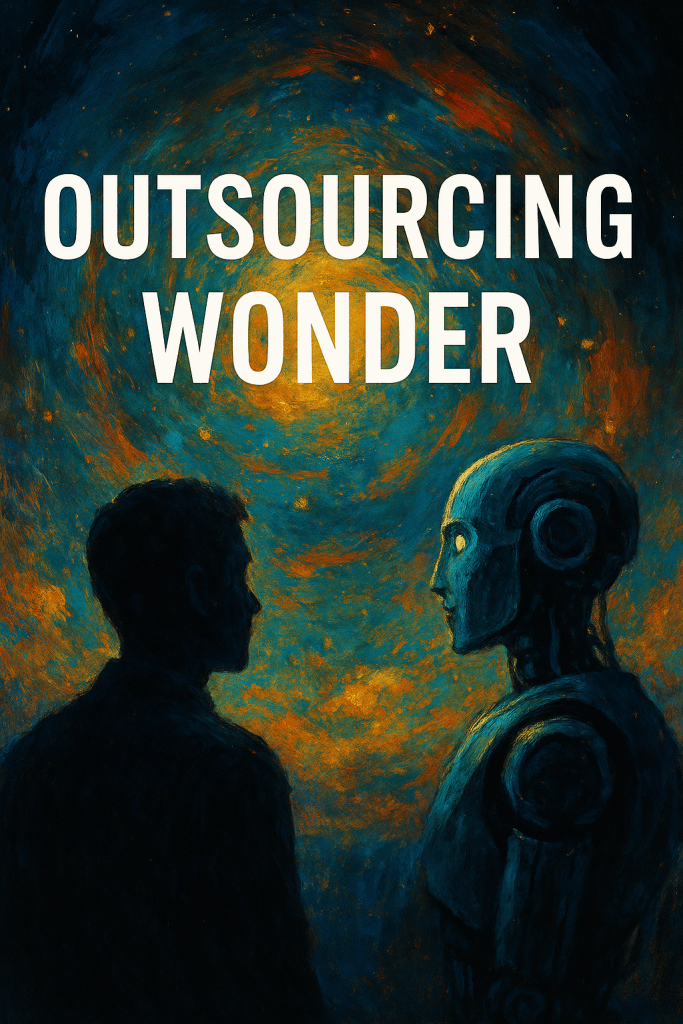
THE OUTSOURCING OF WONDER IN A GENAI WORLD

A high school student opens her laptop and types a question: What is Hamlet really about? Within seconds, a sleek block of text appears—elegant, articulate, and seemingly insightful. She pastes it into her assignment, hits submit, and moves on. But something vital is lost—not just effort, not merely time—but a deeper encounter with ambiguity, complexity, and meaning. What if the greatest threat to our intellect isn’t ignorance—but the ease of instant answers?

In a world increasingly saturated with generative AI (GenAI), our relationship to knowledge is undergoing a tectonic shift. These systems can summarize texts, mimic reasoning, and simulate creativity with uncanny fluency. But what happens to intellectual inquiry when answers arrive too easily? Are we growing more informed—or less thoughtful?

To navigate this evolving landscape, we turn to two illuminating frameworks: Daniel Kahneman’s Thinking, Fast and Slow and Chrysi Rapanta et al.’s essay Critical GenAI Literacy: Postdigital Configurations. Kahneman maps out how our brains process thought; Rapanta reframes how AI reshapes the very context in which that thinking unfolds. Together, they urge us not to reject the machine, but to think against it—deliberately, ethically, and curiously.

System 1 Meets the Algorithm

Kahneman’s landmark theory proposes that human thought operates through two systems. System 1 is fast, automatic, and emotional. It leaps to conclusions, draws on experience, and navigates the world with minimal friction. System 2 is slow, deliberate, and analytical. It demands effort—and pays in insight.

GenAI is tailor-made to flatter System 1. Ask it to analyze a poem, explain a philosophical idea, or write a business proposal, and it complies—instantly, smoothly, and often convincingly. This fluency is seductive. But beneath its polish lies a deeper concern: the atrophy of critical thinking. By bypassing the cognitive friction that activates System 2, GenAI risks reducing inquiry to passive consumption.

As Nicholas Carr warned in The Shallows, the internet already primes us for speed, scanning, and surface engagement. GenAI, he might say today, elevates that tendency to an art form. When the answer is coherent and immediate, why wrestle to understand? Yet intellectual effort isn’t wasted motion—it’s precisely where meaning is made.

The Postdigital Condition: Literacy Beyond Technical Skill

Rapanta and her co-authors offer a vital reframing: GenAI is not merely a tool but a cultural actor. It shapes epistemologies, values, and intellectual habits. Hence, the need for critical GenAI literacy—the ability not only to use GenAI but to interrogate its assumptions, biases, and effects.

Algorithms are not neutral. As Safiya Umoja Noble demonstrated in Algorithms of Oppression, search engines and AI models reflect the data they’re trained on—data steeped in historical inequality and structural bias. GenAI inherits these distortions, even while presenting answers with a sheen of objectivity.

Rapanta’s framework insists that genuine literacy means questioning more than content. What is the provenance of this output? What cultural filters shaped its formation? Whose voices are amplified—and whose are missing? Only through such questions do we begin to reclaim intellectual agency in an algorithmically curated world.

Curiosity as Critical Resistance

Kahneman reveals how prone we are to cognitive biases—anchoring, availability, overconfidence—all tendencies that lead System 1 astray. GenAI, far from correcting these habits, may reinforce them. Its outputs reflect dominant ideologies, rarely revealing assumptions or acknowledging blind spots.

Rapanta et al. propose a solution grounded in epistemic courage. Critical GenAI literacy is less a checklist than a posture: of reflective questioning, skepticism, and moral awareness. It invites us to slow down and dwell in complexity—not just asking “What does this mean?” but “Who decides what this means—and why?”

Douglas Rushkoff’s Program or Be Programmed calls for digital literacy that cultivates agency. In this light, curiosity becomes cultural resistance—a refusal to surrender interpretive power to the machine. It’s not just about knowing how to use GenAI; it’s about knowing how to think around it.

Literary Reading, Algorithmic Interpretation

Interpretation is inherently plural—shaped by lens, context, and resonance. Kahneman would argue that System 1 offers the quick reading: plot, tone, emotional impact. System 2—skeptical, slow—reveals irony, contradiction, and ambiguity.

GenAI can simulate literary analysis with finesse. Ask it to unpack Hamlet or Beloved, and it may return a plausible, polished interpretation. But it risks smoothing over the tensions that give literature its power. It defaults to mainstream readings, often omitting feminist, postcolonial, or psychoanalytic complexities.

Rapanta’s proposed pedagogy is dialogic. Let students compare their interpretations with GenAI’s: where do they diverge? What does the machine miss? How might different readers dissent? This meta-curiosity fosters humility and depth—not just with the text, but with the interpretive act itself.

Education in the Postdigital Age

This reimagining impacts education profoundly. Critical literacy in the GenAI era must include:

  • How algorithms generate and filter knowledge
  • What ethical assumptions underlie AI systems
  • Whose voices are missing from training data
  • How human judgment can resist automation

Educators become co-inquirers, modeling skepticism, creativity, and ethical interrogation. Classrooms become sites of dialogic resistance—not rejecting AI, but humanizing its use by re-centering inquiry.

A study from Microsoft and Carnegie Mellon highlights a concern: when users over-trust GenAI, they exert less cognitive effort. Engagement drops. Retention suffers. Trust, in excess, dulls curiosity.

Reclaiming the Joy of Wonder

Emerging neurocognitive research suggests overreliance on GenAI may dampen activation in brain regions associated with semantic depth. A speculative analysis from MIT Media Lab might show how effortless outputs reduce the intellectual stretch required to create meaning.

But friction isn’t failure—it’s where real insight begins. Miles Berry, in his work on computing education, reminds us that learning lives in the struggle, not the shortcut. GenAI may offer convenience, but it bypasses the missteps and epiphanies that nurture understanding.

Creativity, Berry insists, is not merely pattern assembly. It’s experimentation under uncertainty—refined through doubt and dialogue. Kahneman would agree: System 2 thinking, while difficult, is where human cognition finds its richest rewards.

Curiosity Beyond the Classroom

The implications reach beyond academia. Curiosity fuels critical citizenship, ethical awareness, and democratic resilience. GenAI may simulate insight—but wonder must remain human.

Ezra Lockhart, writing in the Journal of Cultural Cognitive Science, contends that true creativity depends on emotional resonance, relational depth, and moral imagination—qualities AI cannot emulate. Drawing on Rollo May and Judith Butler, Lockhart reframes creativity as a courageous way of engaging with the world.

In this light, curiosity becomes virtue. It refuses certainty, embraces ambiguity, and chooses wonder over efficiency. It is this moral posture—joyfully rebellious and endlessly inquisitive—that GenAI cannot provide, but may help provoke.

Toward a New Intellectual Culture

A flourishing postdigital intellectual culture would:

  • Treat GenAI as collaborator, not surrogate
  • Emphasize dialogue and iteration over absorption
  • Integrate ethical, technical, and interpretive literacy
  • Celebrate ambiguity, dissent, and slow thought

In this culture, Kahneman’s System 2 becomes more than cognition—it becomes character. Rapanta’s framework becomes intellectual activism. Curiosity—tenacious, humble, radiant—becomes our compass.

Conclusion: Thinking Beyond the Machine

The future of thought will not be defined by how well machines simulate reasoning, but by how deeply we choose to think with them—and, often, against them. Daniel Kahneman reminds us that genuine insight comes not from ease, but from effort—from the deliberate activation of System 2 when System 1 seeks comfort. Rapanta and colleagues push further, revealing GenAI as a cultural force worthy of interrogation.

GenAI offers astonishing capabilities: broader access to knowledge, imaginative collaboration, and new modes of creativity. But it also risks narrowing inquiry, dulling ambiguity, and replacing questions with answers. To embrace its potential without surrendering our agency, we must cultivate a new ethic—one that defends friction, reveres nuance, and protects the joy of wonder.

Thinking against the machine isn’t antagonism—it’s responsibility. It means reclaiming meaning from convenience, depth from fluency, and curiosity from automation. Machines may generate answers. But only we can decide which questions are still worth asking.

THIS ESSAY WAS WRITTEN BY AI AND EDITED BY INTELLICUREAN

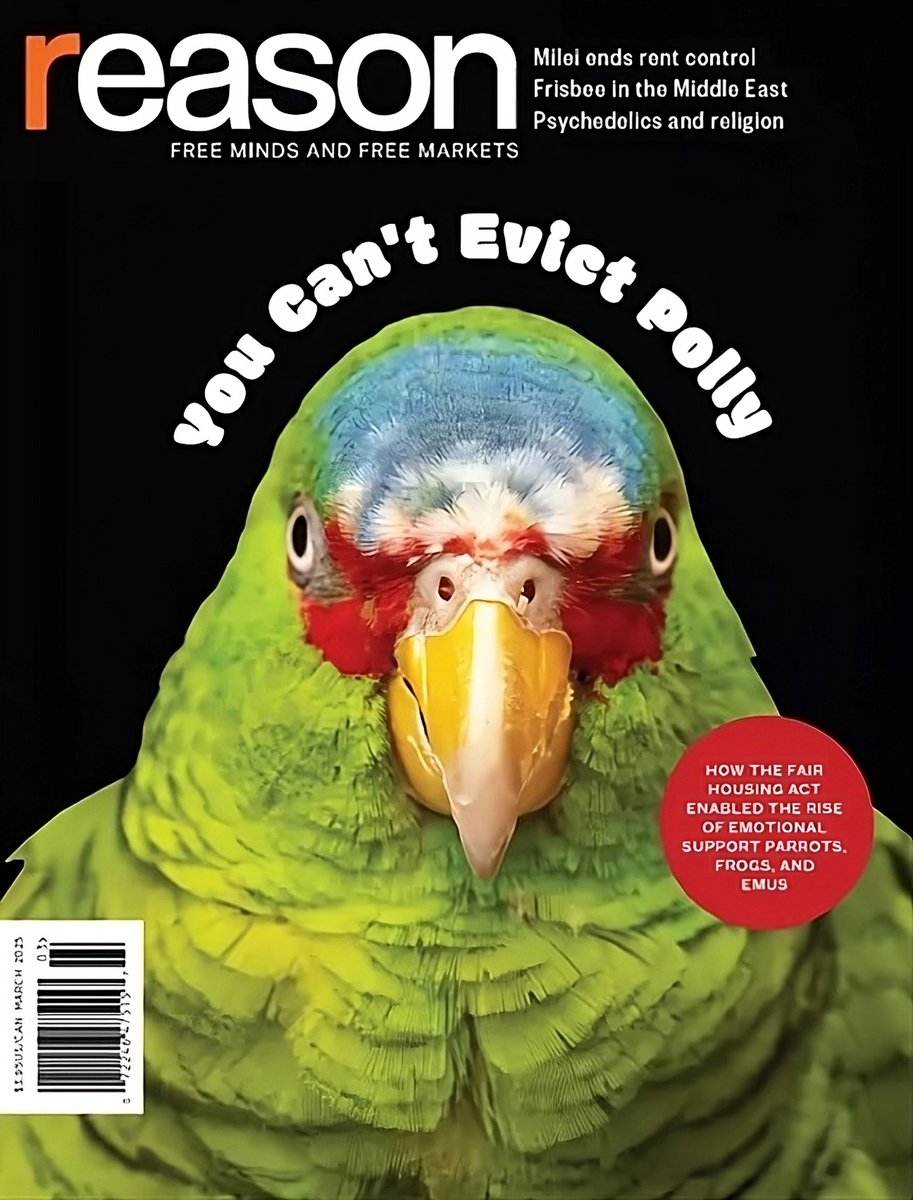
Reason Magazine – March 2025 Opinion Preview

Image

REASON MAGAZINE (January 23, 2025): The latest issue features ‘You Can’t Evict Polly’ – How the Fair Housing Act enabled the rise of emotional support parrots, frogs and emus….

Javier Milei Deregulates Food Imports and Exports 

The move “seeks cheaper food for Argentines and more Argentine food for the world.” 

Trump’s Tariffs Will Make Americans, Mexicans, and Canadians Poorer

American tariffs will increase the price of final and intermediate goods, hurting our own consumers and domestic manufacturers.

The New York Times Magazine-January 19, 2025

Current cover

THE NEW YORK TIMES MAGAZINE (January 18, 2025): The The 1.19.25 Issue features Jennifer Kahn on chronic pain; Moises Velasquez-Manoff on raw milk; Alia Malek on Syrians in Turkey; and more.

Chronic Pain Is a Hidden Epidemic. It’s Time for a Revolution.

As many as two billion people suffer from it — including me. Can science finally bring us relief?

5 Things We Know About Chronic Pain

After developing chronic pain, I started looking into what scientists do — and still don’t — understand about the disease. Here is what I learned.By Jennifer Kahn

Some Raw Truths About Raw Milk

Despite the serious risks of drinking it, a growing movement — including the potential health secretary Robert F. Kennedy Jr. — claims it has benefits. Should we take them more seriously?By Moises Velasquez-Manoff

Syrians in Turkey Agonize Over a Return Home

With the Assad regime out of power, millions weigh the decision to go back to their war-torn country.By Alia Malek

The New York Times Magazine – Jan. 12, 2025

Current cover

THE NEW YORK TIMES MAGAZINE (January 10, 2025): The 1.12.25 Issue features Camille Bromley on the “talking buttons” craze for dogs on social media; Pamela Colloff on the controversial medical diagnosis of shaken baby syndrome; Yudhijit Bhattacharjee on the spy in New York’s Chinese dissident community; and more.

Do Our Dogs Have Something to Tell the World?

Many owners think so, thanks to the “talking buttons” craze on TikTok and Instagram. Scientists are less convinced. By Camille Bromley

The Republican Superstars Eager to Wish You Happy Birthday

Matt Gaetz, George Santos, Roger Stone — the celebrity-video app Cameo has become a key stop for embattled or notorious political figures. By Sophie Haigney

The Interview: Antony Blinken Insists He and Biden Made the Right Calls

Read this issue

The New York Times Magazine – Dec. 22, 2024

In this issue, Nicholas Casey and Paolo Pellegrin on the journey to receive medical treatment for Palestinians in Gaza; Jason Diamond on the dancer and choreographer Mikhail Baryshnikov; Jenna (J) Wortham on the new social media platform Bluesky; and more.

THE NEW YORK TIMES MAGAZINE (December 21, 2024): The 12,22,24 issue features ‘Escape From Gaza’…

For a Desperate Few, a Hectic Escape From Gaza

The war is nearly impossible to flee — except for a small number of sick and wounded who are offered a dramatic path to safety. By Nicholas Casey

Is Mikhail Baryshnikov the Last of the Highbrow Superstars?

Fifty years since he left the Soviet Union, he insists on using his huge fame to bring attention to difficult, esoteric art. By Jason Diamond

Another New Twitter? Good Luck With That.

Users are now flocking to Bluesky. But every social media platform becomes a wasteland in the end. By J Wortham