We kick off our first episode of 2021 by looking at future trends in policy and research with host Meagan Cantwell and several Science news writers. Ann Gibbons talks about upcoming studies that elucidate social ties among ancient humans, Jeffrey Mervis discusses relations between the United States and China, and Paul Voosen gives a rundown of two Mars rover landings.
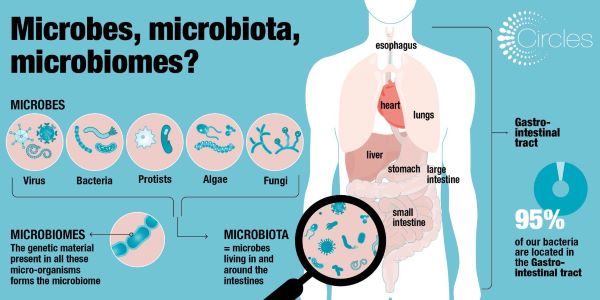
In research news, Meagan Cantwell talks with Leda Kobziar, an associate professor of wildland fire science at the University of Idaho, Moscow, about the living component of wildfire smoke—microbes. The bacteria and fungi that hitch a ride on smoke can impact both human health and ecosystems—but Kobziar says much more research is needed.
This year, two teams of physicists made profound progress on ideas that could bring about the next revolution in physics. Another still has identified the source of a long-standing cosmic mystery.
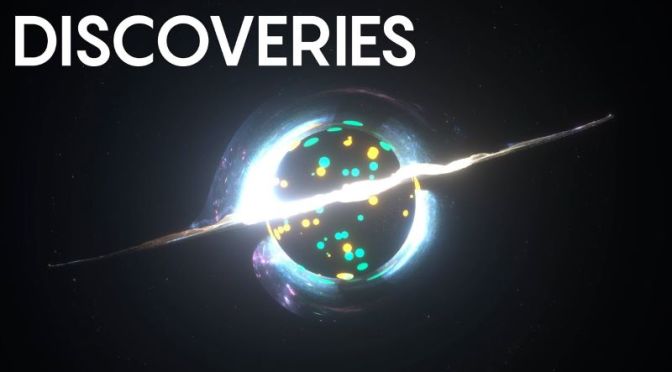
1. Here’s an extremely brief version of the black hole information paradox: Stuff falls into a black hole. Over time — a long, long time — the black hole “evaporates.” What happened to the stuff? According to the rules of gravity, it’s gone, its information lost forever. But according to the rules of quantum mechanics, information can never be lost. Therefore, paradox. This year, a series of tour de force calculations has shown that information must somehow escape — even if how it does so remains a mystery.
2. Levitating trains, lossless power transmission, perfect energy storage: The promise of room-temperature superconductivity has fed many a utopian dream. A team based at the University of Rochester in New York reported that they had created a material based on a lattice of hydrogen atoms that showed evidence of superconductivity at up to about 15 degrees Celsius (59 degrees Fahrenheit) — about the temperature of a chilly room. The only catch: Superconductivity at this temperature only works if the material is crushed inside a diamond anvil to pressures approaching those of Earth’s core. Utopia will have to wait.
3. A dazzling cosmic strobe has ended an enduring astronomical mystery. Fast radio bursts — blips of distant radio waves that last for mere milliseconds — have eluded explanation since they were first discovered in 2007. Or rather, astronomers had come up with far too many theories to explain what are, for the brief time they’re alight, the most powerful radio sources in the universe. But on a quiet morning in April, a burst “lit up our telescope like a Christmas tree,” said one astronomer. This allowed researchers to trace its source back to a part of the sky where an object had been shooting out X-rays. Astronomers concluded that a highly magnetized neutron star called a magnetar was behind the phenomenon.
Despite overwhelming scientific evidence, some American politicians continue to deny that climate change exists, while others question the severity of its impact. But public opinion is shifting, and today even oil and gas companies publicly admit that climate change demands action. So why does climate denialism continue to influence U.S. politics? Here’s a look into who is funding the movement, and why denial is mainly a U.S. problem.
Each year, editors and writers choose a top research achievement as Science’s Breakthrough of the Year. This year, that honor goes to the multiple COVID-19 vaccines that have succeeded in large human trials—and are now being deployed around the world. But there are a lot of other advances to talk about, from figuring out the origin of Fast Radio Bursts to the discovery of the earliest known figurative art. Check out a few of the runners-up candidates—and this year’s Breakthrough of the Year—in this video rundown. Read the stories here: https://scim.ag/37v20ds
Our last episode of the year is a celebration of science in 2020. First, host Sarah Crespi talks with Online News Editor David Grimm about some of the top online news stories of the year—from how undertaker bees detect the dead to the first board game of death. (It’s not as grim as it sounds.)
Sarah then talks with Online News Editor Catherine Matacic about the Breakthrough of the Year, scientific breakdowns, and some of the runners-up—amazing accomplishments in science achieved in the face of a global pandemic. Finally, Book Review Editor Valerie Thompson joins Sarah to discuss highlights from the books section—on topics as varied as eating wild foods to how the materials we make end up shaping us.
A video game provides players with insights into pandemic responses, giant pandas and our annual festive fun.
In this episode:
01:02 Balancing responses in a video game pandemic
In the strategy video-game Plague Inc: The Cure, players assume the role of an omnipotent global health agency trying to tackle outbreaks of increasingly nasty pathogens. We find out how the game was developed, and how it might help change public perception of pandemic responses.
The first of our festive songs, we head back to July this year, and the launch of three separate space missions to the red planet. Scroll to the transcript section at the bottom of the page for the lyrics.
12:54 Research Highlights
Giant pandas roll in piles of poo to keep warm, and how different bread-baking styles have led to distinct lineages of baker’s yeast.
15:17 The Nature Podcast Audio Charades Competition: Lockdown edition
In this year’s festive competition, our reporters try to describe some of the biggest science stories, using only homemade sound effects. Results are mixed, at best…
24:15 Nature’s 10
We hear about some of the people who made it on to this year’s Nature’s 10 list this year.
In our final festive song, we celebrate a huge scientific achievement, and one that’s offering a little hope for 2021. Scroll to the transcript section at the bottom of the page for the lyrics.
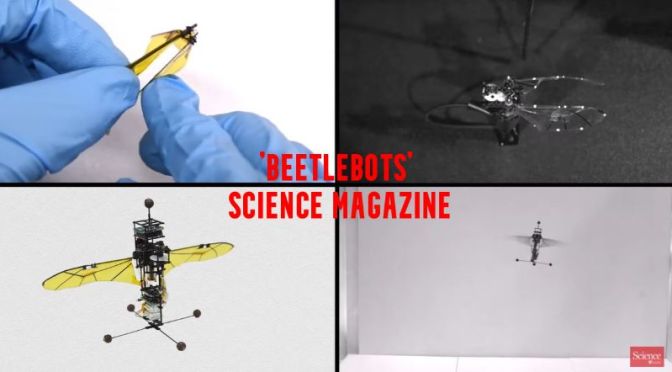
Beetles are virtually crash resistant. Their wings fold up when they collide with objects, and then quickly spring back into place. That helps the insects stay on course and fly straight, rather than spiral to the ground, while exerting little energy. Researchers have now built a winged robot that mimics this capability.
The “beetlebot” keeps flying, even after it crashes into poles, researchers report this month in Science. The energy-efficient robot could even navigate narrow environments, such as collapsed buildings, to aid rescue missions, the team says.
The field of psychology underwent a replication crisis and saw a sea change in scientific and publishing practices, could ecology be next? News Intern Cathleen O’Grady joins host Sarah Crespi to talk about the launch of a new society for ecologists looking to make the field more rigorous.
Sarah also talks with Andrew Storfer, a professor in the School of Biological Sciences at Washington State University, Pullman, about the fate of the Tasmanian devil. Since the end of the last century, these carnivorous marsupials have been decimated by a transmissible facial tumor. Now, it looks like—despite many predictions of extinction—the devils may be turning a corner.
News, Views and Reviews For The Intellectually Curious