Science Senior Correspondent Daniel Clery regales host Sarah Crespi with tales about the most important work to come from 57 years of research at the now-defunct Arecibo Observatory and plans for the future of the site.
Sarah also talks with Toman Barsbai, an associate professor in the school of economics at the University of Bristol, about the influence of ecology on human behavior—can we figure out how many of our behaviors are related to the different environments where we live? Barsbai and colleagues took on this question by comparing behaviors around finding food, reproduction, and social hierarchy in three groups of animals living in the same places: foraging humans, nonhuman mammals, and birds.
DNA clues point to how dire wolves went extinct, and a round-up of the main impacts of Brexit on science.
In this episode:
00:45 Dire wolf DNA
Dire wolves were huge predators that commonly roamed across North America before disappearing around 13,000 years ago. Despite the existence of a large number of dire wolf fossils, questions remain about why this species went extinct and how they relate to other wolf species. Now, using DNA and protein analysis, researchers are getting a better understanding of what happened to these extinct predators.
In December, a last minute trade-deal between the UK and EU clarified what the future relationship between the two regions would look like, after Brexit. We discuss the implications of this trade-deal for science funding, the movement of researchers, and data sharing.
We discuss some highlights from the Nature Briefing. This time, concerns about contaminating water on the moon, and the spy satellites that spied out environmental change.
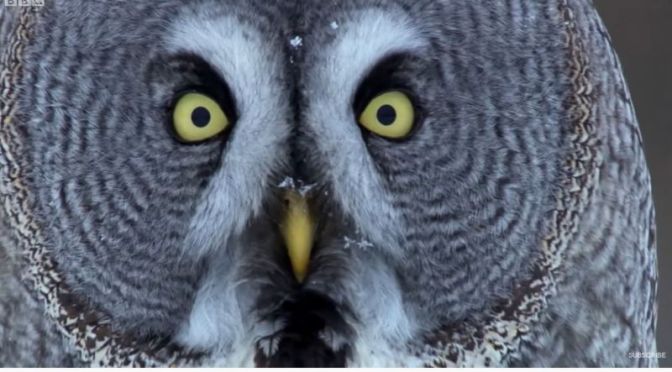
With the ability to fly silently and detect prey with stunning accuracy, owls are master aerial predators. Enjoy this selection of owl moments taken from the BBC Earth library.
In 1972, Frank Wilczek and his thesis adviser, David Gross, discovered the basic theory of the strong force — the final pillar of the Standard Model of particle physics. Their work revealed the strange alchemy at work inside the nucleus of an atom. It also turned out to underpin almost all subsequent research into the early universe. Wilczek and Gross went on to share the 2004 Nobel Prize in Physics for the work. At the time it was done, Wilczek was just 21 years old. His influence in the decades since has been profound. He predicted the existence of a hypothetical particle called the axion, which today is a leading candidate for dark matter. He published groundbreaking papers on the nature of the early universe. And just last year, his prediction of the “anyon” — a strange type of particle that only shows up in two-dimensional systems — was experimentally confirmed.
Over the course of the pandemic, scientists have been monitoring emerging genetic changes to Sars-Cov-2. Mutations occur naturally as the virus replicates but if they confer an advantage – like being more transmissible – that variant of the virus may go on to proliferate.
This was the case with the ‘UK’ or B117 variant, which is about 50% more contagious and is rapidly spreading around the country. So how does genetic surveillance of the virus work? And what do we know about the new variants? Ian Sample speaks to Dr Jeffrey Barrett, the director of the Covid-19 genomics initiative at the Wellcome Sanger Institute, to find out Coronavirus – latest updates See all our coronavirus coverage.
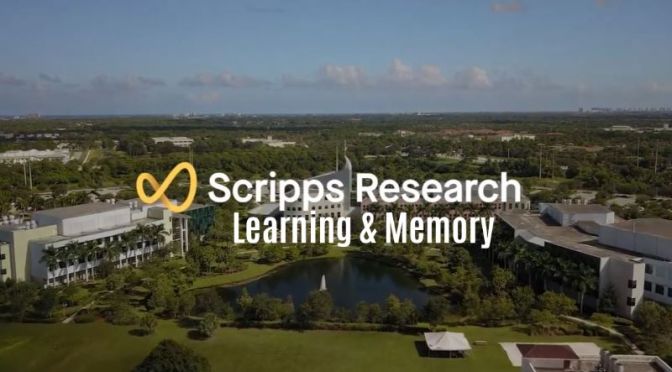
Neuroscience Professor Seth Tomchik, PhD, focuses on two major research areas, the neuroscience of learning and memory, and diseases that affect learning and memory, including neurofibromatosis type one. Neuroscience is now the largest department on the Florida campus of Scripps Research.
The department’s faculty and staff, together with graduate students enrolled in the institute’s Skaggs Graduate School, push the boundaries of scientific knowledge to benefit humanity. Watch all 11 videos in this series to see their work in more detail. Scripps Research is an independent, nonprofit biomedical research institute ranked the most influential in the world for its impact on innovation. With campuses in La Jolla, California, and Jupiter, Florida, the institute advances human health through profound discoveries that address pressing medical concerns around the globe. Scripps Research also trains the next generation of leading scientists at the Skaggs Graduate School, consistently named among the top 10 U.S. programs for chemistry and biological sciences. Learn more at http://www.scripps.edu.
Freelance journalist Gabriel Popkin and host Sarah Crespi discuss what will happen to ash trees in the United States as federal regulators announce dropping quarantine measures meant to control the emerald ash borer—a devastating pest that has killed tens of millions of trees since 2002.
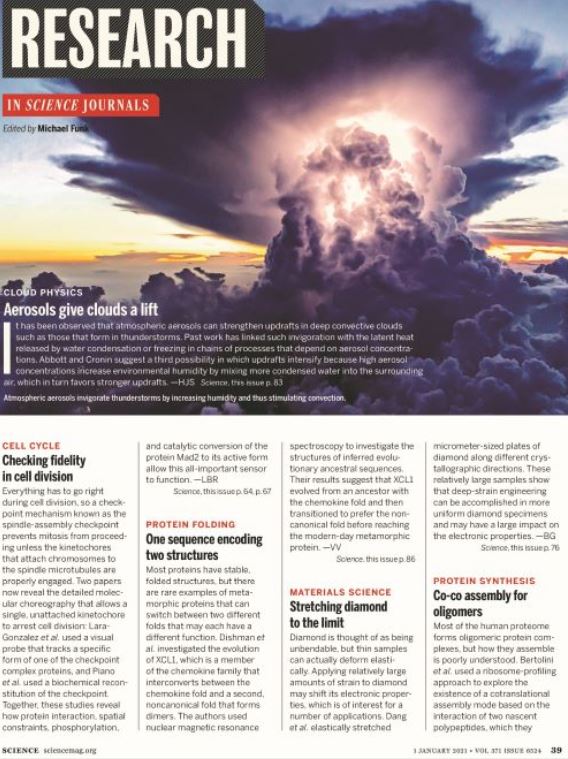
Instead of quarantines, the government will use tiny wasps known to kill the invasive beetles in hopes of saving the ash. Sarah also talks with Pavel Chvykov, a postdoctoral researcher at the Massachusetts Institute of Technology, about the principles for organizing active matter—things like ant bridges, bird flocks, or little swarms of robots.
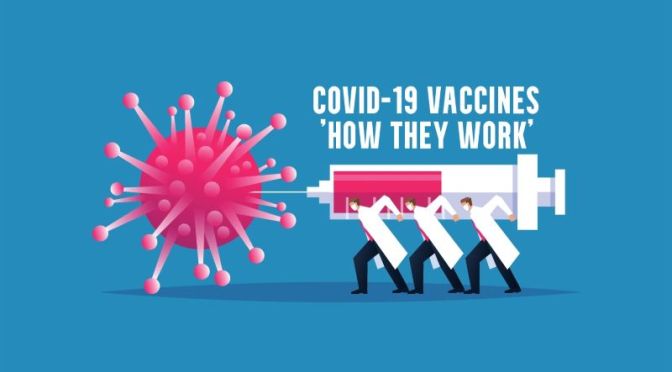
Vaccines are one of the most effective tools we have in preventing and reducing the burden of infectious diseases. In the midst of the COVID-19 pandemic, vaccines are once again poised to change the tide in our favor in the fight against a deadly virus. But how exactly do vaccines work? And are they safe? “You can think of your body’s immune system like an orchestra,” says Yale immunobiologist Akiko Iwasaki, PhD. “The different functions of the immune response are like different instruments. And vaccines work like sheet music for the orchestra, telling the immune system what to do and how to do it.” Different viruses require different types of immune responses in order to confer protection, and some of them can be complex. But with SARS-CoV-2, the virus that causes COVID-19, a simple type of response is all that’s needed to prevent infection. “You just need to trigger an antibody response where the antibodies bind to the surface of the virus and prevent it from entering our cells,” says Ruslan Medzhitov, PhD, professor of immunobiology. “And these types of vaccines tend to be extremely safe.” In addition to the inherent safety of this kind of “training” for the immune system, experts emphasize that the expedited timeline of COVID-19 vaccine development is not a reflection of lax safety standards. “Before a vaccine is approved, it goes through a rigorous amount of testing for safety and efficacy,” says Iwasaki. “So, once a vaccine is made to be publicly available, we should be lining up.” Watch this video to learn more about the fundamentals of how vaccines work, how they are developed, and the importance of vaccination for public health.