Tag Archives: Science

Science Podcast: Secrets Of Einsteinium, Chemicals Sap Ozone & Traffic Jams

Exploring the properties of a vanishingly-rare man-made element, and the AI that generates new mathematical conjectures.

In this episode:

01:04 Einsteinium’s secrets

Einsteinium is an incredibly scarce, man-made element that decays so quickly that researchers don’t know much about it. Now, using state-of-the-art technology, a team has examined how it interacts with other atoms, which they hope will shed new light on einsteinium and its neighbours on the periodic table.

Research Article: Carter et al.

06:28 Research Highlights

The mysterious appearance of three ozone-depleting chemicals in Earth’s atmosphere, and how ride-sharing services have failed to reduce traffic jams.

Research Highlight: Mystery on high: an ozone-destroying chemical appears in the air

Research Highlight: Uber and Lyft drive US gridlock — but not cuts in car ownership

8:38 The computer that comes up with new mathematical formulas

A team of researchers have developed artificial-intelligence algorithms that can generate new formulas for calculating the digits of key mathematical numbers like pi. Although crucial, many of these numbers remain mysterious, so it is hoped that this system will open up new avenues of questioning for mathematicians.

Research Article: Raayoni et al.

14:48 Briefing Chat

We discuss some highlights from the Nature Briefing. This time, a new theory to explain a sixty-year-old mystery surrounding the icy deaths of a group of Russian students, and the continued controversy about the chances of life on Venus.

Video: Explaining the icy mystery of the Dyatlov Pass deaths

News: Life on Venus claim faces strongest challenge yet

Covid-19 Vaccines: ‘What Can You Trust?’ (Video)

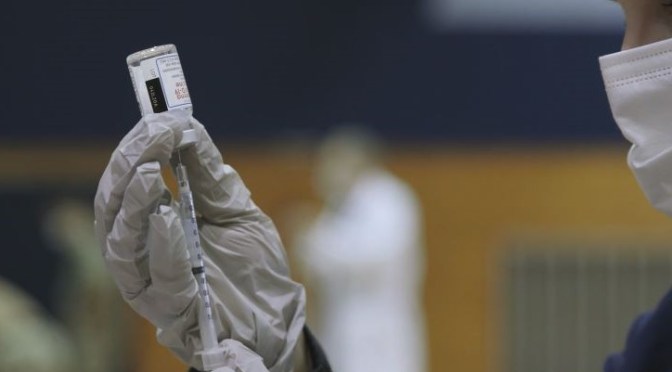
Factual and reliable information is vital to creating trust in vaccines and to overcoming the pandemic. Ed Carr, The Economist’s deputy editor, and Natasha Loder, our health policy editor, answer some of the big questions about the global vaccination drive.

Chapters 00:00​ – Challenges in vaccinating the world 00:45​ – Trust in vaccines 02:30​ – mRNA vaccines 03:23​ – Impact of variants on vaccination 04:29​ – Time between vaccine doses 06:09​ – Mandatory vaccines for travel?

Covid-19: ‘How Do The Leading Vaccines Work?’

As countries like the United States and United Kingdom inoculate their residents with never-before used vaccine technology, others, including Russia, China, and India, are investing in more traditional approaches, like inactivated coronavirus vaccines. But no matter the technique, together they have the potential to create multiple lines of defense against SARS-CoV-2. Science senior correspondent Jon Cohen explains how each of these vaccines can protect us from severe illness—and what understanding the details of our immune responses could mean for the future of human trials.

Science Podcast: Social Costs Of Carbon & The Chirps Of Mole-Rats

On its first day, the new Biden administration announced plans to recalculate the social cost of carbon—a way of estimating the economic toll of greenhouse gases. Staff Writer Paul Voosen and host Sarah Crespi discuss why this value is so important and how it will be determined.

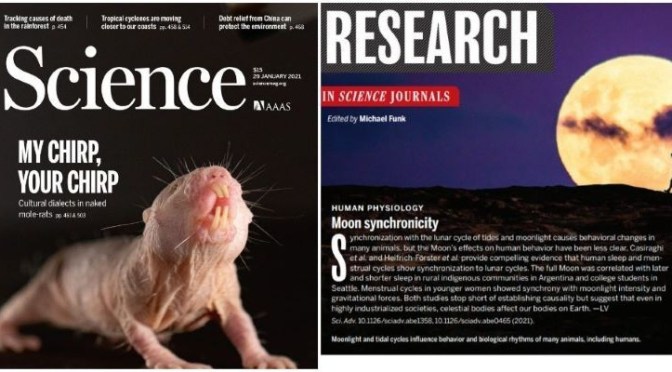
Next up, Alison Barker, a postdoctoral researcher at the Max Delbrück Center for Molecular Medicine, talks with Sarah about the sounds of naked mole-rats. You may already know naked mole-rats are pain and cancer resistant—but did you know these eusocial mammals make little chirps to identify themselves as colony members? Can these learned local dialects make naked mole-rats a new research model for language learning? 

Science Podcast: Spinal Cord Injury Device, Hand Gestures & Saturn’s Tilt

A neuroprosthetic device restores blood-pressure control after spinal-cord injury, and identifying the neurons that help us understand others’ beliefs.

In this episode:

00:47 A neuroprosthetic restores the body’s baroreflex

A common problem for people who have experienced spinal-cord injury is the inability to maintain their blood pressure, which can have serious, long-term health consequences. Now, however, researchers have developed a device that may restore this ability, by stimulating the neural circuits involved in the so-called baroreflex.

Research Article: Squair et al.

News and Views: Neuroprosthetic device maintains blood pressure after spinal cord injury

08:27 Research Highlights

How gesticulating changes the way that speech is perceived, and a new theory of how Saturn got its tilt.

Research Highlight: Hands speak: how casual gestures shape what we hear

Research Highlight: The moon that made Saturn a pushover

10:58 A neuronal map of understanding others

Humans are very good at understanding that other people have thoughts, feelings and beliefs that are different to our own. But the neuronal underpinnings of this ability have been hard to unpick. Now, researchers have identified a subset of neurons that they think gives us this ability.

Research Article: Jamali et al.

18:04 Briefing Chat

We discuss some highlights from the Nature Briefing. This time, the science of why cats love catnip, and the struggle to identify what the mysterious celestial object StDr 56 actually is.

Science: Why cats are crazy for catnip

Syfy Wire: So what the heck is StDr 56?

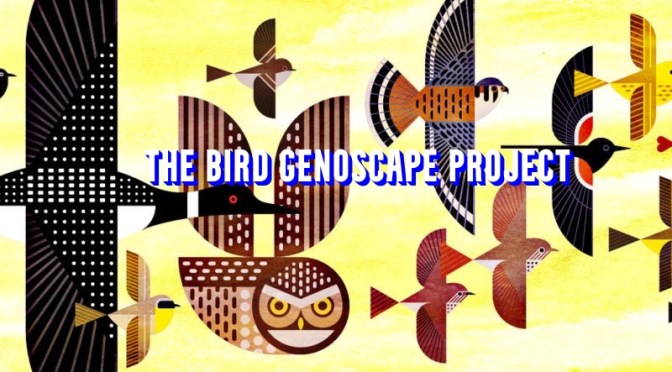
Science & Wildlife: ‘The Bird Genoscape Project’

Billions of birds migrate annually across the Western Hemisphere… but if we don’t know where they go when they leave their breeding grounds, how can we protect them? By extracting DNA from individual feathers (and borrowing cutting-edge technology from the Human Genome Project) scientists can map bird migration with greater precision than ever before. The result is the Bird Genoscape Project, and it’s revolutionizing bird conservation by connecting migratory birds – and the people who care about them – across the Americas. This work was funded by the National Geographic Society. Learn more at http://www.natgeo.org.

Science Podcast: Rodents In Research, Gut Allergic Reactions & Cobra Venom

Online News Editor David Grimm joins host Sarah Crespi to discuss a controversial new paper that estimates how many rodents are used in research in the United States each year.

Though there is no official number, the paper suggests there might be more than 100 million rats and mice housed in research facilities in the country—doubling or even tripling some earlier estimates. 

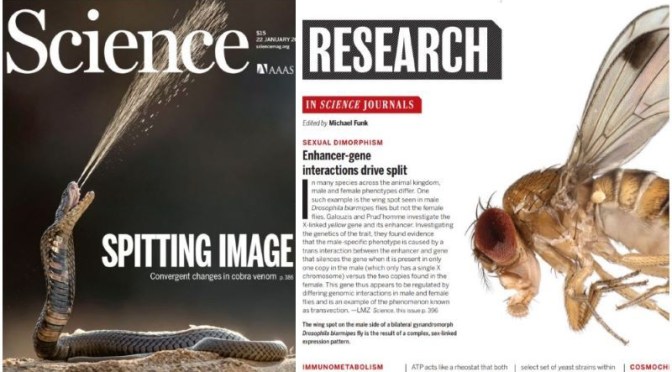
Next, Staff Writer Jennifer Couzin-Frankel talks with Sarah about a new theory behind the cause of irritable bowel syndrome—that it might be a localized allergic reaction in the gut. Sarah also chats with Taline Kazandjian, a postdoctoral research associate at the Centre for Snakebite Research & Interventions in Liverpool, U.K., about how the venom from spitting cobras has evolved to cause maximum pain and why these snakes might have developed the same defense mechanism three different times.Â