


Megastructure stretching nearly 1 kilometre long is probably one of the oldest known hunting aids on Earth.
People infected with the virus that causes COVID-19 cleared the virus more quickly if they had high levels of certain immune cells.
The laboratory-grown food uses rice as a scaffold for cultured meat.


An artist’s experimental approach to Rosalind Franklin’s Photo 51 reveals the molecule’s intricate biochemistry.
Tensions are rising as the ocean’s great predators nab fish on the line, inciting a major new challenge in human–wildlife conflict.

Researchers used artificial intelligence to decipher the text of 2,000-year-old charred papyrus scripts, unveiling musings on music and capers.
Faced with data restrictions and harassment, researchers are mapping out fresh approaches to studying social media’s political reach.
Immune guardians called complement proteins are manufactured by gut cells and help to protect against pathogens.
Data from an African observatory show that jets from a collapsed star are capable of producing some of the Galaxy’s fastest particles.
The blockbuster medications that reduce body weight also reduce inflammation in organs such as the brain, raising hopes that they can treat Parkinson’s and Alzheimer’s diseases.
/Minden Pictures

A bacterium in the intestines of stressed mice interferes with cells that protect against pathogens.
A new wave of research is unpicking the relationship between cancer and neurons — and looking for ways to stop the crosstalk.
Wine-fermentation jars used in Georgia today hint at the properties of ancient vintages.
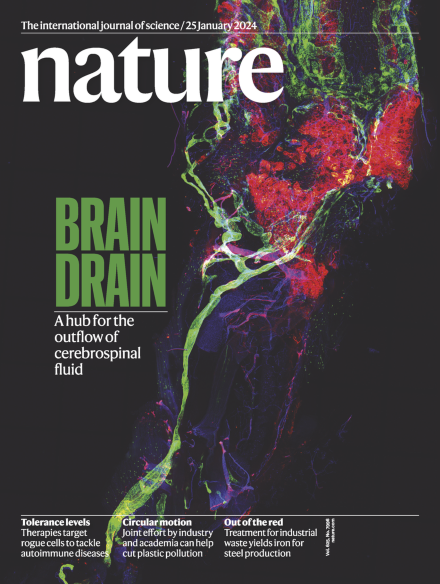
Light pulses with specific quantum properties could be harnessed to send digital ‘contracts’ between buyer and seller.
Mice that work out regularly have higher levels of a molecule that promotes muscle regeneration than sedentary mice do.
Next-generation plants that respond to demand could be key to making a low-carbon energy source more economically appealing.
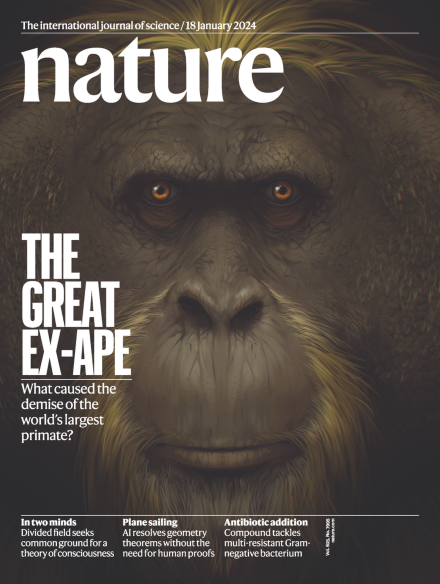
A dormant immune system before receiving the BCG vaccine is tied to a greater innate immune response afterwards.
Detectors at the Large Hadron Collider spot the famed particle decaying into a photon and a ‘Z boson’.

Scientists are devising ways to edit the genomes of immune cells without having to extract them from the people being treated.
A massive quake that triggered tsunamis, fires and multiple aftershocks was the largest on the country’s west coast in more than a century.
Studies of the microbes living on and in our bodies are conducted mainly in a few rich countries, squandering opportunities to improve the health of people globally.
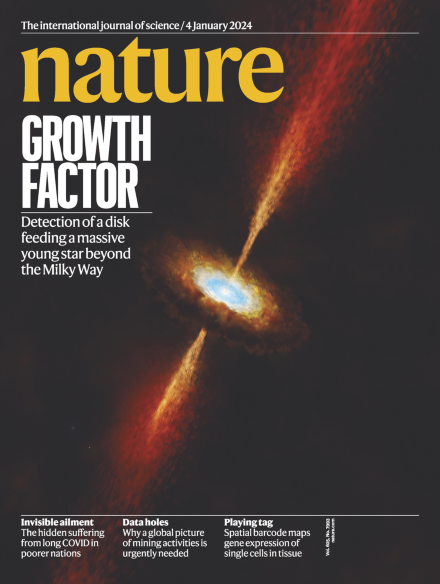
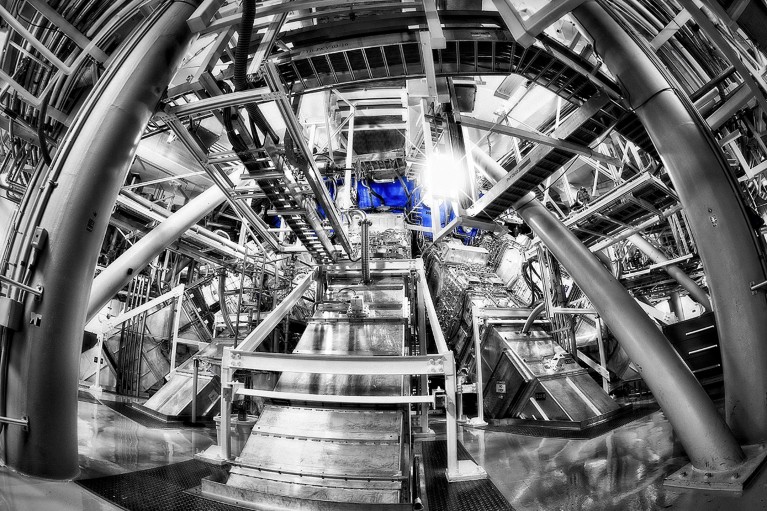
Researchers at the National Ignition Facility are consistently creating reactions that make more energy than they consume.
In December 2022, after more than a decade of effort and frustration, scientists at the US National Ignition Facility (NIF) announced that they had set a world record by producing a fusion reaction that released more energy than it consumed — a phenomenon known as ignition. They have now proved that the feat was no accident by replicating it again and again, and the administration of US President Joe Biden is looking to build on this success by establishing a trio of US research centres to help advance the science.
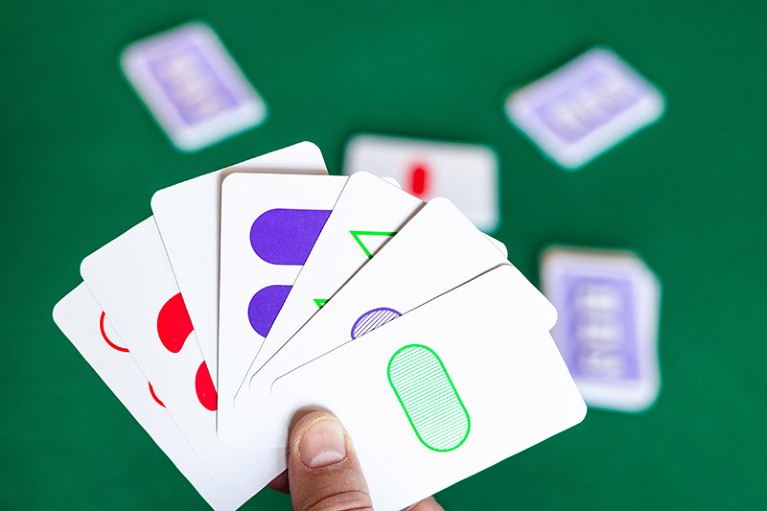
Large language model improves on efforts to solve combinatorics problems inspired by the card game Set.
The card game Set has long inspired mathematicians to create interesting problems.
Now, a technique based on large language models (LLMs) is showing that artificial intelligence (AI) can help mathematicians to generate new solutions.
 Intellicurious