The Globalist (April 15, 2024): The latest on the conflict in the Middle East following Iran’s reprisal attack on Israel. Then: after days of clashes, we discuss the unrest at the Thailand-Myanmar border.
Plus: the implications of Senegal’s new presidency for regional dynamics and fashion news.
Artificial intelligence holds huge promise in health care. But it also faces massive barriers
Better diagnoses. Personalised support for patients. Faster drug discovery. Greater efficiency. Artificial intelligence (ai) is generating excitement and hyperbole everywhere, but in the field of health care it has the potential to be transformational. In Europe analysts predict that deploying ai could save hundreds of thousands of lives each year; in America, they say, it could also save money, shaving $200bn-360bn from overall annual medical spending, now $4.5trn a year (or 17% of gdp). From smart stethoscopes and robot surgeons to the analysis of large data sets or the ability to chat to a medical ai with a human face, opportunities abound.
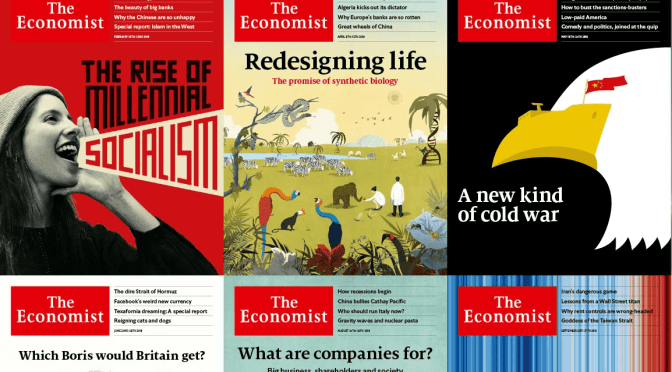
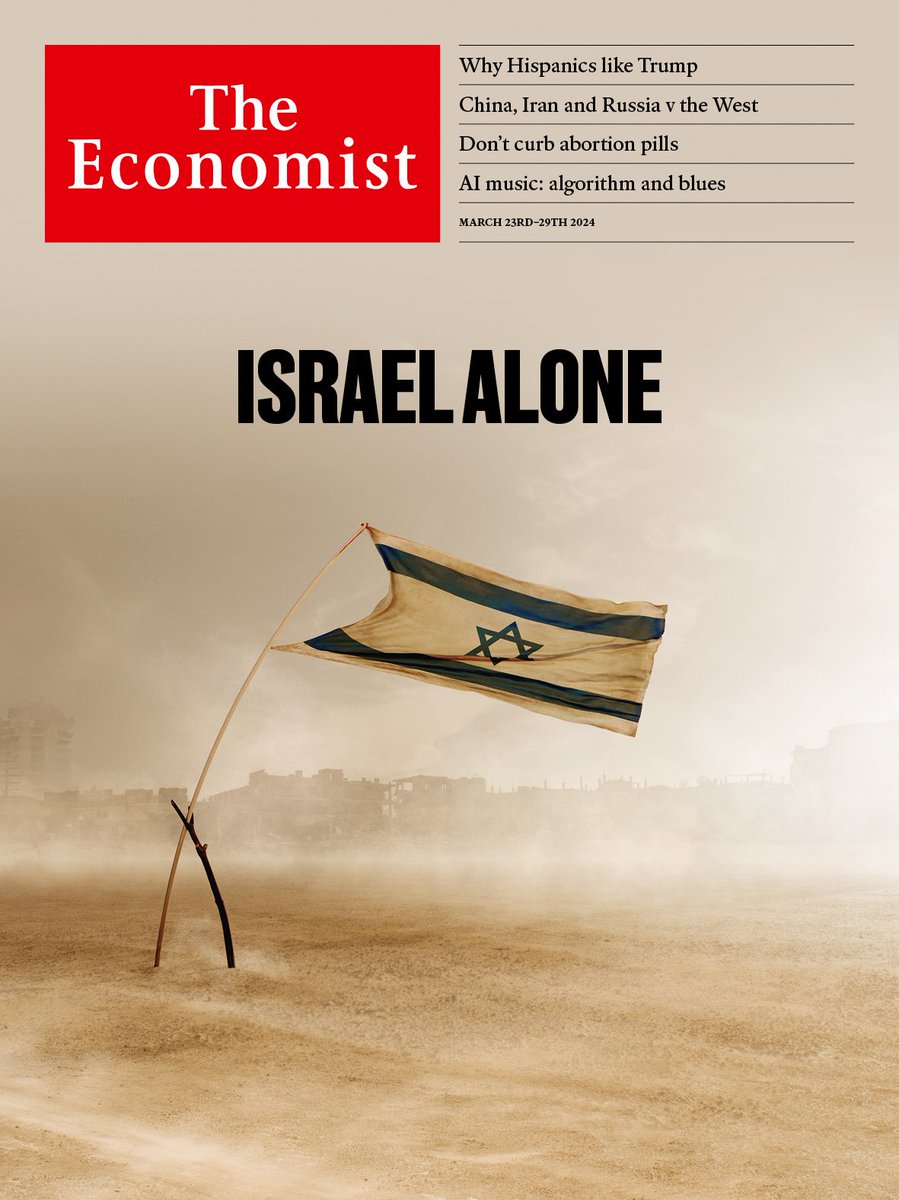
The Economist Magazine (March 21, 2024): The latest issue features ‘Israel Alone’ – At a moment of military might, Israel looks deeply; ‘How To Trade An Election’ – It is getting harder for investors to ignore politics; China, Iran and Russia versus The West – Assessing the economic threat posed by the anti-Western axis…
There is still a narrow path out of the hellscape of Gaza. A temporary ceasefire and hostage release could cause a change of Israel’s government; the rump of Hamas fighters in south Gaza could be contained or fade away; and from the rubble, talks on a two-state solution could begin, underwritten by America and its Gulf allies. It is just as likely, however, that ceasefire talks will fail. That could leave Israel locked in the bleakest trajectory of its 75-year existence, featuring endless occupation, hard-right politics and isolation. Today many Israelis are in denial about this, but a political reckoning will come eventually. It will determine not only the fate of Palestinians, but also whether Israel thrives in the next 75 years.
It is becoming harder for investors to ignore politics
Investors differ in their approach to elections. Some see politics as an edge to exploit; others as noise to block out. Even for those without a financial interest, markets offer a brutally frank perspective on the economic stakes. As elections approach in America and Britain, as well as plenty of other countries, that is especially valuable.
The Economist Magazine (March 7, 2024): The latest issue features Three big risks that might tip America’s presidential election – Third parties, the Trump trials and the candidates’ age introduce a high degree of uncertainty; Xi Jinping’s hunger for power is hurting China’s economy; How to fix the Ivy League – Its supremacy is being undermined by bad leadership…
Russian aggression and American wavering reveal just how ill-equipped the continent is
Russia is becoming more dangerous, America is less reliable and Europe remains unprepared. The problem is simply put, but the scale of its solution is hard to comprehend. The security arrangements based on nato that emerged from the second world war—and have prevented a third—are so much part of Europe’s fabric that remaking them will be an immense task. European leaders urgently need to jettison their post-Soviet complacency. That means raising defence spending to a level not seen in decades, restoring Europe’s neglected military traditions, restructuring its arms industries and preparing for a possible war. The work has barely begun.
The Globalist (February 21, 2024):G20 foreign ministers gather in Rio de Janeiro as a diplomatic spat engulfs Brazil and Israel. Then: Burkina Faso, Mali and Niger juntas confirm their commitment to form a new tri-state confederation, the Philippines conducts joint air patrols with the US and we hear from Portugal’s foreign minister, João Cravinho on Ukraine and Israel.
Plus: the commercial airport set to open on Italy’s Amalfi Coast this summer.
The Globalist (February 20, 2024):Israel’s war cabinet sets a date for the ground invasion of Rafah, while Russia’s foreign minister, Sergey Lavrov, continues his Latin American tour in Venezuela. Sweden’s defence minister, Pål Jonson, tells us about his country’s path to Nato.
Plus: the EU’s mission to protect vessels against Houthi attacks, turmoil at Austrian property company Signa and a round-up of fashion news.
The Globalist (February 19, 2024): We discuss the latest from the Japan-Ukraine Conference for Promotion of Economic Growth and Reconstruction, and Andrew Mueller sits down with Greece’s prime minister, Kyriakos Mitsotakis, at the Munich Security Conference as it becomes the first Orthodox-Christian nation to legalise same-sex marriage. Plus: TV highlights with critic and broadcaster Scott Bryan.
News, Views and Reviews For The Intellectually Curious